Fault diagnosis
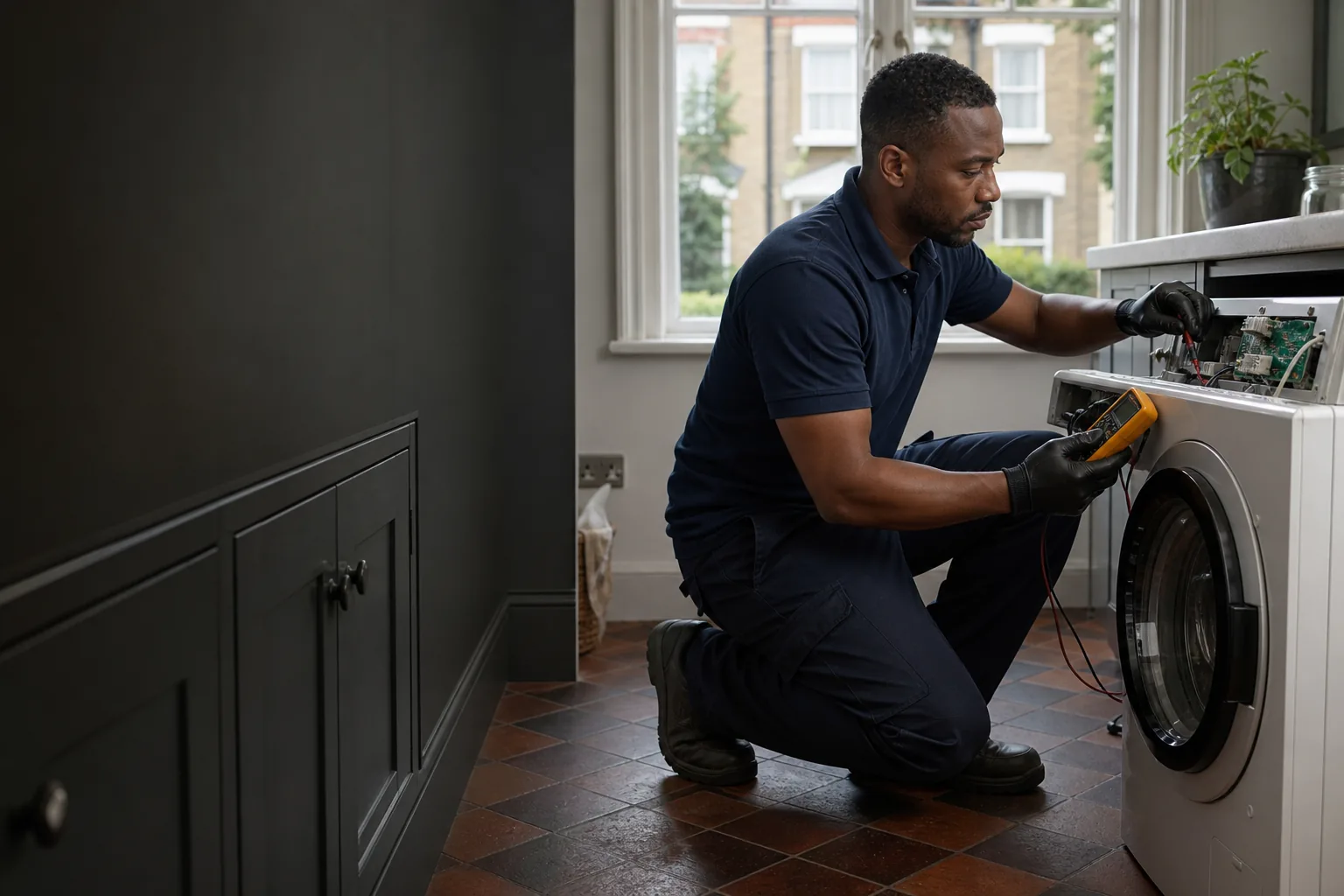
Symptoms, error codes, connections and accessible components are checked methodically.
Alesta · Appliance repair in London
Practical fault finding and repair support for essential kitchen and laundry appliances. Tell us the appliance, model and symptoms so we can organise the right engineer.
☎ Call 020 3608 3976Fault finding before parts
A failed appliance can interrupt the whole household, but the visible symptom is not always the underlying fault. A washing machine that will not drain may have a blocked pump, damaged component or control issue; an oven that does not heat may need a different investigation from one that trips the electrics.
Tell us the appliance type, make, model and what happens when you use it. Photographs of the rating plate or an error code can help us organise an appropriate engineer and prepare for the visit.
Symptoms, error codes, connections and accessible components are checked methodically.
Washing machines, washer-dryers and tumble dryers can be assessed for common operational faults.
Dishwashers, electric ovens, cookers, hoods, fridges and freezers are matched to the relevant expertise.
Where a safe, economical repair is agreed, the appliance is repaired and checked before handover.
Common reasons customers call
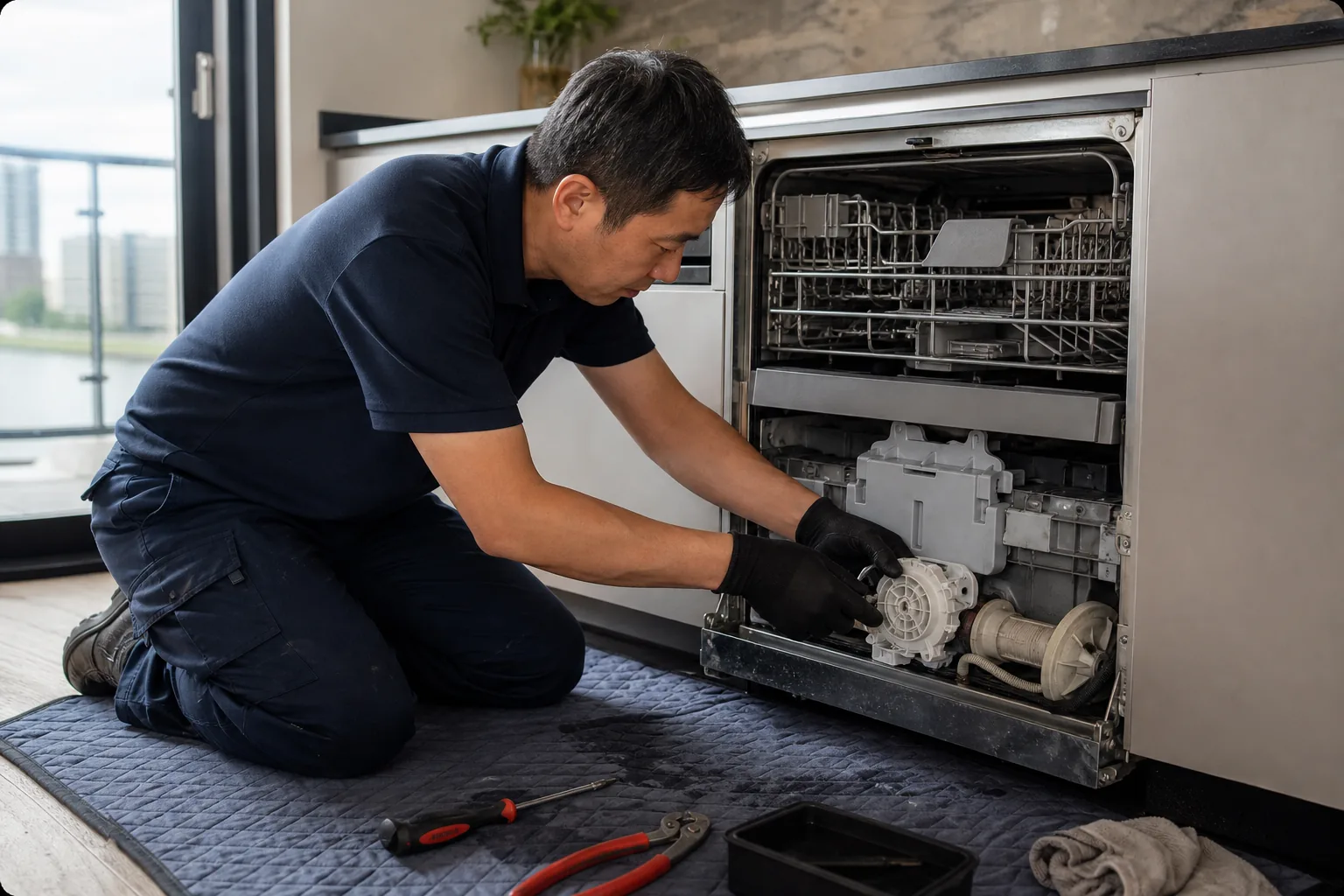
A washing machine or dishwasher finishes with water left inside, displays an error or repeatedly stops.
An oven stays cold, a dryer runs without drying or a dishwasher completes a cool cycle.
Grinding, knocking, excessive vibration or an unfamiliar fan noise needs diagnosis before continued use.
Water appears around the appliance, controls cut out or the machine works only occasionally.
Why Alesta for appliance repair
Make, model, installation and symptoms help us match the visit appropriately.
The visible symptom is investigated before parts or further work are proposed.
Access, cabinetry, flooring and surrounding finishes are considered during the visit.
Repair, parts requirement or replacement considerations are explained without pretending every fault has an instant fix.
A considered repair
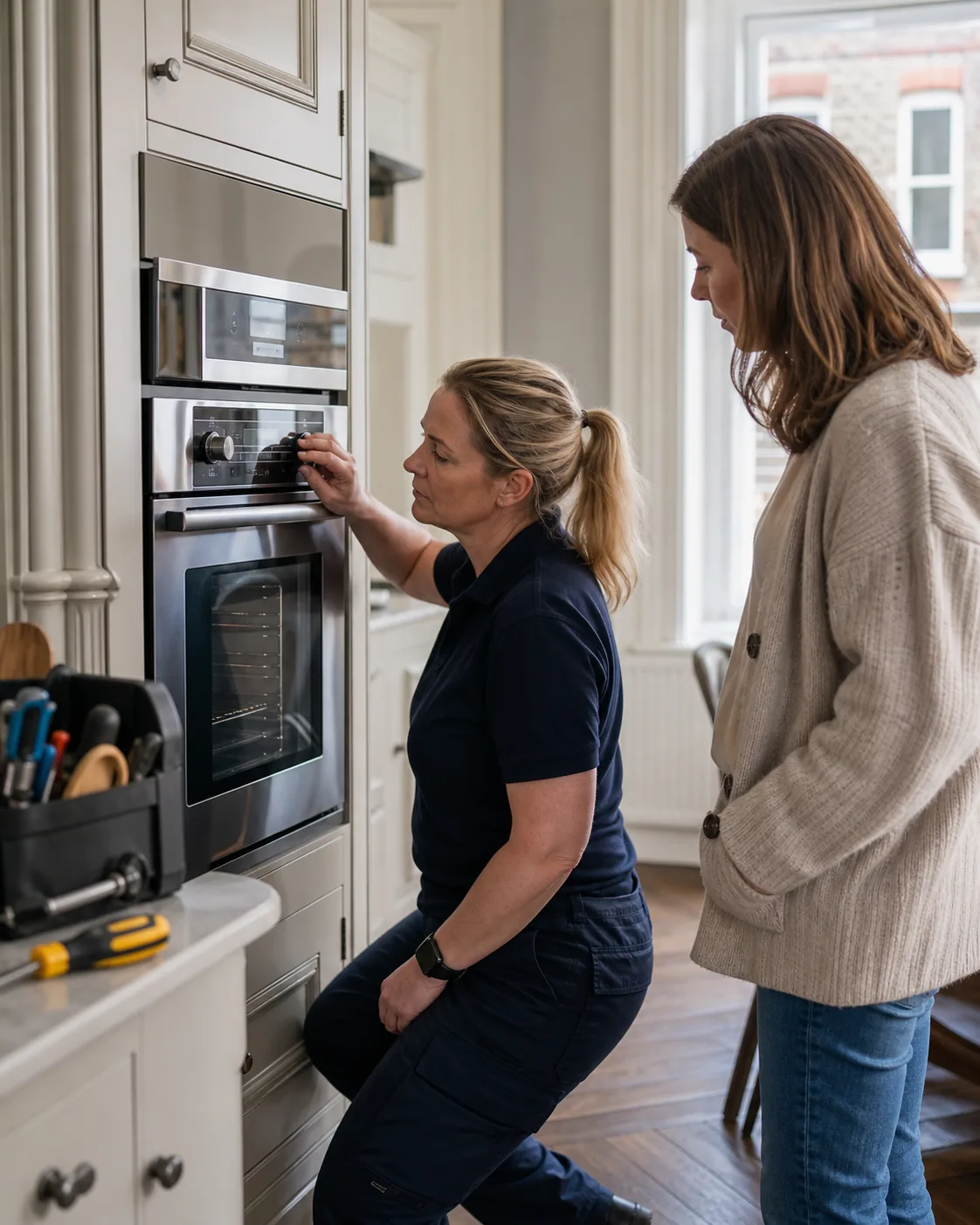
Every repair starts with accurate information. When you call, we ask for the appliance type, make, model, approximate age and a clear description of the fault. An error code, unusual noise, leak, smell or sequence of events can all be useful. We also check whether the appliance is freestanding or integrated and whether access is restricted by cabinetry, flooring or stacked installation. These details help us organise the right discipline and avoid treating every appliance fault as interchangeable.
At the property, the engineer confirms the symptom before opening or removing accessible panels. Power, water and drainage connections are considered as relevant, and diagnostic checks are used to narrow the fault to a component or system. For example, a dishwasher that retains water may require checks around filters, hoses and the pump; a washing machine that will not spin can involve drainage, load detection, the drive system or electronic control. The objective is to diagnose before recommending parts.
If a repair is practical, the engineer explains the work and any part requirement. Common components may sometimes be available at the visit, while model-specific items may need to be sourced and fitted later. We do not claim that every appliance can or should be repaired. Age, corrosion, discontinued parts, previous damage and the likely cost compared with replacement can affect the sensible next step. Gas appliances and fixed electrical work also require the appropriately qualified professional and are never treated as a generic mechanical repair.
Once agreed work is complete, the appliance is reassembled and a functional check is carried out where conditions allow. The engineer looks for normal operation, leaks, unusual noise and relevant controls before the appliance is handed back. You receive a straightforward explanation of what was found, what was done and any operating or maintenance point worth knowing. If a further part or specialist visit is required, the next step is made clear rather than presenting an incomplete diagnosis as a finished repair.
Clear pricing
The final cost depends on the appliance, diagnosis, labour and any model-specific replacement part.
| Service scope | Price | What affects the final price |
|---|---|---|
| Common appliance repair | Typically £50–£150 | Appliance type, fault, access and labour required |
| Diagnostic visit | Confirmed before booking | Appliance, postcode and whether specialist testing is required |
| Replacement parts | Quoted separately | Manufacturer, model, availability and component cost |
Typical pricing: Common repair work can fall between £50 and £150, but this is not a fixed quote. We confirm the applicable visit structure before booking; parts and complex repairs can increase the total.
How the service works
Share the make, model, error code and what happens when the appliance is used.
The engineer checks the symptoms and accessible systems before recommending work.
Completed work is checked and the findings or next step are explained clearly.
Appliance repair FAQ
Useful answers for planning a safe, efficient appliance repair visit.
☎ Call 020 3608 3976Support can include washing machines, washer-dryers, tumble dryers, dishwashers, electric ovens and cookers, hoods, fridges and freezers. Confirm the exact appliance when calling.
The make, model, approximate age, error code and a description of the symptom are useful. A clear photograph of the rating plate can help identify the correct model.
No. Do not force or disconnect it. Explain how it is installed and ensure the surrounding area is accessible so the engineer can assess safe access.
Parts are normally identified after diagnosis and priced according to the model and availability. The applicable cost should be agreed before fitting.
Not always. A model-specific component may need ordering, or the engineer may find that repair is unsafe or uneconomical. The next step will be explained after diagnosis.
Stop using it if safe to do so. Isolate the power or water only if you can do this safely, keep people away from the area and explain the situation when you call.
Where conditions allow, the engineer performs a functional check relevant to the completed work and looks for normal operation before handover.