Lockout response
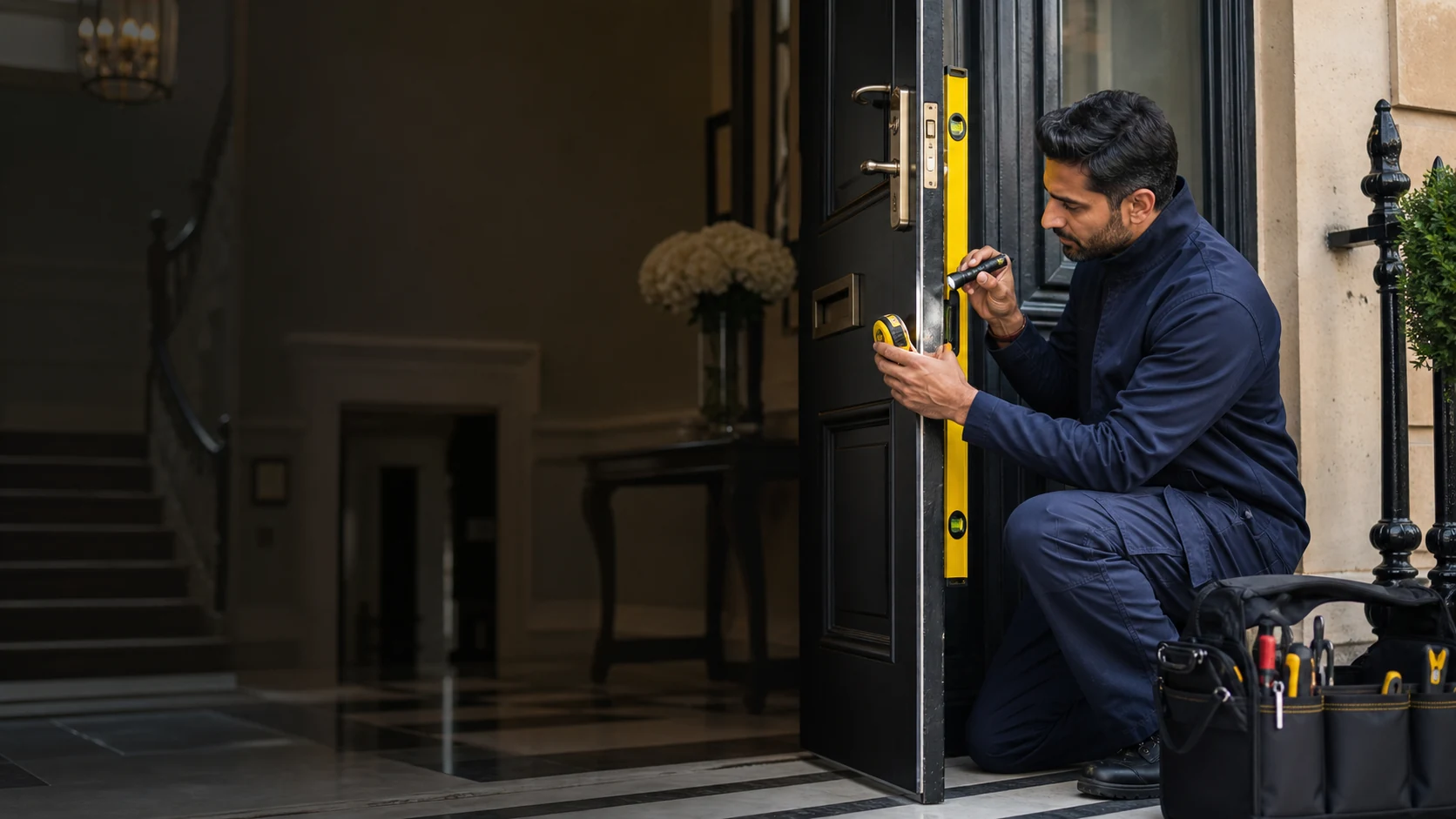
Door state, authority and least-damaging opening options established before entry work.
Alesta · Locksmith services in London
Help with residential lockouts, failed hardware, broken keys and planned lock changes, with urgency, authority, door type and security outcome established first.
☎ Call 020 3608 3976Match the specialist to the situation
A person locked outside needs access triage, while a stiff lock needs diagnosis and a planned security upgrade needs compatible hardware. Broken keys, multipoint mechanisms, timber mortice locks and safes also require different tools, parts and evidence of authority.
We identify the actual task before attendance, using photographs and precise symptoms where possible. Emergency risk, communal ownership, fire-door obligations, access-control wiring and structural door damage are separated so the correct service and permission route can be arranged.
Door state, authority and least-damaging opening options established before entry work.
Cylinder, case, handles, multipoint mechanism and alignment considered together.
Compatible hardware selected around door dimensions, users and stated requirements.
Broken, lost or uncontrolled keys translated into a practical access and security plan.
Common reasons customers call
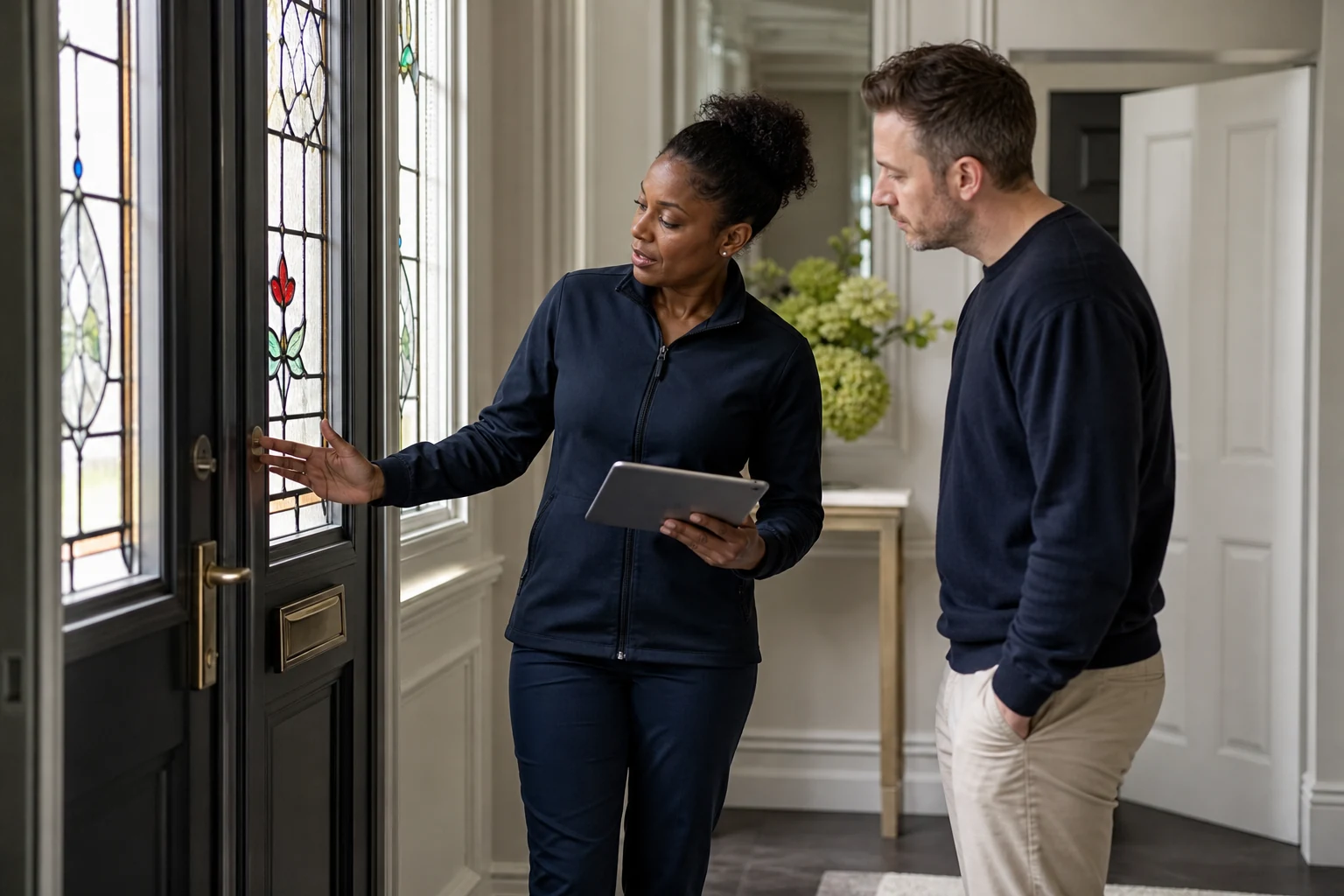
The lock state and immediate safety determine the correct access response.
Stiff, loose or intermittent operation needs diagnosis before complete failure.
Extraction, opening and replacement may be separate stages of the solution.
A move, tenancy or security brief requires compatible hardware and permission.
Why Alesta for locksmith work
Urgent access, repair and planned installation are not treated as interchangeable visits.
Occupancy, ownership, management and communal-door constraints are established.
Door material, measurements and connected mechanisms guide parts and expertise.
The door’s ability to lock after opening or repair is checked and explained.
A situation-led locksmith process
We first establish whether the need is immediate access, a developing fault, a broken key or a planned security change. You provide the address, door material, photographs of both sides and edge hardware where safely possible, and a precise account of what the key, handle and lock do. Urgent calls include questions about vulnerable occupants or hazards. Planned work includes key users, desired access, property permissions and any insurer, lease or fire-door requirement.
The correct authority and service route are confirmed before work. Opening a locked property requires reasonable evidence that the customer has a lawful right to enter. Communal and managed doors can require consent, while electrical access-control faults may need a different discipline. Door damage, high tree access to an alternative entrance or life-threatening emergencies are not improvised locksmith solutions. This triage prevents delay and avoids assigning a visit that cannot lawfully or technically proceed.
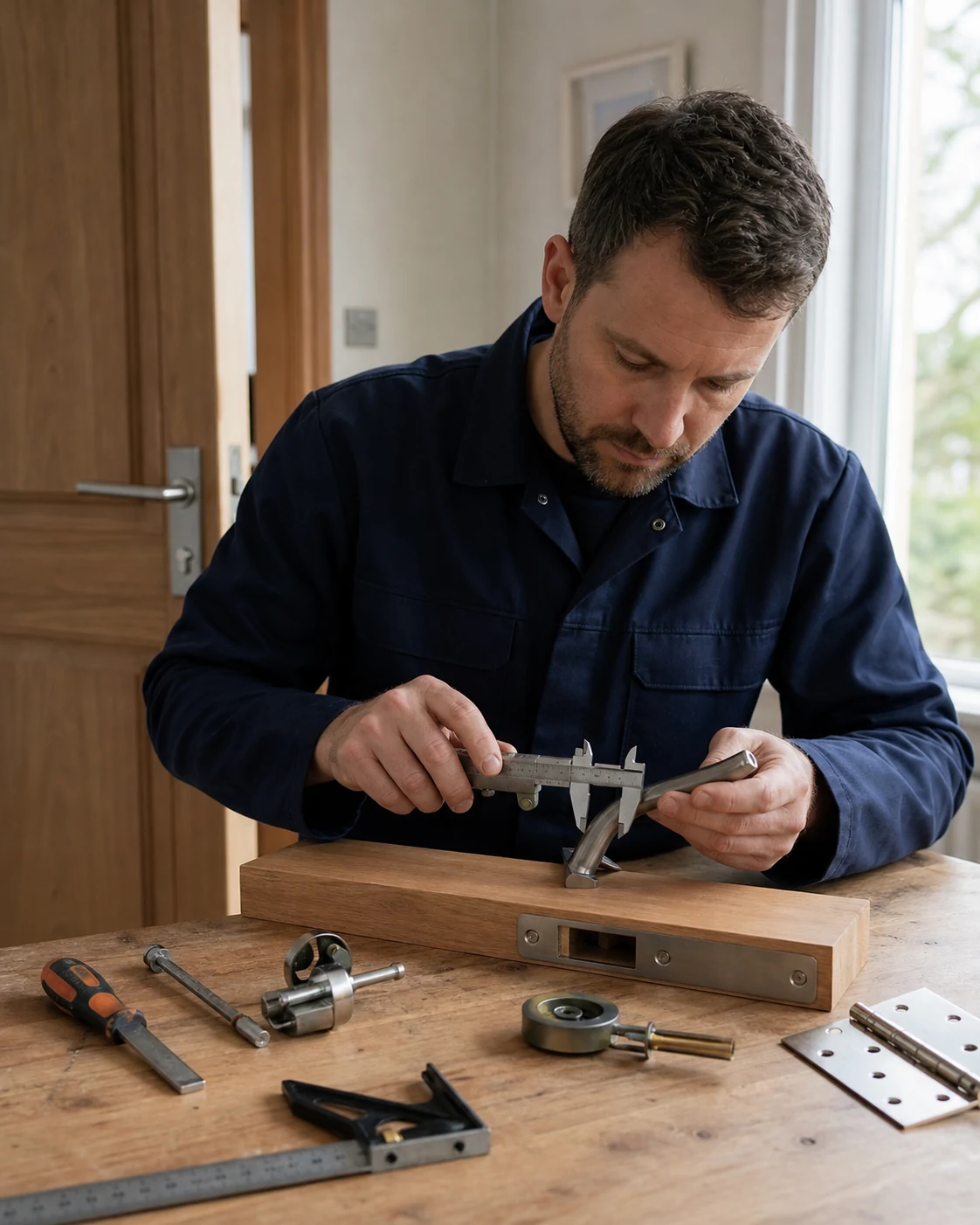
At the property, the locksmith inspects the complete entrance and verifies the reported symptom. Depending on the task, this may involve comparing lock operation open and closed, checking alignment, identifying the cylinder or case, assessing a broken key, or measuring for replacement hardware. Non-destructive entry is considered where viable. Repairs and installations use components matched to the dimensions and system; drilling, conversion or destructive removal is explained before authorisation.
The final stage is based on security, not merely task completion. The locksmith tests normal closing, latching, locking, unlocking, handle return and internal exit as relevant. Supplied keys are counted, temporary arrangements are identified and any related door, frame or obsolete-hardware limitation is documented. Where a specialist follow-on is needed—safe opening, structural door repair or controlled access work—the customer receives a clear route rather than a misleading promise that one locksmith visit covers every security system.
Clear pricing
Cost depends on the service type, urgency, location, door and hardware, opening method, parts, permissions, access and visit timing.
| Service scope | Price | What affects the final price |
|---|---|---|
| Locksmith assessment or planned visit | Quoted after assessment | Task, door type, hardware, location, access and labour |
| Urgent residential access work | Quoted after assessment | Lock state, method, attendance timing, parking and damage risk |
| Repair, replacement or specialist parts | Quoted from findings | Component, compatibility, security specification and fitting |
Pricing context: Photographs and accurate symptoms are needed for price guidance. Attendance timing, destructive entry, specialist hardware and post-entry replacement are confirmed before the scope expands.
How the service works
Share door photos, symptoms, urgency and proof or permission context.
We separate opening, repair, replacement and specialist requirements.
The agreed task is carried out and normal door operation is checked.
Local guides
Choose a region to find your local guide. Please confirm your address and the work required when enquiring.
Locksmith services FAQ
Useful answers about service choice, photographs, authority, damage, parts, preparation and price.
☎ Call 020 3608 3976Choose locked-out help for immediate access, lock repair for unreliable hardware, replacement and installation for a planned change, or send the symptoms so the correct route can be identified.
Send the whole door, both faces of the lock and handles, the door-edge hardware and frame keeps. For multipoint doors, include the full metal strip and any visible markings.
Yes for entry work. The locksmith requires reasonable evidence of occupancy, ownership or authorised management before opening a secured door.
No. Non-destructive methods are considered where suitable, but failed, deadlocked or high-security hardware can require controlled drilling or component replacement.
No vehicle can hold every legacy and specialist component. Good photographs and dimensions improve preparation, but obsolete or unusual hardware may require sourcing and a return visit.
Clear both sides of the door, gather all keys, disclose previous faults or attempted entry, confirm permissions and share any insurer, lease or fire-door requirements.
Service type, urgency, distance, visit timing, lock and door type, opening method, parts, access, parking and follow-on security work influence the quote.