Leak and fault assessment
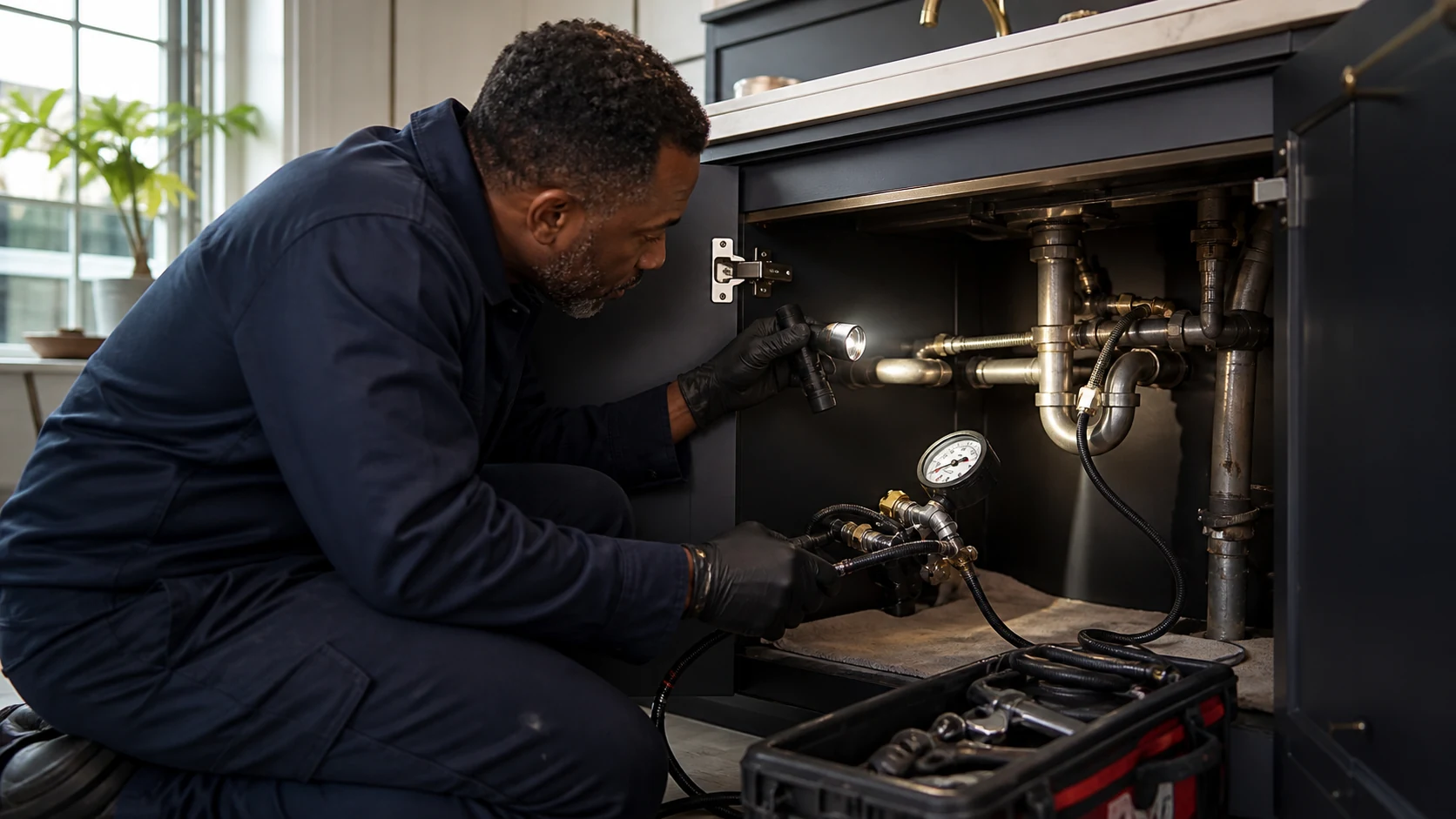
Visible pipework, fittings, valves and symptoms checked before parts are changed.
Alesta · Plumbing services in London
Practical help with leaks, taps, toilets, fittings and planned changes, with water isolation, hidden routes, access and the required outcome confirmed before work starts.
☎ Call 020 3608 3976Source before surface repair
A damp cabinet, stained ceiling or low-pressure tap can result from several fittings or routes. Safe plumbing work begins by locating the likely source, confirming isolation and understanding what must be opened to reach it.
We gather photographs and symptoms first. Boiler internals, gas work, underground drainage, specialist leak detection, electrical faults and final decoration remain separate where the evidence requires another discipline.
Visible pipework, fittings, valves and symptoms checked before parts are changed.
Repairs or replacements matched to connections, dimensions and accessible isolation.
Defined new routes planned around supply, waste, access and surface reinstatement.
Agreed connections checked under normal use and isolation points explained.
Common reasons customers call
The source needs narrowing before cosmetic damage or the nearest fitting is blamed.
Internal parts, supply, scale and compatibility affect the repair route.
Dimensions, connections, isolation and surrounding surfaces must suit the selected product.
New supply and waste positions require an accessible, maintainable route.
Why Alesta for plumbing
Stopcocks and local valves are considered before disassembly begins.
Photographs, dimensions and model details reduce unsuitable replacement assumptions.
Panels, cabinetry, tiles and concealed routes are discussed before opening-up.
Drying, joinery, electrical work and decoration are not concealed inside a plumbing quote.
A controlled plumbing process
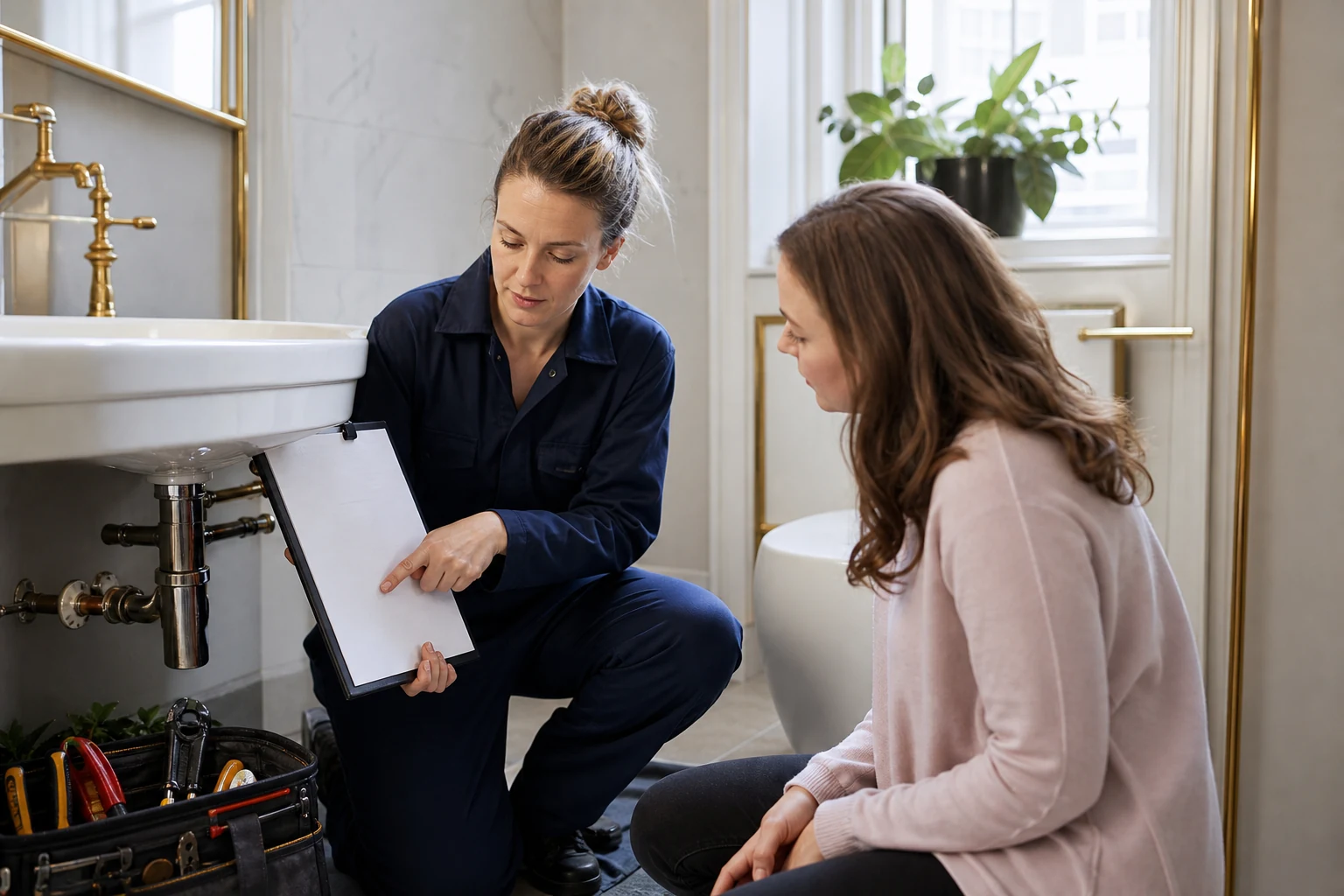
The booking starts with the symptom and water condition. We ask where moisture appears, when it occurs, whether pressure has changed, which fixture is affected and whether the supply can be isolated. Photographs of the wider area, fittings, visible pipework and product labels help identify likely materials. For active uncontrolled leaks, customers are advised to isolate water where safely possible and protect the area; electrical danger or structural flooding requires the relevant emergency response.
On arrival, the plumber confirms the scope and traces the issue through accessible checks. A leak may be tested under use, valves and connections inspected, and the relationship between supply, waste and nearby appliances considered. Panels or contents are removed only where agreed. Concealed leaks can require staged access or specialist detection, and no finished surface is opened simply on guesswork. The plumber explains the evidence and repair route before replacing components.
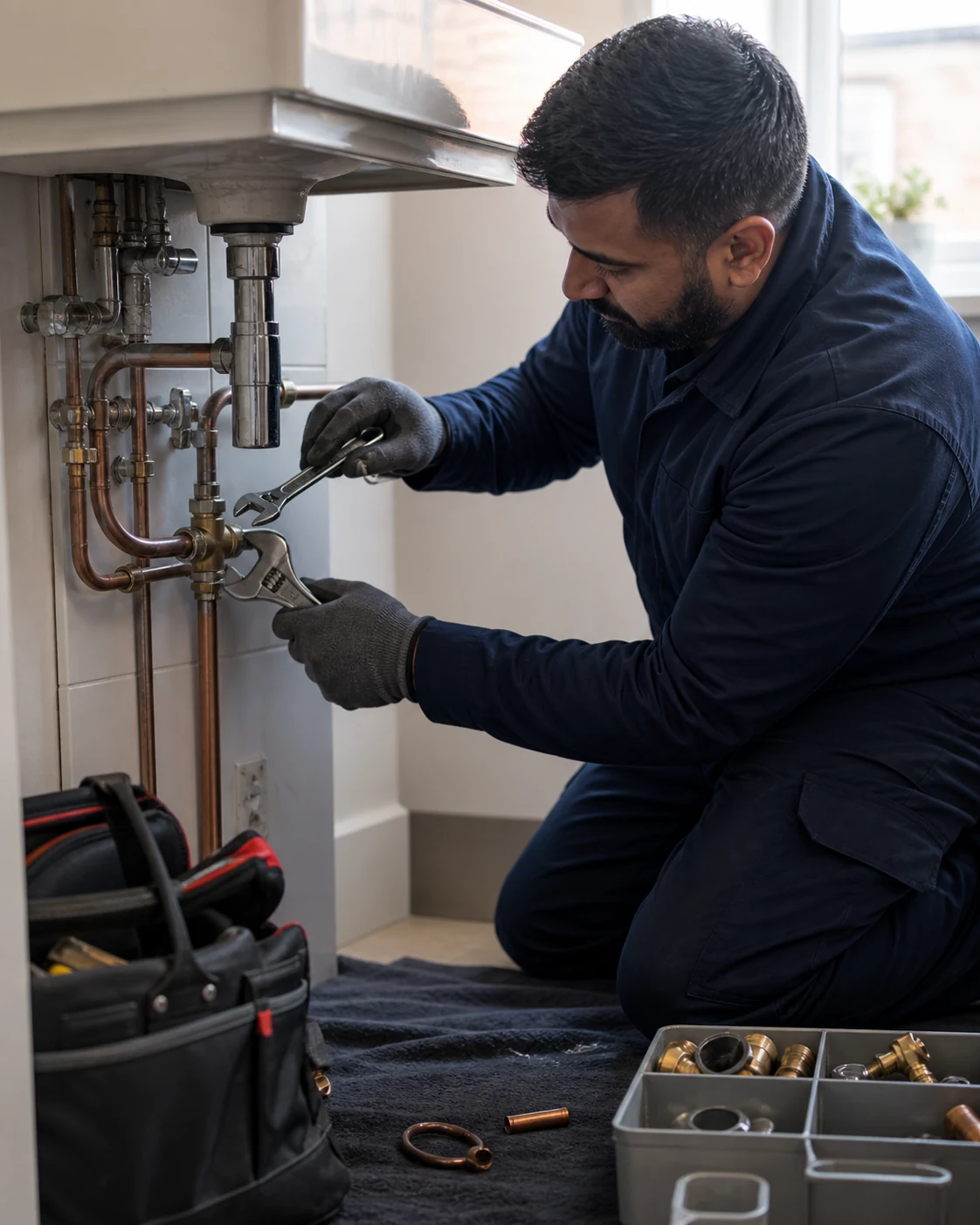
Agreed repairs or installations use compatible pipes, seals, valves, fittings and supports. Customer-supplied fixtures are checked for dimensions, pressure requirements and connection positions before fitting. New routes consider falls, isolation and future access. If corrosion, damaged cabinetry, failed waterproofing or an unsuitable waste arrangement prevents a reliable result, the limitation is shown and any additional scope authorised before work proceeds.
Connections are checked under appropriate normal operation, and repaired areas are observed for leakage where access permits. The plumber explains isolation, use and any curing or follow-up requirement. Wet finishes, hidden damage and downstream drainage cannot be certified by a brief visible check, so limitations remain documented. A sound handover distinguishes the repaired plumbing component from drying, decoration and other property work still required.
Clear pricing
Cost depends on fault type, diagnosis time, isolation, access, pipe material, parts, opening-up and any return visit.
| Service scope | Price | What affects the final price |
|---|---|---|
| Plumbing assessment or minor repair | Quoted after assessment | Symptom, access, isolation, labour and standard parts |
| Fixture replacement or defined alteration | Quoted after assessment | Product, dimensions, connections, waste route and testing |
| Concealed or complex plumbing fault | Quoted from findings | Investigation, opening-up, specialist access and reinstatement |
Pricing context: Current photographs and accurate symptoms are required. Emergency mitigation, specialist leak detection, building repair and decoration are separate unless listed.
How the service works
Share photos, timing, affected fixtures and stopcock or valve access.
The plumber confirms the likely source, access and compatible parts.
Connections are checked and any limitation or follow-on work is documented.
Local guides
Choose a region to find your local guide. Please confirm your address and the work required when enquiring.
Plumbing services FAQ
Useful answers about leaks, isolation, access, supplied fixtures, testing, preparation and pricing.
☎ Call 020 3608 3976If safe, turn off the relevant local valve or main stopcock, contain water and move vulnerable items. If water is near electrics or flooding is severe, prioritise safety and the relevant emergency response.
Send the wider area, visible moisture, pipe connections, valves, fixture and any model label. Do not dismantle pressurised or concealed plumbing yourself.
No. Accessible testing may narrow the source, but hidden routes can require staged opening-up or specialist detection before a repair is possible.
Yes, after compatibility is checked. Dimensions, connections, pressure, waste position and required accessories must suit the existing installation.
Only when stated. Access panels, tiles, cabinetry, plastering, drying and decoration are often separate from the plumbing repair.
The repaired or installed component is checked under appropriate normal operation and observed for leakage where accessible. The exact test depends on the scope.
Diagnosis time, isolation, access, pipe material, parts, fixture compatibility, opening-up and return visits all influence the quote.