Photographic load assessment
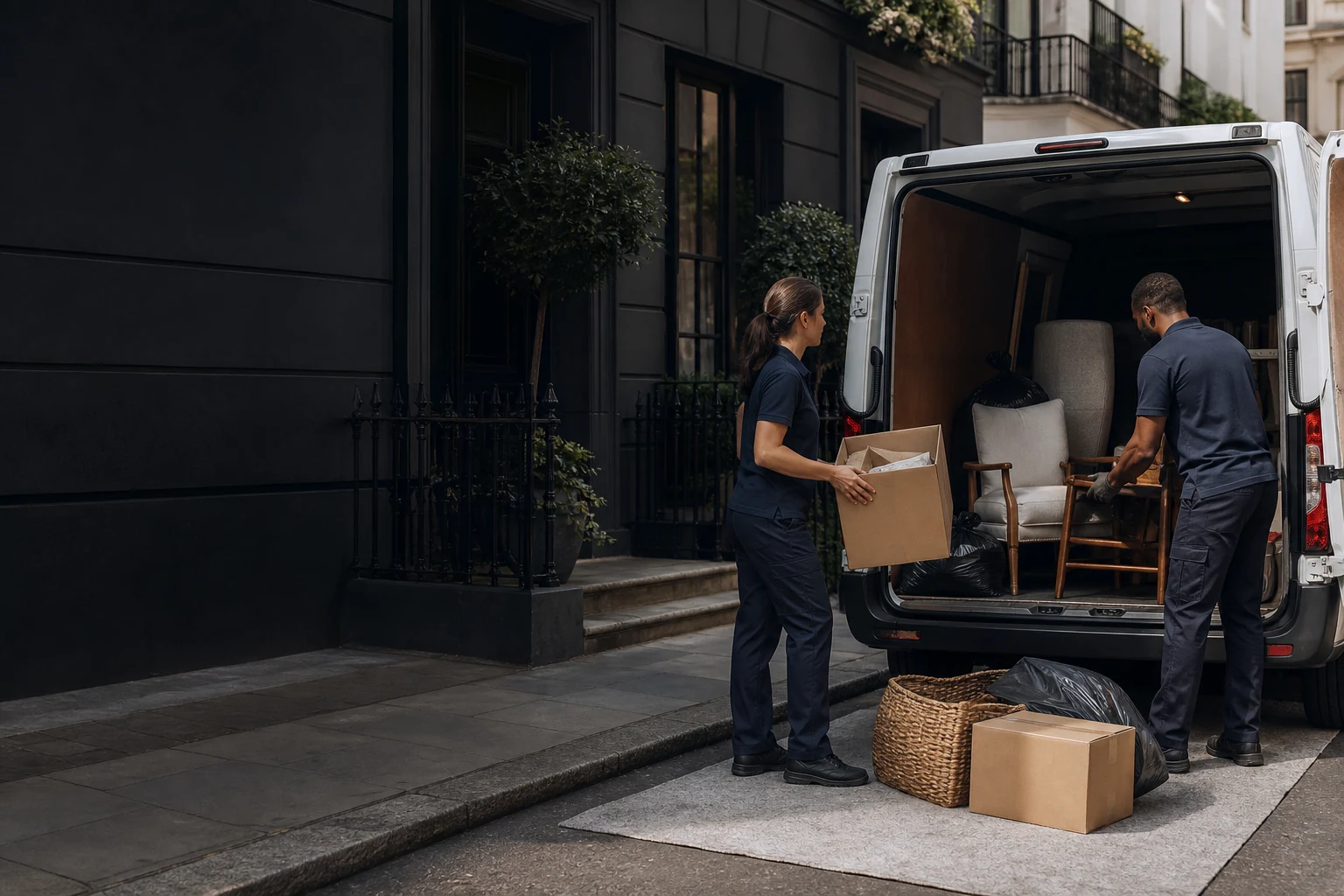
Whole-load and close images help estimate volume, weight and material.
Alesta · Waste removal in London
Responsible collection planned from photographs, material type, volume, access and loading requirements, with restricted and hazardous waste identified first.
☎ Call 020 3608 3976Material before vehicle
Furniture, bagged household waste, green material and renovation debris have different weight, handling and disposal routes. A few photographs and honest dimensions prevent the wrong vehicle or unsafe loading plan.
We establish ownership, access, floors, parking and material first. Hazardous substances, asbestos, chemicals, gas cylinders, clinical waste, unknown liquids and specialist electrical items are not accepted as ordinary mixed waste.
Whole-load and close images help estimate volume, weight and material.
Stairs, lifts, distance, parking and dismantling affect crew and loading time.
Only listed, authorised items are removed from the agreed area.
Reusable, recyclable and residual material is directed according to practical options.
Common reasons customers call
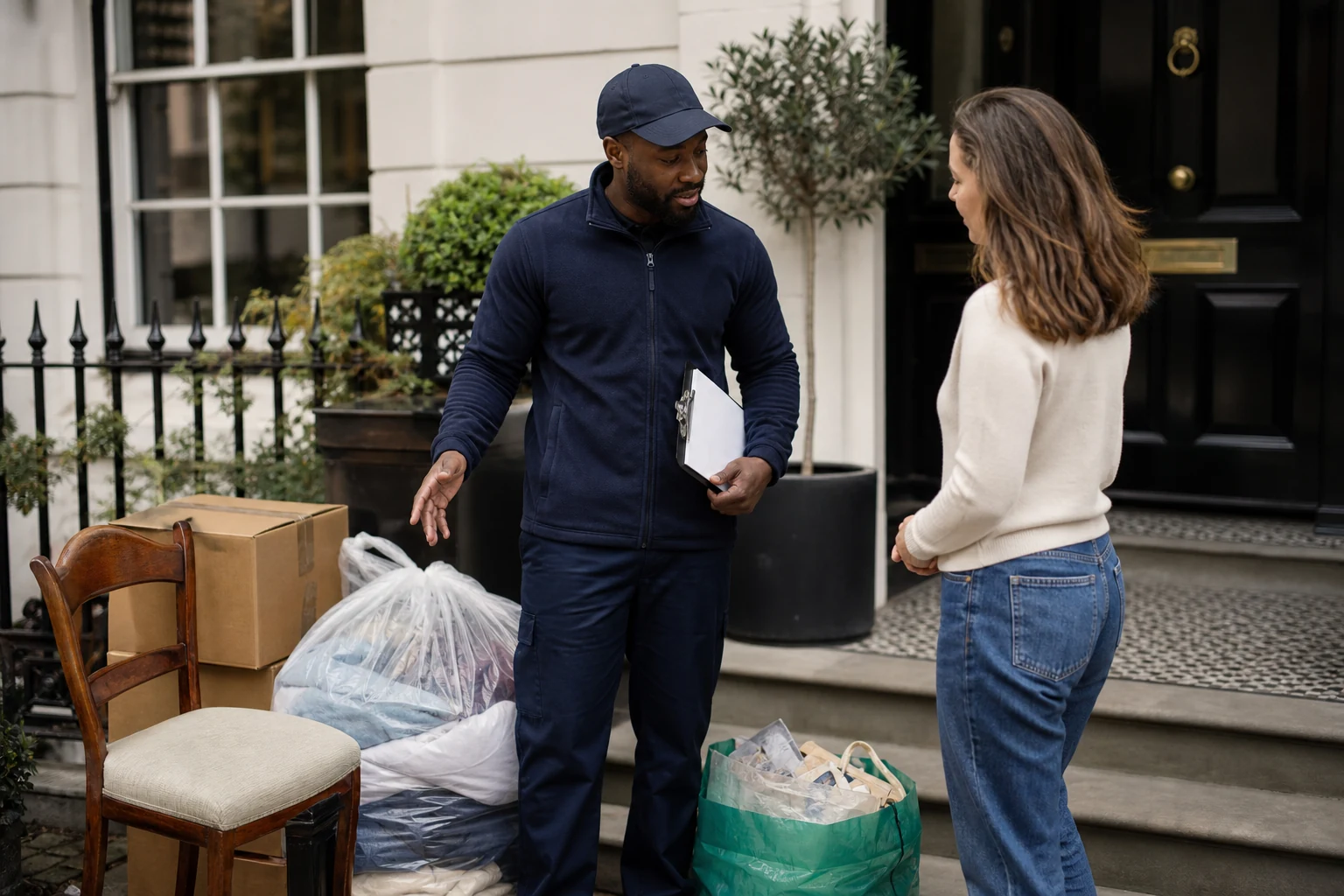
Furniture and ordinary contents need a defined removal list.
Bagged green material and agreed outdoor items need collection.
Large objects need safe carrying and vehicle capacity.
Materials need identifying before a lawful route can be selected.
Why Alesta for waste removal
Photos and measurements support a realistic vehicle and quote.
Unsafe or regulated material is separated before attendance.
Crew, stairs, lifting and dismantling are considered.
Extra items revealed on site are assessed before loading.
A documented collection process
Planning begins with photographs showing the complete load and close views of uncertain materials. We ask for approximate dimensions, bag count, heavy pieces, floor, lift, internal carrying route and parking. The customer confirms ownership and authority to dispose. Paints, solvents, asbestos, batteries, refrigerants, gas cylinders, fuel, clinical waste and unidentified containers must be declared because they cannot be hidden within an ordinary collection.
On arrival, the team compares the load with the quotation and checks access and lifting risk. Items not listed, materially greater volume or unexpected heavy construction material can change capacity and cost. The collection area is confirmed so possessions meant to remain are not taken. Furniture is dismantled only when agreed and safe; fixed fittings, plumbing, electrical disconnection and structural removal require the appropriate separate trade.
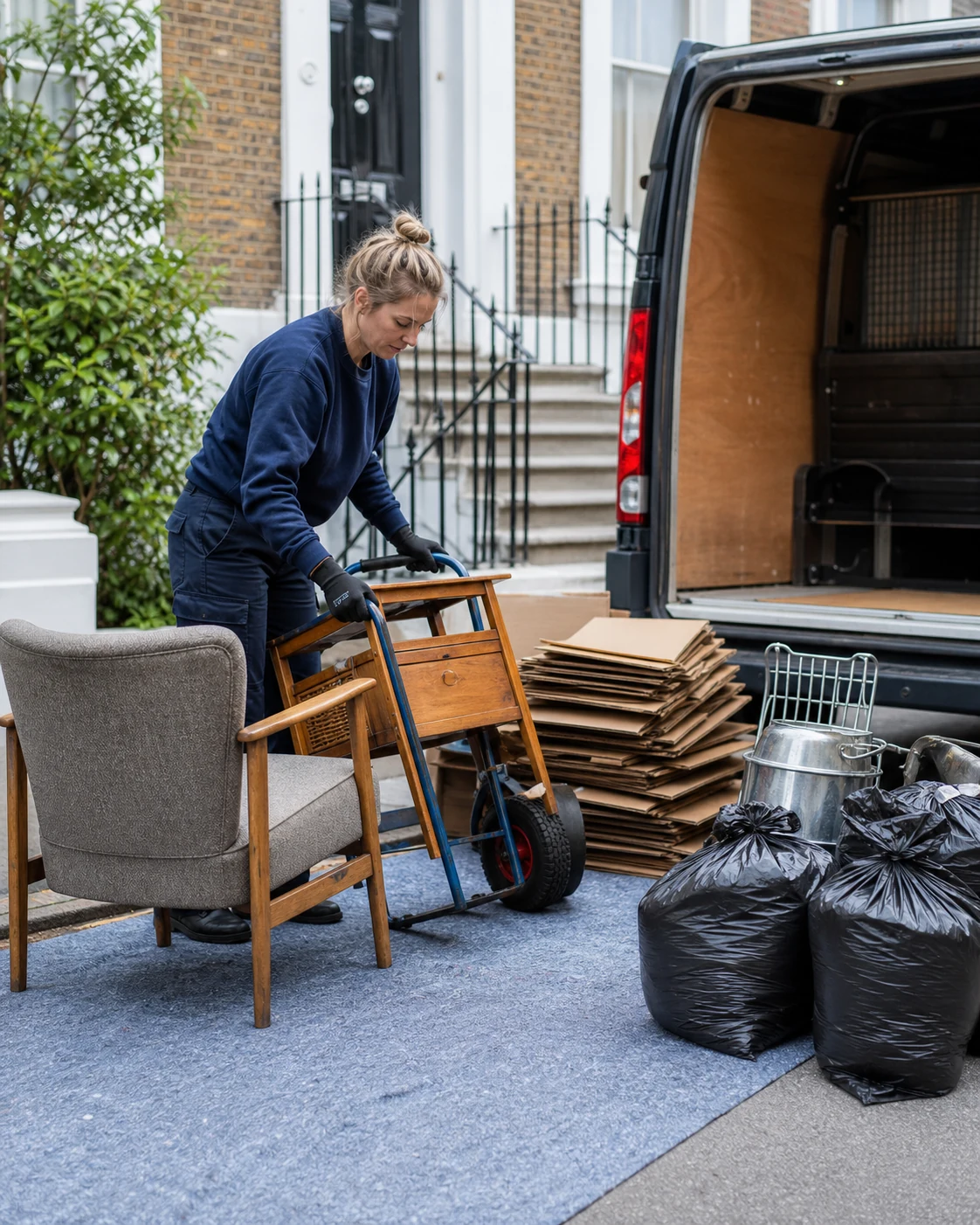
Loading follows weight and stability rather than visual convenience. Heavy items are handled with suitable people and equipment, and bags that split or contain sharp objects may need repacking. Reusable and recyclable material is separated where practical, while regulated streams follow appropriate routes. A collection vehicle cannot be overloaded, so excess material may need a revised load or additional journey rather than unsafe compression.
The agreed area receives a practical sweep after included items are removed, but deep cleaning, stain treatment and repair are separate. The team records any excluded material and explains why it could not enter the load. Final disposal depends on actual material and receiving facilities, not marketing claims that everything is recycled. The handover confirms completed volume, additional authorisation and any specialist collection still required.
Clear pricing
Cost depends on volume, weight, material, crew, access, parking, dismantling and disposal charges.
| Service scope | Price | What affects the final price |
|---|---|---|
| Small household collection | Quoted after assessment | Items, volume, access and material |
| Bulky or mixed load | Quoted from photographs | Weight, crew, vehicle, sorting and disposal |
| Large clearance load | Detailed quotation | Multiple areas, journeys, labour and restricted streams |
Pricing context: Clear photographs are required. Hazardous, specialist and undeclared material is excluded until an appropriate route is confirmed.
How the service works
Send material, dimensions, access, floor and parking.
We define included volume, labour and restricted streams.
The team removes authorised items and reports any exclusion.
Local guides
Choose a region to find your local guide. Please confirm your address and the work required when enquiring.
Waste removal FAQ
Useful answers about photographs, hazardous waste, access, extras, dismantling, reuse and pricing.
☎ Call 020 3608 3976Show the whole load from several angles, close views of materials, large items and the route including stairs or gates.
Not as ordinary waste. Declare them first so a lawful specialist route can be assessed.
Not necessarily. Internal collection can be quoted when floors, lifts, stairs and carrying distance are disclosed.
Only after volume, weight, capacity and price are reassessed. The team cannot overload the vehicle.
Simple dismantling can be included when agreed. Fixed, plumbed, electrical or structural items require separate work.
No responsible provider can promise that. Reuse and recycling depend on condition, material and available receiving facilities.
Volume, weight, material, access, crew, parking, dismantling, journeys and disposal charges affect the quote.