
Fridge Making a Loud Noise: Match the Sound to the Likely Component
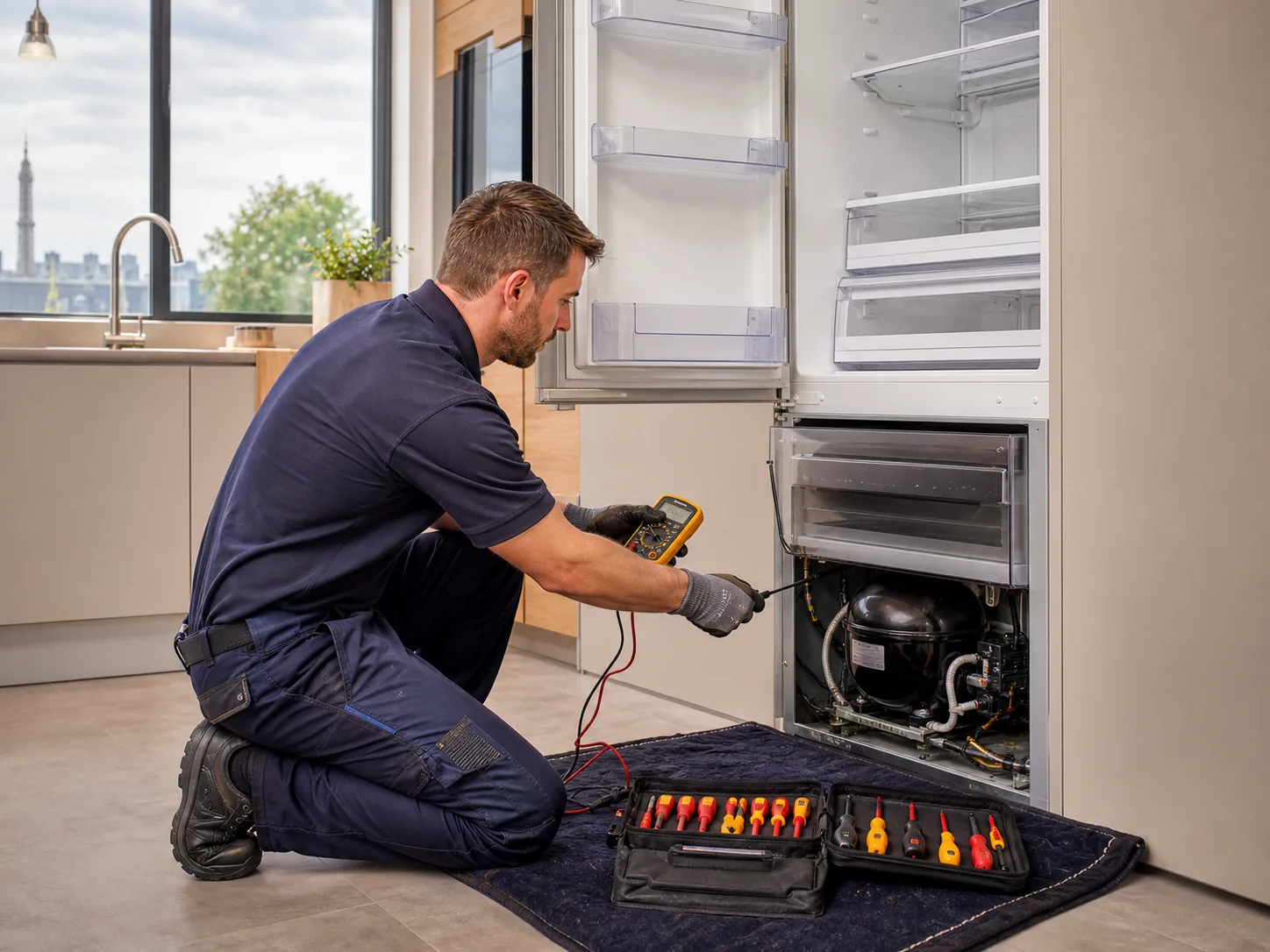
A fridge that has suddenly become loud is worth investigating, but the sound gives the best clue only when you note where it comes from and when it starts. A brief hum followed by a click may involve the compressor start sequence; scraping or ticking from inside the freezer can be a fan touching ice; a rattle often comes from a loose tray, pipe or cabinet contact. Switch the appliance off and seek help promptly if the noise comes with a burning smell, smoke, repeated electrical tripping, loss of cooling or a very hot plug.
Do not pull a heavy fridge out alone or remove its rear cover. Start with the doors closed, listen from the front and sides, and write down whether the sound coincides with the compressor starting, a door opening, an ice-making cycle or the appliance stopping.
Build a sound record before moving anything
Record twenty or thirty seconds on your phone and say which compartment is cold, which door is open and whether the sound changes. Note the model number, displayed temperature and any warning symbol. A recording will not diagnose a bearing or relay, but it lets an engineer hear an intermittent fault that may be quiet during the visit.
Check actual temperatures with an appliance thermometer. A noisy but correctly cooling fridge is a different call-out from one warming rapidly. Keep perishable food safe and follow Food Standards Agency guidance if chilled food has been above its safe temperature.
A rattle that stops when you touch the cabinet
Light vibration can travel through a loose shelf, bottle, drip tray or adjoining cupboard. Without moving the appliance, remove items touching internal walls and make sure shelves and drawers sit correctly. Check that nothing on top of the fridge is vibrating. Press a nearby cabinet, not the fridge’s electrical or mechanical parts, and listen for a change.
If the cabinet rocks, inspect the floor from a safe position. Levelling feet and installation clearances are model-specific. Where the noise comes from loose surrounding cabinetry rather than the appliance, help levelling or securing cabinetry may be the right trade. An integrated fridge needs cabinetry and ventilation checked together; wedging cardboard underneath can obstruct airflow or create instability.

Scraping or rapid ticking inside the freezer
A circulation fan can touch frost, packaging or a damaged shroud. The sound may stop when the freezer door opens because many models pause the fan. Do not hold a door switch in, put fingers through a vent or chip ice with a tool.
Look for visible frost on the internal rear panel and make sure food is not blocking vents. A full manual defrost may temporarily remove ice, but only follow the manufacturer’s process and protect food elsewhere. If frost and noise return, the defrost system, fan or door seal needs diagnosis through a fridge and freezer repair appointment.
Buzzing: normal work or a struggling component?
Compressors and fans hum while running. The important change is volume, duration and outcome. A new harsh buzz with poor cooling matters more than the familiar low hum of a stable appliance. Listen for a repeated sequence: buzz, click, silence, then another attempt. That can mean the compressor is trying to start, but it does not identify which electrical or mechanical component has failed.
An ice-maker water valve can also buzz briefly when filling. If the ice-maker is enabled without a connected water supply, consult the manual and switch that function off correctly.
A single click is not the same as repeated clicking
Controls, dampers and relays can click during normal operation. Repeated clicks every few minutes, especially with rising temperature, suggest unsuccessful cycling. Photograph the display and avoid repeated power resets. Rapid off-on switching can make diagnosis harder and may stress the compressor.
Gurgles, trickles and pops
Refrigerant movement, defrost water and thermal expansion can make short gurgling or popping sounds. They are often normal when the appliance starts or stops. Investigate when the sound is new, continuous, accompanied by a leak or combined with a temperature fault. Water under the cabinet may come from a blocked defrost drain, supply line or unrelated plumbing; isolate only what you can reach safely.
The rear-of-cabinet noise you should not chase
Fans, compressor mounts, pipework and a drain pan sit behind or below many appliances. Do not remove covers. If the fridge was recently moved, tell the engineer whether it was transported upright, when it was switched on and whether the noise started immediately. A crushed cable, trapped water line or cabinet contact needs safe access.
For uncertain multi-component symptoms, the broader domestic appliance repair service can arrange model-specific diagnosis rather than a guessed part order.
Clean only the areas the manual identifies
Dust around an accessible front grille can worsen heat rejection, but cleaning instructions vary. Disconnect the appliance only if the plug is cool, undamaged and safely reachable. Never spray cleaner near electrics or use a metal tool around coils. Built-in ventilation slots should remain clear.
Information that shortens the repair visit
- Make, model and serial number
- Actual fridge and freezer temperatures
- Sound recording and location
- Whether opening either door stops the noise
- Frost, water or error symbols
- Recent moving, power cut or kitchen work
- Whether cooling performance changed
Ask the engineer to identify the sound source before approving parts. A fan, damper, loose drain pan and compressor fault carry very different repair implications.
When replacement enters the conversation
Do not replace a fridge because it made one unfamiliar sound. Consider the confirmed fault, age, parts availability, energy performance, repair warranty and overall cabinet condition. A replaceable fan in an otherwise sound appliance is not the same decision as a sealed-system fault plus failing door seals.
Door seals can make the compressor work harder
A torn, dirty or distorted gasket lets warm air enter, increasing run time and frost. Inspect it in daylight and clean only with the method in the manual. A sheet of paper that pulls free easily at one point is a clue, not a definitive pressure test: hinge alignment and cabinet twist can create the same local gap.
Do not heat the seal with a hairdryer or bend hinges to improve contact. Give the engineer a photograph of the gap and say whether condensation or frost develops nearby. Correcting the seal or alignment may remove both the temperature problem and the new long-running hum.
Keep the appliance running only when it is safe
If temperatures are stable and there is no heat, smell, smoke, trip or scraping contact, keeping doors closed while awaiting an appointment may protect food. If cooling is failing, move food promptly. If electrics or the compressor area appear unsafe, disconnect only at a cool accessible plug; otherwise isolate the circuit safely and seek urgent advice.
The strongest diagnosis you can provide at home is a pattern: sound, location, timing and temperature. Stop at the cabinet boundary. Those four observations are more valuable than naming a compressor from a recording.
