Room-by-room clearance
Listed furniture and household contents removed from the agreed rooms and access route.

Alesta · House clearance in London
Room-by-room clearance planned around what stays, what leaves, access, lifting requirements, vehicle volume and appropriate disposal routes.
☎ Call 020 3608 3976Inventory before vehicle space
Furniture, boxed belongings, electrical items, loose waste and restricted materials cannot all be treated as one anonymous load. We request room-by-room photographs and a clear keep, remove, donate or undecided brief so labour, protection, dismantling and vehicle volume can be planned realistically.
House clearance is distinct from deep cleaning, removals into a new home, storage, probate valuation and hazardous-waste handling. Sensitive circumstances are approached respectfully, but legal authority, ownership decisions and the identification of important documents remain with the customer or authorised representative.
Listed furniture and household contents removed from the agreed rooms and access route.
Suitable furniture separated for safe movement where the construction and access require it.
Team, carrying route and vehicle space matched to item volume and weight.
Reusable, recyclable and general items separated where practical and agreed.

Common reasons customers call
Remaining contents must leave before cleaning, photography, works or key handover.
Rooms contain mixed belongings that require clear authority and careful decisions.
Larger pieces and boxes need removal after retained items have been identified.
Access and lifting must be restored without assuming every object is waste.
Why Alesta for house clearance
Photos and lists define what leaves and protect anything that must remain.
Stairs, lifts, doorways, parking and dismantling affect the team and method.
Hazardous, confidential or specialist items are identified rather than mixed into the load.
Agreed rooms are reviewed before departure so omissions can be addressed immediately.
A room-by-room clearance plan
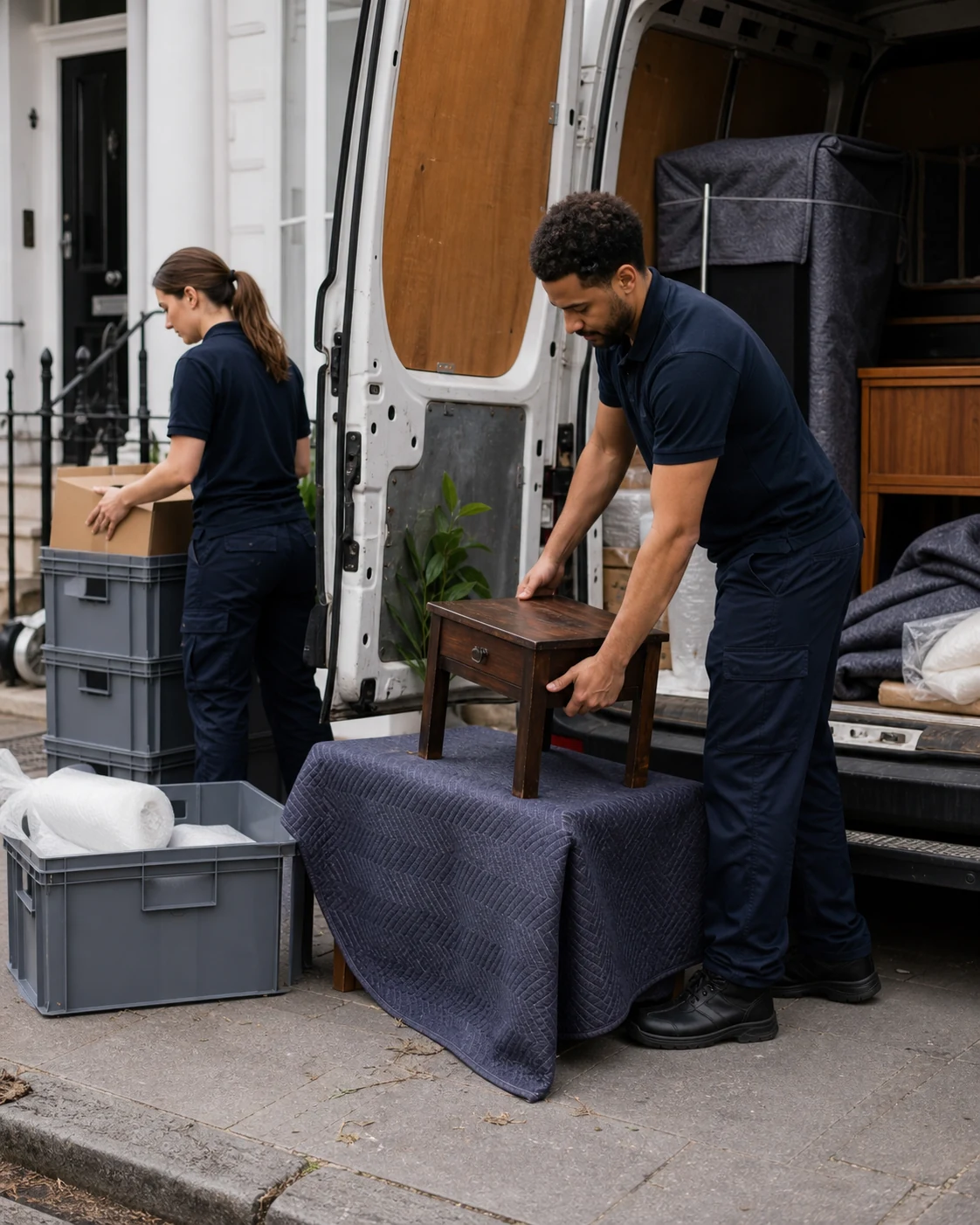
Planning starts with photographs of every affected room, cupboard area, outbuilding and access route. We ask which items must stay, which are being moved elsewhere and which are approved for removal. Large furniture, appliances, books, liquids, garden items and existing bagged waste are listed separately because weight and disposal routes differ. The customer must have authority to instruct the clearance and should secure valuables, medication, keys, personal records and irreplaceable documents before the visit.
The coordinator estimates labour, vehicle volume, carrying distance and basic dismantling from the inventory. Parking restrictions, stairs, lift bookings, narrow doors and shared corridors are confirmed. On arrival, the team walks through the marked scope and protects vulnerable routes as agreed. Any unlabelled or uncertain item is paused rather than discarded. Additional contents revealed behind furniture or inside storage are shown before the load changes.
Items are removed in an order that preserves safe access and uses vehicle space efficiently. Suitable furniture may be dismantled, while fragile, unusually heavy, fixed or specialist objects require separate planning. Reusable and recyclable materials are separated where practical within the agreed route. Paint, chemicals, gas cylinders, asbestos, clinical waste, food contamination, confidential archives and other restricted materials cannot be accepted as ordinary household clearance.
After the approved contents leave, the team checks accessible rooms against the brief and completes a practical sweep of the immediate carrying route where included. House clearance does not automatically include deep cleaning, fixture removal, repairs or decoration. The customer or representative reviews retained items and confirms close-out. The goal is an accountable emptying process with fewer last-minute surprises, not indiscriminate removal based on assumptions.
Clear pricing
Cost depends on item volume and weight, labour, dismantling, stairs, parking, vehicle loads and the disposal categories involved.
| Service scope | Price | What affects the final price |
|---|---|---|
| Small room or partial clearance | Quoted from photographs | Item list, carrying route, labour and vehicle volume |
| Multi-room house clearance | Quoted after inventory review | Rooms, furniture, appliances, boxes, team and loads |
| Complex or restricted-access clearance | Site-specific quotation | Stairs, dismantling, heavy items, parking and specialist routing |
Pricing context: An accurate quote requires room-by-room photographs and an approved removal inventory. Additional loads, restricted materials and specialist lifting are not assumed inside a general clearance price.
How the service works
Send room photos and identify retained, moved, removed and uncertain items.
We confirm team, dismantling, parking, restrictions and disposal routes.
Approved items leave in order and the agreed scope is checked before close-out.
House clearance FAQ
Useful answers about inventories, sensitive items, dismantling, disposal, preparation and pricing.
☎ Call 020 3608 3976Remove valuable small items where possible and label retained furniture clearly. Provide a written room-by-room list and nominate one authorised decision-maker.
Yes, with a clear authorised brief and respectful handling. The family or legal representative must decide ownership, retention and any valuation requirements before removal.
Basic dismantling may be included when agreed from photographs. Fixed, built-in, fragile or complex furniture can require a different scope or specialist.
No valuation or purchase should be assumed. Arrange specialist appraisal before clearance for any item that may have financial, historic or personal value.
Examples include asbestos, chemicals, gas cylinders, clinical waste, contaminated material and some confidential or specialist items. Disclose them before booking.
Only a specifically listed practical tidy is included. Deep cleaning, end of tenancy cleaning, repairs and decoration are separate services.
Volume, weight, room count, stairs, lift and parking access, dismantling, team size, vehicle loads and disposal categories determine the quote.