 020 3608 3976
MODEL · WATER · DRAIN · SPIN
Washing Machine Repairs in Fulham
The model, cycle behaviour, water route, drum action and installation guide diagnosis in Fulham.
Washer dryer washes but will not dry assessed in FulhamMachine connected to a standpipe service planned for FulhamDrum bearing or support wear considered in the Fulham diagnosisEvidence around the reported leak recorded before parts are considered in Fulham
Call 020 3608 3976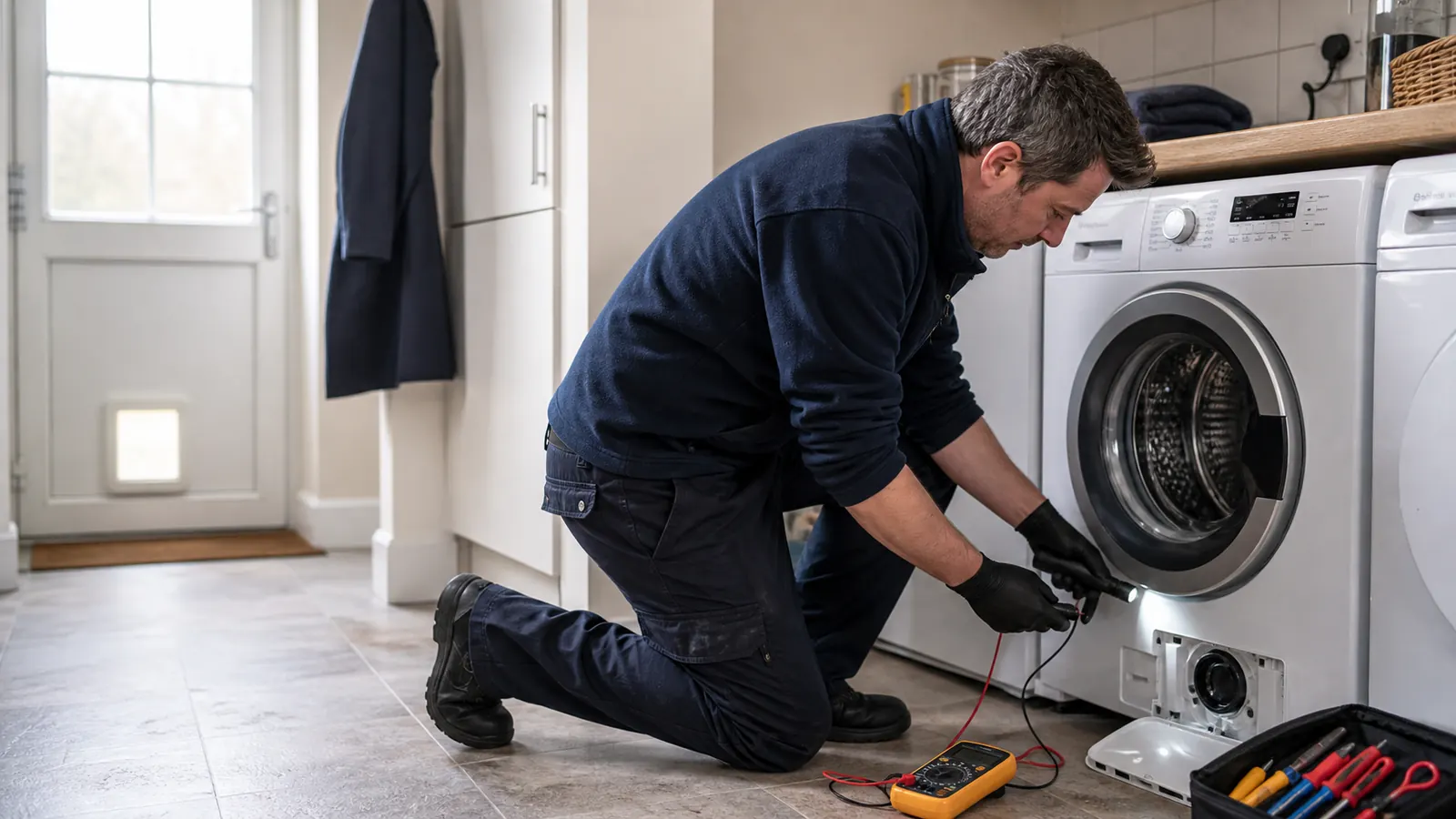
A worn drive component identified and quoted in Fulham
The service objective is A worn drive component identified and quoted. A useful handover explains whether the cause sat in the appliance, its hose arrangement or the connected waste. It also records any condition that could not be altered within the booking. That distinction keeps the repair scope clear for the Fulham property.
Send the model label, error code and a description of the water level before the visit. Keep the machine off if discharge is overflowing, water has reached electrics or a burning smell is present. Leave the drum empty and make the filter area, nearby valves and waste connection reasonably accessible.
The starting point for this Fulham call is a machine connected to a standpipe that washer dryer washes but will not dry. Drainage complaints are mapped against the exact programme stage, because water left after rinsing does not point to the same route as a machine that never begins pumping. The rating plate and displayed code identify the correct technical information before attendance.
A drain investigation follows water from the drum to the property waste. The accessible filter, pump chamber, outlet hose and standpipe or sink connection are considered in order. This prevents a restricted building connection being mistaken for drum bearing or support wear. Fixed drain alterations sit outside an appliance repair unless they are separately agreed.
Retained water also affects the door and spin. The control normally requires a safe water level before releasing the interlock or accelerating the drum. For that reason, forcing the door or repeatedly selecting spin can obscure useful evidence. The Fulham diagnosis records what the machine actually completed before it stopped.
The practical test selected here is evidence around the reported leak. A limited cycle is used only when discharge can be observed without risking overflow. The engineer listens to pump behaviour, checks the hose route and compares the control response with the physical movement of water. One symptom is never used as automatic proof of a failed pump.
Installation height and hose position matter. A hose pushed too far into a standpipe, a kink behind cabinetry or a shared sink connection can change drainage performance. These external conditions are documented separately from the machine connected to a standpipe. Access photographs help show whether the machine can be moved without damaging flooring or connections.
When evidence supports an internal repair, the component is matched to the full production details rather than appearance alone. The machine is isolated before access, restored after the approved work and checked for leaks. The relevant sequence is then repeated to confirm that water leaves through the intended route.
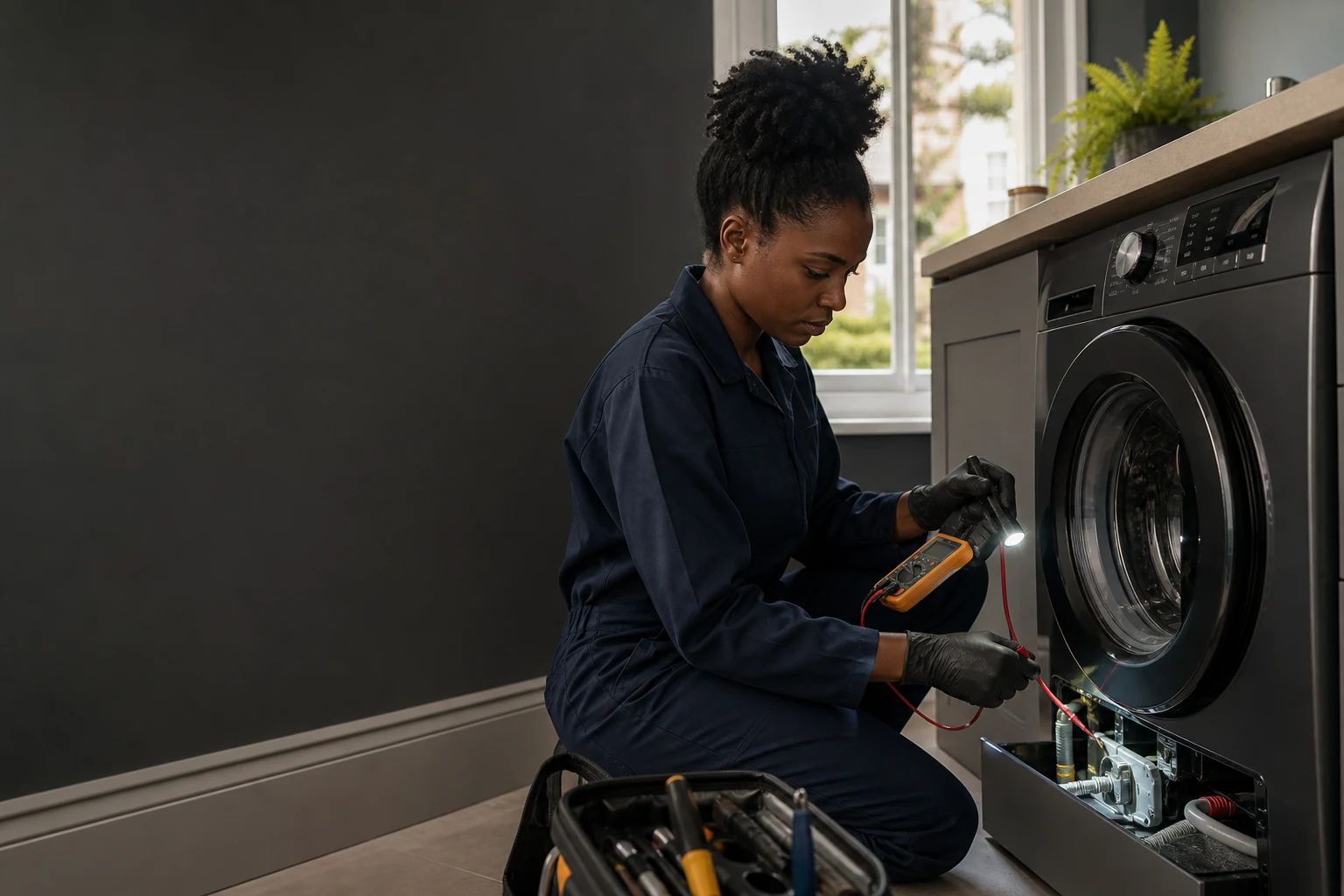
DIAGNOSIS BEFORE PARTS
Evidence around the reported leak
Fill, door lock, drum, heating, drainage, spin and drying behaviour are checked according to the exact model. Parts are considered only after the evidence and appliance details agree.
Washing machine and washer dryer repair prices
| Service scope | Price | Pricing factors |
|---|---|---|
| Diagnostic visit | Quoted after assessment | Model, symptoms, access, test time and location |
| Repair with compatible part | Quoted after diagnosis | Component, labour, appliance condition and testing |
| Complex mechanical or washer dryer fault | Detailed quotation | Assemblies, access, parts route and repeat visit |
Pricing context: The exact model and fault history are required. Final repair cost follows diagnosis; plumbing, drains, cabinetry and fixed wiring are separate unless quoted.
Service information for Fulham
| Area | Fulham |
|---|---|
| Declared request | washer dryer washes but will not dry |
| Laundry appliance type | machine connected to a standpipe |
| Likely fault area | drum bearing or support wear |
| Key check | evidence around the reported leak |
| Typical sequence | Record model, inspect installation, trace cycle fault, quote, repair, test and hand over |
| Pricing basis | Appliance type, model, access, diagnosis, component, labour and testing |
| Preparation | Send rating plate, model, error code, cycle behaviour, leak timing and access |
Washing machine and washer dryer repair questions for Fulham
Can the repair be completed on the first visit in Fulham?
Sometimes, but diagnosis may be needed before the exact model-matched component can be ordered.
How is an approved repair tested in Fulham?
Relevant fill, tumble, heat, drain, spin, drying and control functions are checked through a suitable programme.
Should I clean the pump filter myself in Fulham?
Only follow the manufacturer instructions when safe; retained water can escape and a stuck filter should not be forced.
Should I use a machine with a burning smell in Fulham?
No. Stop the programme, isolate safely if possible and arrange prompt assessment.
Can an integrated washing machine be accessed in Fulham?
Usually, but plinths, doors, flooring, hoses and cabinetry can affect safe removal and should be shown before booking.
Will you supply a compatible replacement part in Fulham?
Parts are confirmed from the complete model and diagnosis before the repair quotation is approved.
Related appliance repairs and nearby coverage
Choose the page matching the appliance address, or use the main repair pages for a broader enquiry.
01Model
Record the exact model and fault timing.
02Observe
Trace the reported programme stage.
03Diagnose
Check the connected water, drum and control systems.
04Repair + test
Approve, repair and verify.
Show the model, connections and installation in Fulham
Send the rating plate, model, error code, cycle behaviour, leak timing and clear access photographs. Call 020 3608 3976 · Request a quote
