 020 3608 3976
SOFA CLEANING · PECKHAM
A Clearer, Safer Sofa Clean for Peckham Homes
The useful first step is to identify the fabric, seat count, cushion style and priority marks before choosing extraction, low-moisture or dry treatment.
- Label and hidden colour test before broad treatment in Peckham
- Crevices, seams and cushion edges included in inspection for Peckham
- Reuse advice based on real drying conditions after a Peckham visit
Planning a Peckham clean for a deep-seat sectional
This Peckham guide uses a deep-seat sectional with food residue near the piping as its practical example. That combination changes the inspection: the technician needs to distinguish removable soil from wear, dye change, fibre damage or contamination that has travelled beyond the visible cover. Photographs help define the enquiry, but fabric and colour testing at the item still control the method.
Seat cushions, back cushions, arms, piping, skirts and the outer frame do not always share the same construction. On this Peckham sofa, the visible cloth may sit over foam, fibre wrap, feather filling, a barrier fabric or a timber frame. Moisture and agitation must therefore be chosen for the least tolerant part, not only for the broad seat panel.
The access note is furniture positioned close to a wall. That affects equipment movement and working space rather than the cleaning standard. Before a Peckham appointment, remove throws, toys and loose objects, keep pets away from the route and share parking, lift or concierge instructions. Do not wash a zipped cover or add a new spot product immediately before inspection.
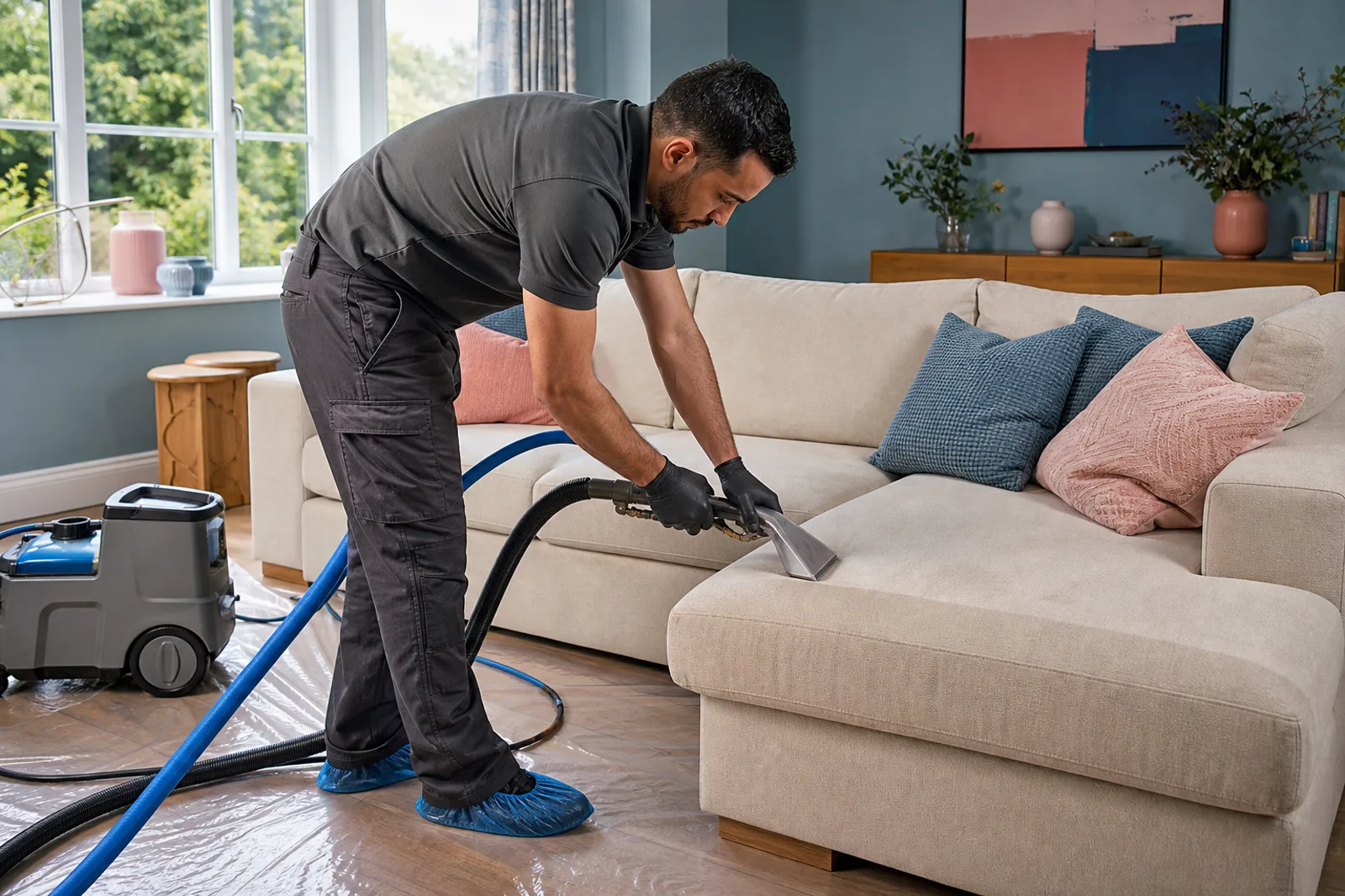
The technician records food residue near the piping, asks what has already been tried and completes dry extraction before wider wet treatment where appropriate. A small hidden test checks colour response and texture. If the fabric is stable, compatible chemistry, controlled agitation and moisture recovery can follow. If it is not, a lower-moisture or dry route may be discussed instead.
Results are explained realistically. Transfer, food residue and routine soil may respond, while bleaching, abrasion, sun fade, stretched fabric or permanent dye loss can remain. Pet liquid can pass into cushion filling, and an odour source below the cover may need a different scope. The purpose of the Peckham assessment is to separate these conditions before promises are made.
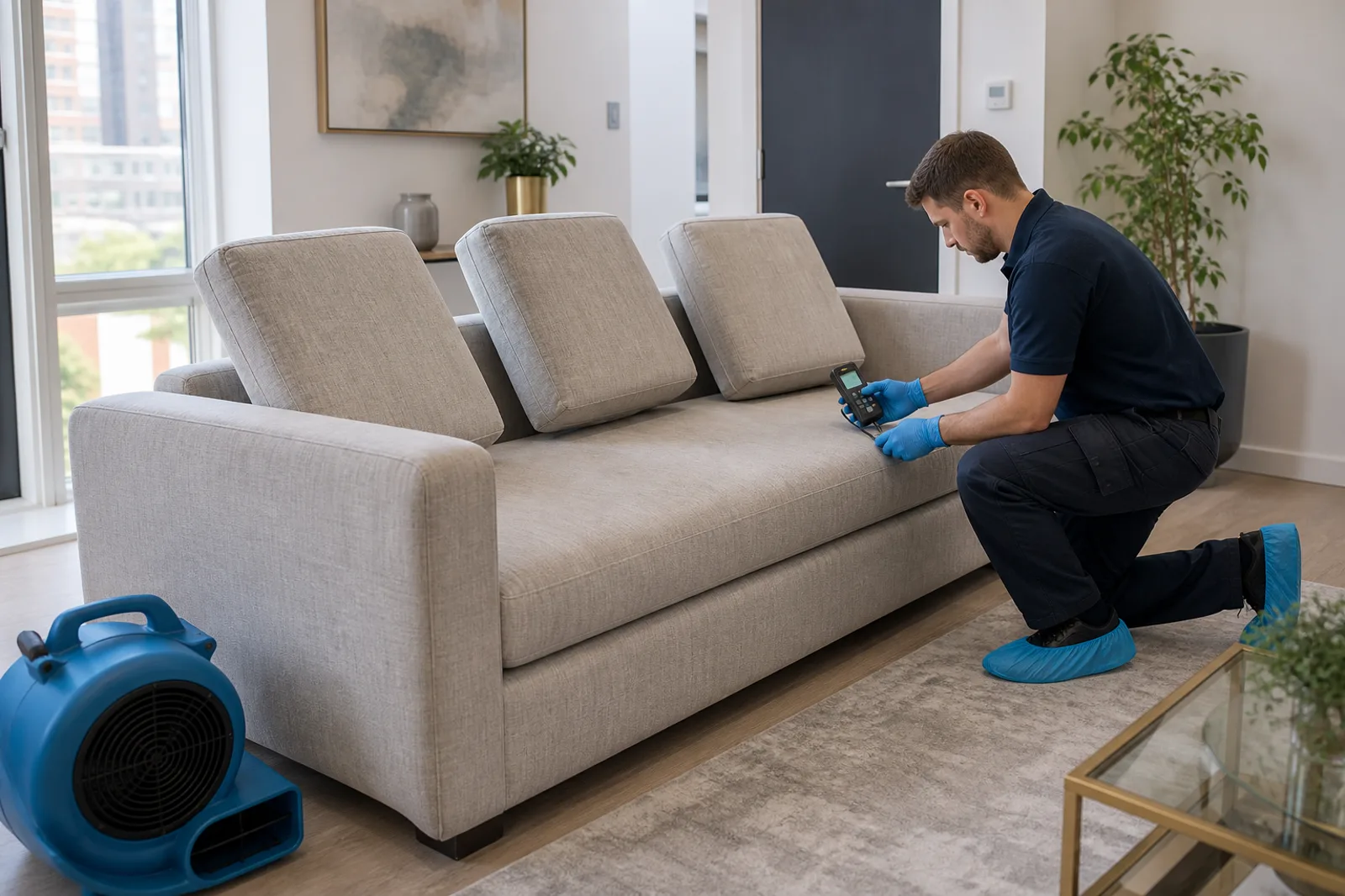
Drying belongs to the service plan. Fabric absorbency, cushion depth, room temperature and airflow influence when the sofa can be used again. Cushions may be positioned for ventilation, but should not be balanced unsafely or placed against radiators. The final handover confirms what remains damp, when covers or throws may return and when normal seating can resume.
Service information
| Service | Professional sofa and upholstery cleaning |
|---|---|
| Area | Peckham |
| Items | Fabric sofas, armchairs, dining chairs, sectionals and footstools subject to inspection |
| Method | Label and colour checks followed by compatible hot-water extraction or a low-moisture route |
| Common priorities | Body oils, food or drink marks, pet contact, odours, dust and routine soil |
| Typical process | Identify fabric → inspect construction → vacuum → test → treat → recover moisture → handover |
| Drying | Fabric absorbency, cushion filling, room airflow and treatment determine reuse |
| Pricing basis | Item, seat count, fabric, method, condition and agreed extras |
| Preparation | Remove throws and loose items; share label, stain history, access and parking details |
ROOM-SPECIFIC PLANNING
What to share for a Peckham booking
Send the postcode, total seat count, full-sofa photographs, close views of labels and marks, fabric if known, access notes and any products already tried. Mention whether cushions are loose, fixed or reversible.
What the upholstery assessment covers
1 · Identify
Label, fibre clues, weave, pile and colour response.
2 · Map
Seats, arms, cushions, seams, piping and priority marks.
3 · Extract dry soil
Vacuum surfaces and accessible crevices before moisture.
4 · Treat
Use compatible chemistry and controlled recovery.
5 · Handover
Check results and explain ventilation and safe reuse.
Sofa Cleaning questions for Peckham
Do you clean the back and sides in Peckham?
The booked scope and access are confirmed first. Visible outer panels, cushions, arms and seams may require different handling.
Can old water rings be removed in Peckham?
A ring may be residue, browning, dye movement or a change in the pile. Testing determines whether improvement is safe.
Can you treat food and drink stains in Peckham?
The source, age, previous products and fabric response affect the result. Permanent dye or fibre change cannot be cleaned away.
Is leather included in fabric sofa cleaning in Peckham?
Leather needs a different assessment and product system. Confirm the upholstery type when booking rather than selecting a fabric method.
Can removable cushion covers go in a washing machine in Peckham?
Do not assume they can. Zips may be for manufacture only, and separate washing can create shrinkage or colour mismatch.
Can you clean an L-shaped sofa in Peckham?
Yes, subject to fabric and construction checks. Seat count, chaise, loose cushions and access determine the quote.
Sofa Cleaning prices
| Item | Standard clean | Deep-care add-on | Dry-cleaning route |
|---|---|---|---|
| Armchair | £32 | +£9 | £36 |
| Sofa, per seat | £33 | +£9 | £36 |
| Two-seat sofa | £66 | +£18 | £72 |
| L-shaped three-seat sofa | £132 | +£36 | £144 |
| Footstool | £32 | +£9 | £36 |
| Minimum service charge | £68 per visit | May be reached by combining eligible items | |
These are standard prices, not membership rates. The confirmed total depends on the item count, size, fabric, construction, condition, stain treatment, chosen method, access and appointment details. Parking or congestion costs may apply where relevant.
Describe the sofa, not just the stain
Share the Peckham postcode, photographs, seat count, label, cushion type, priority marks and access details for a clear quote.
