Upholstery assessment
Fabric, colour, construction, wear and care information reviewed before treatment.
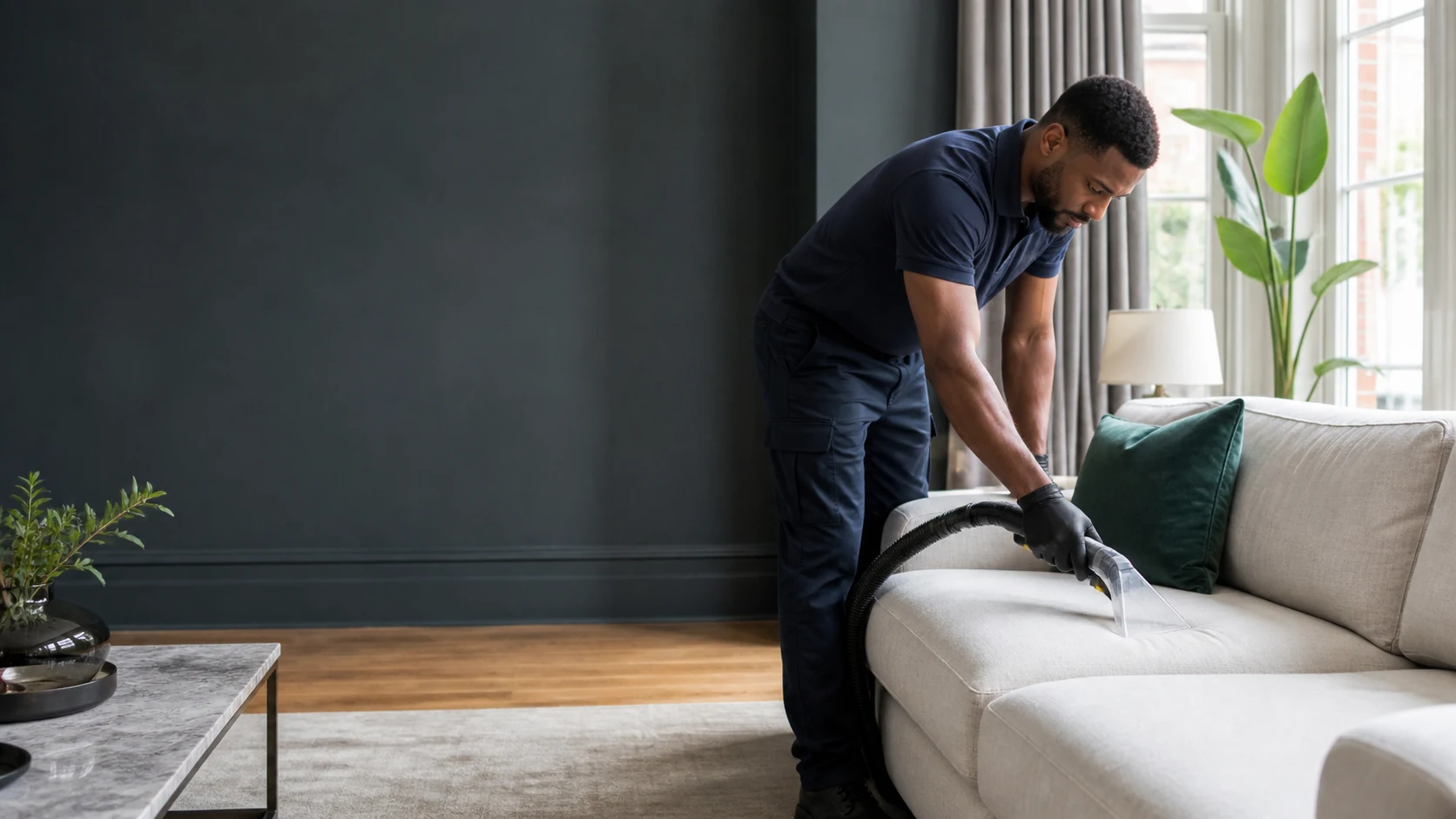
Alesta · Sofa cleaning in London
Professional care for suitable sofas and chairs, with fibre, colour, construction, staining and drying conditions assessed before treatment.
☎ Call 020 3608 3976Fabric before cleaning method
Synthetic weave, cotton, wool, viscose, velvet, loose covers and fixed upholstery can require very different handling. Dye stability, pile direction, foam, adhesives and previous stain products all affect how much moisture and agitation are safe.
We request full-item, label and stain photographs first. Cleaning can improve removable soil and freshness, but sun fading, wear, dye loss, damaged pile, failed foam and permanent chemical marks are not dirt and cannot be restored by extraction.
Fabric, colour, construction, wear and care information reviewed before treatment.
Loose debris, hair and surface particles removed from accessible areas and crevices.
Compatible solution and method selected for the assessed textile and condition.
Ventilation, cushion position and return-to-use guidance provided after cleaning.
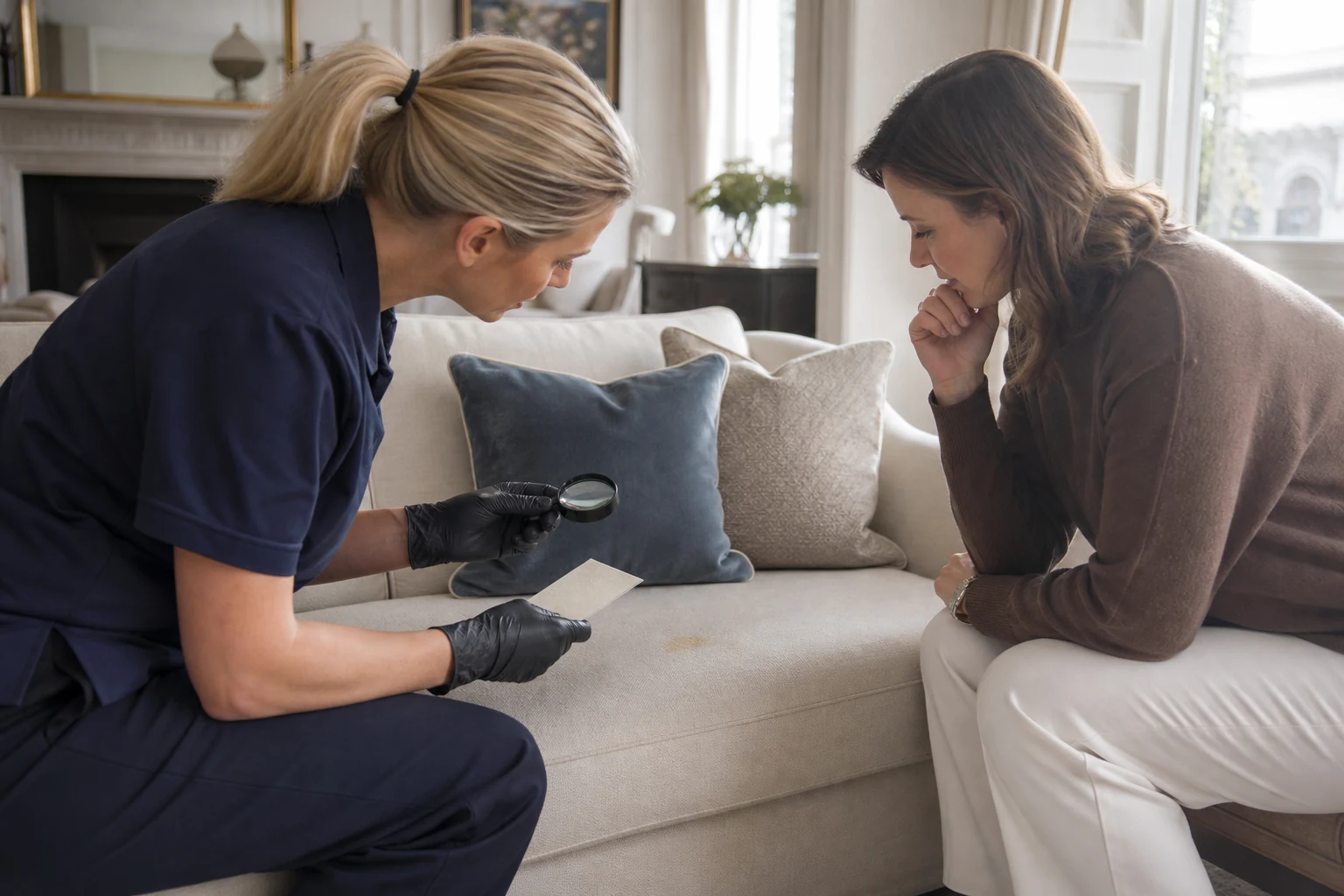
Common reasons customers call
Body contact and general soil are visible across the most frequently used zones.
Stain type, age and previous products need conservative treatment.
Surface and deeper contamination must be distinguished before expectations are set.
Sofa, rug and carpet cleaning need coordinated setup and drying time.
Why Alesta for sofa cleaning
The method follows assessed material rather than one universal machine setting.
Chemistry, age and previous treatment shape what can improve safely.
Fillings and fixed upholstery are not saturated for a superficial quick result.
The item stays out of use until ventilation and fabric condition support it.
A controlled upholstery process
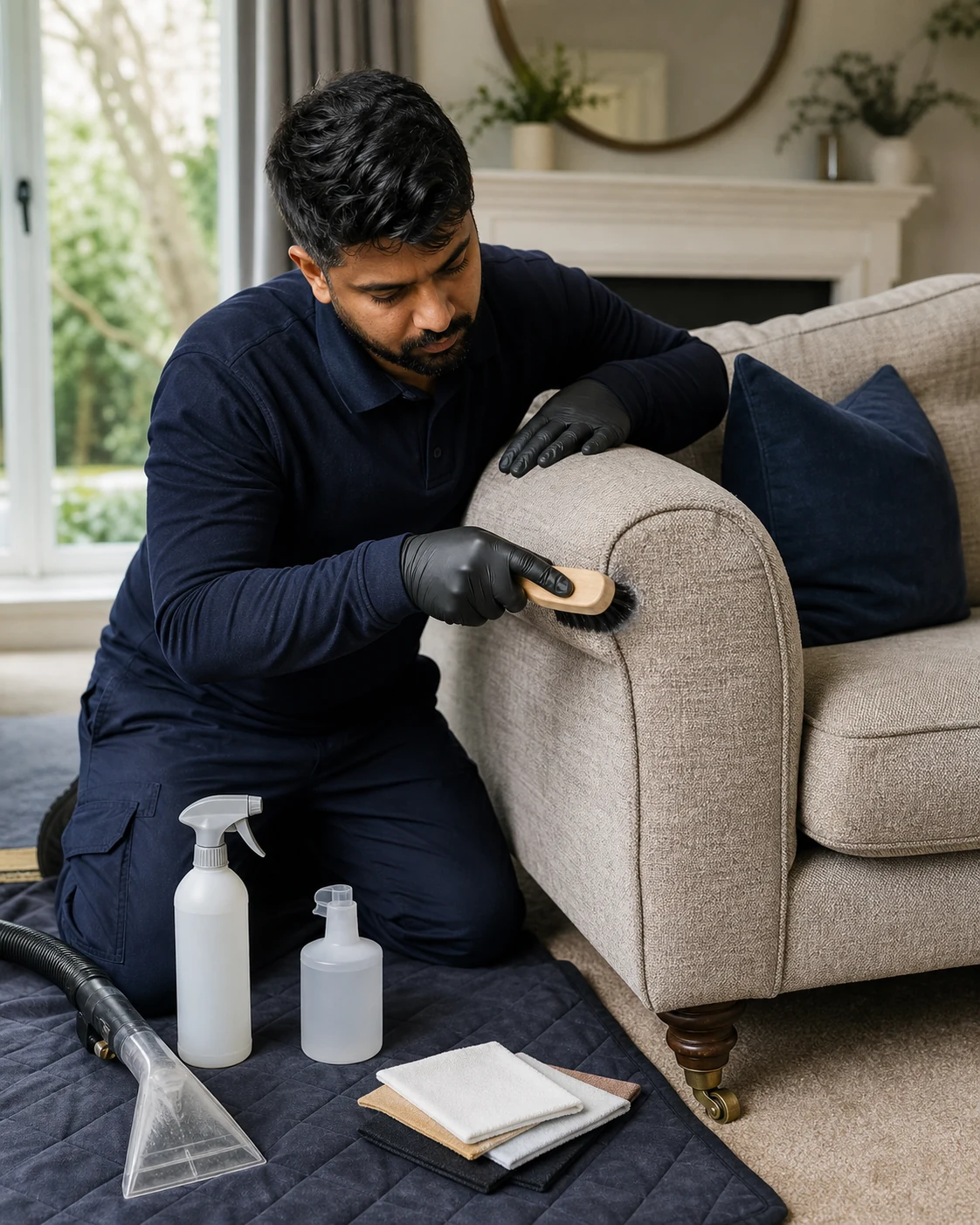
Planning begins with photographs of the entire sofa, care label, cushions, arms, back and affected marks. We ask about material, age, pets, spills, odours and products previously used. Access from the entrance to the room, parking and available ventilation are confirmed. Loose covers, leather, suede, antique textiles and specialist designer pieces are identified because they may require a different route from standard colourfast household fabric.
At the property, the technician inspects seams, piping, buttons, pile, colour change and pre-existing damage. Accessible dry debris and hair are removed before moisture is introduced. A discreet compatibility or colour test is used where appropriate, and stains are assessed individually. Dye loss, bleach, wear and damaged fibres cannot be reversed through cleaning, so the expected outcome is agreed before broad treatment.
A suitable solution is applied in controlled quantity and worked through the upholstery methodically. Extraction or an appropriate low-moisture method removes suspended soil while limiting residual moisture in foam and framework. Cushions, backs and external panels are treated only to the booked scope. Repeated aggressive work is avoided where it could create rings, browning, pile distortion, dye movement or weakened seams.
The technician reviews the fabric, grooms suitable pile and positions cushions for airflow. Drying time varies with construction, room temperature, humidity and ventilation, and the sofa must not be used or covered until fully dry. Remaining permanent marks and wear are explained. Cleaning improves removable soil and appearance but does not repair foam, frames, fabric damage or guarantee elimination of every odour held inside contaminated fillings.
Clear pricing
Cost depends on item size, seat count, fabric, construction, soil, stains, access, loose cushions and specialist requirements.
| Service scope | Price | What affects the final price |
|---|---|---|
| Chair or compact sofa | Quoted from photographs | Item size, fabric, cushions, condition and access |
| Large or sectional sofa | Quoted after assessment | Seat count, panels, construction, setup and drying needs |
| Multiple upholstery items | Combined quotation | Item count, fabrics, treatment methods and visit duration |
Pricing context: Full-item and care-label photographs are required for an honest quote. Specialist leather, antique or unstable textiles are assessed separately.
How the service works
Send fabric, size, cushions, stains and previous treatment information.
We assess textile risk, access, treatment scope and drying conditions.
The upholstery is treated and clear aftercare is provided.
Local guides
Choose a region to find your local guide. Please confirm your address and the work required when enquiring.
Sofa cleaning FAQ
Useful answers about fabrics, stains, pets, drying, cushions, preparation and pricing.
☎ Call 020 3608 3976No. Fibre, dyes, construction, label and condition determine whether extraction, low moisture or specialist care is suitable.
No. Age, chemistry, previous products, dye loss and fibre damage limit safe improvement. The technician avoids treatment likely to worsen the fabric.
Surface contamination may improve, but urine or odour held in foam, frame or backing can remain and may require specialist treatment or replacement.
Drying varies with fabric, filling, humidity, temperature and airflow. Do not sit on or cover upholstery until it is fully dry.
Only the cushion faces and panels listed in the quote are included. Share photographs of every loose item before booking.
Remove small items, secure valuables, provide access around the sofa and arrange ventilation, electricity, water and parking as advised.
Size, seat count, fabric, construction, cushions, condition, stains, access and specialist handling affect the quote.