
It keeps access, use and findings attached to the correct structure.
Give each building its own maintenance boundary
Electrician Services in Esher
A concern in a garage, annex or garden room can be described too narrowly if the main house is left out of the brief. For an Esher property, divide the site into structures and record who uses, opens and maintains each one. List what works at both the affected building and the house. This creates a useful maintenance boundary without assuming that a separate doorway means a separate electrical cause.
- Name every structure included in the assessment
- Record use and access ownership for each building
- Compare working equipment across the site
- Assign follow-up actions to the appropriate property contact
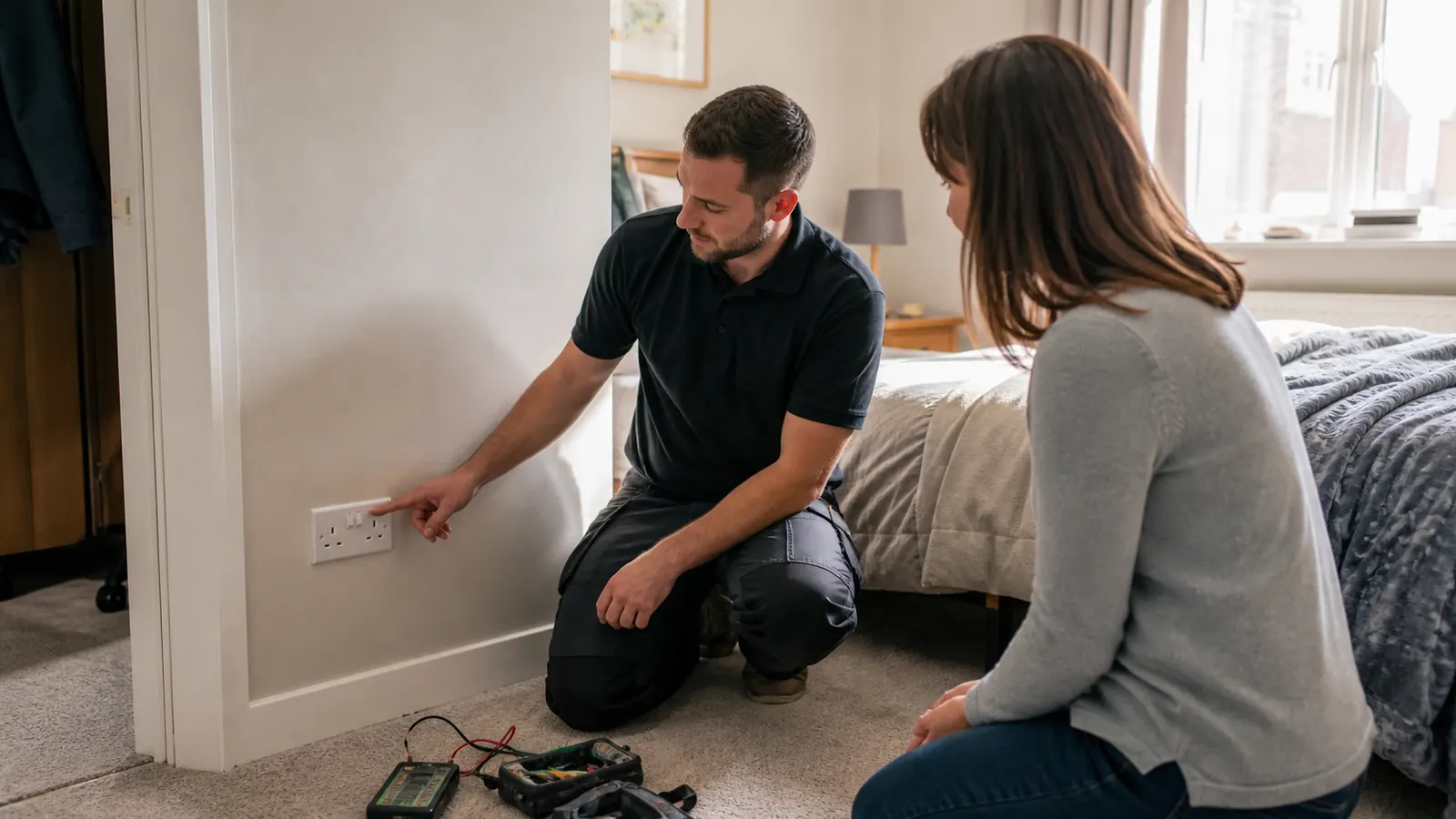
NeedFault · Repair · Installation · Upgrade
AreaLighting · Sockets · Circuit · Consumer unit
PropertyFlat · House · Managed property
Next stepAssessment · Planned work
Building registerHouse and ancillary spaces listed
Use patternDaily activities described by structure
Access ownerEvery key and gate assigned
Maintenance ownerFindings routed to responsible contacts
Esher property context
A structure-by-structure approach to electrical maintenance
Create one entry for the main house, then separate entries for the garage, annex, studio or other included space. For each, note usual access, key holder, intended equipment and any recent change. Draw the physical route between structures and identify the vehicle stopping point. If a fault affects one building, record the others as comparison rather than unrelated background. Quotations should say which structures are assessed, where opening work is permitted and who owns any later repair or decoration.
| Property situation | Electrical consideration | Effect on the visit |
|---|---|---|
| Detached Esher garage with household storage | The work zone may be blocked while relevant equipment remains inside the house. | Move the vehicle, clear the named wall and open the main property as agreed. |
| Annex used by a different family member | The person reporting the symptom may not hold keys or decisions for the house. | Identify access and approval contacts for both structures. |
| Garden studio reached along a long path | The carrying route can involve gates, steps or changing surfaces. | Photograph the complete path and remove loose obstacles. |
| Managed apartment within a larger development | Private maintenance and building-controlled areas have different owners. | Record the flat scope and communal permissions as separate entries. |
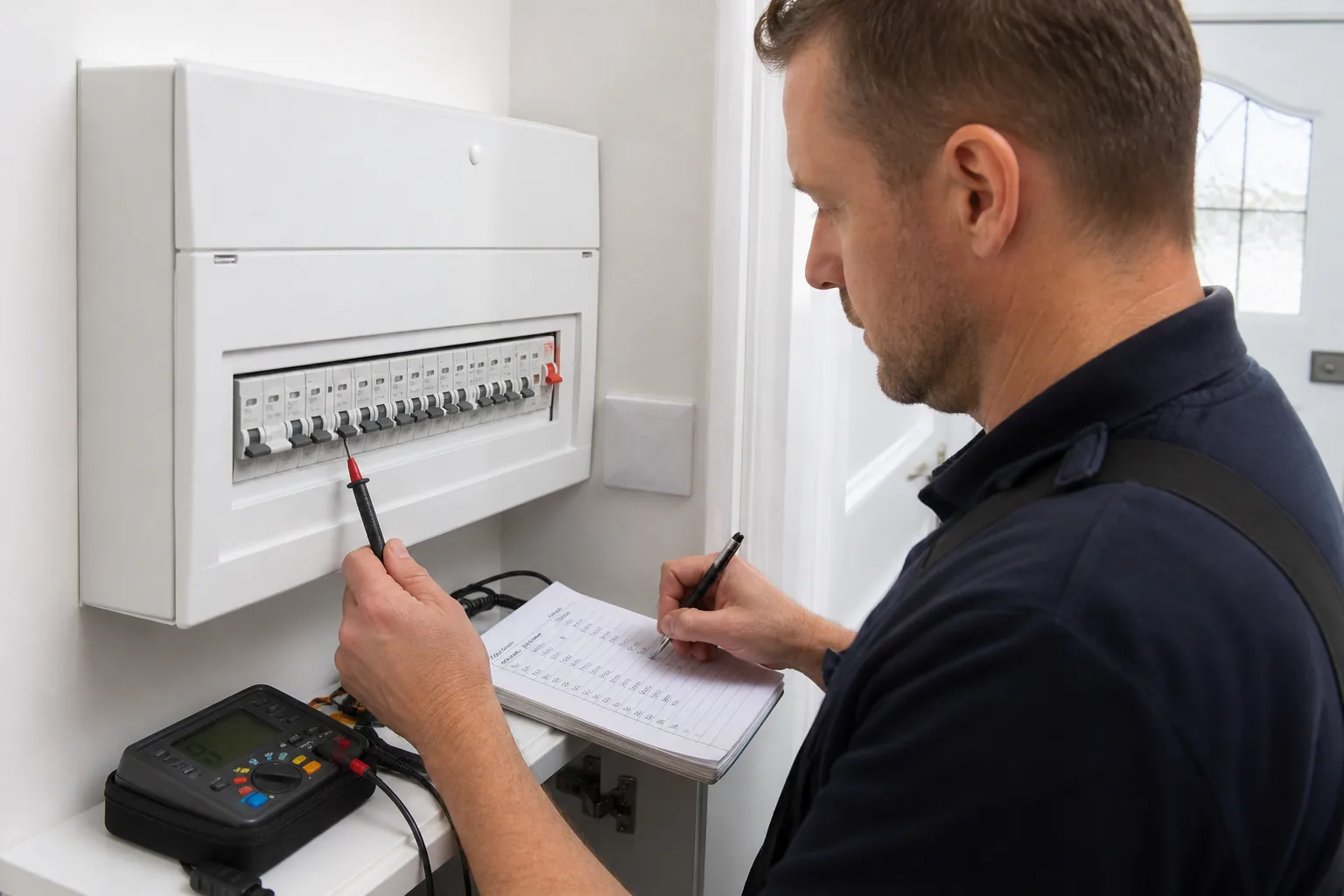
Choose by the work required
Electrical service routes for Esher
Match the service to what is known now, with room for test findings to change the recommendation. Apply that distinction to the Esher address.
| Problem or requirement | Relevant service | Important boundary |
|---|---|---|
| An unexplained issue apparently limited to one structure | Electrical fault finding | Relevant buildings are considered together before repair is defined. |
| Failed or planned lighting in a garage, annex or approach | Light fixture installation and repair | Fitting, controls, support and physical route require review. |
| Damaged or new points for equipment in separate spaces | Switches and sockets installation | Each proposed point needs a stated use and accessible working area. |
| A consumer-unit query raised during wider property maintenance | Fuse box replacement | The board question follows assessment rather than appearance or age. |
| A maintenance list spanning house and ancillary buildings | Electrician services | Each structure retains a separate scope, access owner and outcome. |
Fault notes before diagnosis
Describe what changes in Esher
Record when the change appears and which areas are involved; the cause still needs assessment. For Esher, keep the account factual.
| Symptom | Appropriate next step | Why assessment matters |
|---|---|---|
| An annex loses power while the house remains available | List working and failed lights, outlets and fixed equipment in both structures. | The observed division is useful but does not identify the complete route. |
| Approach or garden lighting changes intermittently | Note the natural timing while leaving every fixed outdoor cover closed. | Several fittings, controls and property areas may be involved. |
| A garage accessory is damaged near stored items | Keep it unused and create clear working space around it. | Its surface cannot reveal the condition behind the plate. |
| New lighting is proposed for an ancillary room | Provide the fitting data and show the full structure connection. | Use, product, support and the route from the house all shape scope. |
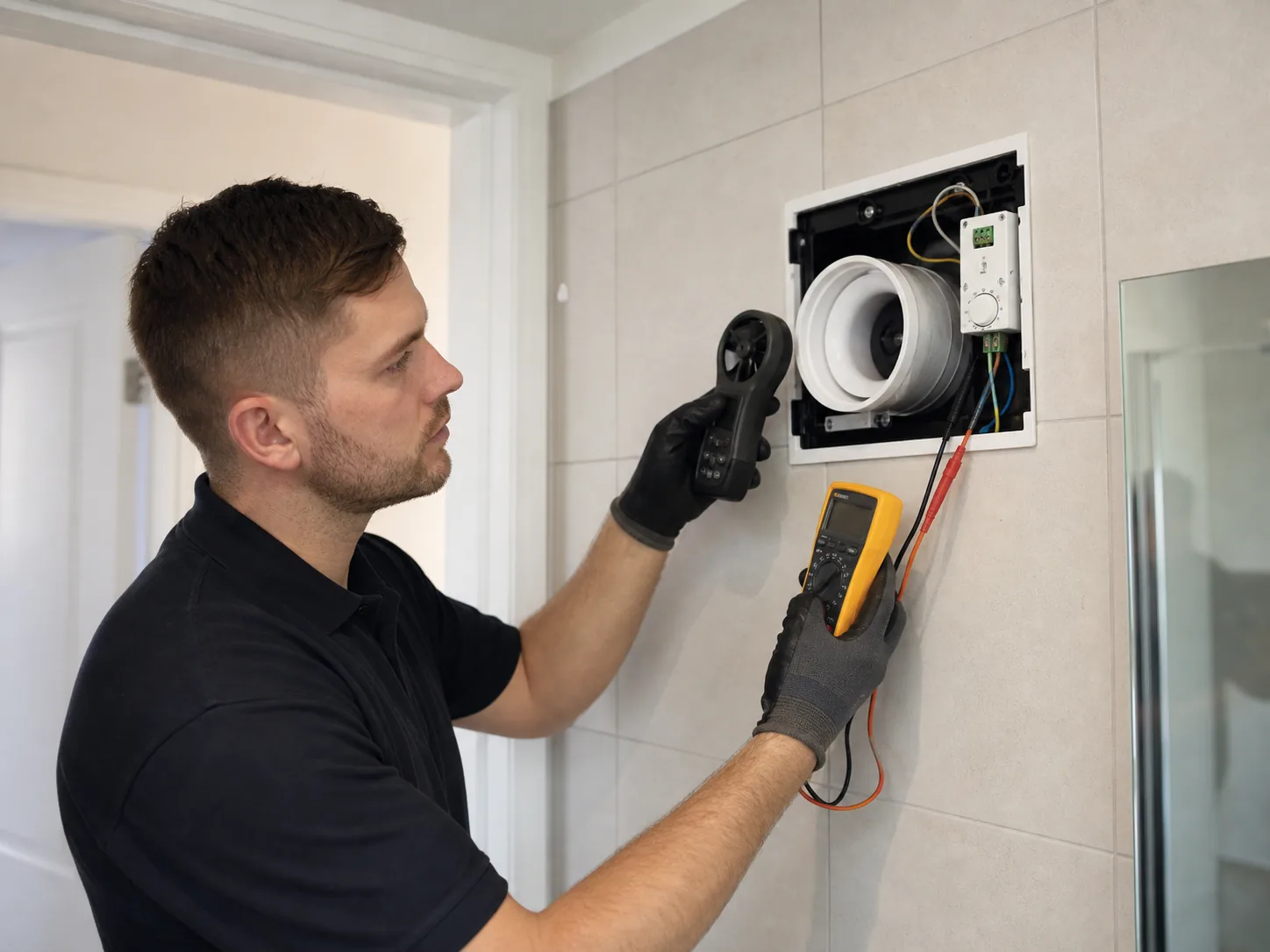
Before the visit
Make the relevant areas ready in Esher
- Create one maintenance entry for every relevant building.
- List the person using and opening each structure.
- Move vehicles and storage from named garage areas.
- Unlock gates and clear paths to annexes or studios.
- Record what works in the house as well as the affected space.
- Leave exterior fittings and electrical covers unopened.
- Decide who receives private, shared and follow-on findings.
A quotation needs a defined scope
What can change the price in Esher
Compare written boundaries and evidence rather than a headline description of the room. The Esher property details provide the comparison point.
| Factor | Why it changes the work | Useful evidence |
|---|---|---|
| Structure coverage | The property boundary is explicit before attendance. | A register naming every building included and excluded. |
| Occupant use | Planned work responds to actual use rather than a generic room label. | Equipment and daily activity listed for each space. |
| Key ownership | The complete assessment can proceed without missing doors. | Named holder for gates, house, garage, annex and communal areas. |
| Physical connection | Carrying access and building relationships are visible. | A simple site sketch with paths, steps and stopping points. |
| Maintenance handover | Every next action has a responsible owner. | A recipient for findings, permissions, decoration and later quotations. |
Short answers for an informed brief
Before electrical work is booked in Esher
Relevant areas in the house may also need access.
The person using it can provide the most accurate equipment list.
Yes, show gates, surfaces, steps and carrying distance.
No, leave fixed enclosures closed for assessment.
No, advice should follow site evidence.
Use the manager or property party controlling that space.
Name the responsible person or trade in the scope.
Safety boundary
Stop using visibly damaged electrical items
For a Esher address: Burning smells, heat damage, sparking, exposed conductors or repeated protective-device operation need professional attention. Keep away from damaged parts, do not remove covers, and call the emergency services if there is smoke, fire or immediate danger.
Esher electrical FAQ
Points worth agreeing before anyone attends in Esher
How should an Esher building register be organised?
Begin with the main house, then add a separate entry for each garage, annex, studio or managed area. Include use, key holder and the exact task.
What helps explain power loss in an annex?
List working and failed equipment there, then record what remains normal in the house. Avoid treating the separate building as proof of the cause.
Why should the annex occupant contribute directly?
They know the daily equipment, control sequence and first observed change. Their account can remain distinct from the homeowner’s maintenance decisions.
How much garage space should be prepared?
Remove the vehicle and clear the named wall, fitting or outlet plus a walking route. Storage elsewhere can remain if it does not obstruct the work.
What belongs on a garden-studio route sketch?
Show the house, gate, path surfaces, steps, studio door and vehicle stopping point. Mark any section that is narrow or shared with household use.
Can intermittent outside lighting be tested repeatedly?
No, record naturally observed timing and controls. Keep weatherproof covers closed and allow the electrician to choose the assessment approach.
How are private and communal responsibilities separated in an apartment?
Record the flat work under the occupier or owner and each shared area under the building contact. Permission for one does not automatically release the other.
When is a second maintenance visit sensible?
Use a later attendance when findings change materials, another structure remains locked or permission is still pending. Give the return visit a defined purpose.
What should the final maintenance record contain?
Update every structure entry with findings, work completed, outstanding permissions and the next owner. Retain any documents supplied for finished work.
How do I compare Esher quotations across several buildings?
Match structures, users, paths, key assumptions, investigation and finishing responsibilities. Check that no ancillary building appears only as an unpriced note.
Related location guidance
Electrical coverage around Esher
Move from a symptom note to an assessed scope
Give every Esher building a maintenance owner
Share the structure register, access holders, site connection and working comparisons so electrical findings can be assigned clearly across the property.
