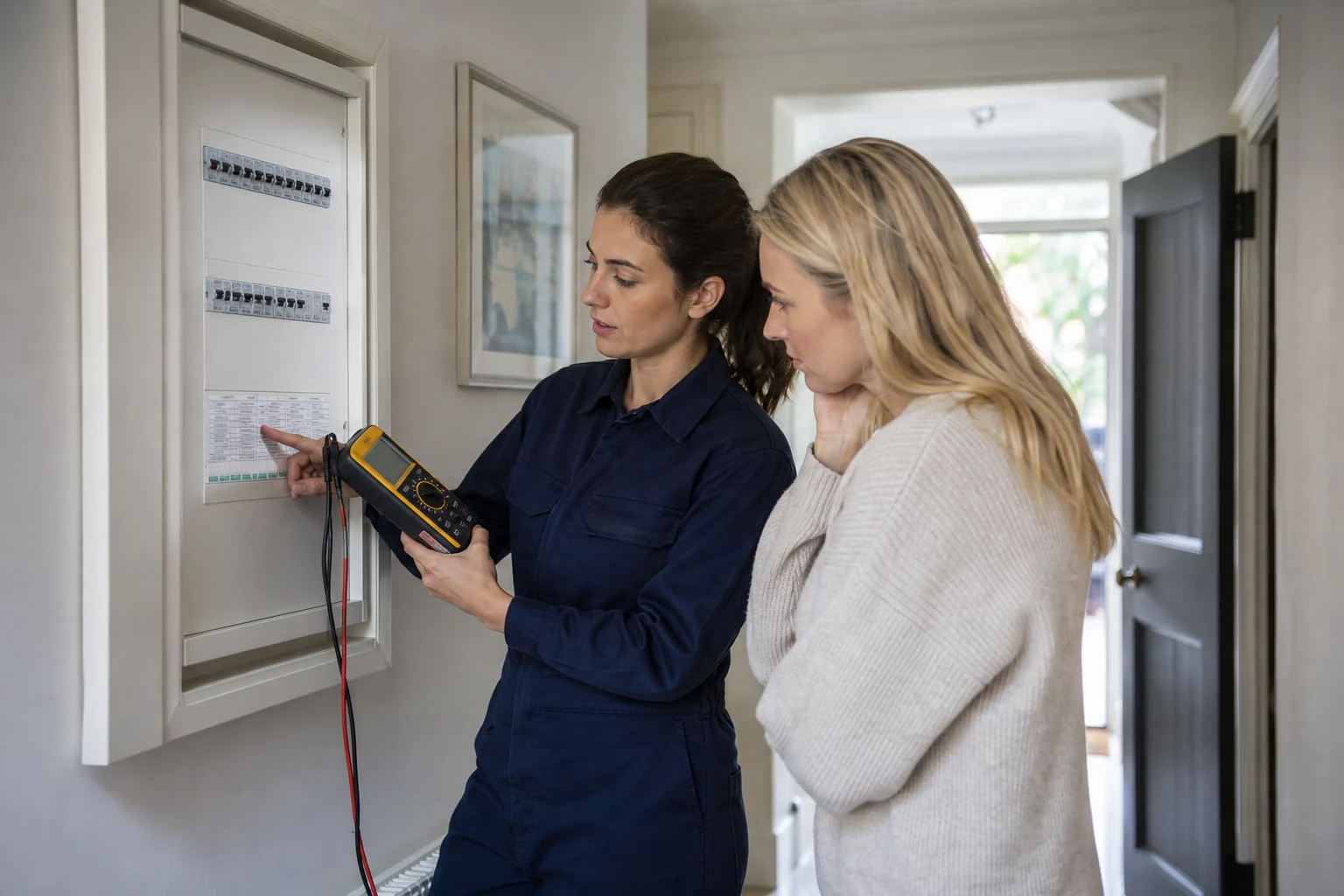
Circuit identification
Affected circuits, protective devices and connected loads are confirmed before intrusive checks begin.

Alesta · Electrical fault finding in London
Methodical diagnosis for tripping circuits, intermittent power and unexplained faults—before parts are replaced or larger work is proposed.
☎ Call 020 3608 3976Evidence before replacement
A breaker that trips can indicate a faulty appliance, damaged cable, moisture, a failing accessory or a problem that appears only under load. Resetting it repeatedly or replacing the protective device without testing can leave the real cause in place.
We gather the affected rooms, timing, recent work and exact protective device first. The electrician then isolates and tests in a logical sequence, narrowing the fault while keeping unnecessary disruption to a minimum.
Affected circuits, protective devices and connected loads are confirmed before intrusive checks begin.
Relevant dead and live tests are selected for the fault and completed with suitable instruments.
Sockets, switches, fittings and accessible connections are inspected where evidence points.
The likely cause, immediate repair and any further investigation are separated clearly.
Common reasons customers call
One circuit disconnects repeatedly, immediately or only when a particular load is used.
Sockets, lights or an appliance supply cut in and out without a clear pattern.
Discolouration, heat, buzzing or a burning smell needs prompt isolation and assessment.
The visible item was changed but the same symptom has returned elsewhere on the circuit.
Why Alesta for fault finding
Timing, affected loads, recent work and protective-device behaviour guide the test plan.
The electrician narrows the affected circuit before opening unrelated parts of the property.
Dangerous signs are isolated and made safe before convenience or cosmetic repair.
A local repair, further access or larger remedial work is recommended only from findings.
A controlled investigation
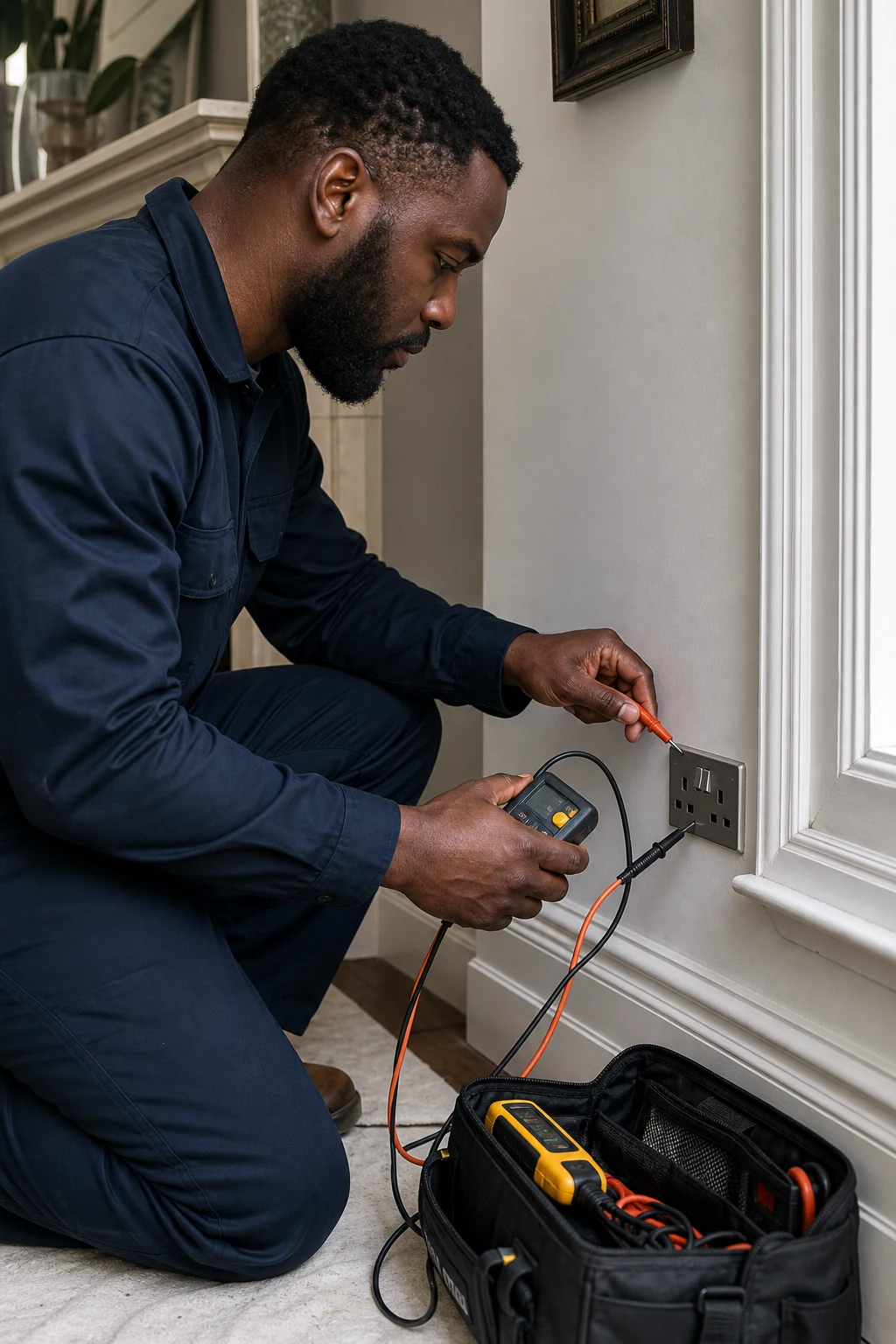
The investigation begins before the tester is connected. We ask what stopped working, which breaker moved, whether the issue is constant or intermittent, and what changed immediately beforehand. Photographs of the consumer unit can help identify the protective device. The electrician also asks about recent leaks, drilling, building work, new appliances and previous repairs because timing can point toward the affected part of the installation.
At the property, the fault is reproduced only where it is safe to do so. The electrician identifies the circuit, proves isolation and separates connected equipment where necessary. Visual inspection is combined with appropriate tests such as continuity, insulation resistance, polarity or supply checks. The sequence depends on the evidence: testing every circuit indiscriminately can waste time and obscure an intermittent problem.
When the faulty section or item is narrowed down, accessible accessories and connections are examined. A damaged socket, light fitting or appliance connection may be repairable during the visit. Concealed cable damage, moisture, multiple degraded circuits or access behind finished surfaces can require a separate remedial scope. No wall or ceiling is opened without explaining why the evidence points there and what reinstatement would involve.
The electrician records the findings and restores only circuits that are safe to energise. Completed repairs are tested appropriately, while an unsafe section may remain isolated until further work is agreed. You receive a clear distinction between the observed symptom, the probable cause, the work completed and any limitation caused by access. The aim is not simply to make the breaker stay on, but to establish why it operated and leave a defensible next step.
Clear pricing
Cost depends on investigation time, number of affected circuits, access and whether a repair can be completed during the visit.
| Service scope | Price | What affects the final price |
|---|---|---|
| Initial fault-finding visit | From £80 | Circuit history, access, test time and affected equipment |
| Minor repair after diagnosis | Typically £80–£150 | Accessory, connection, labour and standard materials |
| Extended tracing or remedial work | Quoted from findings | Concealed wiring, multiple circuits, access and reinstatement |
Pricing context: Audited Alesta electrical pricing includes diagnostic work from about £80. The fault may require further time or a separate remedial quote once testing identifies the cause.
How the service works
Tell us what trips or fails, when it happens and what changed recently.
The electrician narrows the circuit and gathers evidence with appropriate tests.
Safe local work is completed where agreed, or a clear remedial scope is provided.
Electrical fault-finding FAQ
Useful answers about tripping circuits, preparation, testing, access and pricing.
☎ Call 020 3608 3976Tell us which breaker trips, the affected rooms or appliances, how often it happens and whether any leak, drilling, installation or building work happened recently.
No. If it trips again, leave the affected circuit off and unplug connected equipment only where safe. Repeated resetting can worsen damage or hide a dangerous fault.
Often, but intermittent faults can take longer because the symptom may not appear during the visit. A precise history and photographs or notes of when it occurs are valuable.
Not automatically. Non-destructive testing and accessible checks come first. Opening finished surfaces is discussed only when evidence indicates concealed damage or a necessary cable route.
The electrician can help determine whether the fixed installation or a connected appliance is responsible. Internal appliance repair is a separate service.
The key findings, work completed, isolated areas and recommended next step are explained. Formal certification is provided only when that specific inspection or work requires it.
Investigation time, number of circuits, intermittent behaviour, access, repair materials and any concealed damage affect the total.