
Water leak
Visible water, dampness or a mark that returns when a nearby fitting is used.
ISLINGTON · PLUMBING DIAGNOSTICS
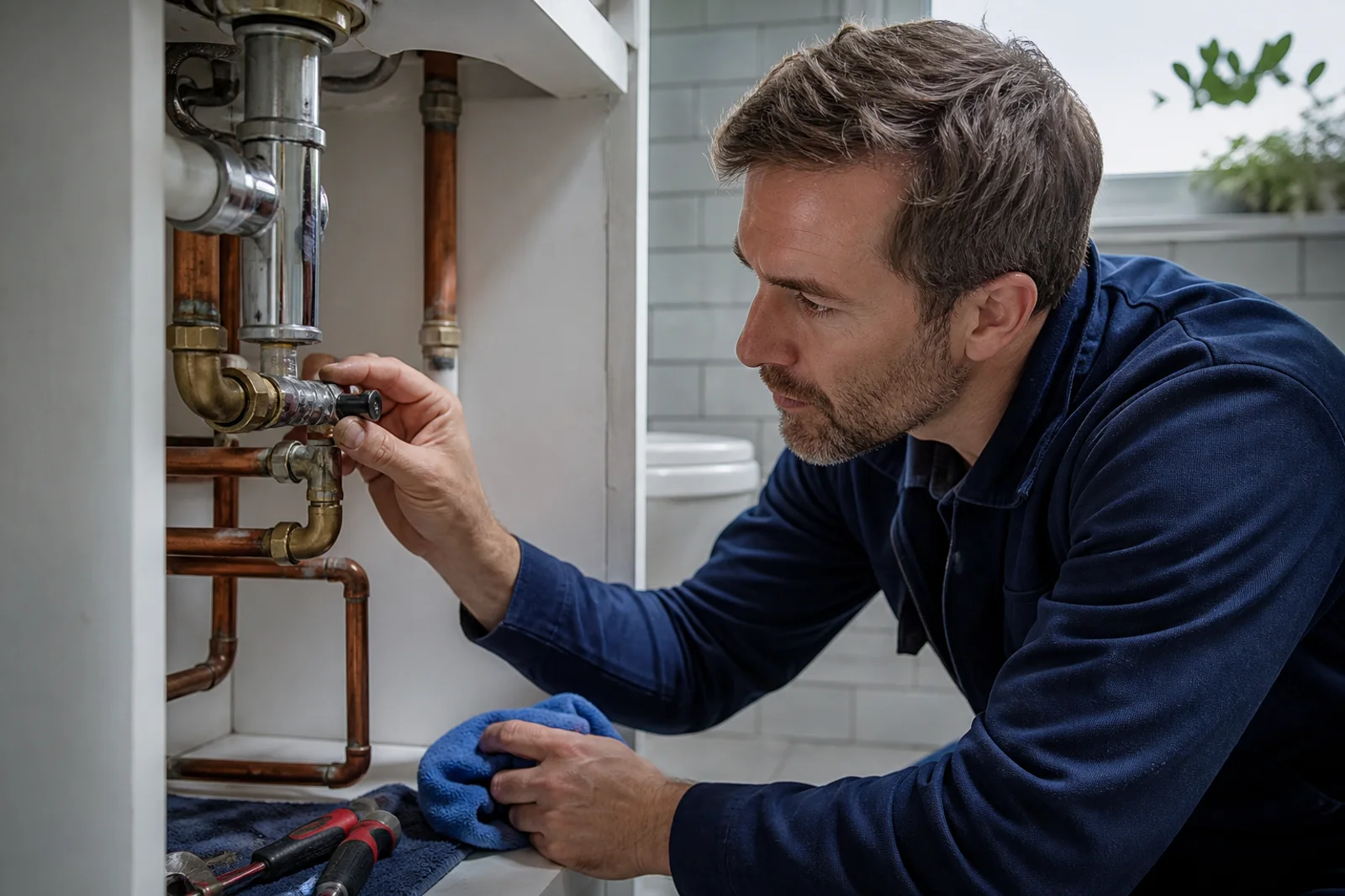
A plumbing repair starts with the water symptom, not a guessed part. Alesta checks leaks, taps, toilets, fixtures and visible pipework, then explains what can be repaired and what would need further investigation.

START WITH WHAT YOU CAN SEE
You do not need to diagnose it yourself. Choose the closest description and share when it happens, where the water appears and whether the supply can be isolated.
Visible water, dampness or a mark that returns when a nearby fitting is used.
A drip, stiff control, loose body, poor flow or water escaping around the fitting.
A cistern that keeps filling, an unreliable flush, a leak or a loose connection.
A visible pipe, valve or joint is leaking, damaged or in the wrong position.
A compatible sink, tap, toilet or other plumbing fixture needs replacing.
Supply or waste connections must move to suit a new kitchen or bathroom layout.
OBSERVATION BEFORE ASSUMPTION
These examples show what a plumber might check. They are not remote diagnoses.
| What you notice | Possible issue | Sensible next step |
|---|---|---|
| Water below a kitchen sink | Supply connection, waste joint or nearby appliance hose | Stop using the affected fitting, isolate if necessary and photograph all visible connections |
| A tap keeps dripping after it is closed | Internal component wear or a fitting-specific fault | Identify the tap type and any model mark before parts are selected |
| A toilet continues to fill | Fill valve, flush mechanism or overflow arrangement | Check whether the local isolation is accessible and record what the cistern does |
| A ceiling mark appears after bathroom use | Supply, waste, seal or another concealed route | Stop using the likely fixture and trace the timing before any surface is opened |
| Flow has reduced at one outlet | Local valve, tap, hose or outlet issue | Compare nearby outlets so the symptom is separated from a wider supply matter |
ISLINGTON PROPERTY CONTEXT
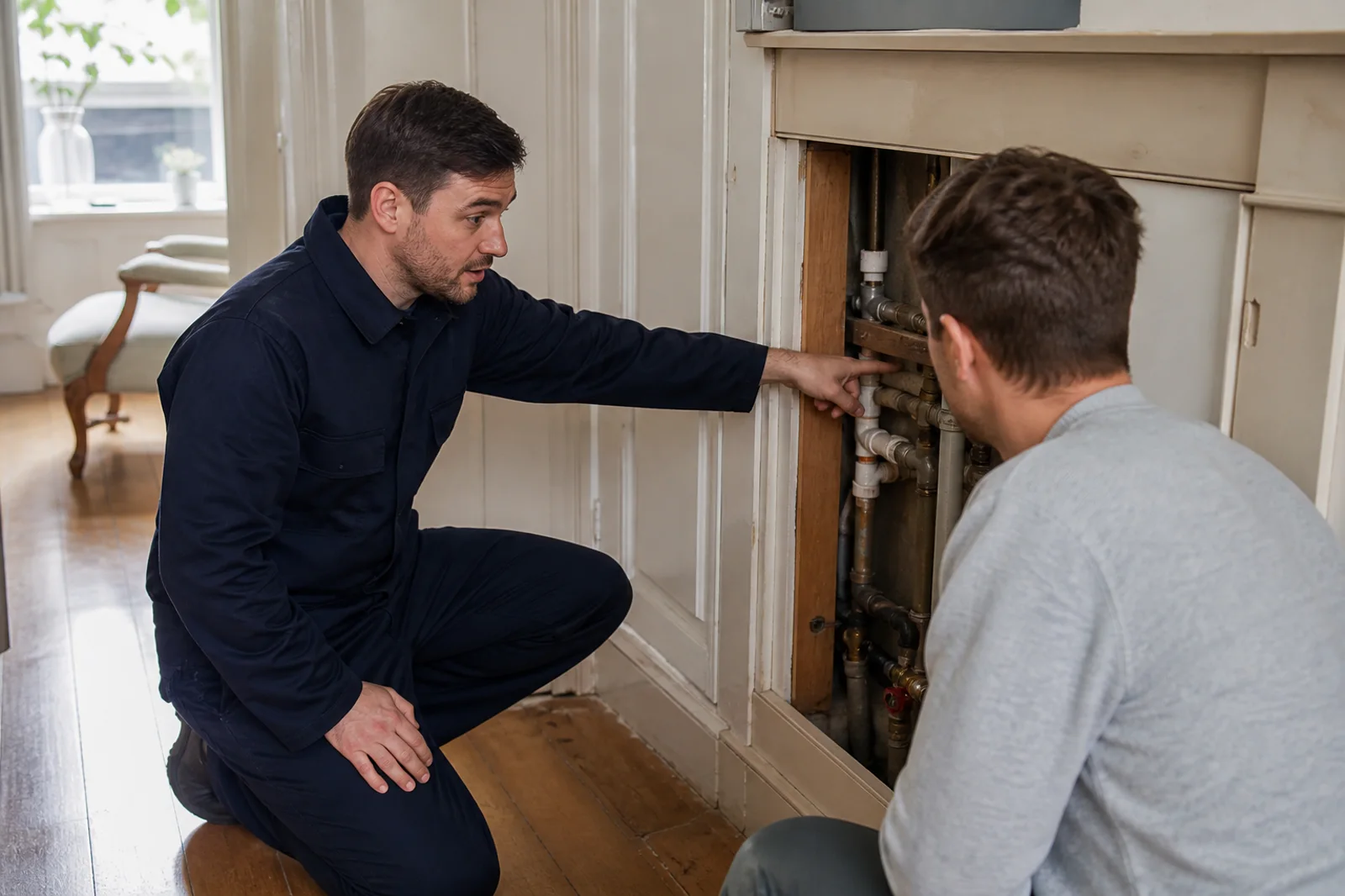
Parts of Islington contain late Georgian and early Victorian terraces, alongside converted houses, purpose-built flats and later housing blocks. In a building divided into flats, supply and waste pipes may have been changed more than once. Water beside a sink or toilet can therefore have travelled from a boxed-in connection, a neighbouring cupboard or the floor above.
Before a visit, find out whether the affected pipe is inside the flat, in a shared riser or connected to a communal system. A landlord, managing agent or concierge may need to provide access, especially when the stopcock sits outside the dwelling. Do not open decorative panels or fitted cabinets until there is a sensible reason to inspect behind them and it is clear who will make good afterwards.
This context draws on Islington Council descriptions of local terraces, converted housing and later blocks. It helps frame access questions; it does not describe every building in the area.
PROBLEM → CHECK → REPAIR
The plumber starts with what can be seen and tested safely. Boiler internals, gas work, underground drainage, electrical faults and specialist leak detection are separate services.
A STEP-BY-STEP CHECK
Record where, when and during which use the problem appears.
Find the relevant local valve or main stopcock before taking anything apart.
Check fittings and how the supply, waste and nearby appliances relate to one another.
Decide whether the evidence points to one component or calls for further access or another specialist.
Confirm parts, opening-up, exclusions and anything that would need a return visit.
Complete the agreed work, run the fitting normally and explain any remaining limitation.
KEEP OR CHANGE?
Age alone does not decide. The condition of the body, availability of compatible parts, isolation, connections and the cost of reliable access all matter.
A replaceable cartridge, washer or seal may justify repair. A damaged body, poor access or incompatible part can make replacement more sensible.
Fill and flush components are often separate from the ceramic fixture, but access and model compatibility must be checked.
A local component may be renewed when surrounding pipe is sound. Wider corrosion or unsuitable joints can change the scope.
A replacement must fit the available dimensions and existing supply and waste positions; appearance alone is not enough.
CLEAR BOUNDARIES
QUOTE THE EVIDENCE
Alesta does not publish a fixed price for an unseen fault. The quote follows the symptom, access, isolation and likely parts or opening-up.
| Service scope | Pricing basis | Main variables |
|---|---|---|
| Assessment or minor repair | Quoted after assessment | Fault, diagnosis time, isolation, labour and standard parts |
| Fixture replacement | Quoted after assessment | Product, dimensions, connections, access and testing |
| Pipework alteration | Quoted to a defined scope | Route, pipe material, waste fall, opening-up and supports |
| Concealed or complex fault | Based on findings | Investigation, staged access, specialist input and reinstatement |
Intermittent or concealed symptoms usually take longer to narrow than a visible failed connection.
Working valves, clear cupboards and known stopcock access can reduce avoidable delay.
Pipe material, fitting type, dimensions and product requirements determine what can be used.
Panels, wet finishes or an ordered component can turn one defined visit into staged work.
HELP BEFORE ARRIVAL
Clear the immediate work area, but do not remove fixed panels or disconnect plumbing. Tell us if the home is occupied, if entry is through a communal door and who can approve extra work if the fault turns out to be different from the original report.
CONNECTED SERVICE ROUTES
General plumbing does not automatically include every water-related system. These existing Alesta pages explain related scopes.
NEARBY PLUMBING AREAS
Choose the guide for the actual work address. The surrounding pages describe access and water-control questions that differ between nearby property types.
LOCAL ORIENTATION
The map is for area context, not a promise of arrival time. Nearby Plumbing GEO links will be activated only after their pages pass content and link QA, so this test page does not create broken destinations.
PRACTICAL ANSWERS
The cost depends on the fault, diagnosis time, isolation, access, pipe material, parts and whether surfaces must be opened. Alesta quotes after the likely scope is understood rather than assigning a fixed price to an unseen symptom.
If it is safe and you know the correct valve, isolate the relevant supply or main stopcock. Move vulnerable items, contain dripping water where practical and call with the location and timing. Keep clear if water is affecting electrics.
A dripping tap may be repairable when its internal component can be identified and the tap body remains sound. The tap type, access, isolation and availability of compatible parts determine the sensible route.
Often the fill or flush mechanism can be treated separately from the pan and cistern, but the exact arrangement, isolation, access and compatibility need checking first.
A customer-supplied tap can only be fitted if its dimensions, pressure requirements and connection positions suit the existing installation. Send the product details and photographs before the visit where possible.
Accessible checks can narrow the likely source. Some concealed or intermittent faults require staged access or separate specialist leak detection. Finished surfaces should not be opened on guesswork.
Not automatically. Cabinetry, tiling, plastering and decoration are separate unless they are expressly included in the agreed scope. The likely access route should be discussed before opening-up.
The occupier should confirm whether the affected route and stopcock are within the flat or a shared area. A landlord, freeholder, managing agent or concierge may need to provide access or authorise work; this is practical guidance, not legal advice.
Not always. A visible standard fault may be resolved in one visit, while concealed damage, an unavailable component, wet surrounding material or another trade requirement can require investigation and a separately agreed return.
Agreed connections are checked under appropriate normal use where access permits. The plumber explains isolation, use and any known limitation, while drying, decoration or unrelated downstream issues remain separate.
READY TO EXPLAIN THE SYMPTOM?
Share the affected fixture, when the problem occurs, whether the water can be isolated and photographs of the wider route.
