Fault diagnosis
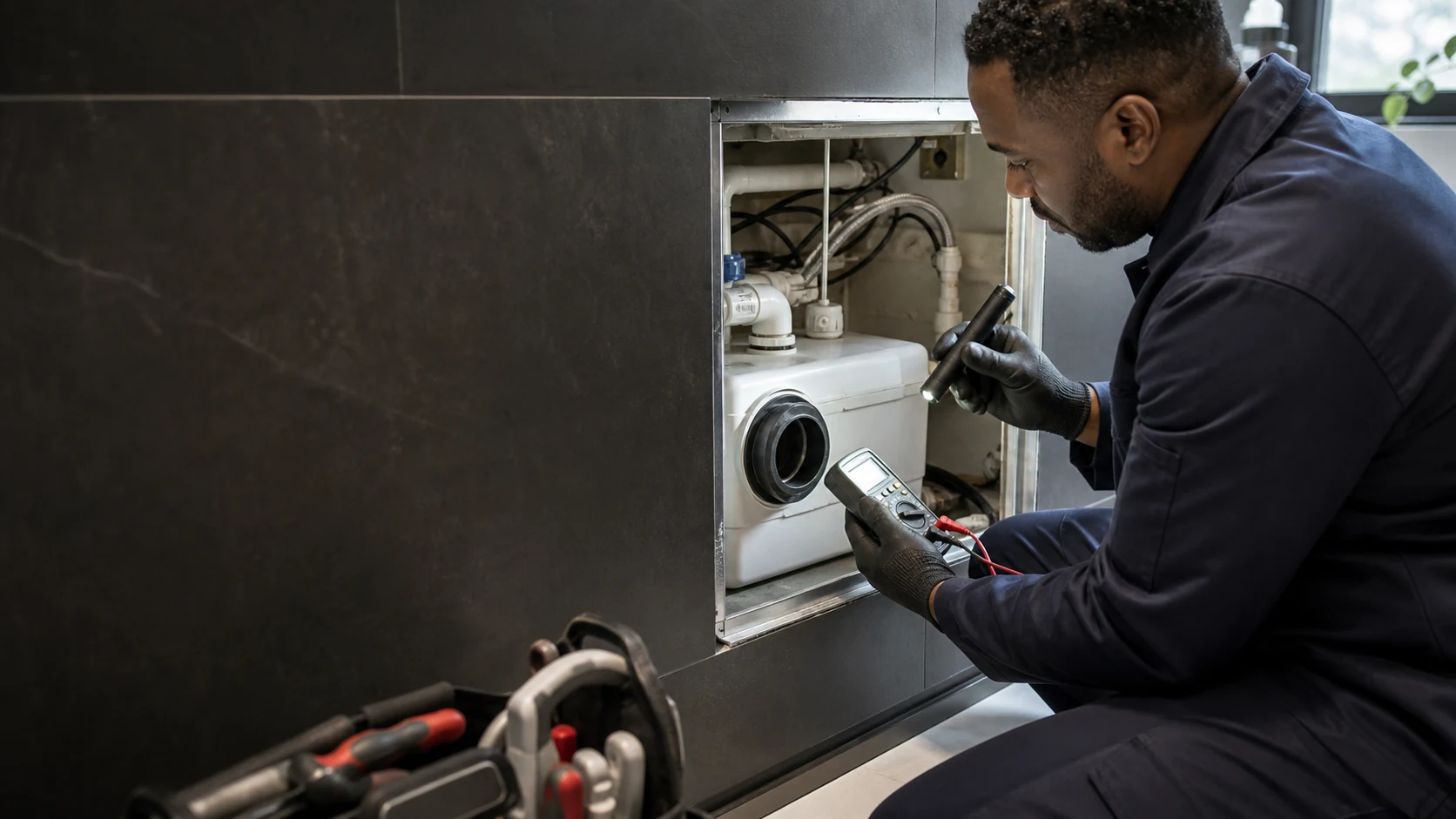
Operating pattern, supply, inlets, discharge and accessible connections assessed together.
Alesta · Saniflo installation and repair in London
Installation and repair for suitable Saniflo and macerator systems, with appliance identity, discharge route, connected fixtures, ventilation and electrical supply reviewed first.
☎ Call 020 3608 3976System before component
Failure to start, repeated cycling, slow discharge, noise or leakage can relate to blockage, internal components, connected fixtures, non-return arrangements, electrical supply or the discharge pipe. Replacing the unit without checking the wider setup can reproduce the same fault.
We request the model, symptoms, installation views and connected appliances before attendance. Sewage contamination, concealed pipework, electrical faults and non-compliant layouts may require separate work or multiple trades.
Operating pattern, supply, inlets, discharge and accessible connections assessed together.
Serviceable components considered against age, contamination, parts and unit condition.
Compatible capacity, fixture connections and pipe routes checked before a new unit is chosen.
Connections and operation tested through the agreed fixtures before handover.
Common reasons customers call
Repeated or prolonged operation can indicate a control, blockage or discharge issue.
Inlet restrictions or poor discharge may affect the toilet, basin, shower or appliance.
Mechanical wear, obstruction, seals or ventilation need safe inspection.
Capacity, falls, power, discharge destination and access must be designed before installation.
Why Alesta for Saniflo work
The exact unit and connected fixtures guide parts, capacity and serviceability.
Pipe route and restriction are checked rather than blaming every symptom on the motor.
Safe isolation and hygiene requirements shape access and repair decisions.
Fixed supply faults are referred to an appropriately qualified electrician.
A system-led repair process
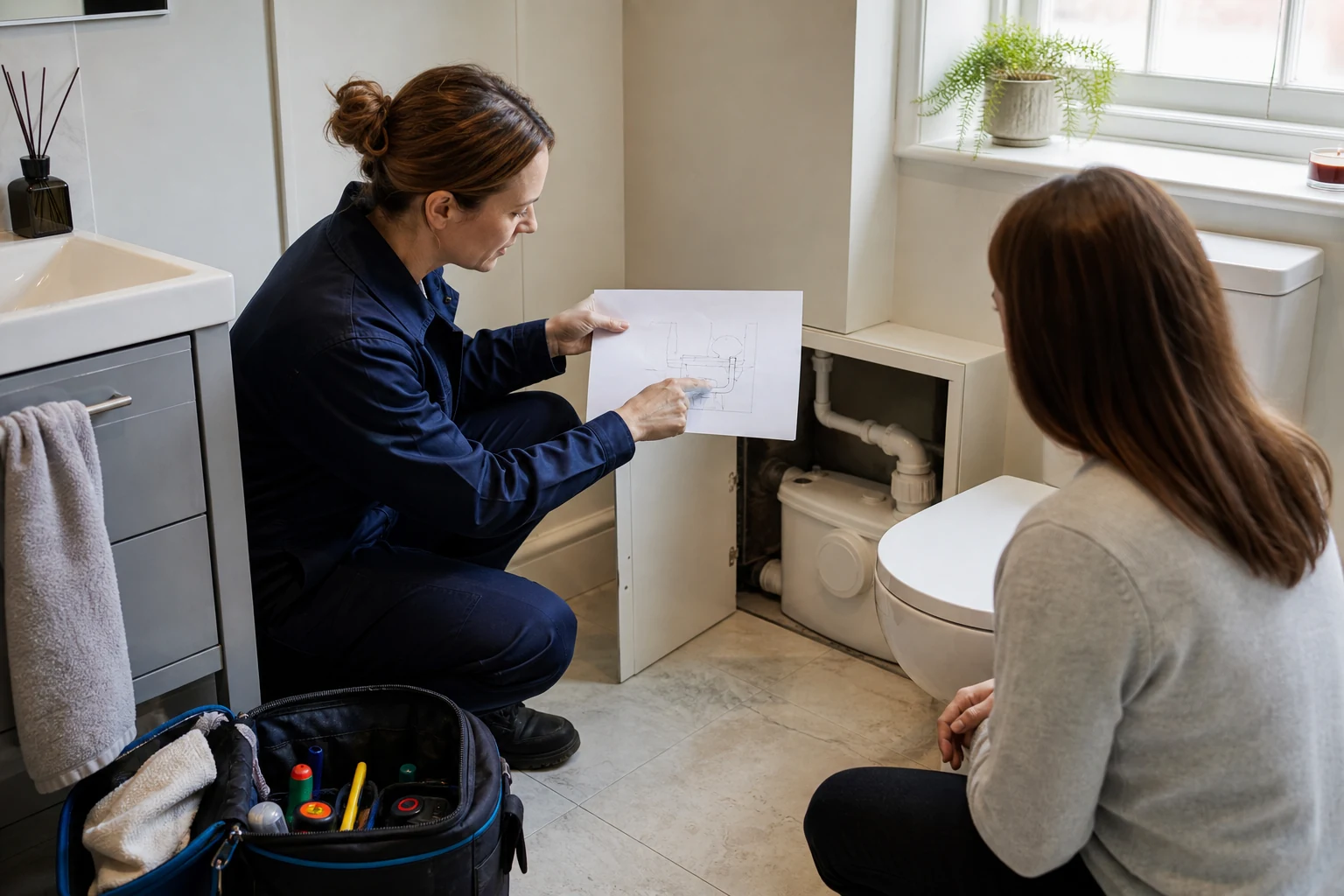
The process starts with appliance identification. We ask for the model label, age, connected fixtures, fault pattern, warning behaviour and photographs showing the unit, inlet and discharge pipes. Customers should explain what entered the system and whether other drains are affected. Power cycling, dismantling and chemical drain products should be avoided because they can create electrical, contamination or component risks and obscure the original symptom.
At the property, the unit and relevant services are isolated before access. The technician checks visible connections, supply behaviour, signs of leakage, inlet condition and discharge response. A blocked downstream pipe can mimic a failed unit, while a fixed electrical fault needs the correct qualified trade. Contaminated areas require controlled handling, and severe leakage or unsafe access may need preliminary cleanup or opening work before diagnosis can continue.
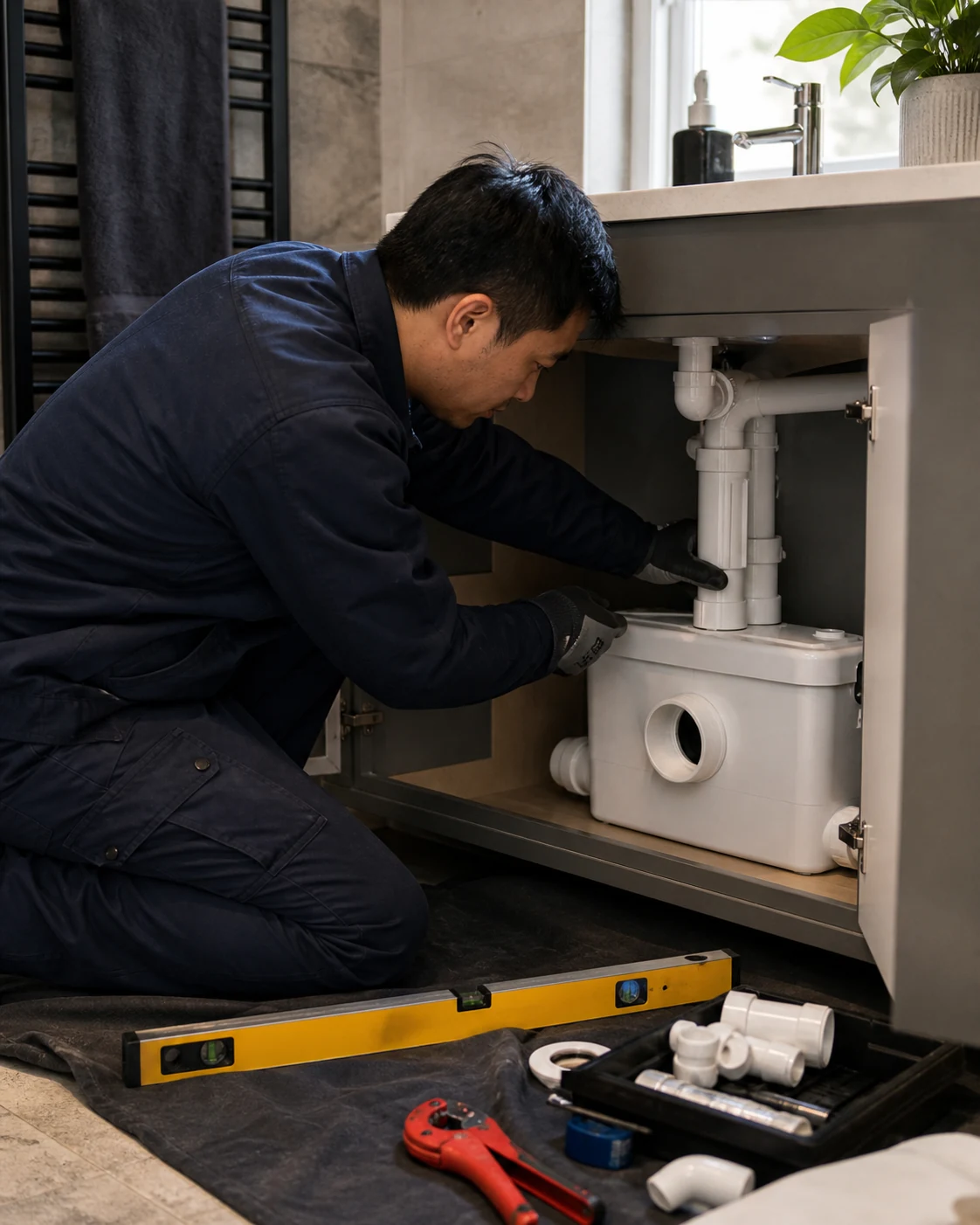
Where repair is viable, the agreed obstruction or serviceable component is addressed and seals or connections disturbed by the work are reinstated appropriately. Parts are matched to the exact model rather than assumed universal. For replacement or new installation, capacity, fixture compatibility, ventilation, pipe gradient, discharge length, access for future service and suitable electrical provision are considered before fitting. Concealed alterations and building work remain separate unless listed.
The system is then tested using the connected fixtures in a controlled sequence, checking starts, stops, leakage and discharge. Customers receive guidance on suitable waste and operating limitations; wipes, sanitary products, excess paper, fats and foreign objects can cause repeat failure. The close-out distinguishes repaired equipment from unresolved pipe, power or installation defects. No repair can guarantee reliability where the wider system remains unsuitable or prohibited items continue to enter it.
Clear pricing
Cost depends on model, fault, contamination, access, parts, connected fixtures, discharge pipework and electrical or building work.
| Service scope | Price | What affects the final price |
|---|---|---|
| Macerator fault assessment | Quoted from model and symptoms | Access, diagnosis, contamination, connections and test time |
| Repair or component replacement | Quoted after diagnosis | Parts, labour, seals, blockage and unit condition |
| Replacement or new installation | Site-specific quotation | Unit, fixtures, pipe route, power, access and building work |
Pricing context: Model photographs and installation views are required for a reliable quote. Fixed electrical work, extensive drainage changes and making good are separate unless expressly included.
How the service works
Send model, connected fixtures, pipe views and exact operating behaviour.
The technician checks unit, inlets, discharge, supply and access.
Agreed work is completed and operation is checked through the fixtures.
Saniflo FAQ
Useful answers about isolation, blockages, chemicals, electrical work, replacement and pricing.
☎ Call 020 3608 3976No. Stop using connected fixtures where safe, isolate according to available instructions and arrange assessment before leakage or motor damage worsens.
Do not use unapproved chemicals. They can damage components, create hazardous conditions and make dismantling unsafe.
No. The motor can run while a blockage, damaged component or discharge problem prevents effective clearance.
No. Capacity, connected fixtures, pipework, power, dimensions and manufacturer requirements must be compatible.
Appliance checks may form part of diagnosis, but fixed wiring, fused spurs and circuit faults require appropriately qualified electrical work.
Only suitable human waste and the recommended amount of toilet paper should enter applicable units. Follow model guidance and never flush wipes or foreign objects.
Model, diagnosis time, contamination, parts, access, pipework, fixture count, replacement requirements and associated trades affect the quote.