
Collection planning · Chelsea

Chelsea waste removal for described household and project loads

Describe the material, show the full load and explain the route from item to vehicle. Those facts are checked before collection scope or timing is agreed.

  • Photographic load assessment
  • Access and carrying route considered
  • Restricted material declared first
  • Quotation based on the assessed work
Call 020 3608 3976
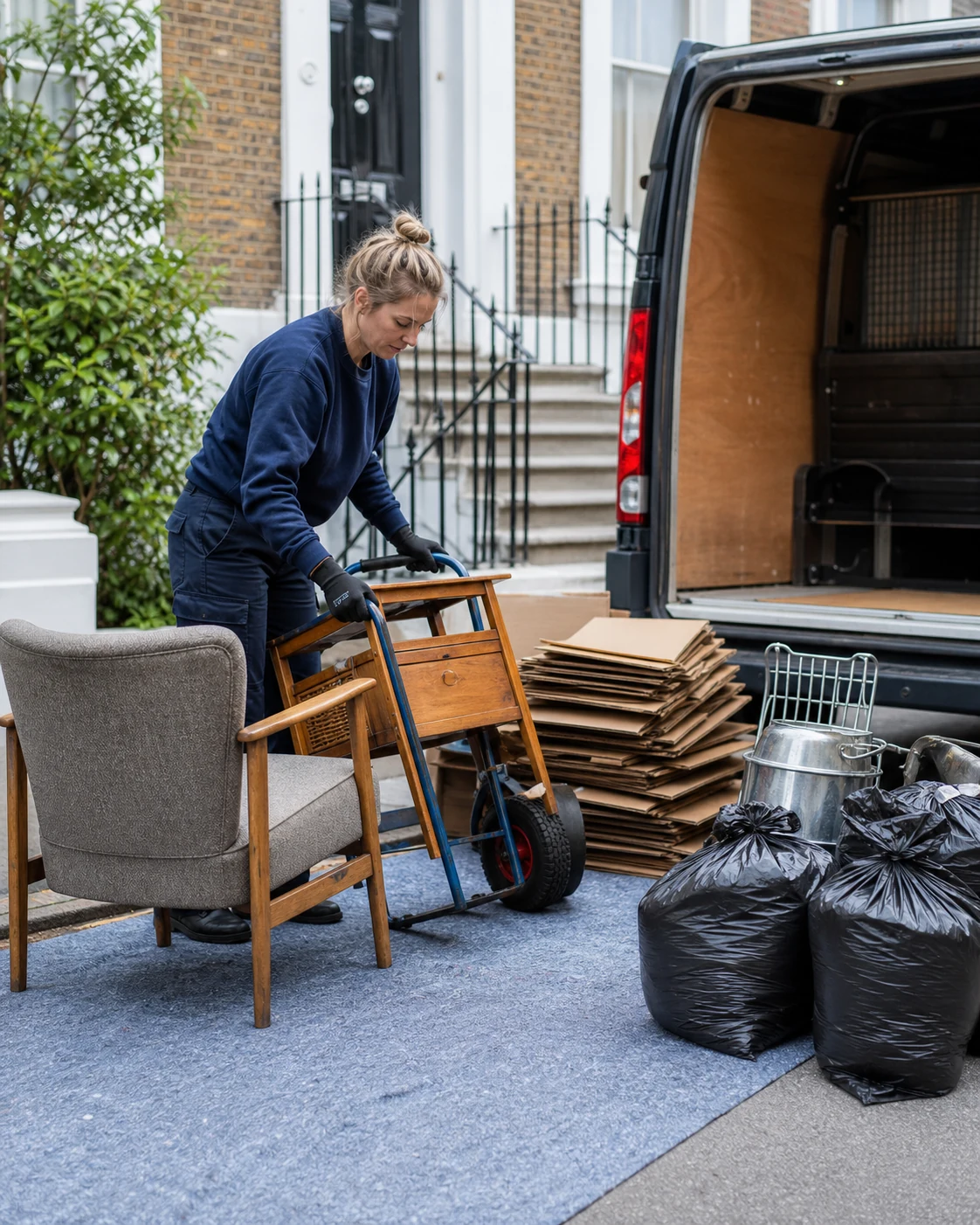
Waste removal team loading sorted household items outside a London home
furniture plus sealed bags planned around limited kerb space and longer internal carries

Quotation basis For the wider booking boundaries, review Alesta's waste collection service.

Tie the Chelsea quotation to declared facts

What is the biggest cost factor?

The estimate follows the pictured contents and stated access. Volume and weight influence capacity; stairs, carrying distance, parking and crew requirements influence the work; material and disposal charges influence onward handling. Agreed safe dismantling may add another task. None of these is replaced by a local flat rate. If an uncertain object is later identified, or the photographed pile grows, explain the revision immediately. A changed factual scope may require a new figure or collection arrangement rather than an unsupported promise to preserve the first quote.

Volume and weightMaterial typeCrew and loading timeStairs, lift and carryVehicle positionAgreed dismantlingDisposal requirementsMultiple collection points

Make the load visible Bulky household pieces can be assessed separately through the separate furniture disposal service.

Give uncertain objects their own line in the inventory

An unidentified container is not ordinary mixed waste merely because it sits beside household bags. Photograph its label, keep it separate and ask before booking. Apply the same clarity to batteries, refrigerants, fuel, chemicals and gas cylinders. For accepted groups, record bag counts, furniture dimensions and dense debris independently. Say whether material is loose, boxed or spread between rooms. This method lets the reviewer consider weight and handling without overlooking vehicle space, while each known stream can be matched to an appropriate route where practical. Note which pictured pieces are definitely included.

Identify the material Declared renovation material should follow the separate project waste removal rather than an ordinary mixed load.

What is being cleared from this Chelsea address?

Describe every group that is present. Do not place uncertain liquids or unlabelled containers inside an ordinary mixed load.

01

Furniture

Freestanding sofas, tables, wardrobes and other bulky household pieces.

02

Bagged household material

Closed bags with their general contents described and unusual weight highlighted.

03

Green material

Cuttings and garden material kept visible and separate where accepted.

04

Renovation debris

Compatible non-hazardous project debris, declared before the quotation.

Property context in Chelsea

Separate a Chelsea clearance into known and uncertain material

Start a Chelsea brief by sorting certainty, not by forcing everything into one category. Furniture, bagged household contents, green material and declared renovation debris can each be photographed as recognisable groups. Anything unusually heavy, leaking, unlabelled or difficult to identify should remain apart until clarified. A whole-load picture establishes scale; close images record condition, sharp edges and labels. Include approximate furniture dimensions and the number of separate rooms involved.

Only after the contents are mapped should the carrying route be described. Note the floor, steps, door widths, lift and distance through shared space, then identify the realistic vehicle position. If the crew cannot load beside the entrance, state the remaining outside carry. This order prevents a neat pile from disguising difficult labour or unsuitable material. It also gives disposal planning a reliable starting point without inventing a recycling result, a standard Chelsea price or a promise about restricted waste.

Material route and limits

Not every item belongs in a mixed load

Reusable and recyclable material is separated where practical. The actual route depends on what is presented, so no fixed recycling percentage is promised.

Batteries, specialist electrical items and hazardous substances need to be identified rather than hidden inside bags or boxes. If the contents or material are uncertain, keep them separate and send a close photograph or label information before booking.

Access changes the work

The nearest door is not always the usable route

Ground floor

Show steps, gates and the distance from door to vehicle.

Flats and stairs

State the floor, stair turns and shared areas.

Lift access

Confirm the working size and any booking rule.

Rear access

Photograph gates, alleys and surface changes.

Restricted parking

Use current signs or authority information.

Bulky pieces

Supply dimensions before dismantling is considered.

Collection sequence

How this removal moves from brief to loading

  1. 01

    Describe

    Send photographs and identify material.

  2. 02

    Check access

    Explain limited kerb space and longer internal carries, floors and vehicle position.

  3. 03

    Agree scope

    Confirm the expected work and quotation basis.

  4. 04

    Compare and load

    The presented load is checked before loading.

  5. 05

    Route material

    Suitable material follows the appropriate disposal route.

Before the team arrives

Resolve doubtful contents before the booked visit

Compare the final pile with the inventory and label every separate stream. Keep personal possessions away from included furniture, and do not place unknown liquids inside general bags. Open the agreed collection rooms, check the lift or staircase, and make the exit usable without creating unstable stacks. The current vehicle position should be reconfirmed rather than remembered from another day. Report extra items early; fixed fittings and service disconnections must already have been handled by an appropriate trade.

  • Send clear, recent photographs
  • Mention stairs, lifts and carrying distance
  • Confirm current parking restrictions
  • Separate material where requested
  • Highlight unusually heavy items
  • Declare restricted or hazardous material

Questions for this collection

Chelsea rubbish removal: practical answers

What belongs in the first Chelsea waste inventory?

List each collection area, furniture piece, household bag group, green material and declared project debris. Add overview photographs plus close views of anything dense, damaged or uncertain.

How should an object with no readable label be treated?

Keep it separate and request clarification with clear photographs. Unknown liquids and unidentified containers cannot be assumed to follow the ordinary mixed-waste route simply because their volume appears small.

Does broken furniture require different information?

Show loose panels, exposed edges and its current dimensions. Damage can change lifting and stable loading, while dismantling remains a separate agreed task rather than an automatic response.

Why list every room when the waste is photographed?

Several modest groups may involve more gathering and carrying than one consolidated pile. Naming all spaces prevents cupboards, basements or outside areas from appearing unexpectedly during the visit.

Can Chelsea access be estimated from the postcode?

No. Give the actual floor, lift, stairs, shared doors and usable loading position. Property-level evidence is required because addresses in one neighbourhood can present entirely different carrying routes.

What changes when dense material is added later?

Extra weight may affect manual handling, vehicle capacity, loading stability and disposal planning even if little additional space is visible. Supply new images before the collection is confirmed.

Is deep cleaning part of the clearance?

A practical sweep of the immediate loading area may be possible after removal, but deep cleaning, repairs and making good are separate services and should not be treated as included.

Can a guaranteed recycling percentage be requested?

No fixed percentage can be promised. Reusable or recyclable material may be separated where practical, depending on its condition and the suitable routes available for the declared contents.

Collection area

Chelsea collection map

Use the map to identify the collection address and describe the actual vehicle approach. Current access restrictions still need to be checked for the proposed date.

Nearby waste removal pages

Return to the Waste Removal Services hub for the service scope.

Chat