Bagged inert residue
Properly contained dust, small plaster or tile fragments can be assessed by bag count and weight.

Alesta · Building waste disposal in London
Collection of ordinary non-hazardous building and refurbishment waste, with the material type, volume, access and loading route confirmed before the team arrives.
☎ Call 020 3608 3976Know what is being collected
Building waste varies in weight, shape and handling requirement. Bagged plaster residue, timber offcuts, metal, tiles, doors, cabinets and flattened packaging cannot be priced accurately from a room count alone. Clear photographs and approximate dimensions help establish the vehicle, team, loading time and whether heavy or awkward items need separate planning.
This service is for agreed ordinary renovation waste. Asbestos, chemicals, wet paint, gas cylinders, clinical waste, contaminated soil and other hazardous or regulated materials need specialist routes and must never be mixed into a general collection.
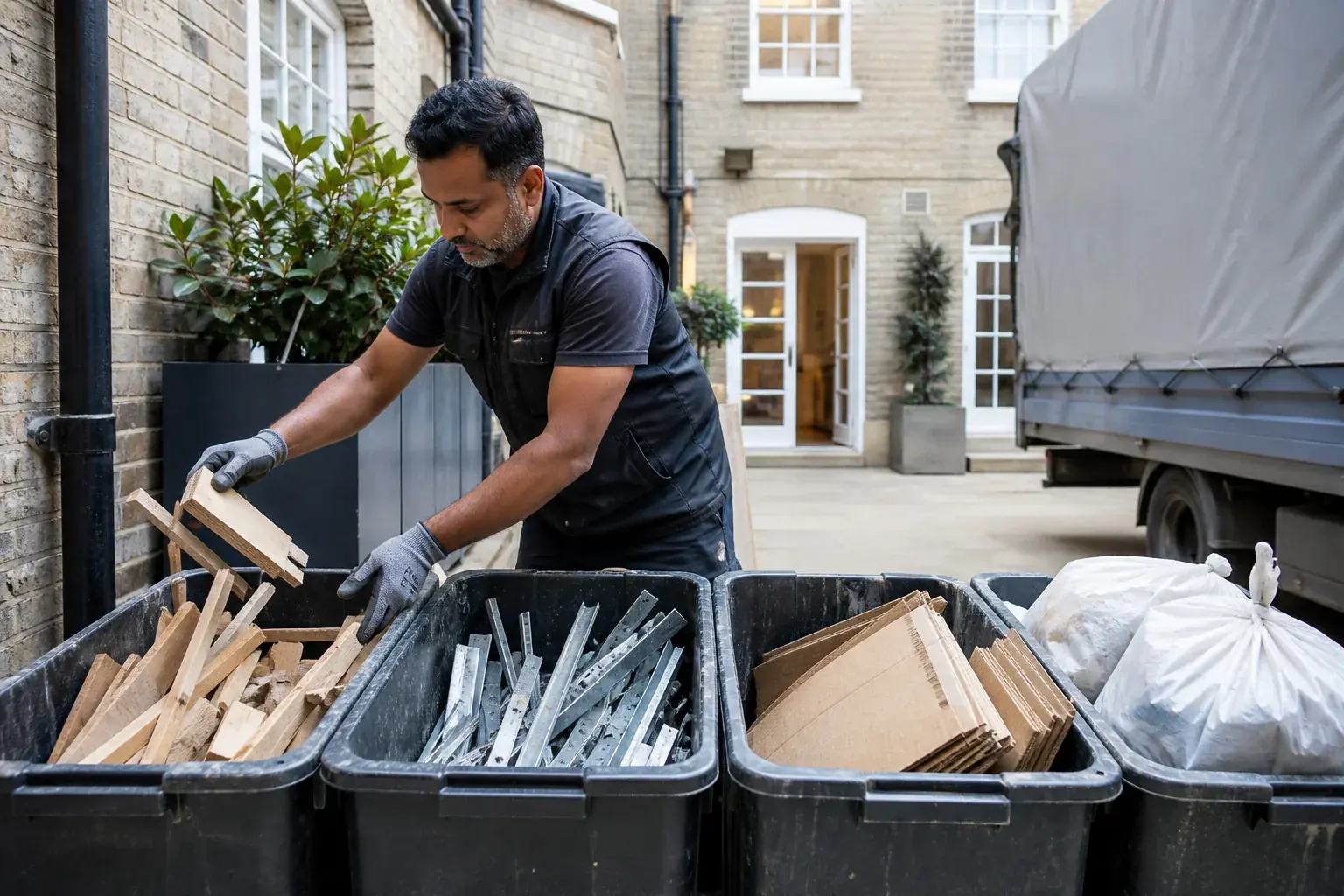
Properly contained dust, small plaster or tile fragments can be assessed by bag count and weight.
Manageable lengths of wood and boards are planned around volume, fixings and safe handling.
Dismantled cabinets, doors, sanitary items and flattened packaging can be listed in the scope.
Agreed material groups are kept orderly and loaded through the confirmed access route.
Common reasons customers call
Old cabinets, sanitary items, tiles, packaging and manageable offcuts need a planned collection.
Sheet material, timber and bagged non-hazardous debris are occupying working or circulation space.
The property owner needs a separate team to remove listed materials before cleaning or handover.
Access, weight or programme means several defined collections are safer than one overloaded visit.
Why Alesta for building waste disposal
Material groups, approximate volume and awkward items are reviewed before vehicle planning.
Unacceptable waste is identified before collection rather than discovered after loading begins.
Stairs, lifts, shared halls, floors and parking constraints are considered in the plan.
The agreed areas are reviewed so remaining items or separate scopes are not ambiguous.
A considered collection
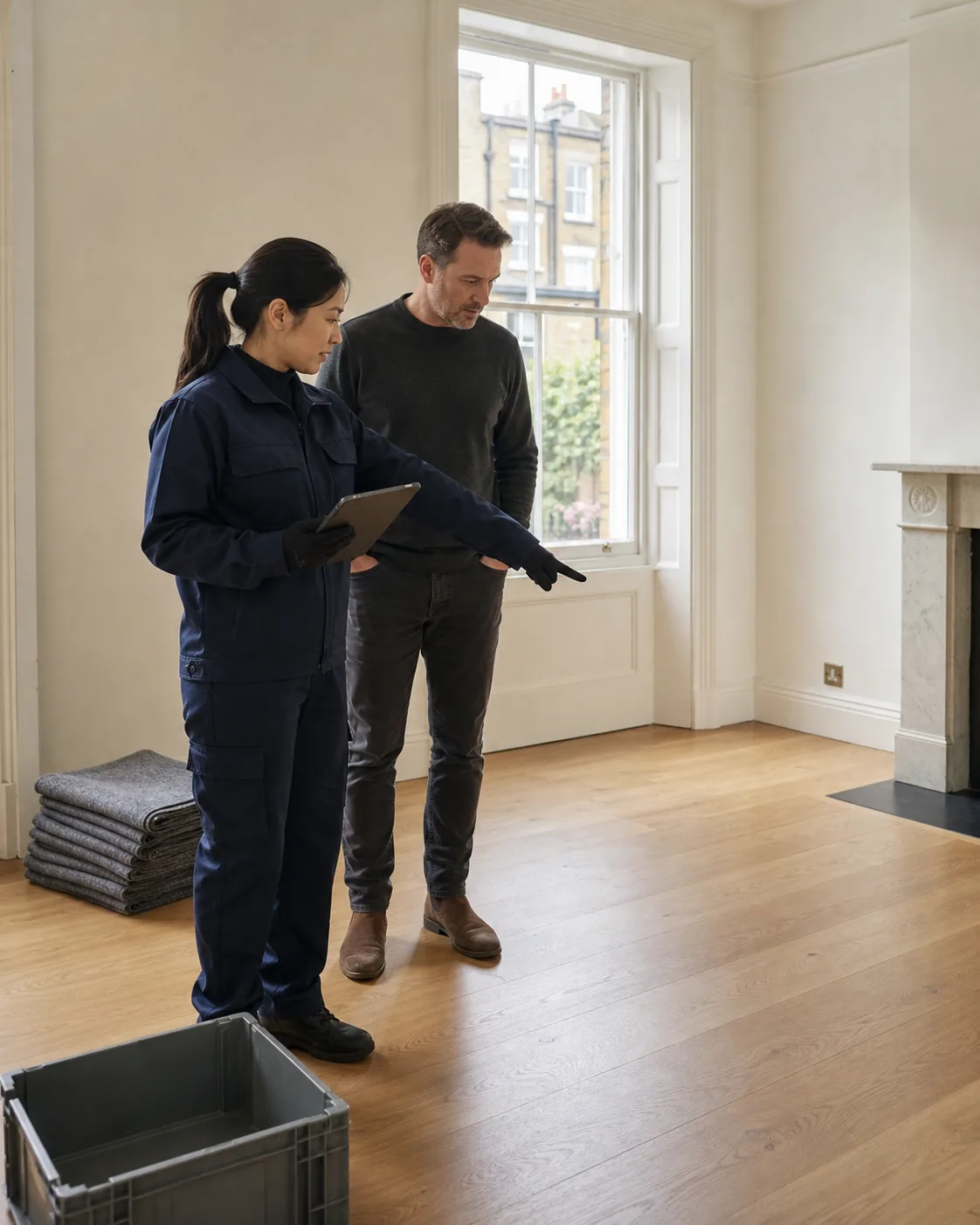
Every collection begins with an inventory. We ask what work produced the waste, which materials are present, how they are contained and roughly how much space they occupy. Photographs should show the whole pile and a familiar object for scale. Heavy bags, long timber, sheet material, doors, worktops, sanitary items and appliances are listed separately. This allows the vehicle capacity, lifting requirement and loading time to be planned rather than guessed at the kerb.
We also establish what cannot travel in the general load. Suspected asbestos, chemicals, solvents, wet paint, oils, batteries, gas cylinders, clinical material, contaminated soil and unidentified substances require appropriate specialist disposal. Plasterboard and some other materials may need separation. If anything is uncertain, it should remain isolated and be described before the visit. Mixing excluded material into sealed bags can stop the collection and create avoidable cost.
Access is then planned from the waste to the vehicle. The team needs to know about stairs, basement routes, small lifts, controlled parking, red routes, long carries and shared entrances. Loose dust and sharp fixings should be contained; overloaded bags may need repacking. Floors and common areas can be protected where agreed, and material groups are kept orderly so they can be loaded safely. Items outside the confirmed inventory are reviewed before they are added to the collection.
At completion, the team checks the agreed collection area with the customer. Ordinary sweeping associated with lifting the waste may be included in the scope, but a detailed after-builders clean is a separate service with different equipment and time. Any excluded item left behind is identified rather than concealed in the handover. The aim is a documented, practical clearance that leaves the property ready for its next stage and sends accepted material through the appropriate waste route.
Clear pricing
The final cost reflects the material mix, total volume and weight, loading route, labour time and disposal requirements.
| Service scope | Price | What affects the final price |
|---|---|---|
| Small ordinary builders-waste collection | From £100 | Bag count, material weight, parking, carrying distance and loading time |
| Larger mixed renovation load | Quoted from photos | Vehicle space, material separation, heavy items, stairs and controlled access |
| Heavy, awkward or additional items | Quoted separately | Extra labour, specialist handling and any disposal route outside the agreed load |
Pricing context: A small, accessible ordinary building-waste collection can start from £100. Clear photographs are required before confirmation. Hazardous or unidentified materials are excluded and require an appropriate specialist route.
How the service works
Show the complete pile, identify heavy or long items and describe where the waste is stored.
We agree the expected load, carrying route, parking and any material that needs another disposal method.
The accepted material is collected safely and the agreed area is checked with you before handover.
Building waste disposal FAQ
Useful answers about accepted materials, preparation, access, loading and final pricing.
☎ Call 020 3608 3976Ordinary non-hazardous renovation waste can include bagged rubble, timber offcuts, metal, tiles, doors, cabinets, sanitary items and flattened packaging, subject to the agreed inventory.
Suspected asbestos, chemicals, solvents, wet paint, oils, batteries, gas cylinders, clinical waste and unidentified or contaminated material need an appropriate specialist disposal route.
Send wide photographs of the full pile plus close views of heavy or unusual items. Include approximate dimensions and bag counts so vehicle space and labour can be planned.
Loose dust, small fragments and sharp fixings should be safely contained. Do not overload bags, hide excluded material or mix liquids with ordinary dry building waste.
Plasterboard may require separation from the general load. Identify it clearly in advance so its quantity and disposal arrangement can be confirmed before collection.
No. Ordinary sweeping connected with lifting the agreed waste may be included, but detailed dust removal and surface cleaning are a separate after-builders cleaning service.
Volume, weight, material type, stairs, long carries, parking restrictions, loading time, extra items and any required separation can all change the confirmed price.