
Furniture
Freestanding sofas, tables, wardrobes and other bulky household pieces.
Collection planning · Chiswick
Describe the material, show the full load and explain the route from item to vehicle. Those facts are checked before collection scope or timing is agreed.
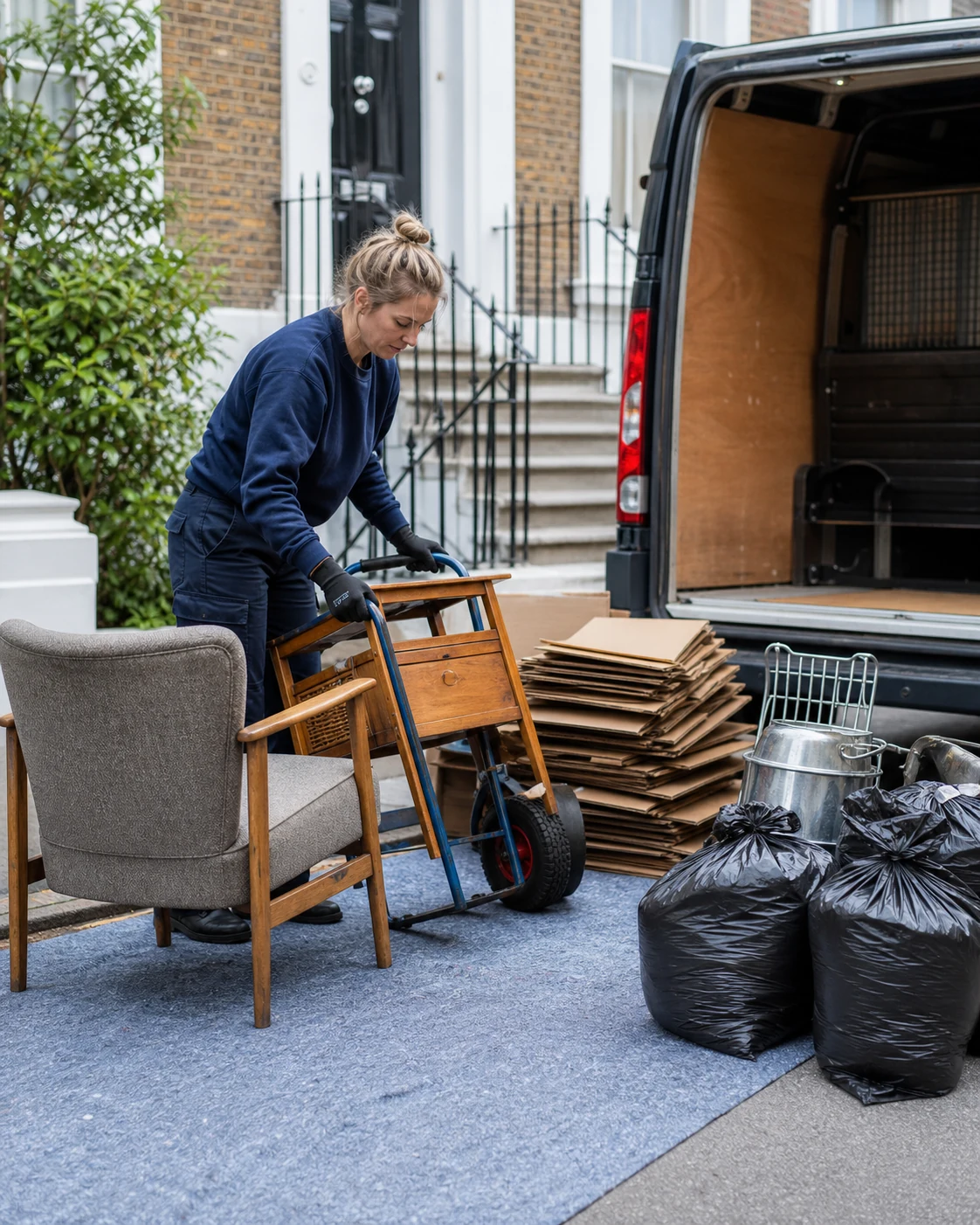
Identify the material For the wider booking boundaries, review Alesta's main waste removal service.
Describe every group that is present. Do not place uncertain liquids or unlabelled containers inside an ordinary mixed load.
Freestanding sofas, tables, wardrobes and other bulky household pieces.
Closed bags with their general contents described and unusual weight highlighted.
Cuttings and garden material kept visible and separate where accepted.
Compatible non-hazardous project debris, declared before the quotation.
Material route and limits Bulky household pieces can be assessed separately through the bulky furniture disposal.
Reusable and recyclable material is separated where practical. The actual route depends on what is presented, so no fixed recycling percentage is promised.
Batteries, specialist electrical items and hazardous substances need to be identified rather than hidden inside bags or boxes. If the contents or material are uncertain, keep them separate and send a close photograph or label information before booking.
Property context in Chiswick Declared renovation material should follow the separate renovation waste collection rather than an ordinary mixed load.
A useful Chiswick brief starts by separating what is being removed. Group furniture, bagged household contents, green material and declared renovation debris, then photograph each group in full. Add closer views of broken edges, heavy pieces and labels. Approximate dimensions are valuable for a sofa, cabinet or table that must pass through a narrow hall. Anything leaking, unlabelled or potentially restricted should remain isolated until identified.
Next, walk the actual route to the street. Record steps, side passages, shared entrances, floor level and any lift, followed by the likely distance to the vehicle. Residential access does not guarantee that loading is possible beside the door, particularly where stopping controls or other property arrangements apply. State the current facts rather than relying on a previous visit. Combining a clear material inventory with an honest carrying route supports decisions about labour, capacity and onward handling without inventing a neighbourhood rate or disposal outcome.
Make the load visible
Do not use visible volume as a substitute for an inventory. Count contained bags, measure awkward furnishings and name the substance of project debris, which may be heavy despite occupying little room. Show loose garden material separately and explain how it will be contained. Wide photographs establish scale; detail images reveal sharp fragments, damage and uncertain contents. List every included room, shed or outside area so nothing remains hidden behind the main pile. This evidence helps assess handling, loading stability and suitable disposal routes. If furniture might need taking apart, discuss it before collection because only agreed, safe dismantling can form part of the plan.
Access changes the work
Show steps, gates and the distance from door to vehicle.
State the floor, stair turns and shared areas.
Confirm the working size and any booking rule.
Photograph gates, alleys and surface changes.
Use current signs or authority information.
Supply dimensions before dismantling is considered.
Quotation basis
The quoted figure depends on the described material, volume, weight, crew time, access, parking and applicable disposal charges. A compact group of dense debris may require different handling from lightweight furniture of similar apparent size. Several collection points or a long side passage can also add labour. Chiswick itself does not create a fixed tariff. Photographs and route notes define the assessed scope. If bags are added, a shed is included later or the planned vehicle position changes, provide revised details so cost and capacity can be checked before arrival.
Before the team arrives
Keep the photographed groups identifiable and place possessions that remain well away from them. Open agreed rooms, check gates or communal doors and confirm that the stated loading information is still current. Remove simple trip hazards, but do not lift dangerously, disconnect services or dismantle furniture unless this was arranged. Report new items or changed access with updated photographs. Unknown liquids and restricted materials stay labelled and separate from ordinary bags, while fixed fittings require the relevant specialist trade.
Collection sequence
Send photographs and identify material.
Explain controlled parking and residential access, floors and vehicle position.
Confirm the expected work and quotation basis.
The presented load is checked before loading.
Suitable material follows the appropriate disposal route.
Questions for this collection
Take an overview of every included area, then provide bag counts and approximate dimensions for large items. Close images should identify dense, broken or uncertain material that a wide photograph cannot describe reliably.
Give the floor served, usable lift dimensions and the alternative staircase. Even a normally reliable lift should be reported unavailable if its status changes, because the carrying plan and labour may need reassessment.
Its material and weight can differ greatly from household contents while appearing small in a picture. Separate views support safer lifting, stable vehicle loading, capacity assessment and selection of an appropriate disposal route.
No. Keep them separate and provide labels or clear photographs for clarification. Chemicals, solvents, paint, fuel and unknown liquids are restricted streams and must not be concealed within an ordinary mixed collection.
Dimensions help compare the item with doorways, gates and stair turns, while photographs show its condition. They also reveal whether safe dismantling needs discussion in advance instead of being improvised during the visit.
Explain how it is opened, any timed access, internal steps and the distance from the collection area. Mention arrangements controlled by a resident or building contact so the crew is not relying on unrestricted entry.
Deep cleaning, repairs and making good should not be assumed. A practical sweep of the immediate loading area may be possible after removal, but any wider cleaning requirement needs to be discussed separately.
Report it as soon as it enters the scope and send photographs of its contents and route. Another area can add volume, weight and carrying time that were absent from the original assessment.
Collection area
Use the map to identify the collection address and describe the actual vehicle approach. Current access restrictions still need to be checked for the proposed date.
Return to the Waste Removal Services hub for the service scope.
