
Collection planning · Hendon

Hendon waste collection with access agreed before arrival

Describe the material, show the full load and explain the route from item to vehicle. Those facts are checked before collection scope or timing is agreed.

  • Photographic load assessment
  • Access and carrying route considered
  • Restricted material declared first
  • Quotation based on the assessed work
Call 020 3608 3976
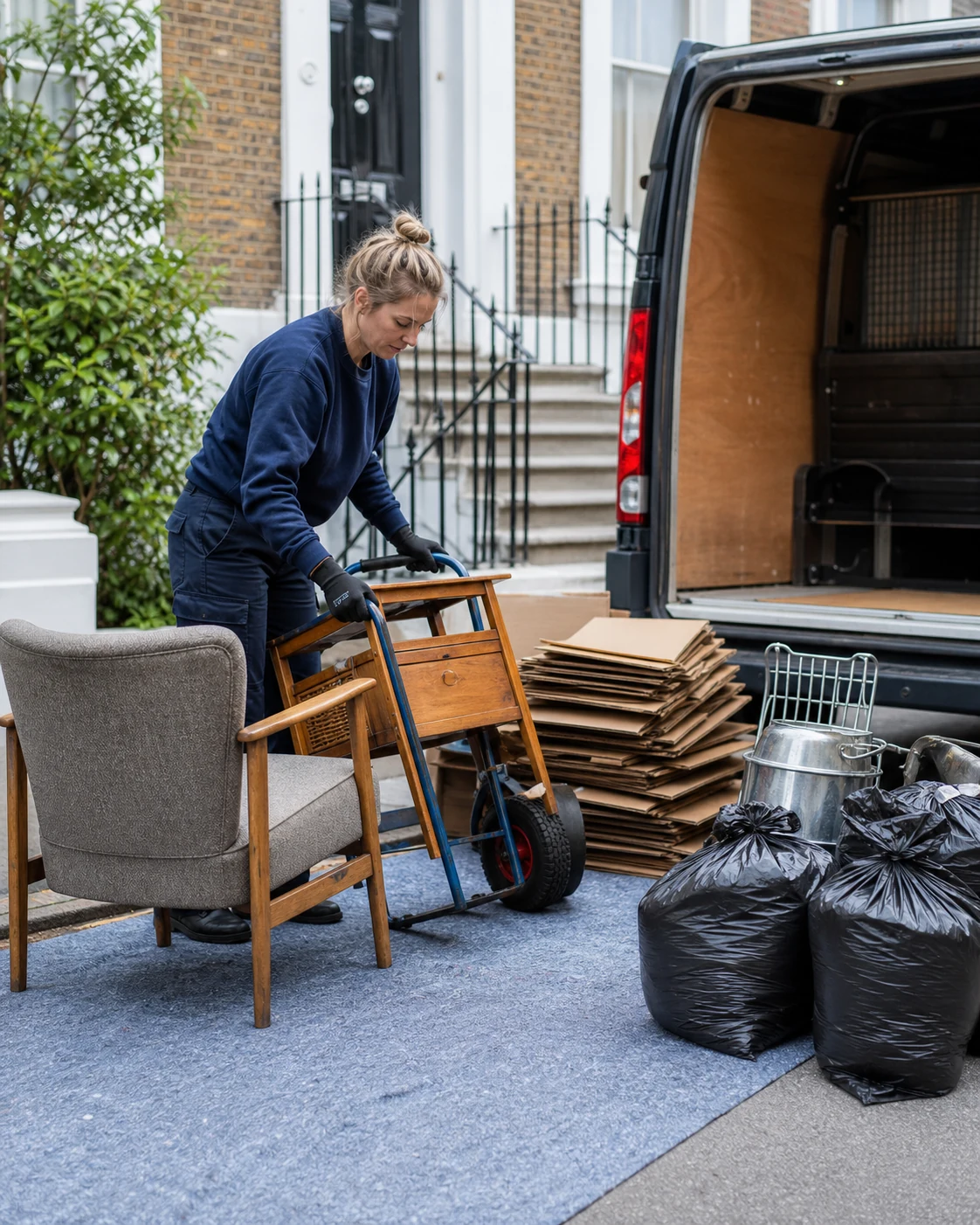
Waste removal team loading sorted household items outside a London home
a bulky furniture collection planned around restricted residential roads

Make the load visible For the wider booking boundaries, review Alesta's main waste removal service.

Use measured groups to prevent double counting

Photograph each room or outside space as a complete group and add an approximate count beside it. When the same sofa or stack appears from another angle, say so explicitly. Furniture measurements reveal awkward shape; bag counts show quantity; a description of contents indicates likely weight. Dense building material should never disappear behind a broad label such as miscellaneous waste. Keep restricted or unidentified items apart from accepted groups. These checks stop repeated images from inflating the inventory and help assess lifting, vehicle capacity, stable loading and suitable onward treatment using the actual scope rather than an optimistic visual estimate.

Property context in Hendon Bulky household pieces can be assessed separately through the bulky furniture disposal.

Anchor a Hendon collection to the real vehicle position

The useful starting point for a Hendon clearance is not the postcode but the place where a collection vehicle could actually load. Note any controlled bay, restricted access, private road arrangement or distance from the entrance. Then walk inward along the route the crew would use, recording external steps, gates, communal doors, floor level and lift availability. Photographs should show the narrowest turn alongside the largest furniture dimensions, especially where the property includes more than one collection area.

Inventory the contents without merging unlike material. Count ordinary household sacks, identify each bulky item, show green waste separately and describe declared renovation debris by substance. Dense fragments, broken edges and anything with uncertain contents need close views. Chemicals, batteries, fuel, gas cylinders and unidentified liquids remain outside the ordinary mixed group until clarified. Confirm that the person arranging collection has authority over every listed object. This evidence connects material, weight and carrying work to the appropriate disposal plan, while avoiding a made-up Hendon price or an unsupported promise that everything will fit in one journey.

Before the team arrives Declared renovation material should follow the separate renovation waste collection rather than an ordinary mixed load.

Confirm authority, access and contents before arrival

Make sure the person booking the visit is entitled to release all listed objects. Separate items that remain, empty personal papers from furniture and keep the photographed groups recognisable. Recheck keys, shared doors, lift operation and the vehicle approach. Report any new sacks or altered materials immediately. Restricted substances stay isolated and declared, while plumbing or electrical disconnection, fixed fittings and structural removal need separate qualified arrangements before an item is presented for ordinary collection.

  • Send clear, recent photographs
  • Mention stairs, lifts and carrying distance
  • Confirm current parking restrictions
  • Separate material where requested
  • Highlight unusually heavy items
  • Declare restricted or hazardous material

Quotation basis

What may change a Hendon collection assessment

What is the biggest cost factor?

Material, volume, weight, crew time and disposal charges provide the core of the quotation. The carrying route adds property-specific facts such as stairs, gates, a failed lift or a distant lawful loading position. Safe dismantling contributes only when discussed and agreed. No standard Hendon rate replaces those details or the evidence collected for the individual address. Added rooms, underestimated debris or changed access can affect capacity and labour, so the original figure should be checked against new photographs before the collection proceeds.

Volume and weightMaterial typeCrew and loading timeStairs, lift and carryVehicle positionAgreed dismantlingDisposal requirementsMultiple collection points

Identify the material

What is being cleared from this Hendon address?

Describe every group that is present. Do not place uncertain liquids or unlabelled containers inside an ordinary mixed load.

01

Furniture

Freestanding sofas, tables, wardrobes and other bulky household pieces.

02

Bagged household material

Closed bags with their general contents described and unusual weight highlighted.

03

Green material

Cuttings and garden material kept visible and separate where accepted.

04

Renovation debris

Compatible non-hazardous project debris, declared before the quotation.

Material route and limits

What must be declared separately

Reusable and recyclable material is separated where practical. The actual route depends on what is presented, so no fixed recycling percentage is promised.

Unknown liquids, paints, solvents, fuel and refrigerants must be declared before any collection is discussed. Batteries, specialist electrical items and hazardous substances need to be identified rather than hidden inside bags or boxes.

Access changes the work

Floors and distance belong in the quote

Ground floor

Show steps, gates and the distance from door to vehicle.

Flats and stairs

State the floor, stair turns and shared areas.

Lift access

Confirm the working size and any booking rule.

Rear access

Photograph gates, alleys and surface changes.

Restricted parking

Use current signs or authority information.

Bulky pieces

Supply dimensions before dismantling is considered.

Collection sequence

A collection with visible decision points

  1. 01

    Describe

    Send photographs and identify material.

  2. 02

    Check access

    Explain restricted residential roads, floors and vehicle position.

  3. 03

    Agree scope

    Confirm the expected work and quotation basis.

  4. 04

    Compare and load

    The presented load is checked before loading.

  5. 05

    Route material

    Suitable material follows the appropriate disposal route.

Questions for this collection

Planning answers for a Hendon collection

Why must the Hendon loading position be described precisely?

A lawful stopping place may still be some distance from the entrance. The complete outside carry, including gates and steps, affects crew time and handling even when internal access is simple.

Who can authorise objects for collection?

The person arranging the service should have ownership or clear authority over every included item. Resolve uncertainty with landlords, managers or other responsible parties before the crew arrives.

How can photographs avoid double counting furniture?

Label views by room and mention when an object appears from several angles. A short inventory tied to each image helps distinguish extra pieces from repeated photographic coverage.

Does a compact pile of rubble count as a small load?

Not automatically. Building debris can be dense enough to affect lifting, loading stability and vehicle capacity. Identify the material and show its depth instead of relying on floor area.

What if access is through a managed communal entrance?

Confirm the current entry procedure, keys and any time or route arrangement with the relevant contact. Provide those facts during assessment rather than assuming unrestricted access on collection day.

Can connected equipment be removed by the clearance team?

Plumbing and electrical disconnection require separate appropriate work. Arrange that first and confirm the item is safely free-standing; ordinary collection should not be expected to include technical isolation.

Will the cleared area receive a deep clean?

Deep cleaning, repairs and making good are separate from waste collection. A practical sweep of the immediate loading area may be possible, but broader cleaning should be booked independently.

How are reusable items considered after collection?

Suitable pieces may be separated for reuse or recycling where practical. Condition, material and available routes determine the outcome, so no universal diversion percentage should be promised.

Collection area

Hendon collection map

Use the map to identify the collection address and describe the actual vehicle approach. Current access restrictions still need to be checked for the proposed date.

Nearby waste removal pages

Return to the Waste Removal Services hub for the service scope.

Chat