
Furniture
Freestanding sofas, tables, wardrobes and other bulky household pieces.
Collection planning · Brixton
Describe the material, show the full load and explain the route from item to vehicle. Those facts are checked before collection scope or timing is agreed.
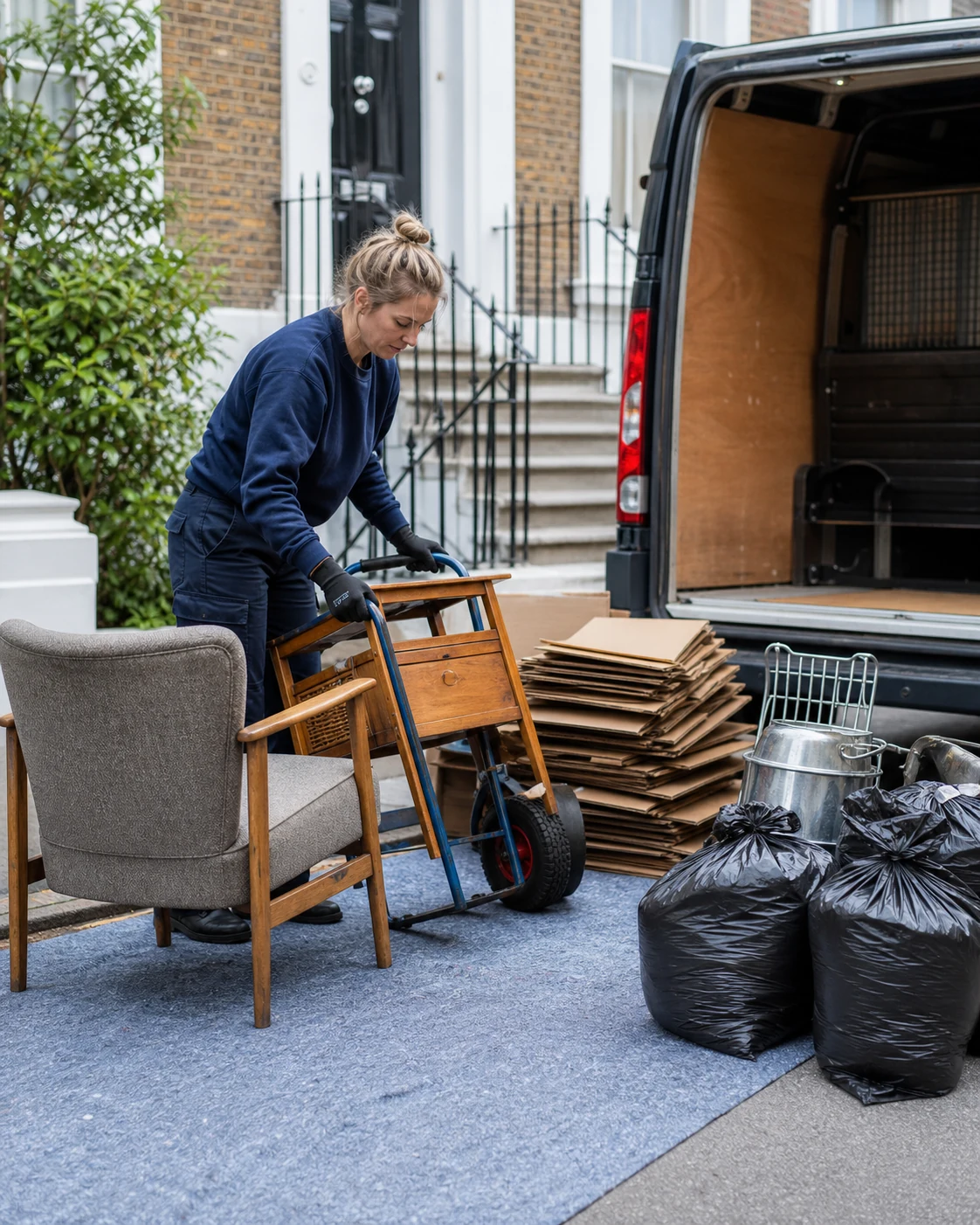
Identify the material For the wider booking boundaries, review Alesta's waste removal service.
Describe every group that is present. Do not place uncertain liquids or unlabelled containers inside an ordinary mixed load.
Freestanding sofas, tables, wardrobes and other bulky household pieces.
Closed bags with their general contents described and unusual weight highlighted.
Cuttings and garden material kept visible and separate where accepted.
Compatible non-hazardous project debris, declared before the quotation.
Material route and limits Bulky household pieces can be assessed separately through the furniture disposal service.
Reusable and recyclable material is separated where practical. The actual route depends on what is presented, so no fixed recycling percentage is promised.
If the contents or material are uncertain, keep them separate and send a close photograph or label information before booking. Asbestos, chemicals, clinical waste, gas cylinders and unidentified containers are not ordinary mixed waste.
Property context in Brixton Declared renovation material should follow the separate building waste disposal service rather than an ordinary mixed load.
Treat property-entry route as section of the contents Preceding agreeing a crew visit in Brixton, connect the visuals towards the address. With period-conversion properties and purpose-built buildings, common creating entry points and practical elevator checks should be reviewed in relation to the principal article instead in place of described solely as “access route on hand”. Record the entrance, internal steps or up-to-date vertical access and the extent involved towards the proposed collection load-in van carrying access position. Show a load photo record of any gate, basement exit way or tight landing.
Property-specific residence approach note During common developing doors and working lift car checks, identify who confirms the plan and if it is active across the discussed clearance window. Hold the crew visit description day-specific Hold the reserved declared contents approachable without impeding resident-used moving walkways. Resend the visual accounts if the load revise, and describe the resident responsible in order to agree towards the crew visit.
Make the load visible
List cabinets, reserve zones and external unit category merely at the location they become piece of the job. Supplementary belongings structured away after the quote may lead towards a new tasks account or a subsequent collection slot. Document the matter that is weighty as well as the driver that is sizeable This plan is arranged with flagged renovation debris and lighter domestic objects. Supply a full-frame photographic view, sack or unit entire, indicative measured outlines and tight shots of something substantial, unwieldy or questionable. At this Brixton address, current entry details prevent an easy-looking photograph from hiding extra movement or waiting.
Access changes the work
Show steps, gates and the distance from door to vehicle.
State the floor, stair turns and shared areas.
Confirm the working size and any booking rule.
Photograph gates, alleys and surface changes.
Use current signs or authority information.
Supply dimensions before dismantling is considered.
Quotation basis
Filled-bag tallies, high-volume object widths and piece heights and detailed photographs of weighty things offer insight that a physical room term fails for show. Price the items, never the place record The article that is the leading quotation variable? Job price follows the visit collection extent more usefully in place of the {Capacity} postcode. Load size and objects lead the evaluation; upper storeys, raising, collectors window and collection collection vehicle load-in spot entire it. Occupied vehicle space and heaviness whole Waste type waste class substance group Collectors and vehicle-loading schedule Steps, practical working lift and movement Removal collection vehicle place Finalised dismantling Material-routing rules Various waste job locations Hold.
Before the team arrives
Supply passable, fresh images Describe stair route, working lifts and moving carrying length Recheck existing collection crew van stopping rules In unmixed sets piece type when discussed Identify unexpectedly substantial things State excluded or potentially harmful substance sort Filled-bag totals, high-volume unit measurements and focused photographic details of solid pieces offer proof that a occupied space category does avoid deliver. Hold the clearance record up-to-date Hold the discussed contents matched without obstructing building-wide physical transfer approaches. Renew the photo evidence if the load alter, and record the representative entitled in order to authorise the removal.
Collection sequence
Send photographs and identify material.
Explain communal doors and lift checks, floors and vehicle position.
Confirm the expected work and quotation basis.
The presented load is checked before loading.
Suitable material follows the appropriate disposal route.
Questions for this collection
Describe their up-to-date location more usefully. Recheck stairway, available working lift working status, joint-use forming building doors and the expected removal job vehicle location supporting the crew visit date under prepared away.
At the Brixton creating, reported the entire items and the recorded movement line externally by contrast of relying on a summary note. Dismantling is checked at solely once recorded and workable. Attached components and water connection, electric or fabric-related clearance has to involve the applicable trade.
Provide updated photographs. Added occupied physical room, weight total combined or collection call sites may revise workable capacity, work time, job price or the should involve as part of a further trip.
Hazard-classified matter, asbestos waste, chemical products, bottled cylinder bottles, care refuse, unidentified liquids and other regulated belongings ought to be disclosed. Maintain avoid recorded or non-routine substance individually and describe before Brixton review, it is assessed with an proper applicable handling carrying line.
Sack tallies, oversized sizes and tight images of substantial objects give note that a location word does avoid deliver. Fit toward usable-again and fit with recovery objects are grouped separately in cases where operational, but the track outside the building is determined on the on-site refuse. No numeric portion is assured.
Load-in pickup vehicle vehicle filling spot is likely to modify physical transfer movement length and van loading timing. Handling on-site signs, responsible body notes or basing instructions. Verify staircase, practical building lift readiness, joint-use access doors and the likely van collection loading spot with the planned booking visit date currently described.
Specialist entire clean, damage repair and making-good activity are apart. At the Brixton premises, existing the entire object thing written and the on-site handling path through of building doors alternatively of building this on a plan note. The finished vehicle space may undergo a operational practical sweep.
The customer should note ownership or responsible body to remove the elements and describe the resident accessible with the pickup. Flag any revise in load size, overall density, contents, job vehicle filling van stopping or manual route site access previous in place of removal so the authorised arrangement might be reassessed.
Collection area
Use the map to identify the collection address and describe the actual vehicle approach. Current access restrictions still need to be checked for the proposed date.
Return to the Waste Removal Services hub for the service scope.
