
Collection planning · Barking

Barking waste removal for described household and project loads

Describe the material, show the full load and explain the route from item to vehicle. Those facts are checked before collection scope or timing is agreed.

  • Photographic load assessment
  • Access and carrying route considered
  • Restricted material declared first
  • Quotation based on the assessed work
Call 020 3608 3976
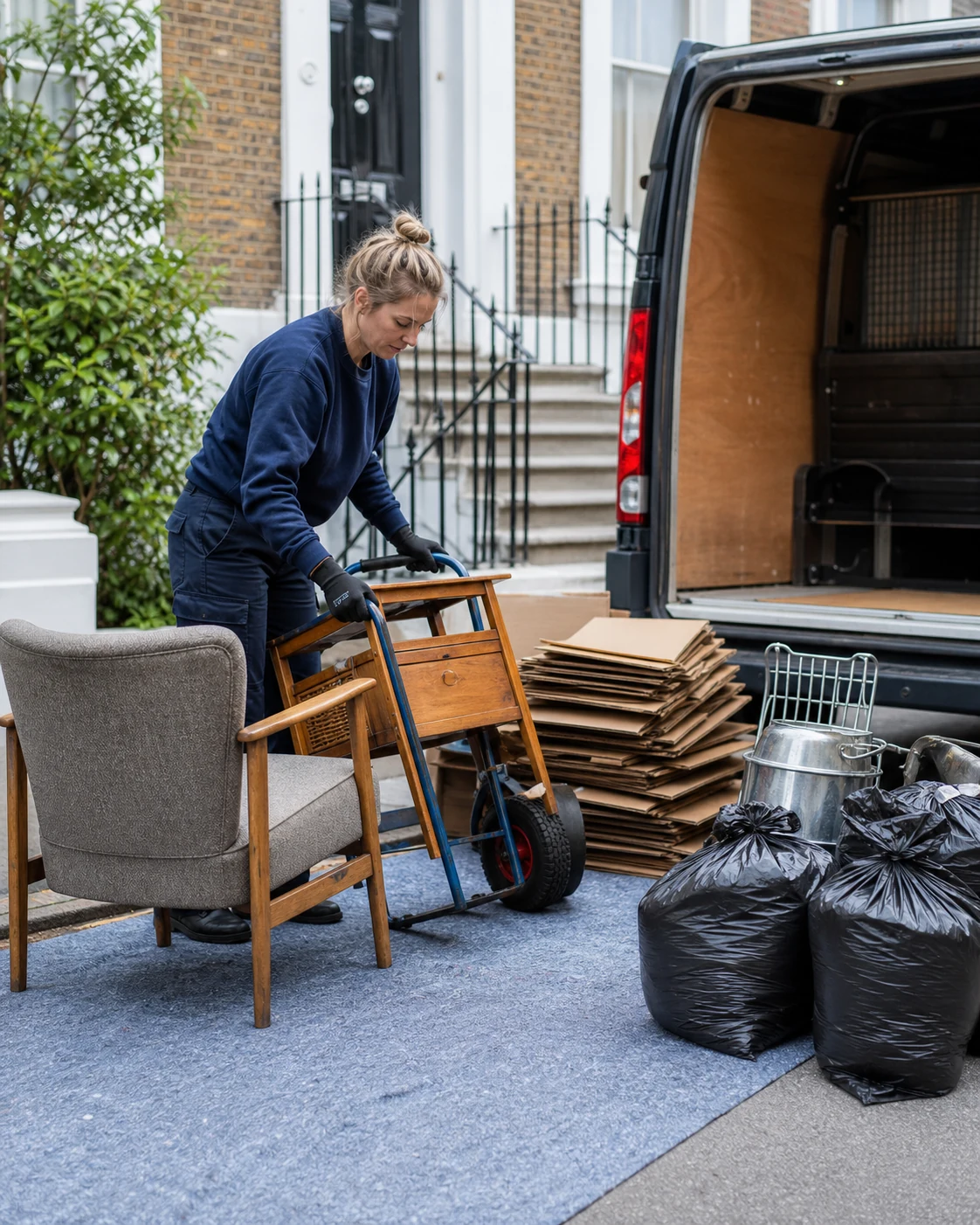
Waste removal team loading sorted household items outside a London home
a mixed load from several parts of the property planned around estate blocks and communal routes

Quotation basis For the wider booking boundaries, review Alesta's waste collection service.

The Barking quotation reflects handling as well as contents

What is the biggest cost factor?

The assessment joins volume and weight with the physical work required at the address. Crew numbers, stairs, lift use, carrying distance, parking and vehicle position all contribute. Agreed dismantling and disposal charges are also relevant. This means two loads occupying similar space can need different resources. A reliable quotation depends on complete photographs and a truthful route description. Unseen rooms, undeclared dense debris or a changed entrance can require the scope to be reviewed. The item list should therefore match every area shown in the photographs before resources are confirmed.

Volume and weightMaterial typeCrew and loading timeStairs, lift and carryVehicle positionAgreed dismantlingDisposal requirementsMultiple collection points

Make the load visible Bulky household pieces can be assessed separately through the separate furniture disposal service.

Create one Barking inventory without merging unlike materials

Group the load by material and location. Count household bags, measure bulky furniture, photograph green material independently and name renovation debris instead of burying it in a mixed label. A lightweight wardrobe may occupy substantial vehicle space, while a compact sack of project material may reach a weight constraint sooner. Show weak packaging and anything too awkward for one person to handle. Keep chemicals, batteries, paints, fuel, cylinders and unknown liquids outside the ordinary group. Additions after assessment can change stability, capacity, labour and the suitable onward route. Note any single object that sets the scale for the vehicle or carrying route.

Identify the material Declared renovation material should follow the separate project waste removal rather than an ordinary mixed load.

What is being cleared from this Barking address?

Describe every group that is present. Do not place uncertain liquids or unlabelled containers inside an ordinary mixed load.

01

Furniture

Freestanding sofas, tables, wardrobes and other bulky household pieces.

02

Bagged household material

Closed bags with their general contents described and unusual weight highlighted.

03

Green material

Cuttings and garden material kept visible and separate where accepted.

04

Renovation debris

Compatible non-hazardous project debris, declared before the quotation.

Property context in Barking

Establish the Barking collection boundary before counting volume

A Barking clearance brief should first define exactly what may leave the property. Mark the booked objects clearly when other belongings remain in the same room, store or communal area, and confirm that the customer has authority to remove them. Once that boundary is clear, describe how the team reaches each group. Record floors, gates, shared doors, stair turns and the walking distance between the furthest item and a realistic loading position.

Use photographs for different purposes rather than sending several versions of the same view. An overview establishes scale; side angles reveal hidden depth; close images identify labels, dense matter and damage that affects lifting. Give measurements for furniture approaching doorway size and state whether a working lift has been confirmed. Parking information should reflect the planned date. If access depends on a building contact or a controlled entrance, explain who provides it and when.

Material route and limits

The disposal route starts with identification

Reusable and recyclable material is separated where practical. The actual route depends on what is presented, so no fixed recycling percentage is promised.

If the contents or material are uncertain, keep them separate and send a close photograph or label information before booking. Asbestos, chemicals, clinical waste, gas cylinders and unidentified containers are not ordinary mixed waste.

Access changes the work

Record the practical loading position

Ground floor

Show steps, gates and the distance from door to vehicle.

Flats and stairs

State the floor, stair turns and shared areas.

Lift access

Confirm the working size and any booking rule.

Rear access

Photograph gates, alleys and surface changes.

Restricted parking

Use current signs or authority information.

Bulky pieces

Supply dimensions before dismantling is considered.

Collection sequence

From load photographs to the final sweep

  1. 01

    Describe

    Send photographs and identify material.

  2. 02

    Check access

    Explain estate blocks and communal routes, floors and vehicle position.

  3. 03

    Agree scope

    Confirm the expected work and quotation basis.

  4. 04

    Compare and load

    The presented load is checked before loading.

  5. 05

    Route material

    Suitable material follows the appropriate disposal route.

Before the team arrives

Set up a controlled Barking handover

Place only authorised items in the agreed group, empty personal contents from furniture and secure bags that are safe to lift. Keep the exit route clear without blocking neighbours or an escape path. Confirm keys, gates, lift arrangements and current vehicle information. Fixed connections need the appropriate trade. Restricted material must remain separate, and any difference from the photographed scope should be reported before attendance. Keep children or pets away from the work area and ensure the authorised contact can answer questions during collection.

  • Send clear, recent photographs
  • Mention stairs, lifts and carrying distance
  • Confirm current parking restrictions
  • Separate material where requested
  • Highlight unusually heavy items
  • Declare restricted or hazardous material

Questions for this collection

Before booking waste removal in Barking

How can items in a Barking communal store be authorised?

Identify the exact booked group and confirm ownership or permission to remove it. Where several residents use the space, provide an available contact who can resolve uncertainty before any object is carried away.

Why are side-angle photographs useful for a Barking load?

A front view can hide the depth of a pile and objects behind furniture. Side views reveal occupied space, while close photographs help identify dense, damaged or unfamiliar material separately.

What should happen to a leaking waste bag?

Keep it away from the carrying route and report its contents. Repacking may be required before safe lifting, particularly where liquid, sharp material or an unidentified substance could escape during handling.

Does a Barking quote depend only on vehicle space?

No. Weight, material, crew requirements, stairs, lift use, carrying distance, parking, dismantling and disposal charges also matter. Capacity is one part of the assessment rather than the whole calculation.

Can a fixed cabinet be included as ordinary furniture?

Describe how it is attached before booking. Fixed fittings and structural removal are not assumed, while plumbing or electrical connections need a suitable separate trade before the object becomes ready to carry.

When should a Barking inventory be updated?

Update it as soon as another room, bag or bulky piece is added. Revised evidence lets the team reconsider volume, weight, labour and disposal needs before arriving with an unsuitable plan.

What is expected after the immediate area is cleared?

A basic sweep may be possible where practical, but deep cleaning, repairs and making-good remain separate. The collection service does not promise restoration of surfaces or removal of unrelated dirt.

How are reusable objects treated after a Barking collection?

Potentially reusable or recyclable material may be separated when practical. No fixed proportion or destination is guaranteed; condition, material type and the appropriate route determine the realistic outcome.

Collection area

Barking collection map

Use the map to identify the collection address and describe the actual vehicle approach. Current access restrictions still need to be checked for the proposed date.

Nearby waste removal pages

Return to the Waste Removal Services hub for the service scope.

Chat