
Survey and protect
We check painted joinery, porcelain tile and new glazing, note cement haze near tiled areas and agree what must remain untouched.
A carefully sequenced post-renovation clean for Erith, planned around restricted lift times and protected hallways, sealed timber and newly painted joinery and the requirements of a final snagging review.
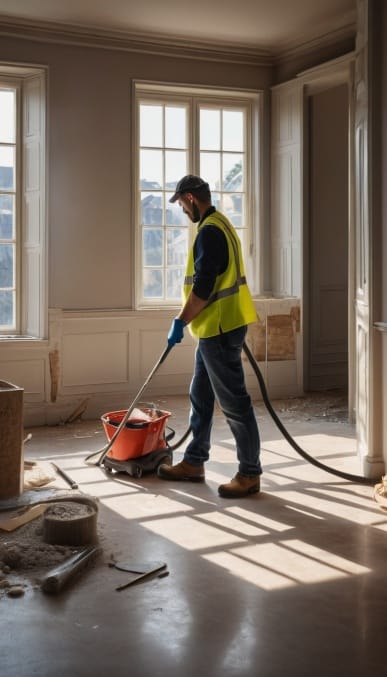
For a newly finished property in Erith, our first task is to understand which trades have left dust and which surfaces are still curing. A short photographic record is used when useful, giving the customer a clear reference for areas that require another trade. The working sequence protects completed rooms and keeps the entrance route available for the final inspection.
We check painted joinery, porcelain tile and new glazing, note cement haze near tiled areas and agree what must remain untouched.
The team works from high edges downwards, using controlled dry extraction before any damp process.
Joinery, cupboards, sanitary fittings, glazing edges and floor junctions are cleaned in the agreed sequence.
The visit ends with a room-by-room sign-off, plus clear notes for defects or unfinished building work.
Properties around Erith often include converted period flats with shared stairs. For this location the booking plan also considers school-run traffic and restricted loading space. Those practical details determine how many cleaners arrive together, where equipment is staged and which room can be completed first without carrying dust back through the property.
Alesta assigns experienced cleaners with one final-inspection lead to this type of work. The cleaners are briefed on the reported renovation before arrival, then the scope is confirmed on site. We do not treat every pale mark as dust: cement haze near tiled areas needs a different response from a scratch, incomplete decoration or material that requires specialist restoration. This protects the customer and the new finish.
During the clean, cloths and tools are separated by room purpose and residue type. Newly installed painted joinery, porcelain tile and new glazing are tested discreetly before broader cleaning. Cupboard interiors, ledges, door tops, switches and ventilation points receive deliberate attention because these details are easily missed during a fast visual clean but become obvious once the property is occupied.
Before leaving Erith, the supervisor compares the result with the priorities agreed at arrival. The final check includes access routes, rooms needed first, internal storage and the last floor pass. Anything unsafe to remove is explained instead of hidden. Customers receive a practical result: cleaned areas ready for use, outstanding defects identified clearly, and no vague promise that cleaning can repair construction damage.
Erith contains Victorian terraces and converted flats, so the cleaning plan must reflect access, occupancy and the finishes installed during the project. A typical local booking may follow full redecoration after electrical work. Before arrival we ask which trades have finished, whether decorators are returning, and which rooms must be ready first. This prevents cleaners working around active drilling, wet paint or unpacked materials.
The first inspection looks for packaging fragments and dust behind appliances. We separate removable construction residue from scratches, staining, failed sealant or incomplete workmanship. Cleaning cannot correct a building defect, and identifying that boundary early protects new surfaces from unnecessary abrasion. The agreed result is a practical reset before keys change hands.
In Erith, permit-controlled parking and narrow communal halls can influence arrival, equipment and waste movement. We record parking restrictions, stairs, lift dimensions, key collection and alarm instructions before the appointment. If the property is occupied, one room can be kept usable while work progresses elsewhere. If it is empty, the team can follow a top-to-bottom sequence without repeatedly crossing completed floors.
Consider a modern apartments and managed developments in Erith following loft conversion and staircase alterations. The visible dust may appear light, yet opening cupboards, checking radiator tops and looking behind doors often reveals a second layer of residue. The useful response is not to wash every surface immediately. Fine material is removed dry first so that it does not become a paste around hinges, grout lines or textured flooring.
Inside the Erith property, labels and films on sealed timber and newly painted joinery are lifted only after the underlying finish has been inspected. Product guidance takes priority over a general-purpose chemical, especially where paint mist beside glazing appears close to a delicate edge. The team will not scrub a curing wall or force residue from a surface that could be permanently marked. Instead, the supervisor explains whether the safe next step belongs to cleaning, restoration or the original contractor—an important boundary before a final snagging review.
Fine plaster residue on ledges and sockets may remain across several rooms. Cupboards can contain packaging dust, floors may show traffic marks and bathrooms may have light grout or sealant residue. Access routes, water, electricity and safe lighting should be available.
At completion in Erith, the agreed rooms are ready for normal use: reachable ledges are dust-free, fittings have been detailed and floors have received the last pass after higher work. The supervisor checks sealed timber and newly painted joinery once more and records scratches, incomplete sealing, curing marks or materials that still belong to the builders. For extended family houses, that written distinction makes a final snagging review clearer and prevents unfinished trade work from being mistaken for a cleaning omission.
Guide prices in Erith are shaped by room count, renovation stage, limited equipment staging space and the care required around porcelain tile and fresh grout. A focused extension clean and a whole-property refurbishment may have similar floor areas but very different levels of paint mist, fitted storage and detailed handwork. The figures below therefore show stable starting points; the confirmed quotation follows the actual condition and agreed handover scope.
Small flat or focused post-build areaFrom £165
Two or three bedroom propertyFrom £300
Large renovation or multi-floor homeFrom £445
Additional detailed appliance interiorsFrom £55
Before the Erith appointment, contractors should clear rubble, sharp offcuts, spare boards and unused packaging from the working route. Tell Alesta which surfaces are newly installed, whether appliances are connected and if cupboards or internal glazing form part of the scope. Because this booking involves extended family houses, details about restricted lift times and protected hallways should be confirmed in advance. Photographs are helpful for planning the team and equipment, while the arrival survey remains the final check of condition and scale.
For the Erith visit, keep manufacturer instructions available for sealed timber and newly painted joinery and point out any coating that is still curing. Confirm parking or loading permission, the key holder and the time the property must be returned. When access involves restricted lift times and protected hallways, a named contact prevents cleaners waiting outside or carrying equipment through a completed room. These arrangements leave more of the booking for detailed removal of paint mist beside glazing and less time for avoidable access delays.
A limited preparation clean may be possible, but the final detailed clean should follow dusty and wet trades. Otherwise settled dust and fresh marks can return immediately.
Standard after builders cleaning covers dust and light removable residue. Heavy construction waste, hazardous material and skips require a separate disposal arrangement.
No. The safe method depends on the surface and how long the material has cured. Aggressive removal can damage glass, metal, stone, timber or new coatings.
An empty property is easier to sequence, but occupied appointments can be planned room by room when access and priorities are agreed in advance.
The team reviews the agreed priority areas, then distinguishes cleaning completion from defects or unfinished building work requiring another trade.
After builders cleaning in Erith needs to fit the way local properties are reached and handed over. Appointments may be influenced by shared entrances, narrow stairways and managed access. We confirm these details before arrival so that equipment, keys and the cleaning sequence are organised without wasting booked time. This is especially useful for mixed residential and commercial buildings, where several rooms or communal routes may need to remain usable while the work is completed.
The final walkthrough concentrates on fresh grout, silicone lines and coated surfaces. Each surface is checked before a method is selected because construction dust, adhesive, paint mist and sealant marks do not respond to one universal product. Dry extraction normally comes before damp cleaning; delicate finishes are tested first; and anything that appears to be a scratch, failed seal or unfinished trade defect is recorded instead of being concealed.
Before departure, the agreed priority rooms are reviewed from the entrance towards the furthest part of the property. Door tops, sockets, cupboard interiors, sanitary fittings, glazing edges and floor junctions receive particular attention because fine dust often settles there after the main builders have left. The result is a practical handover record for the customer: what was cleaned, what could not be treated safely and what should return to the contractor. That distinction helps owners, tenants, landlords and project managers in Erith move forward with clear expectations.

Enter your postcode to see estimated arrival time for your area.
Estimated arrival times are approximate and may vary depending on traffic and technician availability.