Targeted inspection
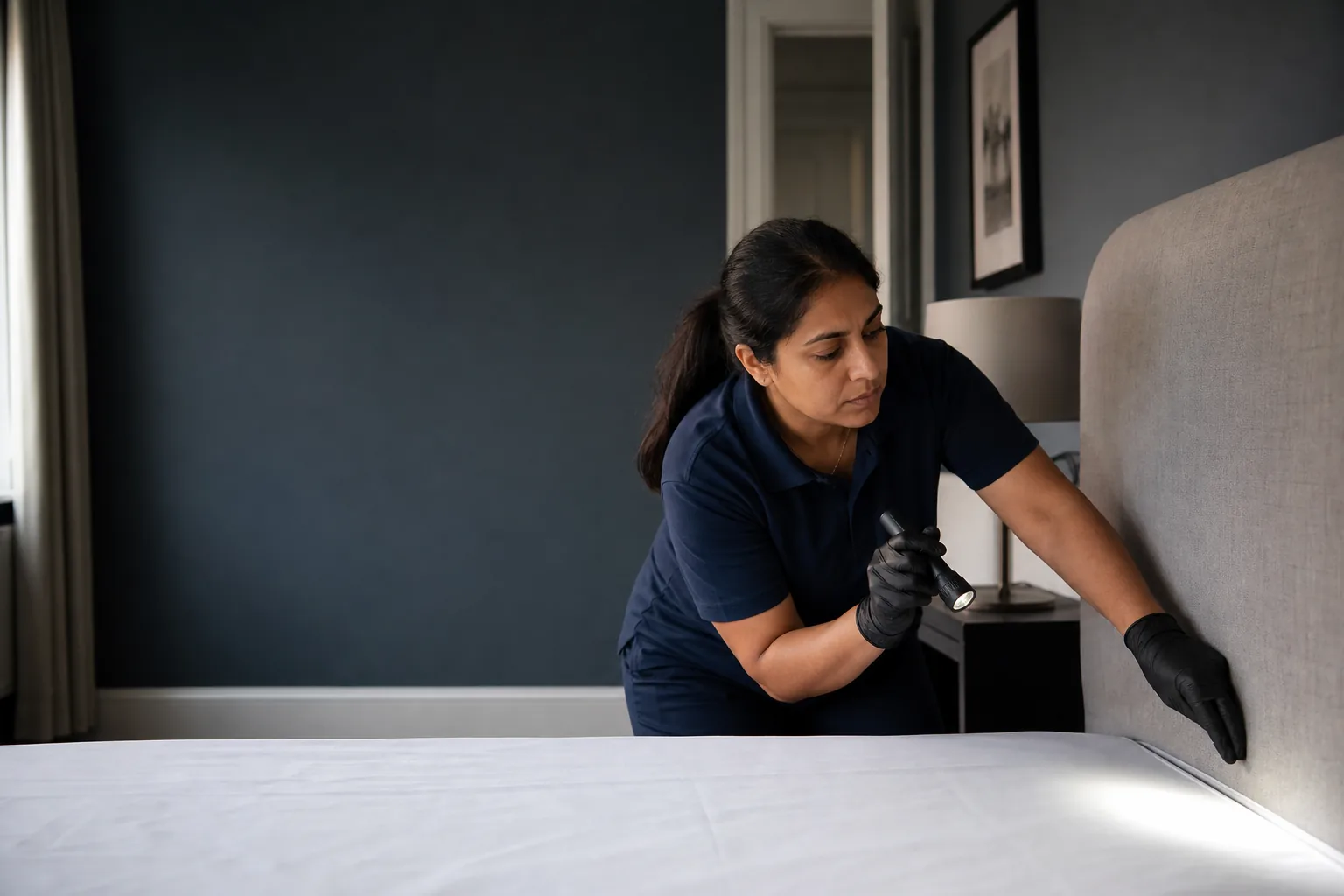
Sleeping areas, bed-frame joints, seams, nearby furniture and accessible harbourage points are checked.
Alesta · Bed bug treatment in London
Careful inspection and a treatment plan based on the property, affected rooms and signs found. We explain preparation, access and realistic follow-up before work begins.
☎ Call 020 3608 3976Inspection informs treatment
Bed bugs can hide in mattress seams, bed frames, headboards, nearby furniture and narrow gaps. Bites alone do not confirm the cause, so the starting point is the history of the problem and the physical signs that can be found.
Tell us which rooms are affected, when the signs began, whether anyone has recently travelled or moved furniture, and what treatment has already been attempted. We use this to organise the appropriate inspection and treatment scope.
Sleeping areas, bed-frame joints, seams, nearby furniture and accessible harbourage points are checked.
The method is selected around the evidence, number of rooms, property condition and level of activity.
You receive practical instructions for bedding, clothing, clutter, access, residents and pets.
Re-entry, cleaning restrictions, monitoring and any follow-up requirement are explained clearly.
Common reasons customers call
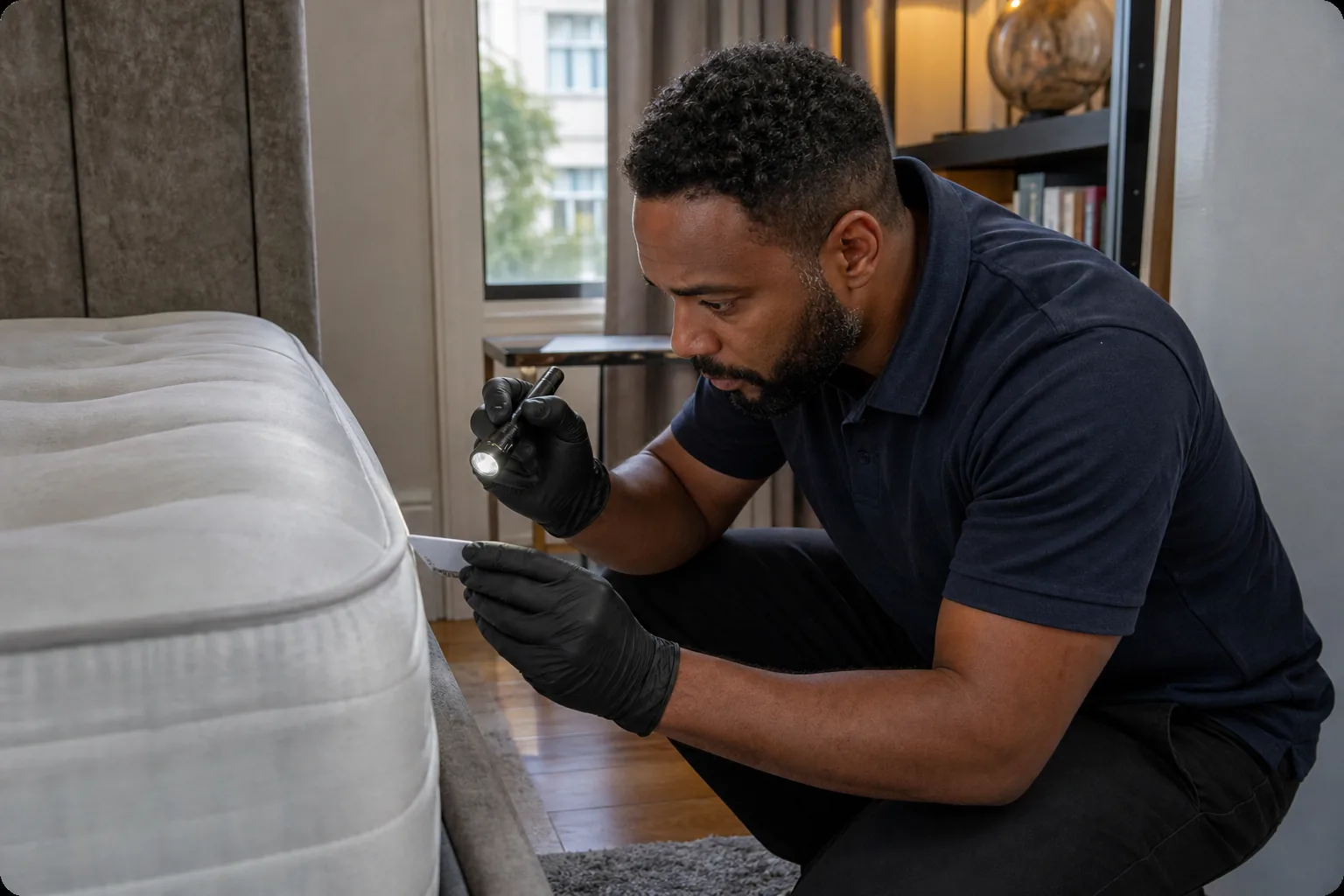
Small dark spotting, shed material or unexplained marks appear around mattress seams and the bed frame.
Signs begin after a hotel stay, house move, second-hand furniture delivery or frequent overnight guests.
Skin reactions continue, particularly after sleeping, although bites alone are not enough for identification.
Coordinated inspection may be needed where rooms share walls, furniture moves between units or occupancy changes.
Why Alesta for bed bug treatment
The history and physical signs are considered before a treatment scope is recommended.
Instructions reflect the treatment method, affected spaces, occupants, pets and sensitive belongings.
Access, privacy, re-entry and communication are planned for homes, rentals and managed buildings.
Monitoring and next steps are explained without claiming that every infestation has the same treatment path.
A considered treatment
Every treatment begins with the history of the problem and the rooms involved. We ask when signs first appeared, where people sleep or rest, whether luggage or furniture has recently moved and which DIY products have already been used. This helps us understand how activity may be distributed instead of treating one visible spot in isolation. Before the visit, avoid moving belongings between rooms or discarding furniture unless specifically advised, because either action can spread insects or remove useful evidence.
The professional inspects accessible mattress seams, bed-frame joints, headboards, bedside furniture, skirting edges, cracks and nearby upholstery. Bites alone do not confirm bed bugs, so physical signs and monitoring matter. The location and extent of evidence help determine whether a targeted residual treatment, steam or heat-based approach, or a combination is appropriate. The proposed method, rooms included and any limitations are explained before treatment begins.
Preparation is method-specific. It may include laundering and sealing selected textiles, reducing clutter, opening access around furniture, arranging for residents and pets to leave temporarily, or removing heat-sensitive items where heat is planned. Follow the written instructions for the agreed method rather than using a generic checklist. Excessive cleaning immediately after a residual application can reduce its effectiveness, while incomplete access can leave harbourages untreated.
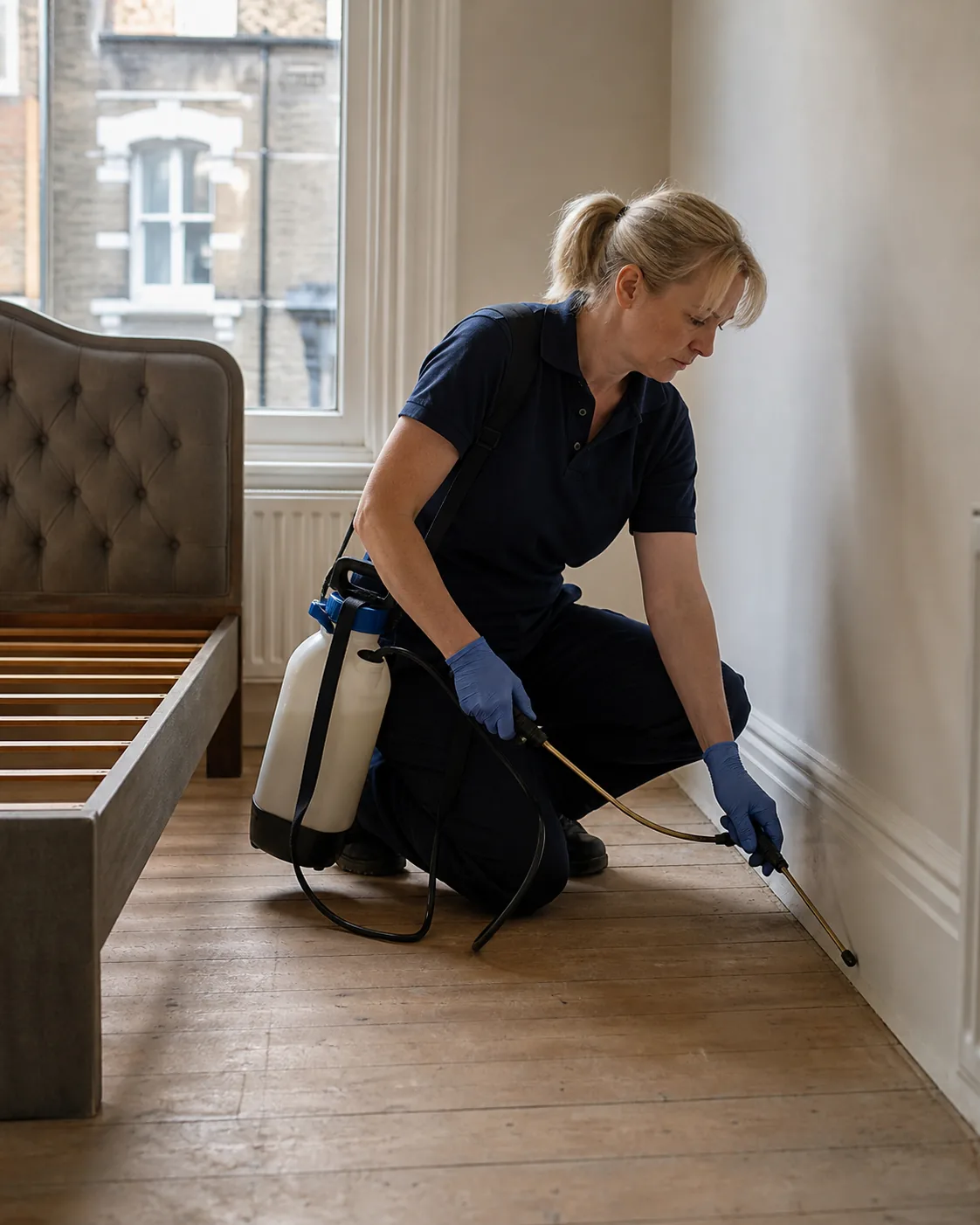
Treatment is carried out methodically across the agreed areas, following product labels, re-entry guidance and safe working practice. Bed bugs can persist or reappear because of eggs, concealed harbourages, movement between rooms or later reintroduction, so monitoring remains important. Follow-up depends on the method and the activity found; we do not present one identical plan as suitable for every property. At handover, we explain what was treated, the aftercare steps and when you should contact us again.
Clear pricing
The final cost depends on the number of rooms, property size, evidence found and treatment method required.
| Service scope | Price | What affects the final price |
|---|---|---|
| Targeted bed bug treatment | From £150 | Rooms included, access, evidence and chosen method |
| Additional rooms or follow-up | Quoted for the scope | Property size, activity found and monitoring results |
| Heat treatment | From £400 | Volume treated, preparation, access and heat-sensitive contents |
Pricing context: These are starting points rather than a diagnosis or fixed quote. We confirm the rooms, preparation and treatment route before booking so the agreed scope is clear.
How the service works
Explain the affected rooms, when activity started and any recent travel, furniture moves or DIY treatment.
We assess accessible harbourages and agree the method, preparation and rooms included.
The agreed work is completed and you receive clear re-entry, aftercare and follow-up guidance.
Bed bug treatment FAQ
Clear answers about identification, preparation, treatment and follow-up.
☎ Call 020 3608 3976Bites alone are not conclusive. Dark spotting, cast skins, eggs or live insects around mattress seams, bed frames and nearby furniture can be useful evidence. A professional inspection helps distinguish them from other pests.
Not before receiving advice. Moving or discarding items can spread activity through the property and may be unnecessary. Keep items in place unless the treatment plan says otherwise.
Preparation depends on the selected method. You may be asked to launder and seal textiles, reduce clutter and create access around furniture. Follow the instructions supplied for your booking.
Often yes for a defined period, but the timing depends on the products or heat process used. We explain re-entry guidance before the appointment so you can plan safely.
No. Eggs, concealed harbourages and the extent of activity can make follow-up or monitoring necessary. The appropriate next step depends on the evidence and treatment method.
They can move with people and belongings and may travel through adjoining areas. Avoid transferring loose items between rooms and tell us if neighbouring rooms or flats may also be affected.
Observe the re-entry time, avoid cleaning treated residual areas sooner than advised and continue monitoring. Contact us if activity continues within the review period explained at handover.