
Extractor Fan Not Working: Steam, Noise and Power Checks
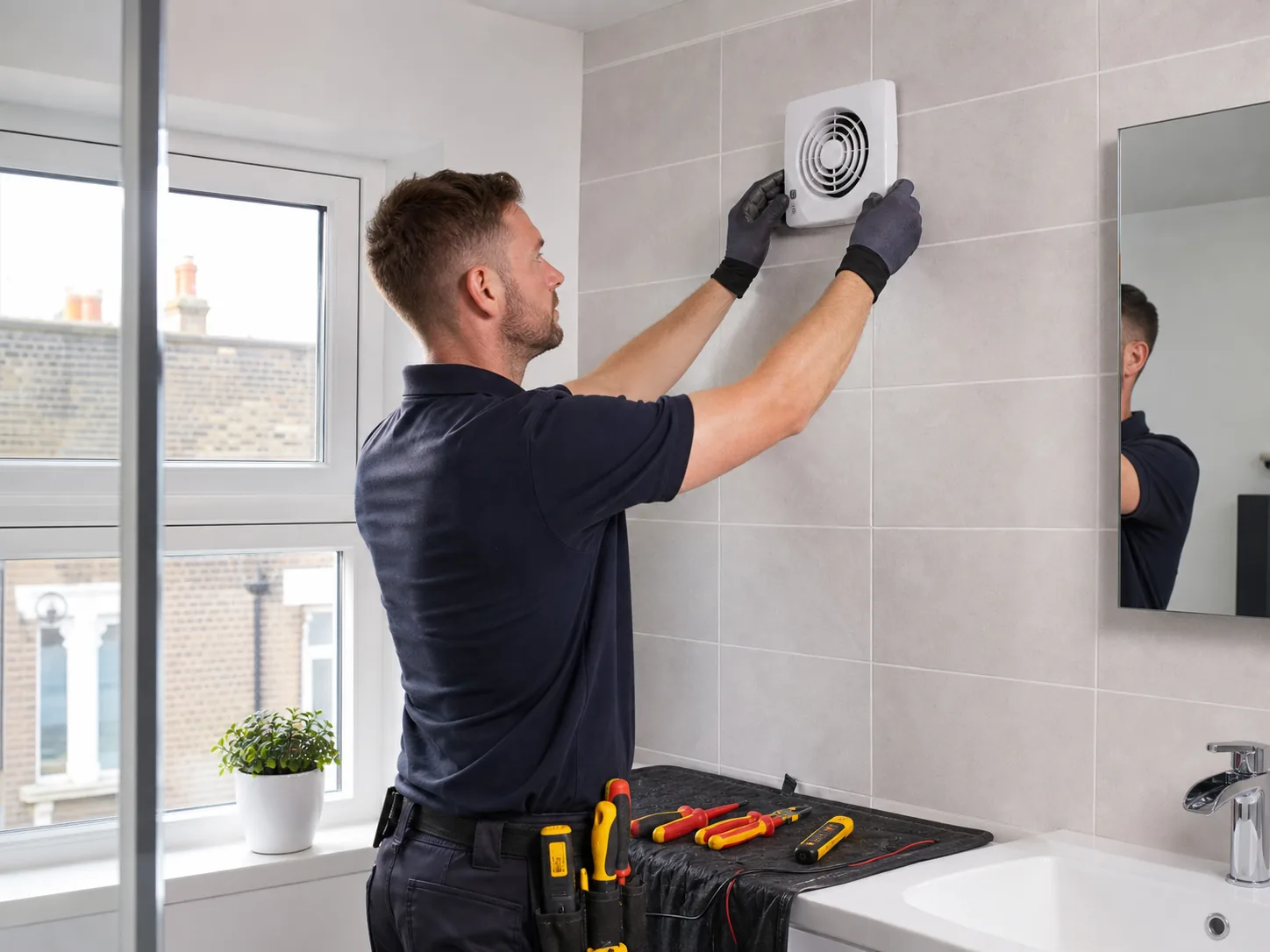
If a bathroom extractor fan is silent, check the user controls and whether the light or pull cord that triggers it is working. If the fan runs but steam lingers, clean only the removable cover or filter described in the manual and check the outside grille from a safe ground-level position. Do not remove a bathroom fan, open its wiring compartment or work from a wet floor. A burning smell, sparking, heat, water inside the fitting or repeated circuit tripping means isolate the circuit only if safe and call an electrician.
Use the symptom to choose the first check
| What the fan does | Useful first observation | Likely next route |
|---|---|---|
| Completely silent | Trigger, isolator and other circuit symptoms | Control, supply or failed motor diagnosis |
| Hums but does not turn | Dust at the grille; no touching blades | Motor or obstruction assessment |
| Runs loudly | Rattle, grinding or vibration location | Cleaning, mounting or bearing check |
| Runs but steam remains | Airflow, duct outlet and room air path | Blocked duct, weak fan or unsuitable design |
| Runs long after lights go off | Timer or humidity setting and duration | May be normal; compare with instructions |
A silent fan: check the trigger, not the wires
Some fans start with the bathroom light, some use a pull cord, and humidity-controlled models may wait until moisture crosses a threshold. Check the wall switch, pull cord and any clearly labelled fan isolator without removing a cover. If the fan has a user control, confirm it has not been set to off.
Do not assume the isolator is safe because it looks like a light switch. Bathroom circuits have zoning and protection requirements. Fixed wiring checks need qualified electrical help.
A fan that runs but leaves the mirror wet
Hold a single sheet of toilet tissue near the grille without allowing it to be sucked inside. A healthy fan should create a noticeable pull, though this is not a measured airflow test. Compare performance with the bathroom door slightly ajar. If the pull improves, the room may lack a suitable replacement-air path.
Steam clearance also depends on shower length, water temperature, room volume, fan capacity and duct resistance. Opening a window can help temporarily, but it does not prove the installed system is adequate.
Clean the cover without flooding the fan
Switch the fan off at its user isolator and follow the manufacturer’s cleaning instructions. Many covers unclip or have a washable filter; others are not intended for household removal. Vacuum loose surface dust with a soft attachment or wipe the removable cover away from the electrical unit. Let it dry fully.
Never spray cleaner through the grille, push cotton buds into the motor or hold a vacuum against moving blades. Grease in a kitchen fan and lint in a bathroom fan need different cleaning methods.
The outside grille tells half the story
From safe ground level, look for a flap that is stuck, a grille covered by lint or a duct that appears crushed. Do not climb a ladder in wet or windy conditions. Flats may discharge through a communal system or inaccessible façade; report concerns to building management.
A backdraft shutter may click in wind. Continuous rattling, cold air or smells entering from another property can indicate a duct or shared-system issue rather than a failed fan.
Why long duct runs reduce extraction
Every bend, long flexible section and restrictive grille adds resistance. A fan sized for a short wall outlet may struggle through a ceiling duct. Condensation can collect in poorly arranged ducting and run back towards the fan. Do not open the ceiling or alter ductwork without checking fire stopping, insulation and building responsibilities.
Timer overrun may be deliberate
A timer fan can continue after the light goes off to clear residual humidity. Humidistat models may run unexpectedly during damp weather or while towels dry. Find the manual and time the overrun. A fan that never stops, cycles rapidly or runs in a dry room may have a sensor, control or wiring fault.
Noise can distinguish dirt from failure
A soft increase in noise with visible dust suggests restricted airflow. A loose grille can rattle. Grinding, squealing or a motor that hums without turning suggests mechanical failure. Stop running a fan that becomes hot or smells burnt. Ordering a motor from the noise alone is premature; the duct and mounting also need checking.
Condensation is a room problem as well as a fan problem
Use the fan during bathing and leave it running for the designed overrun. Keep the door closed while showering so moisture does not spread, then allow the replacement-air path the system requires. Wipe heavy condensation from windows and sills rather than waiting for one small fan to remove liquid water.
If black spotting has developed, first correct moisture and ventilation. Cleaning visible growth without solving the fan or duct leaves the conditions unchanged. Extensive or recurring contamination may need professional mould removal after the source is addressed.
Rental and leasehold homes
Report the fault in writing with photographs, the date, fan behaviour and steam-clearance time. Say whether the fan is part of a communal system. Do not authorise façade or shared-duct changes yourself. Landlords and managing agents need enough evidence to separate cleaning, appliance failure and building ventilation.
What an electrician or ventilation engineer should establish
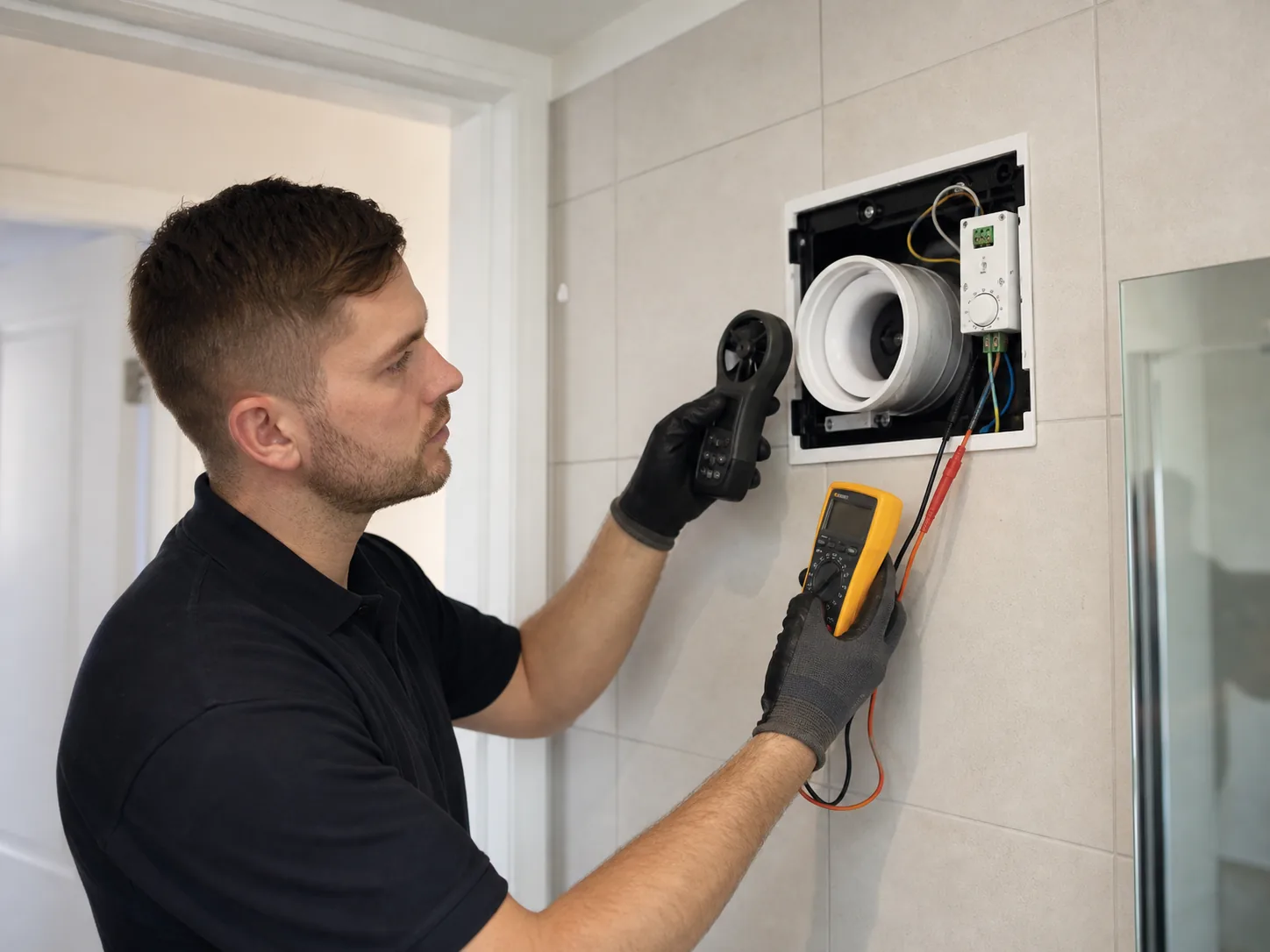
The visit should confirm supply and controls, fan condition, measured airflow, duct route, outside termination and suitability for the room. Ask whether the existing unit can be repaired, whether replacement needs a different capacity, and how electrical and building work will be certified.
Where the motor or unit has failed, extractor fan replacement is the exact service route. Give the fan model, duct diameter, wall or ceiling position and photographs of accessible grilles.
After repair, test the room—not just the switch
Confirm that the fan starts from each intended trigger, runs for the expected overrun and produces airflow at the outlet. During the next shower, note whether the mirror and window clear more quickly without new rattling or water return. Keep the model instructions so future occupants know what a normal timer or humidity cycle looks like.
If the room still stays wet, give the installer the same shower duration and door position used before the repair. A comparable test can reveal whether the remaining limitation is fan capacity, duct resistance or replacement air rather than another failed motor.
A silent fan starts with power and control observations. A spinning fan with poor steam clearance starts with airflow and ducting. Keeping those two paths separate avoids replacing a working motor while the real restriction remains in the ceiling.
