Affected-area assessment
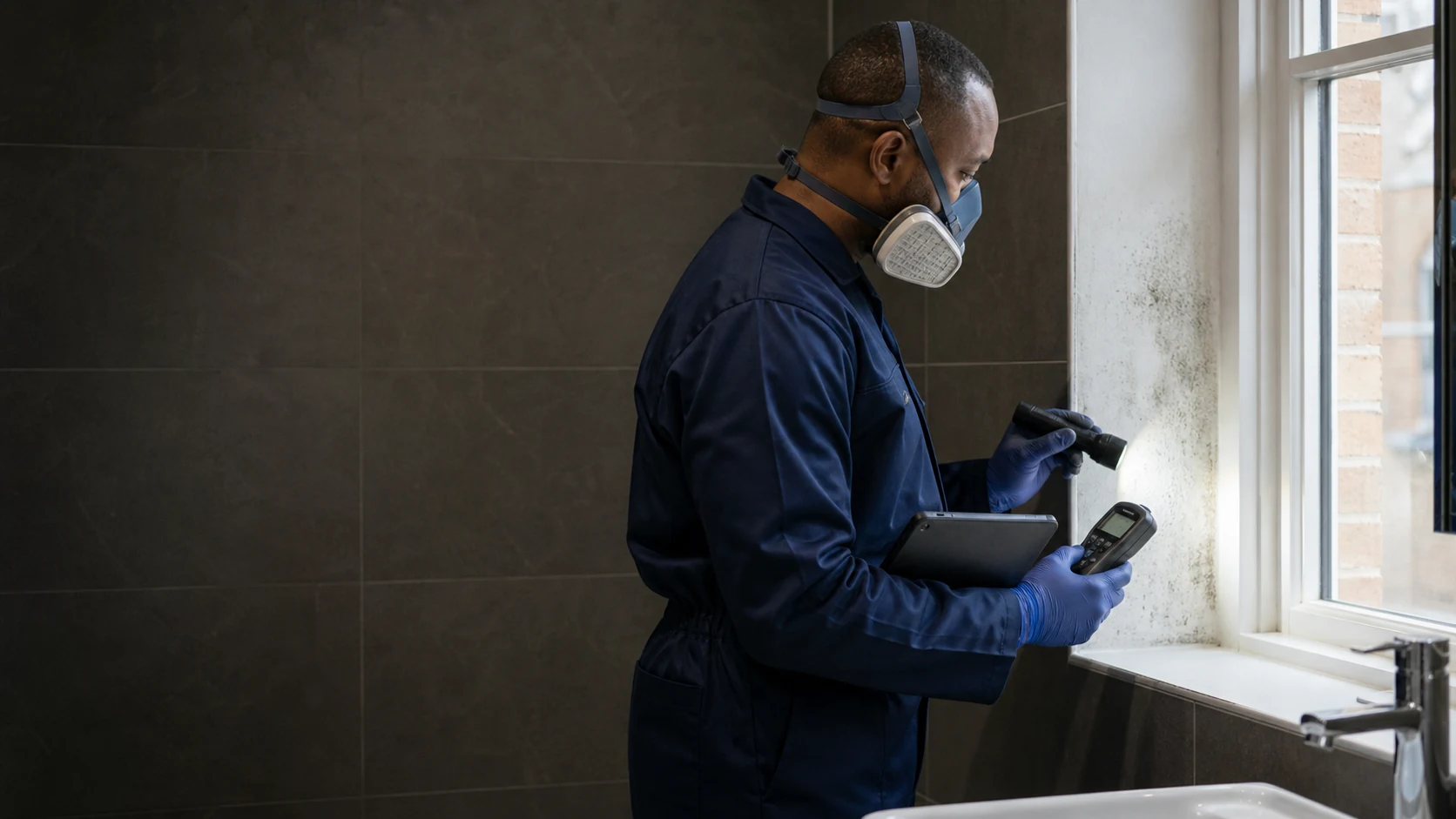
Location, extent, recurrence, moisture history and surface type reviewed before treatment.
Alesta · Mould removal in London
Careful assessment and treatment of suitable affected surfaces, with moisture, ventilation, material damage and the limits of cleaning made clear before work begins.
☎ Call 020 3608 3976Moisture source before cosmetic finish
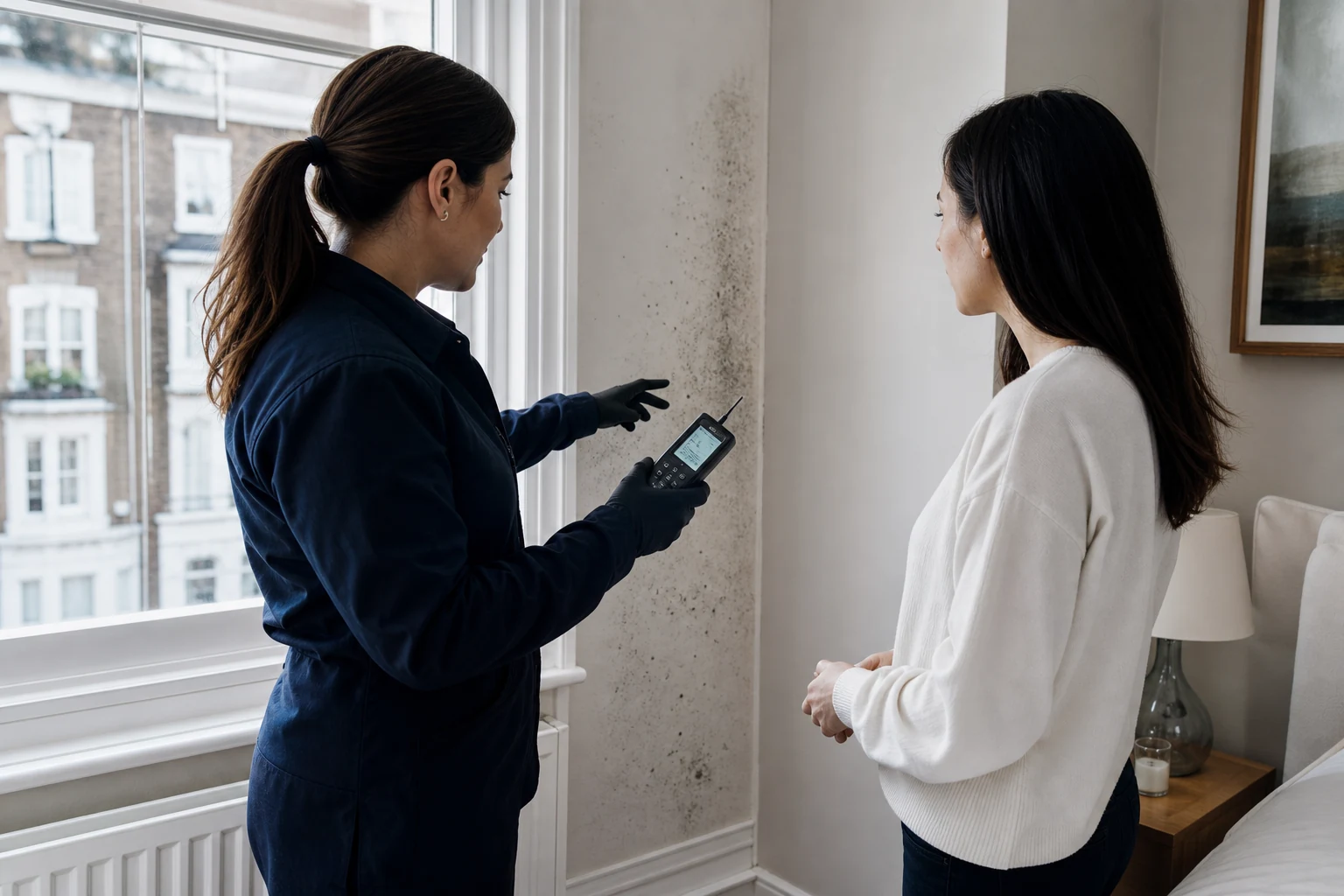
Condensation, leaks, penetrating damp, thermal bridges and inadequate ventilation can create similar-looking patches but require different remedies. Cleaning the surface without addressing continuing moisture often produces only a short-lived visual improvement.
We review the area, recurrence, odour, water events, ventilation and material condition before defining suitable treatment. Large contamination, sewage, structural damp, hidden cavities, severely damaged porous materials and health-sensitive situations may require a dedicated survey or specialist remediation rather than routine surface cleaning.
Location, extent, recurrence, moisture history and surface type reviewed before treatment.
Suitable accessible materials treated with products and methods matched to their condition.
Practical contributors and relevant follow-on investigation explained clearly.
Permanent staining, damaged substrates and unresolved leaks separated from removable surface growth.
Common reasons customers call
Cold surfaces and condensation may be combining with limited airflow or wet furnishings.
Steam, extraction performance, paint condition and external moisture all need consideration.
The repair and drying status must be established before cosmetic treatment is meaningful.
Restricted circulation and cold external surfaces may be affecting hidden finishes and belongings.
Why Alesta for mould removal
Leaks, condensation, heating and recurrence inform the practical treatment plan.
Paint, plaster, sealant, timber and porous boards cannot all tolerate the same method.
Work area, occupants and ventilation are considered before disturbing visible growth.
Plumbing, ventilation, replacement materials and decoration are identified as distinct remedies.
A moisture-aware treatment process
The assessment starts with photographs of the affected area and the wider room. We ask when it appeared, how quickly it returns, whether there has been a leak, and how the room is heated and ventilated. Surface dimensions, material, odour and any impact on nearby furniture or belongings are recorded. Occupant vulnerabilities and respiratory concerns must be disclosed; cleaning is not medical advice, and significant or uncertain contamination may require an environmental or building specialist.
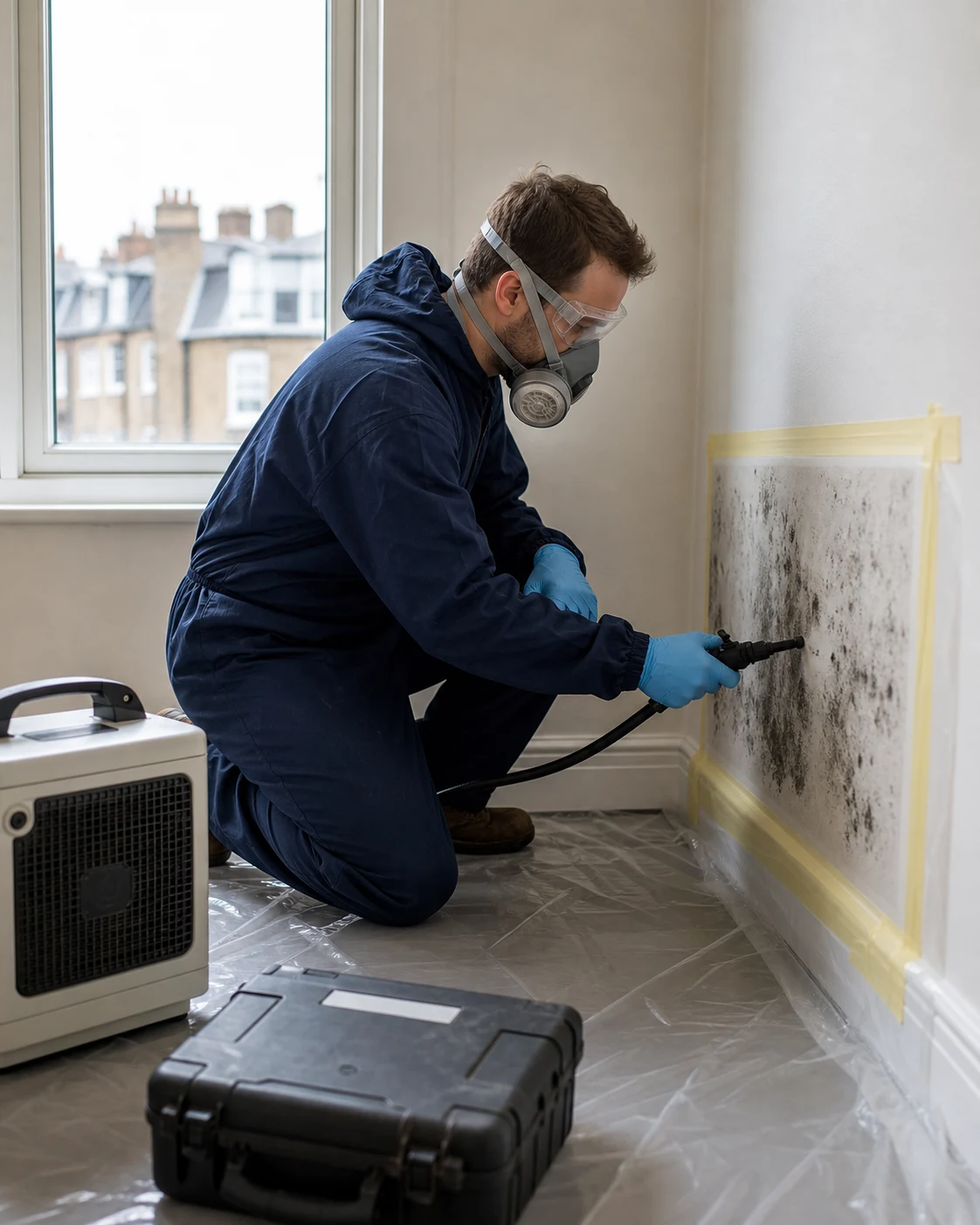
At the property, the technician confirms the visible extent and checks for obvious moisture contributors that are within observational scope. The work area and surrounding contents are prepared to limit unnecessary spread. Surface condition is tested cautiously because softened plasterboard, loose paint, decayed timber and saturated porous material may need removal or replacement rather than wet cleaning. Active leaks and incomplete drying must be addressed before a lasting cosmetic result can be expected.
Suitable accessible surfaces are treated with a controlled method and compatible professional product. Growth is not dry-brushed into the room, and aggressive bleaching is not used as a substitute for material assessment. The process may include dwell time, careful wiping or extraction and repeat treatment within the agreed area. Sealant, wallpaper, plasterboard and deeply stained porous finishes may retain marks or contamination that cannot be safely removed from the surface alone.
After treatment, the area is reviewed and practical drying, heating and ventilation actions are explained. Plumbing repair, fan installation, damp diagnosis, insulation improvement, replastering, redecoration and replacement of damaged contents are separate work. No surface service can guarantee mould will not return while moisture conditions persist. The close-out distinguishes removed growth, residual staining, damaged materials and the investigations or repairs most likely to protect the result.
Clear pricing
Cost depends on affected area, room count, material condition, access, containment, treatment method and whether moisture investigation or material replacement is required.
| Service scope | Price | What affects the final price |
|---|---|---|
| Small accessible surface area | Quoted from photographs | Dimensions, surface, recurrence, room access and preparation |
| Multiple or recurring affected areas | Quoted after assessment | Extent, materials, containment, labour and treatment stages |
| Complex damp or damaged materials | Specialist quotation required | Moisture diagnosis, removal, repairs, replacement and reinstatement |
Pricing context: A reliable quote requires current photographs and moisture history. Leak repair, damp surveys, ventilation upgrades, replacement materials and decoration are separate unless explicitly included.
How the service works
Send wide and close photos, dimensions, recurrence, leaks and ventilation details.
We define suitable treatment, safety limits and necessary follow-on work.
Accessible growth is addressed and practical recurrence risks are documented.
Local guides
Choose a region to find your local guide. Please confirm your address and the work required when enquiring.
Mould removal FAQ
Useful answers about causes, preparation, stains, leaks, recurrence, health and pricing.
☎ Call 020 3608 3976Ongoing condensation, leaks, damp, cold surfaces or poor airflow can recreate the conditions. Surface cleaning alone does not correct those causes.
No. Uncontrolled products can spread residue, damage finishes, create fumes or hide the visible pattern needed for assessment. Keep the area undisturbed where safe.
Not necessarily. Pigment and moisture can permanently stain paint, sealant, grout, plaster or timber even after removable surface growth is treated.
The leak should be repaired and the material allowed to dry appropriately first. Otherwise moisture can undermine treatment and growth may return quickly.
This depends on the area, products, ventilation and occupant sensitivity. Follow the technician’s preparation, access and return instructions for the agreed method.
No medical outcome can be guaranteed. Seek appropriate medical advice for symptoms, and specialist environmental assessment where contamination is extensive or health risk is a concern.
Area, room count, surface type, recurrence, access, containment, treatment stages, moisture source and damaged-material replacement affect the quote.