
Can You Pressure Wash a Patio in Autumn? Weather, Algae and Drying Time
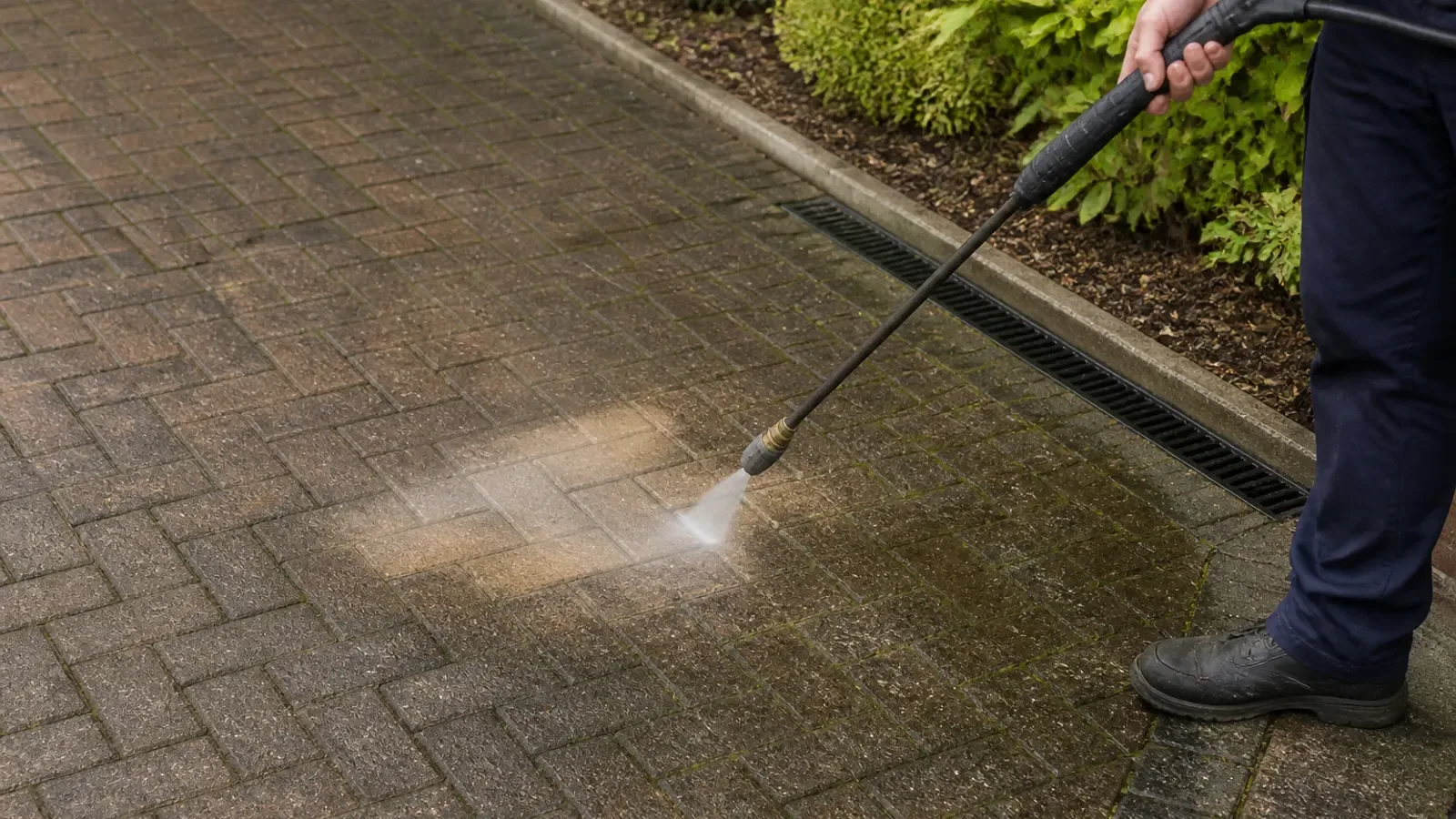
You can pressure wash a patio in autumn, but choose a mild, dry spell and inspect the paving first. Avoid frost, saturated ground and a forecast that leaves dirty water sitting overnight. The pressure setting is only part of the decision: stone type, loose pointing, drainage, algae and jointing sand determine whether washing is sensible.
The autumn weather window
Look for a day without heavy rain, strong wind or freezing temperatures, followed by enough dry time for the surface and joints to drain. A cool cloudy day can be useful because cleaning solution does not dry instantly, yet shortening daylight makes an early start important.
Do not rely only on daytime temperature. Water left in open joints before a cold night can freeze. If the ground is already saturated, extra run-off may pool against walls or overwhelm a small drain.
Clear leaves before they become slurry
Sweep up leaves, twigs, soil and loose moss while dry. A pressure jet shreds organic material and pushes it into gullies, channel drains and planting beds. Tannins from wet leaves can also mark pale paving.
Move pots and furniture rather than washing around them. Photograph existing cracks, rocking slabs and failed joints. Those pictures prevent a pre-existing defect from being confused with cleaning damage and show which areas must be treated cautiously.
Identify the paving, not just its colour
Concrete flags, block paving, porcelain, sandstone and limestone do not respond identically. Natural stone may have soft surfaces or iron content; old concrete can expose aggregate; porcelain is dense but its grout or pointing can still be vulnerable. Check supplier care guidance where available.
If the material is uncertain, use the least aggressive method on a hidden patch. Allow it to dry fully. Wet paving often looks darker and more even, hiding etched areas that become obvious the following morning.
Inspect joints and edges
Do not direct a concentrated jet into loose mortar, slab edges or the sand between blocks. Missing material allows movement and weed growth and can send dirty water beneath the surface. Mark failed joints for repair rather than attempting to “clean them solid”.
Keep the lance away from door seals, air bricks, vents, electrical fittings and timber thresholds. Water forced beneath a door or into a wall opening turns an outdoor clean into an indoor damp problem.
A controlled test patch
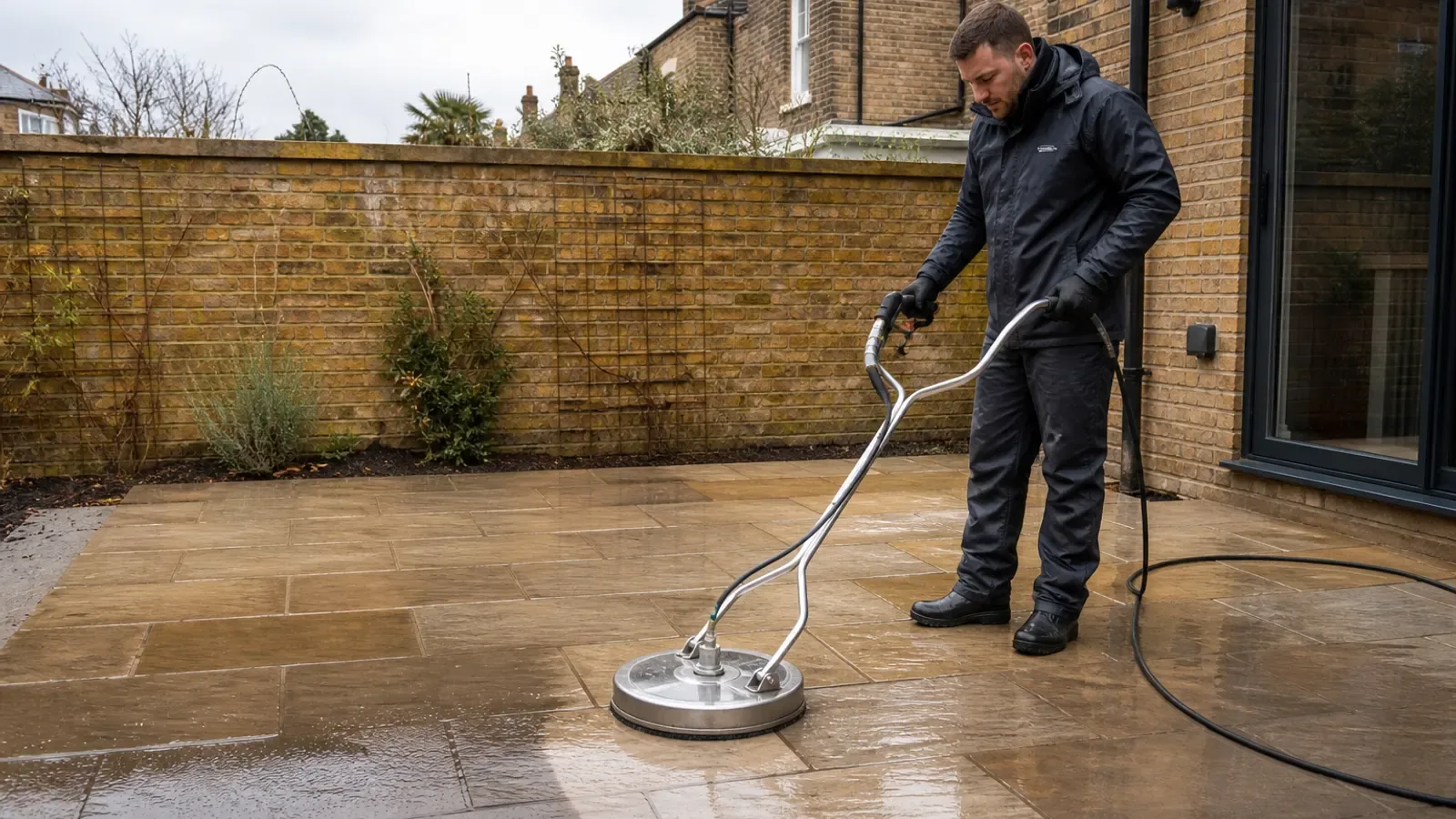
Begin with a wide fan, lower pressure and greater distance than you expect to need. Hold the nozzle at a consistent angle and make overlapping passes. Never start a turbo nozzle close to an unfamiliar slab; it can carve soft material before there is time to react.
Compare the cleaned patch with the surrounding surface after drying. If the texture has roughened, colour is uneven or joint material has moved, stop and choose a gentler process. For a larger or delicate area, professional patio pressure washing should begin with the same material assessment, not maximum machine pressure.
Algae is also a drainage clue
Green growth thrives where shade and persistent moisture coincide. Cleaning removes the visible layer, but a leaking gutter, blocked channel or low spot will invite it back. Note the wettest zones before washing; the pattern is easiest to see after several damp days.
Use only a treatment compatible with the paving and follow its label for dilution, dwell time, rinsing, plants, pets and drainage. Never mix products. Keep people away until the area is rinsed and no longer slippery.
Plan the run-off
Work from the building towards a safe drainage point, not towards thresholds. Clear accessible gullies first and prevent debris entering surface-water systems where local rules or the product label prohibit it. Do not send contaminated water onto a neighbour’s path or into a pond.
Protect soil and delicate plants from the direct jet. Wind can carry spray farther than expected, so postpone the job if cars, windows or pedestrians cannot be kept out of range.
Block paving needs a drying stage
Pressure washing can remove kiln-dried jointing sand. Once the blocks are completely dry, inspect joint depth and re-sand with the product and method suitable for that paving. Sand spread over damp blocks clumps on the surface instead of filling joints.
Do not seal immediately after an autumn wash. Moisture, residual contamination and uncertain weather can undermine the finish. Follow the sealer manufacturer’s preparation and temperature limits if sealing is genuinely needed.
When DIY is a poor bet
Stop if slabs rock, pointing disintegrates under a finger, the surface is flaking, drainage runs towards the house or safe lance access is impossible. A steep, algae-covered patio is a slip hazard before the machine even starts.
Repair and preparation may matter more than cleaning. minor outdoor repairs may suit local defects, while a garden clearance before washing can expose paving and drains where heavy growth or stored waste blocks access.
Protect the operator and everyone nearby
Wear eye protection, sturdy footwear and clothing suited to flying grit. Keep children and pets indoors. Never point the lance at skin, use it from an unstable ladder or run cables through standing water. Follow the machine instructions for electrical supply and residual-current protection.
Take regular breaks to check the surface rather than focusing on speed. A patio is not cleaned successfully if the operator leaves stripes, erodes joints or sprays grit over newly painted walls.
Judge the result tomorrow, not while it is wet
After the patio dries, inspect colour, texture, joints and drainage. Photograph defects newly visible beneath the algae. Sweep residual debris and keep the route closed if shaded areas remain slippery.
An autumn clean is worthwhile when it restores safe grip and appearance without sacrificing the surface. If the test patch or weather window is doubtful, waiting for a better day is a sound maintenance decision—not a failed attempt.
Cleaning around walls, furniture and delicate edges
Use a hand brush or gentler rinse near rendered walls, painted timber, loose gravel and glazed doors. A pressure fan rebounds from a vertical surface and can drive grit into seals or mark paint well beyond the patch being cleaned. Covering an air brick with plastic is not a solution because it can trap water or be forgotten afterwards; keep the jet away and preserve ventilation.
Heavy planters deserve a plan before the machine is connected. Emptying wet soil onto the lawn creates another disposal problem, while dragging pots scratches paving. Ask for help, use suitable lifting equipment or clean around an item if moving it would be unsafe. The untreated footprint can be finished later when the pot can be relocated properly.
If autumn leaves stains rather than algae
Brown leaf marks, rust from furniture and black lichen spots are different deposits. More pressure is not automatically the answer. Identify the stain, test a compatible product and follow its dwell and rinsing instructions. Acidic products can damage limestone and cementitious joints; bleach-containing products can affect plants, fabrics and drainage. Never combine treatments or decant them into an unlabelled sprayer.
