Surface assessment
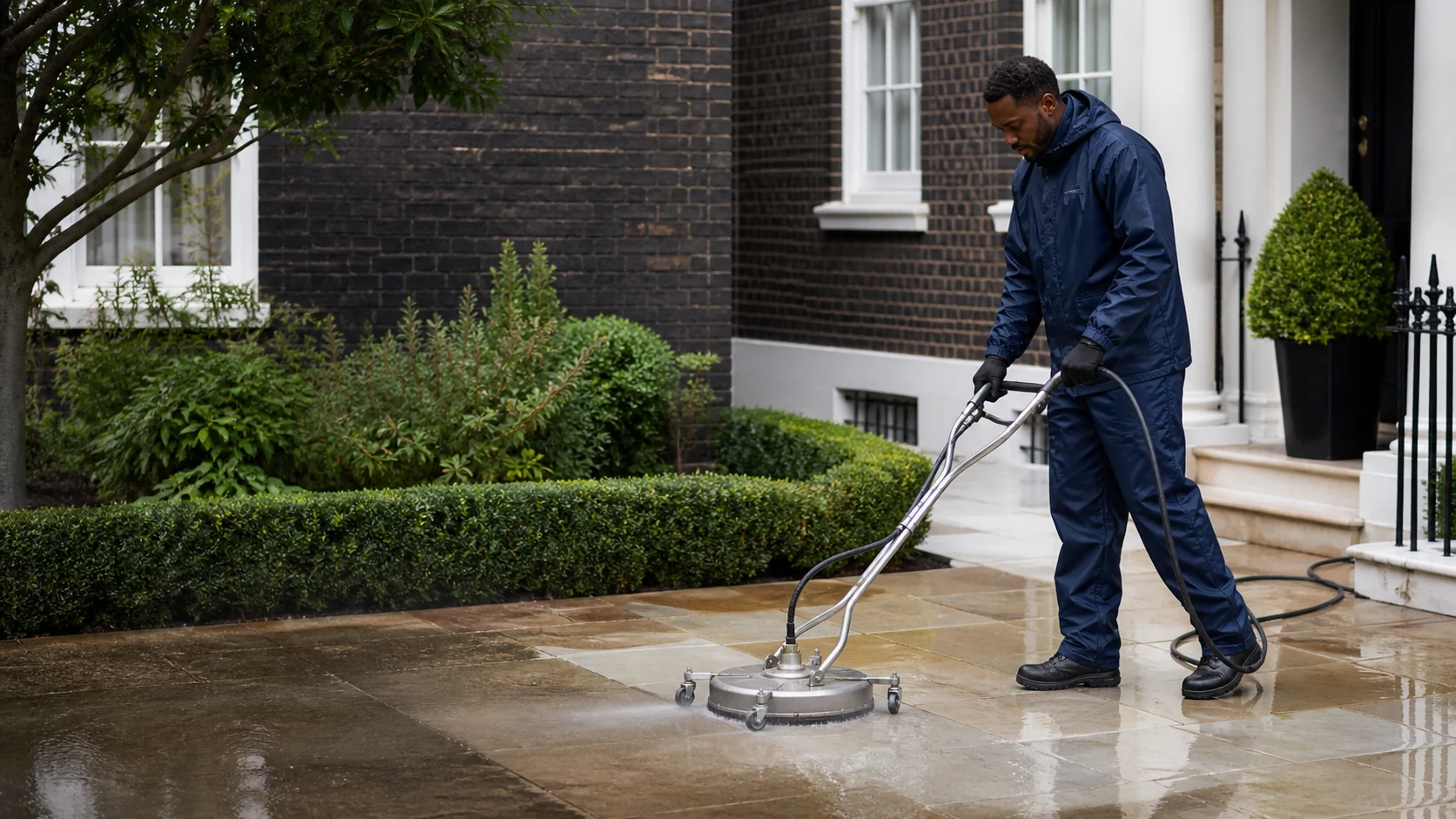
Material, condition, joints and inconspicuous test area considered before full cleaning.
Alesta · Pressure washing in London
Controlled pressure washing for suitable paths, patios and hard areas, with material, joints, drainage, water access and nearby finishes assessed before cleaning.
☎ Call 020 3608 3976Surface before pressure
Concrete, block paving, natural stone, decking, render and painted finishes respond differently to water pressure. Loose joints, spalled surfaces and delicate coatings can be damaged if equipment is used without inspection.
We request photographs, dimensions and material details first. Cleaning is separated from sealing, re-sanding, chemical treatment, repairs and contaminated-water control so the method and expected finish remain realistic.
Material, condition, joints and inconspicuous test area considered before full cleaning.
Pressure, distance and attachment selected to remove suitable surface soil without needless aggression.
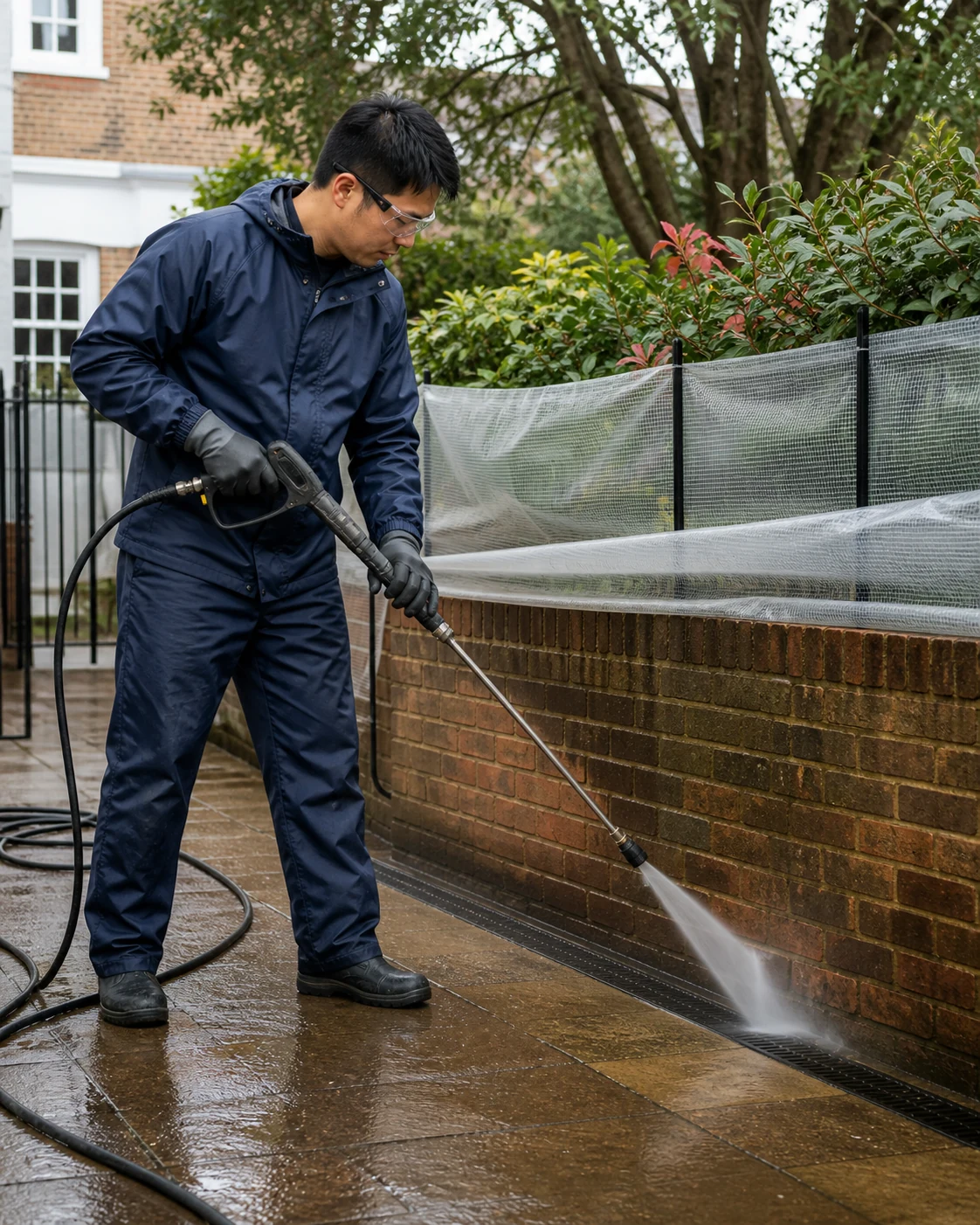
Drainage, neighbouring property, doors, air bricks and planting protected as far as practical.
Permanent staining, fading, erosion and biological regrowth distinguished from removable dirt.
Common reasons customers call
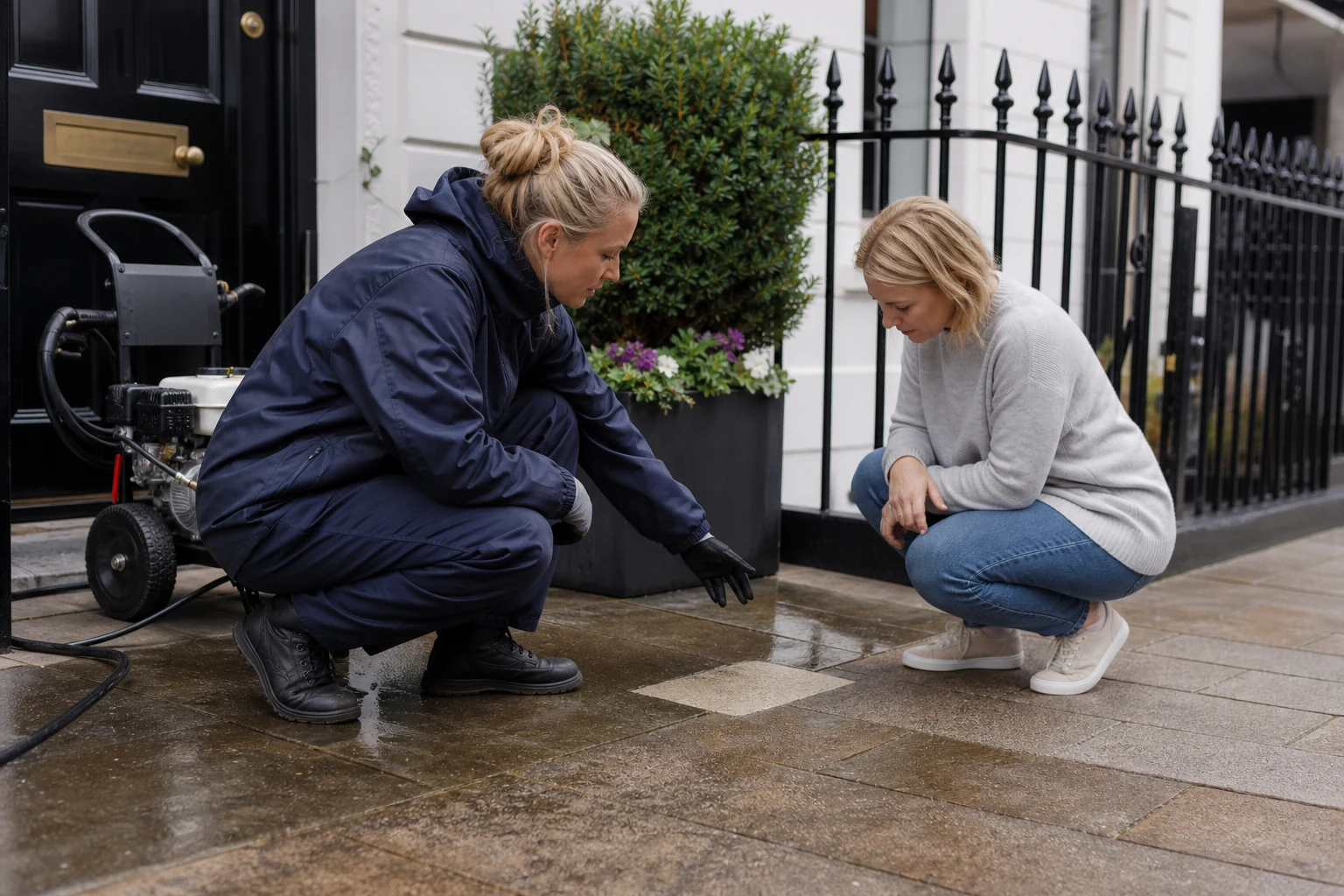
General soil may lift while old staining and material variation can remain.
Surface growth needs removal alongside attention to shade, drainage and recurrence.
Furniture, access and drying time need coordinating before an event or seasonal return.
Edges, walls, timber and planted areas need protection and method changes.
Why Alesta for pressure washing
An inconspicuous area helps establish how the surface responds.
Equipment settings and working distance follow condition rather than maximum output.
Runoff is directed responsibly and known restrictions are included in planning.
Re-sanding, sealing, treatment and repair are never implied by washing alone.
A controlled exterior clean
Planning starts with the surface and its surroundings. We ask for photographs in dry daylight, dimensions, material if known, age, previous sealing or painting, access, parking, external tap and drainage. Oil, rust, paint, cement, organic growth and general traffic soil are different problems, so the main contamination is identified. Customers also disclose cracked slabs, loose pointing, unstable blocks and any drainage restriction.
On arrival, the technician checks the material, joints and neighbouring finishes, then agrees a discreet test area. Fragile render, failing paint, soft stone, damaged decking or open joints may require lower pressure, another method or refusal. Furniture and loose items are moved as agreed, while doors, vents, electrics and delicate planting are protected where practical. Weather and runoff direction are checked before the main area begins.
Cleaning proceeds in controlled overlapping passes with pressure, distance and attachment adjusted to the response. The team avoids driving water beneath thresholds or directly into open joints and does not promise that pressure alone removes every oil, rust or deep biological stain. Chemical products are used only when separately assessed for surface, drainage and occupant safety. Waste and slurry are managed within the agreed practical limits rather than pushed into unsuitable drains.
The cleaned area is reviewed after the surface water reduces enough to reveal the result. Pre-existing erosion, colour variation, failed pointing and permanent marks are recorded. Block-paving sand can be displaced and sealing may have degraded; re-sanding or resealing is separate and should happen only after suitable drying and assessment. The handover explains drying, access and regrowth expectations so a freshly cleaned surface is not mistaken for a repaired or permanently maintenance-free one.
Clear pricing
Cost depends on area, material, contamination, access, water and drainage, protection, equipment and optional follow-on treatments.
| Service scope | Price | What affects the final price |
|---|---|---|
| Small path or patio area | Quoted after assessment | Dimensions, material, soil, access, water and setup |
| Larger or mixed hard-surface area | Quoted after assessment | Square area, edges, drainage, condition and cleaning time |
| Specialist stain or follow-on treatment | Quoted separately | Product, test result, runoff controls, re-sanding or sealing |
Pricing context: Current photographs, dimensions and material details are needed. Repair, re-sanding, sealing and specialist stain treatment are included only when written into the scope.
How the service works
Send photos, dimensions, material, staining and access details.
The technician checks response, pressure, protection and runoff.
The agreed area is cleaned and remaining marks or repair needs are explained.
Pressure washing FAQ
Useful answers about surfaces, water, weather, stains, preparation, follow-on work and pricing.
☎ Call 020 3608 3976Many sound patios, paths and hard surfaces can be suitable, but material and condition must be assessed. Soft stone, failing coatings and damaged joints may need another method.
Incorrect use can. A test area, suitable pressure, distance and attachment reduce risk, but existing weakness or erosion can limit treatment.
Usually a suitable accessible water supply is required. Tell us about tap location, hose route and restrictions so equipment and feasibility can be confirmed.
No. Oil, rust, paint, cement, dye and deep biological staining may remain or need specialist treatment, and aggressive removal can damage the surface.
Remove loose belongings, secure doors and pets, disclose fragile items and drainage issues, provide access and arrange parking where possible.
Not automatically. Block-paving sand may need replenishment and some surfaces may benefit from sealing, but both require separate assessment and suitable drying.
Area, material, condition, contamination, access, water, drainage, protection, equipment and optional treatments influence the quote.