
How to Clean a Rug Without Causing Colour Bleed or Shrinkage
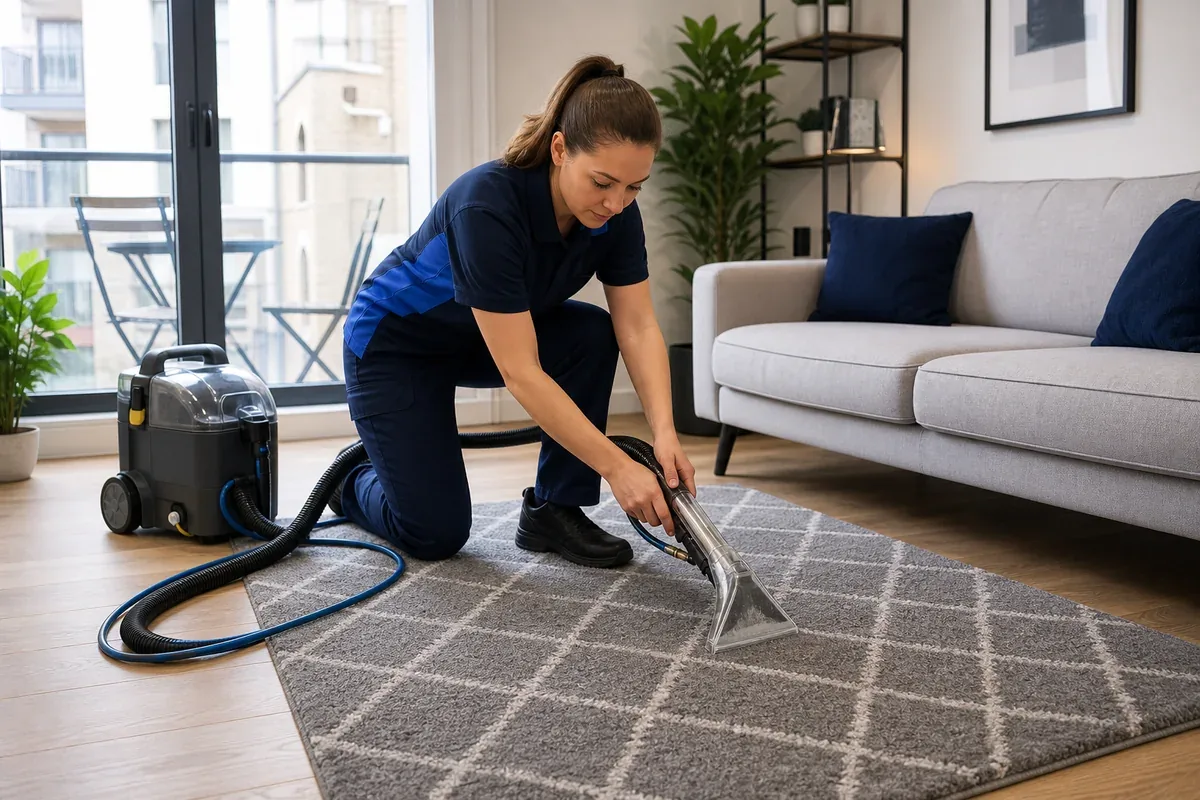
Before cleaning a rug at home, identify its fibre and construction, vacuum gently and test a hidden area for colour transfer. Blot spills rather than scrubbing. Do not wet-clean silk, viscose, unstable dyes, glued constructions or valuable hand-made rugs without specialist assessment: colour bleed, shrinkage and distorted foundation yarns can be permanent.
Read the rug before choosing a method
Look for a care label, fibre information and construction clues on the back. Machine-made synthetic rugs, tufted rugs with adhesive, hand-knotted wool and flatweaves have different tolerances. Fringe may be cotton even when the pile is wool.
If identity is uncertain, stay with controlled dry soil removal and seek advice. An online recipe cannot tell whether a foundation dye is unstable or latex backing has begun to fail.
Inspect both sides in good light
Photograph stains, worn edges, holes, loose fringe, pet contamination and any previous colour run. Turn the rug only if it can be handled safely. Powdery backing, cracking adhesive or gritty debris may change the plan.
Check the floor beneath for moisture sensitivity and existing marks. Cleaning solution that passes through a rug can damage timber or leave a stain on pale carpet.
Vacuum without stressing the construction
Use suction appropriate to the rug and work in the pile direction where relevant. Avoid a powerful rotating brush on fringe, loose loops, silk-like fibres or worn areas. Vacuum the back carefully if construction permits, then clean the released grit from the floor before replacing it.
Dry soil removal matters because water turns fine dust into mud. It also reveals the real stain boundary before products are introduced.
The white-cloth colour test
Dampen a white cloth with the proposed diluted solution and press it on a hidden area of each strong colour. Do not rub. Hold for the product’s instructed contact period, then inspect the cloth and rug after drying.
Any dye transfer, texture change or watermark means stop. A small successful test reduces risk but does not guarantee that a large wet area will dry evenly.
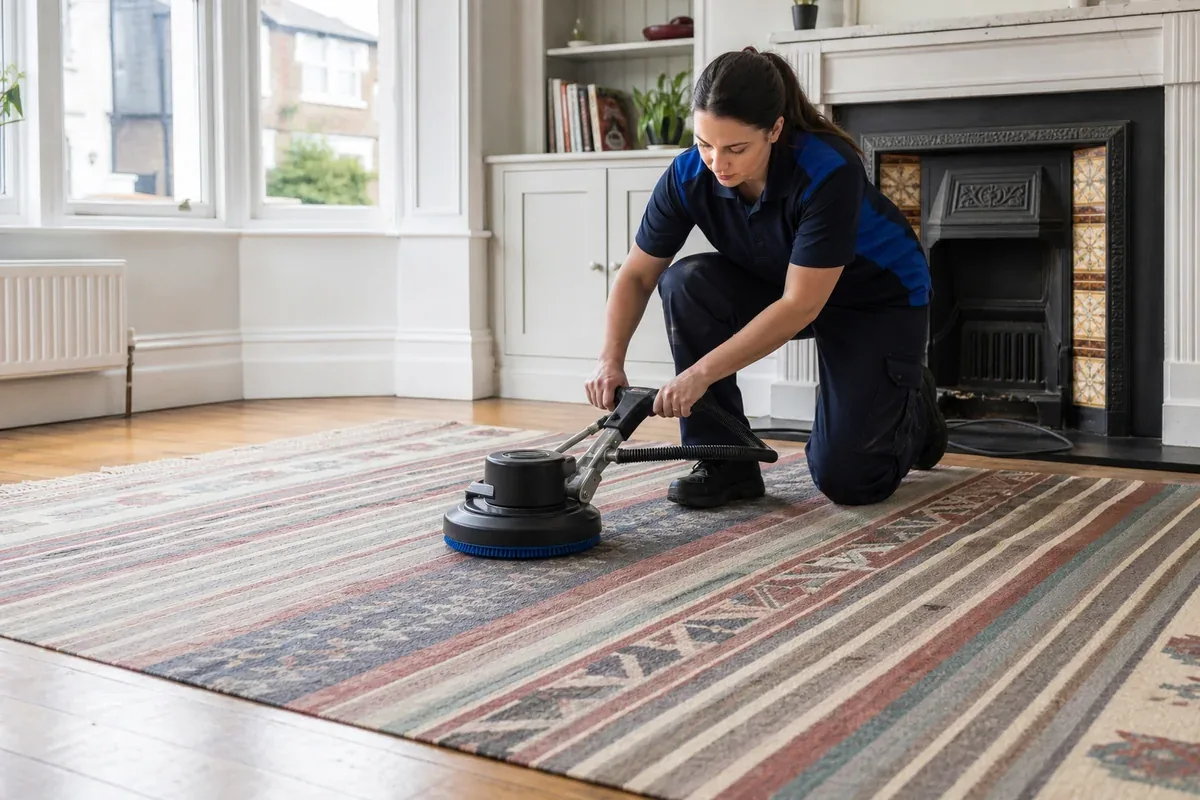
Fresh liquid spills
Blot from the edge with white absorbent towels. Lift the towel rather than rubbing back and forth. Replace it until transfer slows. If the spill contains solids, lift them with a spoon or blunt edge without pushing them into the pile.
Use a compatible spotting product only after testing. Work in small amounts and blot out residue. Flooding a drink stain can enlarge the ring and carry dye into neighbouring areas.
Pet accidents and contamination depth
Urine can pass through pile into the foundation and floor. Mark the wet boundary, blot and avoid masking fragrance. Repeated accidents may require controlled treatment from both sides or professional washing.
For significant contamination, specialist rug cleaning is safer than pouring enzyme solution through an unidentified rug. Tell the cleaner which products have already been used.
Why wool needs restraint
Wool can felt under heat, alkalinity and agitation. Use products expressly suitable for wool and minimal mechanical action. Do not use very hot water or scrub with a stiff brush.
Natural variations and abrash are not stains to bleach away. Colour and pile direction can make a clean rug look uneven from one angle; inspect from both ends.
Viscose, silk and unstable dyes
Viscose can lose strength and texture when wet, and silk can suffer watermarking, dye movement and pile distortion. Home wet cleaning is a poor experiment on either. Hand-made rugs may combine several fibres and natural dyes.
Ask a specialist about fibre testing, dye stability, wash method and drying support. Avoid any provider who guarantees a result from a photograph alone.
Fringe is not a handle
Do not drag or hang a wet rug by its fringe. Vacuum fringe with suction only and comb gently with fingers if the construction allows. Harsh bleaching can weaken cotton and create a white border that does not match the aged rug.
Loose knots, torn ends and unravelled sides need repair advice before washing. Cleaning can expose weakness that packed soil was temporarily holding together.
Controlled surface cleaning for a suitable synthetic rug
If label and testing support it, apply a small amount of compatible solution with a cloth or controlled tool, working section by section. Avoid soaking. Extract or blot residue and keep strokes consistent so pile lays evenly.
Do not mix products or assume more foam cleans better. Residue attracts soil and can stiffen fibres. Rinse only as the product and rug permit.
Drying without shrinkage or odour
Support the whole rug evenly and create airflow above and below where possible. Do not leave it flat on a moisture-sensitive floor or fold it while damp. Avoid intense heaters that dry the surface long before the foundation.
Turn or reposition only if its wet weight can be handled safely. A large soaked rug is extremely heavy and can stretch under its own weight.
When a ring appears
A ring can form when soil or product migrates to the drying edge. Do not chase it with repeated wet circles. Photograph it, stop adding chemicals and let the rug dry before deciding the next step.
A carpet-cleaning method is not automatically transferable to a removable rug; backing, edge finishing and drying are different.
What to check after drying
Inspect colour, shape, texture, fringe and backing odour. Lay the rug flat and check whether corners lift or dimensions have changed. New stiffness often indicates residue; a sour smell suggests slow or incomplete drying.
If the test area changed, do not scale the method up. If it remained stable and the rug is suitable, retain notes on dilution and drying time for future spots.
Questions for a professional cleaner
Ask whether the rug is cleaned on site or at a workshop, how fibre and dyes are tested, how urine or moth risk is handled and how it is dried. Confirm collection, furniture moving, insurance and treatment of pre-existing damage.
Related fabric does not guarantee the same method: upholstery has different fillings and tension, so use specialist upholstery cleaning for a sofa affected by the same spill.
A successful clean preserves colour, dimensions and handle as well as removing soil. If those cannot all be protected at home, stopping after dry vacuuming is the correct result.
Storage after cleaning
Never roll a rug while it is even slightly damp. Once dry, roll it in the pile direction where appropriate around a suitable support; avoid tight folds that create permanent creases. Use breathable protection for longer storage and keep it away from damp floors, direct heat and pest-prone voids.
Inspect stored rugs periodically for moth activity, moisture and colour transfer from wrapping. A clean rug placed in a damp cellar can develop a problem that no spotting method caused. Record its dimensions before storage so distortion is easy to recognise later.
