
Cooker Hood Not Extracting: Airflow Tests Before You Replace It
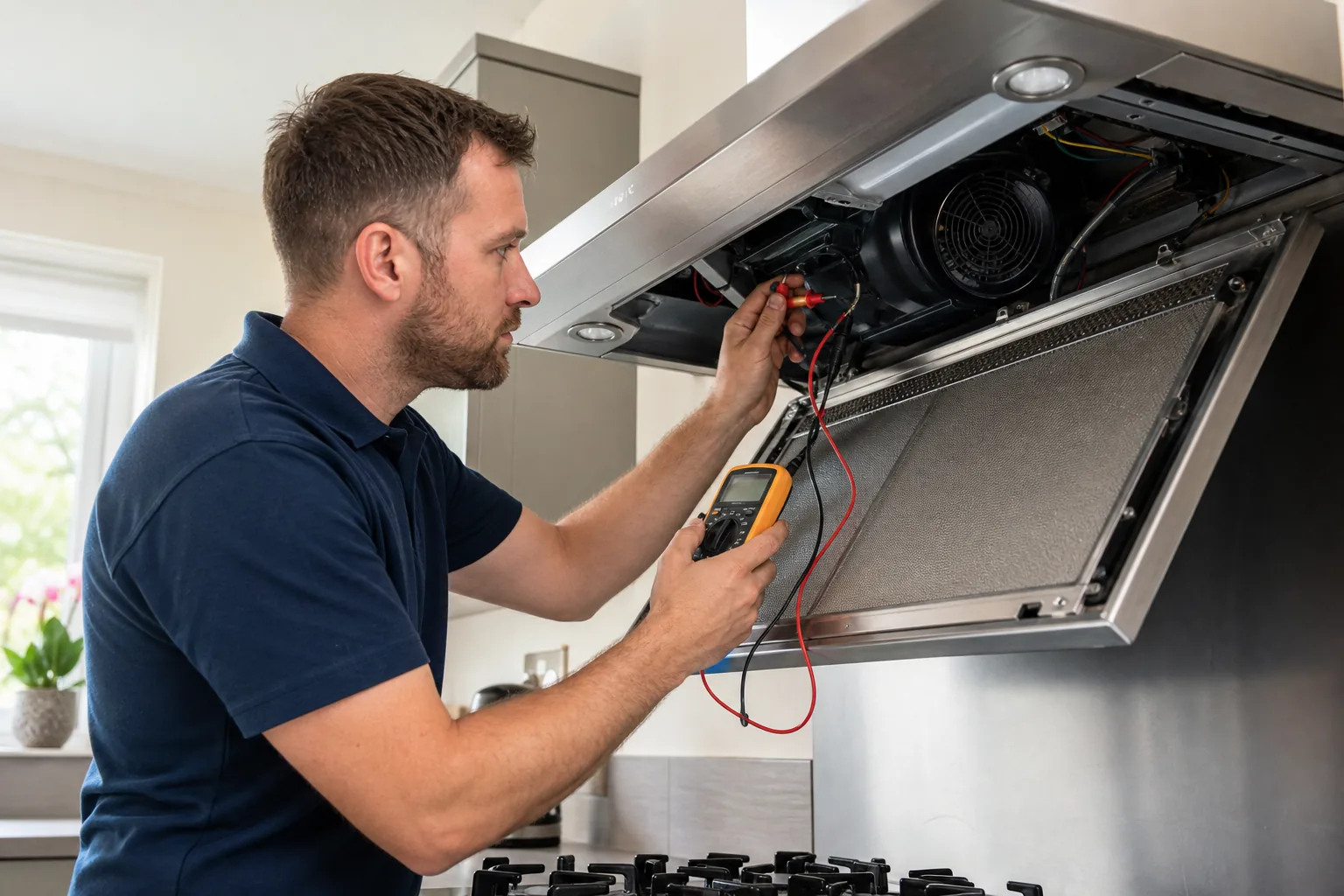
If a cooker hood runs but does not extract, start with the airflow path: clean or replace the filters as specified, confirm the hood is in extraction rather than recirculation mode, and check the outside flap from a safe position. If it is silent, trips the circuit, smells burnt or has a hot switch, stop and arrange electrical or appliance diagnosis. Do not remove the hood, open wiring compartments or reach into a moving fan.
One tissue test separates no airflow from weak airflow
With the hob cold and the hood running, hold one sheet of light tissue near the filter without allowing it to be drawn inside. No pull at any speed suggests a fan, control or severe blockage problem. A modest pull at the grille but cooking fumes escaping around the canopy points towards insufficient capture, installation height or cross-draughts.
This is a comparison, not a measured airflow test. Record the difference between speed settings and whether noise changes. An engineer can measure flow and inspect the duct safely.
Grease filters need cleaning before fault diagnosis
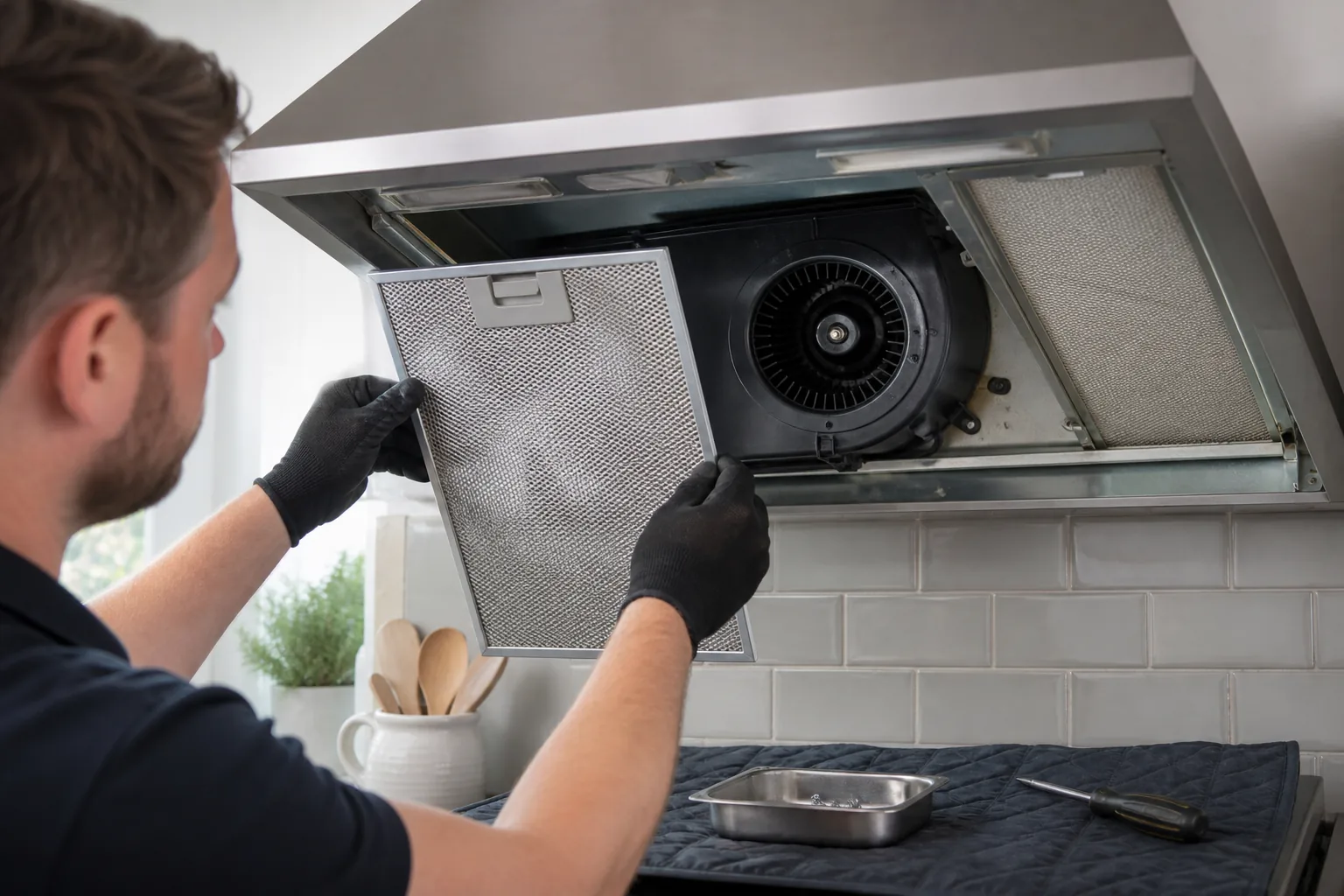
Metal mesh filters collect grease and progressively restrict air. Remove them only as the manual describes. Wash by the permitted method, dry completely and refit in the correct orientation. Disposable paper, fabric or carbon filters normally need replacement, not washing.
Do not run the hood without filters. Grease reaching the motor and duct creates hygiene, performance and fire concerns. If filters are damaged or do not fit tightly, order the model-specific part.
Is the hood extracting outside or recirculating?
An extracting hood sends air through a duct to an external terminal. A recirculating hood passes air through grease and carbon filters before returning it to the kitchen. Recirculation can reduce odour and grease but does not remove water vapour outside. If windows steam while the hood appears to work, confirm the installation type.
Some models can be configured for either mode. Missing duct pieces, an incorrectly fitted blanking plate or absent carbon filters can undermine performance. Do not change the configuration without the installation manual.
Check the external outlet without climbing
From safe ground level, see whether the flap opens when the hood runs. A stuck grille, insect nest, grease deposit or crushed duct can restrict discharge. Do not use a ladder in poor conditions or push tools into the opening. In flats, the duct may be communal or terminate at an inaccessible façade; involve building management.
Noise tells you where the energy is going
Motor speeds up but airflow falls
A blocked filter or duct can make the hood louder while moving less useful air. Stop long enough to clean the accessible filter and compare again.
Rattle at one speed
A loose filter, damper or trim may resonate. Press only external, cool trim from a safe position; do not reach behind the grille.
Grinding or scraping
A fan wheel, bearing or foreign object may be involved. Switch off and book cooker hood repair. Continued running can increase damage.
Capture depends on more than fan power
A hood mounted too high, narrower than the hob or exposed to a strong cross-draught can miss the rising plume. Back burners may capture better than front burners. Use lids and appropriate heat, but never compromise safe cooking simply to make a weak hood appear effective.
Replacement should consider hood width, manufacturer mounting range, duct size, route and noise at useful speed—not just the largest advertised airflow number.
Flexible ducting can hide a major restriction
Long flexible ducts, tight bends and crushed sections add resistance and collect grease. Do not open cupboards or ceilings blindly. Photograph accessible sections and tell the engineer the estimated route. Fire stopping, shared shafts and leasehold permissions may constrain changes.
When the lights work but the fan does not
Hood lights and motor can use separate controls while sharing a supply. Working lamps do not prove the motor, capacitor or selector is healthy. Try each speed once and note whether there is a click, hum or error display. Avoid repeated switching if the motor hums without turning.
A completely dead hood
Check a clearly labelled local switch or fused connection unit without removing its cover. See whether other kitchen circuits are affected. Do not replace fuses repeatedly or pull out a hard-wired hood. Heat, discolouration, buzzing or trips need an electrical fault assessment.
Steam and odour are different performance tests
Steam reveals moisture removal; lingering frying odour can reflect carbon-filter saturation or grease elsewhere in the kitchen. A recirculating hood will not exhaust moisture. Clean splashbacks and nearby surfaces before blaming a new filter for old odour.
Condensation can reveal a duct problem beyond the fan
Water dripping from the hood after cold weather is not always cooking splatter. Warm, moist air may condense inside an uninsulated duct, run back through a poorly graded section or collect behind a non-return flap. Note whether dripping occurs only during cooking, after the fan stops or following rain. Those timings help separate internal condensation from an external weather-entry problem.
Do not catch persistent water with towels around switches or lamps. Isolate the hood if moisture reaches electrical parts and arrange inspection. The remedy may involve duct insulation, fall, terminal design or sealing rather than a new motor. In a flat, confirm who owns the concealed duct before authorising work. Ask for photographs of any accessible defect so the repair proposal is tied to evidence rather than guesswork.
Prepare a repair brief
- Model and serial number
- Extraction or recirculation mode
- Which speeds work
- Tissue-test result
- Filter type and last service
- Noise and its location
- Visible duct route and outside flap behaviour
Use the broader appliance repair service if model identification or access is uncertain. Ask whether diagnosis, parts, return labour and airflow verification are included.
Test the repair with cooking conditions held constant
Use the same pan position, heat level and hood speed as before. Check tissue pull, outside flap and visible plume capture. New noise, vibration or grease leakage means the job is not finished. Keep the filter schedule and part numbers with the appliance manual.
Also check what happens with the kitchen door and nearest window in their usual positions. A dramatic improvement only when a window is opened may indicate inadequate make-up air, but it is not permission to alter fixed ventilation. Record the observation for the engineer, particularly where the room contains a gas appliance. Ventilation serving combustion must never be blocked or casually modified to improve hood performance.
A cooker hood is a route, not just a motor. Work from filter to fan to duct to outlet. Replacing the visible unit before checking the route can leave the new hood struggling against the same restriction.
