Fault diagnosis
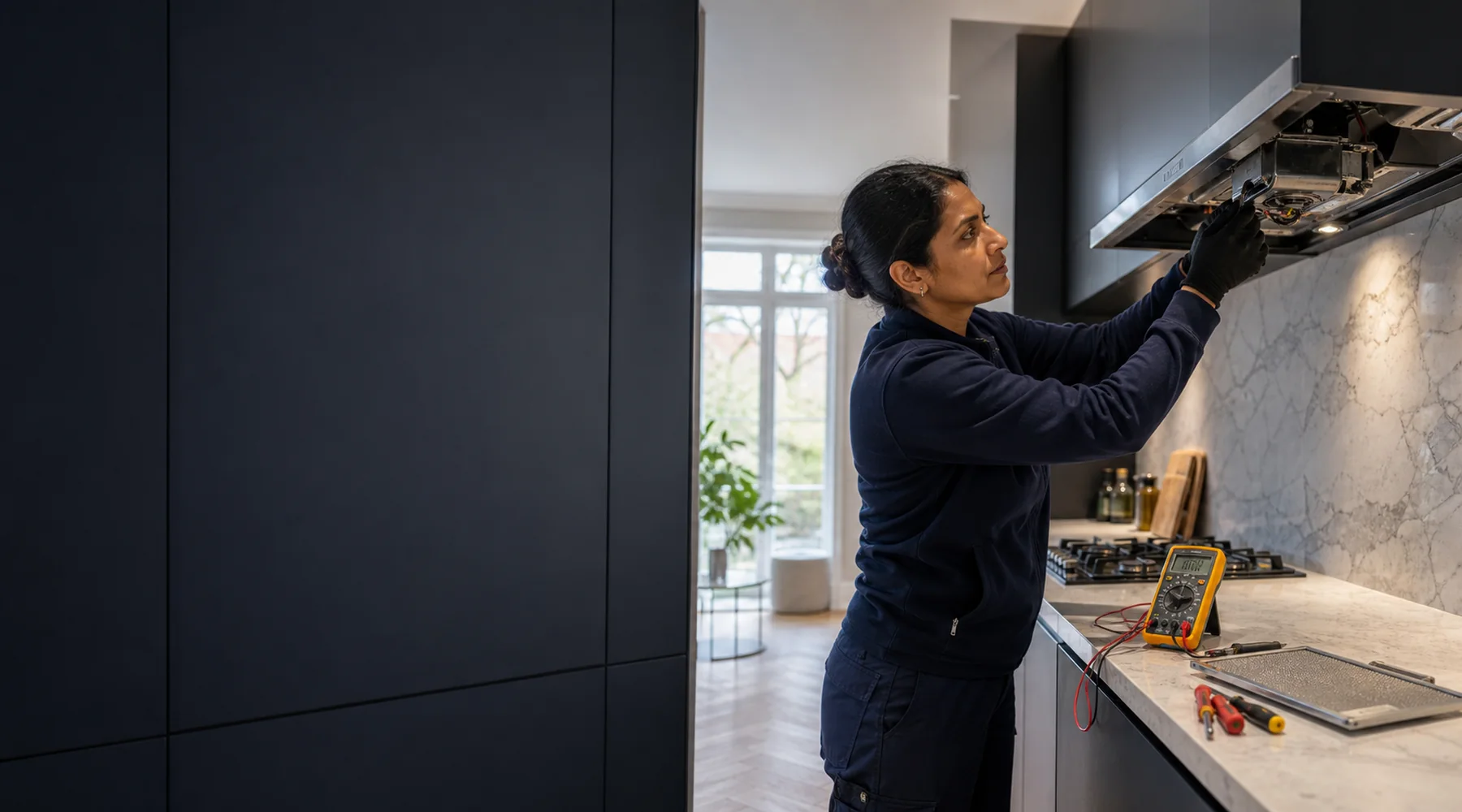
Power, controls, fan speeds and accessible components are checked in a sensible sequence.
Alesta · Cooker hood repairs in London
Careful diagnosis and repair for cooker hoods that have lost suction, become noisy or stopped responding. Tell us the make, model and fault so we can organise the right engineer.
☎ Call 020 3608 3976Airflow and electrics considered together
A cooker hood can sound as though it is working while moving very little air. Grease-loaded filters, a restricted duct, a tired motor, a failed capacitor or a control fault can create similar symptoms, so replacing parts before diagnosis is rarely the right starting point.
Tell us whether the hood extracts outside or recirculates, then share the make, model and exact behaviour. A photograph of the rating plate and installation helps us prepare for safe access around cabinetry, the hob and the electrical supply.
Power, controls, fan speeds and accessible components are checked in a sensible sequence.
Noise, vibration, starting behaviour and airflow are used to assess the motor and impeller.
Switches, touch controls, indicators and cooker hood lights can be investigated.
Grease filters, recirculation filters and accessible duct connections are considered alongside the electrical fault.
Common reasons customers call
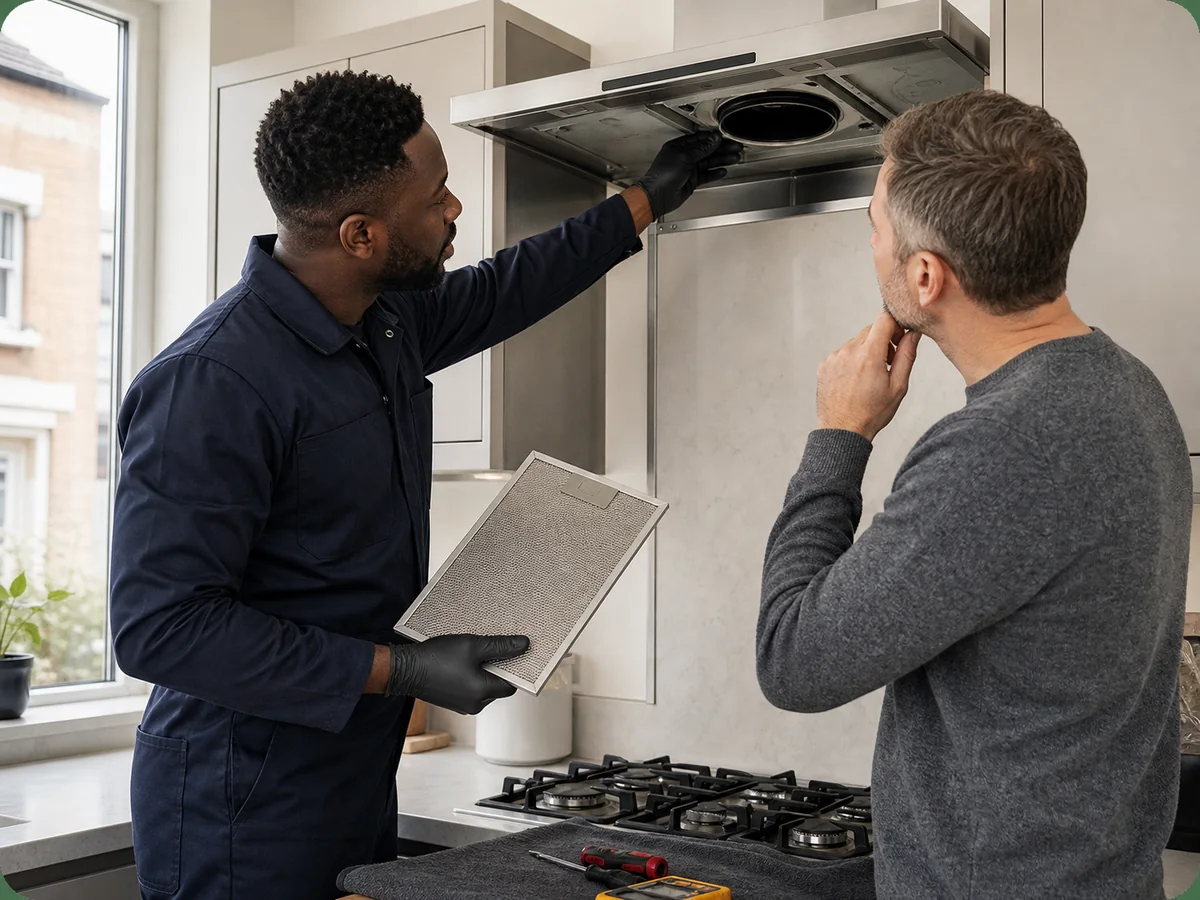
The motor can be heard, but steam lingers and the airflow at the outlet feels unusually weak.
One setting has failed, the fan starts reluctantly or touch controls respond only occasionally.
Rattling, scraping or a loud hum can point to the impeller, motor, mounting or an airflow restriction.
The hood has power problems, trips a circuit or no longer responds despite the supply being available.
Why Alesta for cooker hood repairs
Hood type, venting arrangement, dimensions and access help us match the visit appropriately.
A hood that trips, smells hot or has damaged wiring is isolated and assessed before continued use.
Model-specific motors, capacitors, controls and lamps are identified rather than improvised.
Agreed work is followed by checks of fan speeds, noise, controls, lighting and useful airflow.
A considered repair
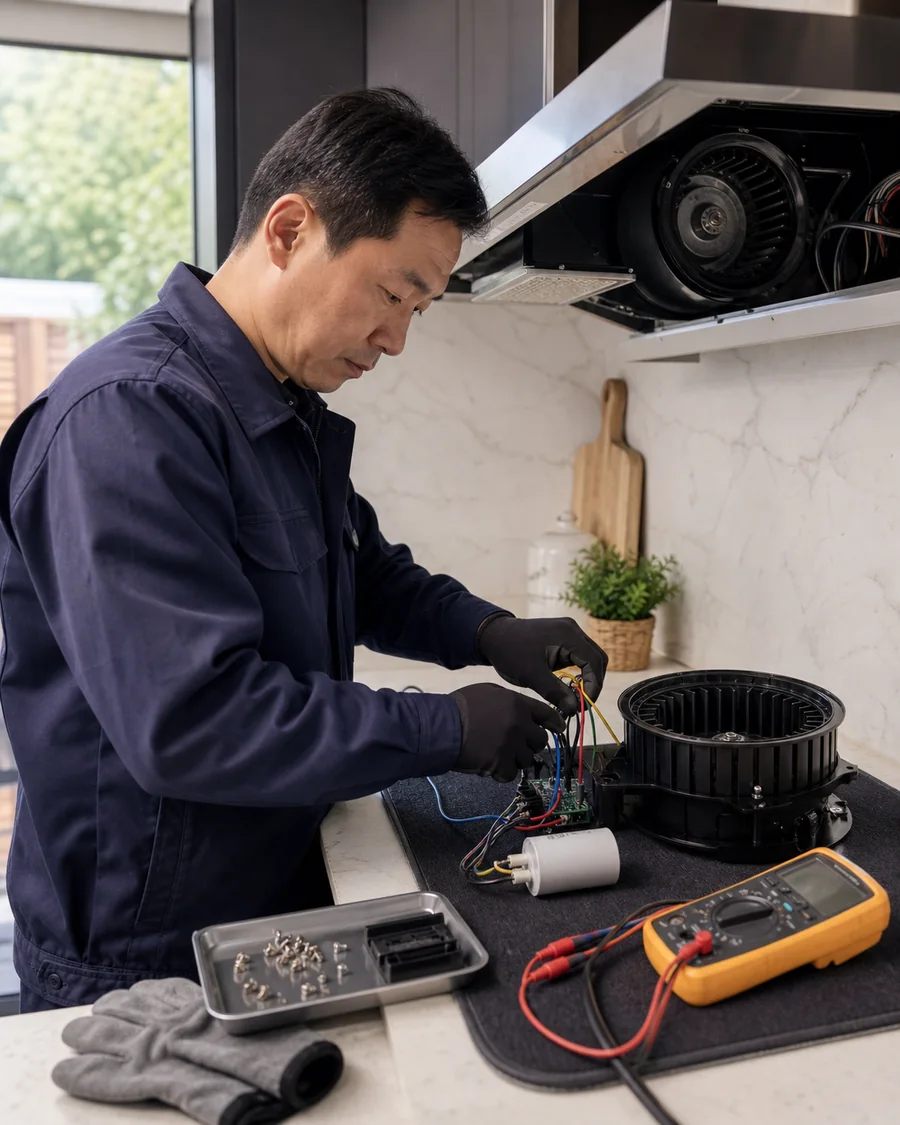
Every cooker hood repair begins with the installation and the symptom. We ask for the make and model, whether the hood extracts through a duct or recirculates through a carbon filter, and what happens at each fan speed. A photograph of the rating plate, controls and surrounding cabinetry can reveal useful access details. If the hood trips the electrics, smells hot or makes a scraping sound, we ask you to stop using it until it has been assessed.
At the property, the engineer makes the area safe and verifies the available supply before examining the hood. Grease filters and accessible duct connections are checked because restricted airflow can overload the system or imitate a motor fault. The engineer then works through the controls, lighting, fan speeds, motor starting behaviour and accessible wiring. Noise and vibration are considered alongside suction: a loose impeller or mounting can require a different response from a motor that hums but does not start.
If the fault is traced to a repairable component, the proposed work and any model-specific part are explained. Motors, capacitors, switches, electronic modules and lamp assemblies are not assumed to be interchangeable. Some common items may be resolved during the visit, while a precise manufacturer part may need ordering. Duct cleaning beyond the accessible connection, alterations to cabinetry and extensive fixed wiring are separate scopes and will be identified clearly if they are contributing to the problem.
After the agreed repair, the hood is reassembled with its filters correctly seated. The engineer checks available speed settings, controls, lighting, noise and useful airflow where the installation permits. For recirculating models, the condition and replacement interval of carbon filters can be explained; for externally vented models, an inaccessible or obstructed duct may need separate attention. You receive a straightforward account of the fault, the work completed and any practical maintenance step that can help the hood perform consistently.
Clear pricing
The final cost depends on the hood, access, diagnosis, labour and any model-specific replacement part.
| Service scope | Price | What affects the final price |
|---|---|---|
| Common cooker hood repair | Typically £60–£150 | Hood type, fault, access and labour required |
| Diagnostic visit | From £60 | Model, postcode, installation and whether specialist testing is required |
| Replacement parts | Quoted separately | Manufacturer, model, availability and component cost |
Typical pricing: Diagnostic visits can start from £60 and common repair work may fall between £60 and £150, but these are not fixed quotes. Parts, built-in access and complex electrical faults can increase the total.
How the service works
Share the hood type, make, model, installation and what happens at each setting.
The engineer checks filters, controls and accessible components before recommending work.
Agreed work is checked across the available speeds, lights, noise and airflow.
Cooker hood repair FAQ
Useful answers for planning a safe, efficient cooker hood repair visit.
☎ Call 020 3608 3976Share the make, model, installation type and exact symptom. Photographs of the hood, controls and rating plate can help identify access and compatible parts.
Grease filters, carbon filters or duct restrictions can reduce airflow, while a worn motor or damaged impeller can create a similar symptom. Diagnosis should consider both airflow and components.
Often it can, subject to safe access and availability of the correct model-specific motor or fan assembly. The sensible repair is confirmed after diagnosis.
Filters are not automatically included. Their type and condition are checked, then the correct grease or carbon filter can be identified and priced if replacement is required.
No. The accessible connection can be considered during diagnosis, but specialist cleaning or alteration of concealed ductwork is a separate scope.
Stop using it and isolate it only if you can do so safely. Do not repeatedly reset the circuit; explain exactly what happened when you call.
The model, built-in access, fault, labour and cost of any compatible part all affect the total. The applicable visit structure is confirmed before booking.