
How to Get Rid of Cockroaches in a Flat Without Spreading Them
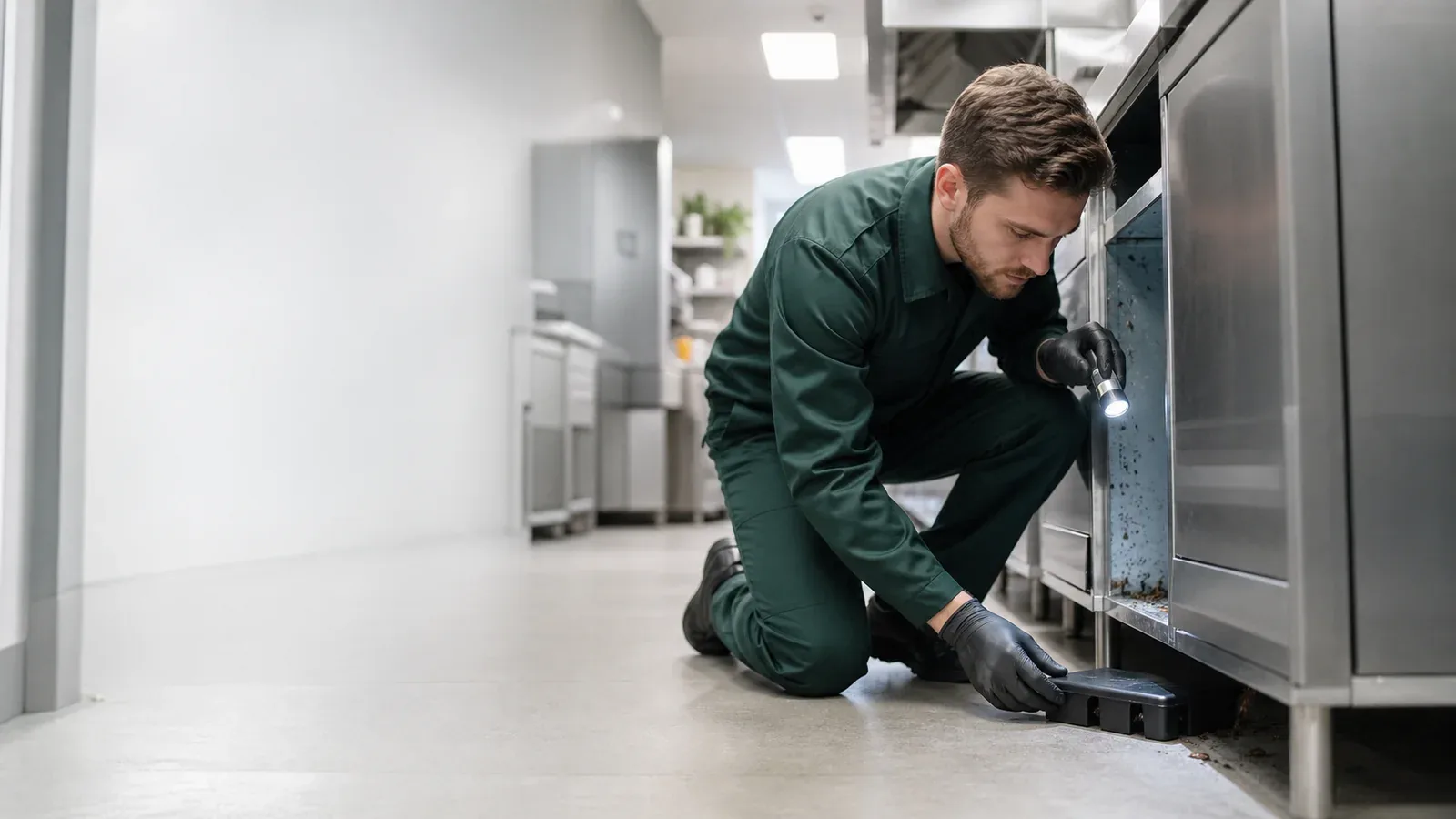
Cockroaches in a flat are controlled by removing competing food and water, mapping harbourages, using targeted treatment and coordinating with the landlord or managing agent where insects can move between homes. Do not release a fogger or spray every sighting. Repellent aerosol can drive cockroaches deeper into service voids, contaminate bait and scatter activity into adjoining rooms.
Confirm the insect before emptying the kitchen
Capture a specimen on a sticky monitor or in a sealed clear container. Note the exact room and time. German cockroaches are small, tan-brown and have two dark lines behind the head; other insects found near sinks may require a different response. Photograph adults, nymphs and any capsule-like egg cases with scale.
Place monitors tight against edges: behind the fridge, beneath the sink, beside the cooker, near pipe entries and inside warm cabinet corners where children and pets cannot reach them. Number each trap and record captures after the same interval. A map shows whether the centre is one appliance or a shared riser.
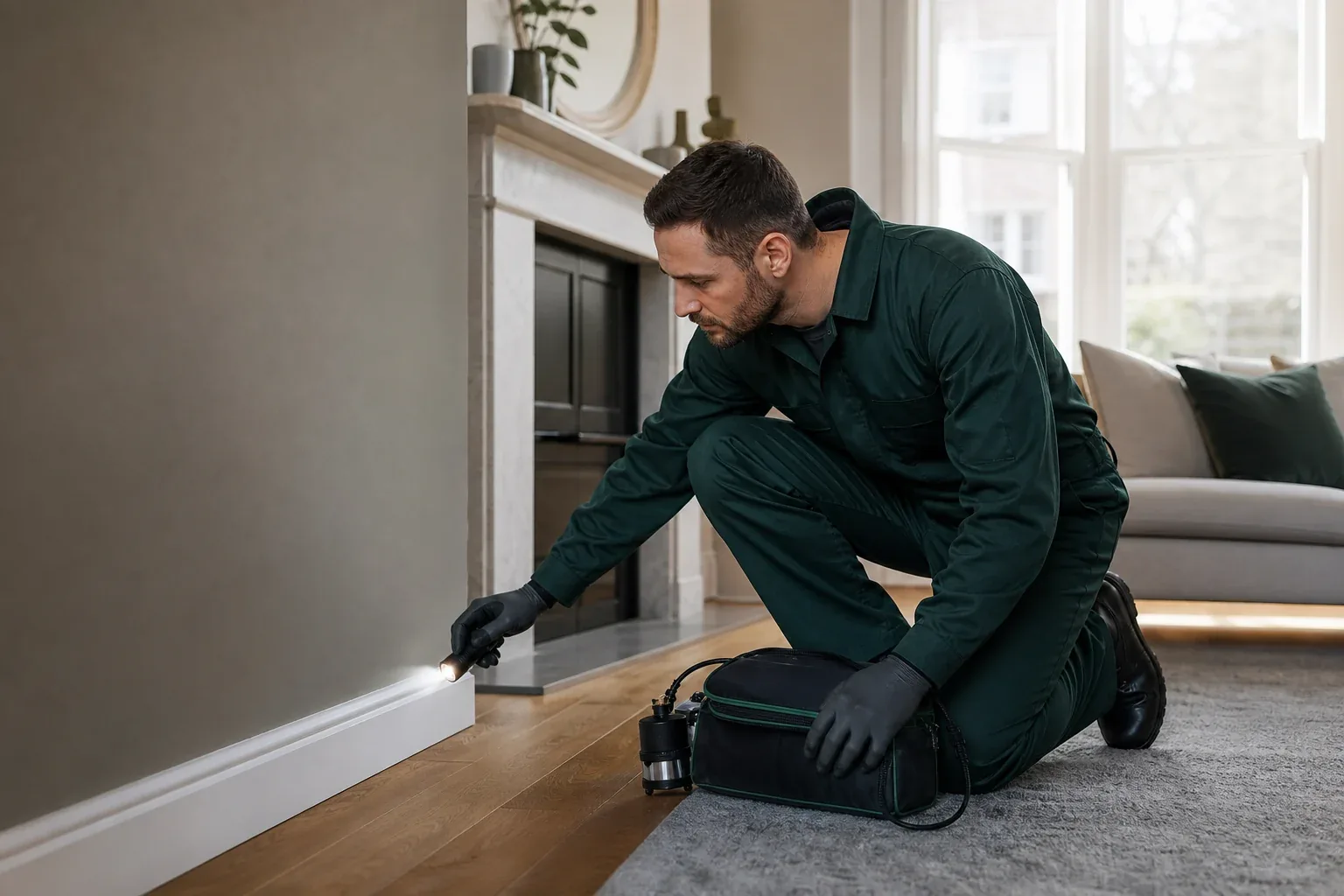
Do not carry the infestation into other rooms
A panic clear-out can move egg cases and nymphs in cardboard, appliances and shopping bags. Keep items in the affected room while sorting. Seal obvious rubbish before removal, but do not fill communal corridors with uninspected belongings.
Discard corrugated food boxes that provide narrow harbourage. Inspect reusable containers and wipe their exteriors. Store dry food in tight containers and keep pet food sealed overnight. Avoid taking a toaster, microwave or coffee machine to another flat; warm motors and crumbs make small appliances common hiding places.
Clean for bait acceptance, not for appearances
Remove grease from cooker sides, cabinet hinges and the floor-wall junction. Vacuum crumbs from cracks using a crevice tool, then empty the vacuum into a sealed bag outdoors. Wash cloths promptly. This reduces alternative food so professionally placed bait remains attractive.
Do not scrub away monitoring marks or insecticide placements. Ask the technician which zones must remain untouched. Ordinary kitchen hygiene can continue around them, but bleach, aerosol and strongly scented cleaner close to gel bait can undermine treatment.
Water keeps a small population alive
Dry the sink and draining board overnight, empty saucers, and repair dripping taps or pipes. Check condensation trays and the area beneath the fridge where safely accessible. Do not pull a heavy appliance out alone or reach beside live equipment with a wet hand.
A damp cabinet base may indicate a plumbing leak as well as pest habitat. Report it in writing. Treatment without repairing a steady water source is a short-term contest the cockroaches are well equipped to survive.
Why random sprays and foggers fail
Open-air insecticide settles on exposed surfaces while cockroaches shelter inside cracks, motor compartments and wall voids. Some formulations repel them from treated zones. The result may be fewer visible insects for a few days while the population redistributes.
Products also have legal labels covering application, dose and protected surfaces. Never improvise a stronger mixture or apply agricultural product indoors. In a home with children, pets, asthma or food preparation, targeted professional placement is particularly important.
A flat is connected to its neighbours
Pipe penetrations, cable routes, ducts and shared walls allow movement between units. Tell the landlord or managing agent when monitors confirm activity, giving locations rather than accusations about another resident. Ask whether adjacent flats and communal bin or service areas will be inspected.
One treated kitchen can be reinvaded if a shared source remains. Coordination does not mean every resident receives identical pesticide; it means inspection and a building-level plan. Alesta’s professional cockroach treatment is the most specific service for that programme.
What professional treatment may involve
The technician should identify the species, inspect warm and humid harbourages, review monitors and choose products suited to the setting. Gel bait, insect growth regulators, dusts or residual applications may be used in controlled locations according to labels and risk assessment. More product is not automatically faster control.
Ask what preparation is required, how long people and animals must stay away, what must not be cleaned, and when follow-up occurs. A pest inspection and identification visit is sensible when the specimen is uncertain or activity extends beyond one species.
Do not seal every gap on day one
Proofing is valuable, but sealing an active harbourage without a treatment plan can redirect insects. The technician should identify which routes can be closed immediately and which need monitoring or treatment first. Later pest-proofing work should use appropriate durable materials around service penetrations without interfering with ventilation or fire-stopping.
Do not inject domestic sealant into electrical equipment, gas routes or communal systems. Building management may need to authorise service-void work.
If you must move during treatment
Tell the pest professional before packing. Use clean plastic containers rather than reused cardboard, inspect every item, and keep processed belongings separate. Small appliances may need specialist inspection. Do not sell or donate potentially infested equipment.
Label sealed containers by status and room. Laundering may help with washable textiles, but cockroach control is not achieved by washing every possession. Focus on food zones, warm equipment and the mapped harbourages.
Measure progress properly
Count monitor captures by location and date. A decline across several checks is more meaningful than one night without a sighting. Nymphs after treatment may indicate hatching from existing egg cases; the provider should explain how that affects follow-up. Fresh activity in a new room needs reporting promptly.
Keep invoices, preparation instructions and building correspondence. Successful control ends with sustained monitoring, repaired water sources, food management and coordinated proofing—not simply with the disappearance of the last cockroach you happened to see.
Landlord and tenant roles should be written down
Report confirmed activity promptly and keep photographs, trap records and access offers. The cause may involve one flat, a shared service void, waste management or building disrepair, so responsibility cannot be decided from the first sighting alone. Ask who books treatment, who contacts neighbours and who repairs penetrations or leaks.
Tenants can support control by following preparation, storing food and allowing reasonable access. A request to discard all belongings or pay cash for unnamed pesticide is not a proper treatment plan. Seek housing advice if a serious building-wide problem is ignored.
Kitchen hygiene after treatment
Follow re-entry times and clean only the food-contact surfaces the technician identifies. Do not wash treated cracks or remove gel placements. Use separate cloths for food preparation and floor-level work. Inspect delivered groceries and avoid keeping paper bags beside warm appliances.
Once monitoring shows control, maintain sealed storage, nightly dryness and regular appliance-edge cleaning. These steps reduce food and water; they do not replace follow-up where captures continue.
What not to promise yourself
One dead adult does not prove the harbourage is gone, and one quiet week does not prove an adjoining source is controlled. Conversely, a single nymph during the expected follow-up period does not automatically mean every treatment failed. Use the agreed monitor dates and ask the technician to interpret the life stage and location.
