Harbourage inspection
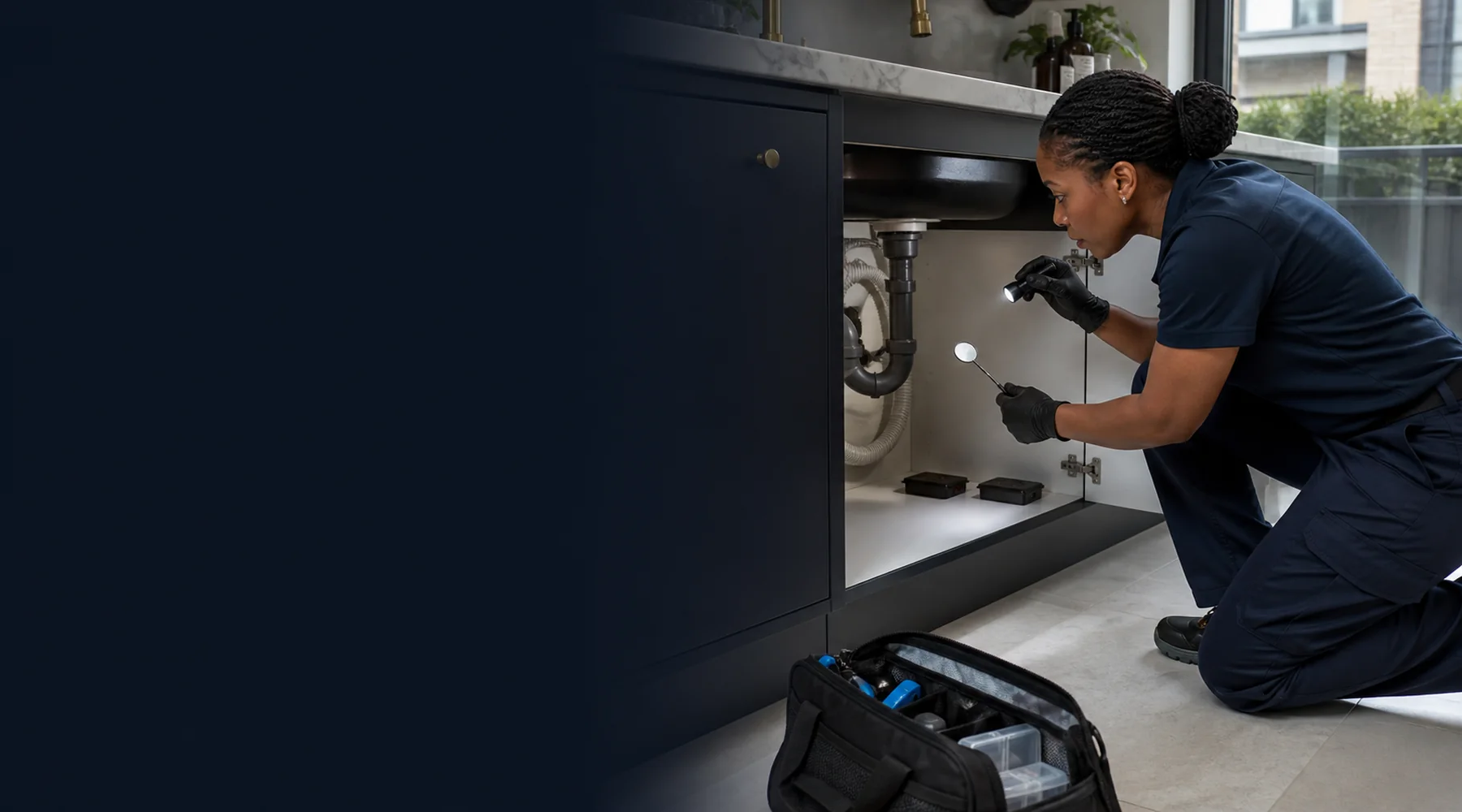
Warm appliances, pipe entries, cabinets, service gaps and moisture points checked for evidence.
Alesta · Cockroach control in London
Discreet inspection and targeted control planned around the species, harbourages, food and water sources, adjoining areas and follow-up evidence.
☎ Call 020 3608 3976Confirm activity and harbourages
Cockroaches favour warmth, water, food residue and narrow protected gaps. Sightings can centre around kitchens, boiler cupboards, bathrooms, appliances, service risers and waste areas. Species and life stage matter because behaviour, breeding rate and likely harbourages influence the treatment plan.
One visible insect does not reveal the full extent. We assess droppings, egg cases, cast skins, monitoring catches and activity patterns, while considering adjoining flats, pipe routes and shared service voids that may allow reinfestation.
Warm appliances, pipe entries, cabinets, service gaps and moisture points checked for evidence.
Discreet traps help map activity and show whether treatment is reducing the population.
Suitable gel or other authorised products placed in protected locations according to the plan.
Fresh evidence, bait uptake, hygiene factors and adjoining-source risks reviewed after treatment.
Common reasons customers call
Insects appear around sinks, cupboards, bins or appliances when the room becomes quiet.
Dark specks, shed skins or capsules are found inside cabinets and warm equipment gaps.
Visible insects reduce briefly but hidden harbourages, eggs or adjoining sources remain active.
Pipe and riser voids may allow movement between units, requiring coordinated investigation.
Why Alesta for cockroach control
The plan is based on signs, monitoring and likely harbourages rather than a sighting alone.
Targeted placements keep products in protected locations and reduce unnecessary surface treatment.
Food, moisture, waste, cracks and adjoining routes are addressed alongside product use.
Monitoring results, re-treatment criteria and customer responsibilities are explained.
A considered treatment
Every treatment begins with the sightings and the building. We ask when and where insects were seen, whether activity is mainly at night, which rooms share pipework, and what products have already been used. Photographs can help with initial identification, but monitoring and physical evidence are more reliable than description alone. Food should be sealed, loose waste removed and relevant cupboards made accessible before the visit, without spraying new DIY products that may scatter activity or contaminate bait locations.
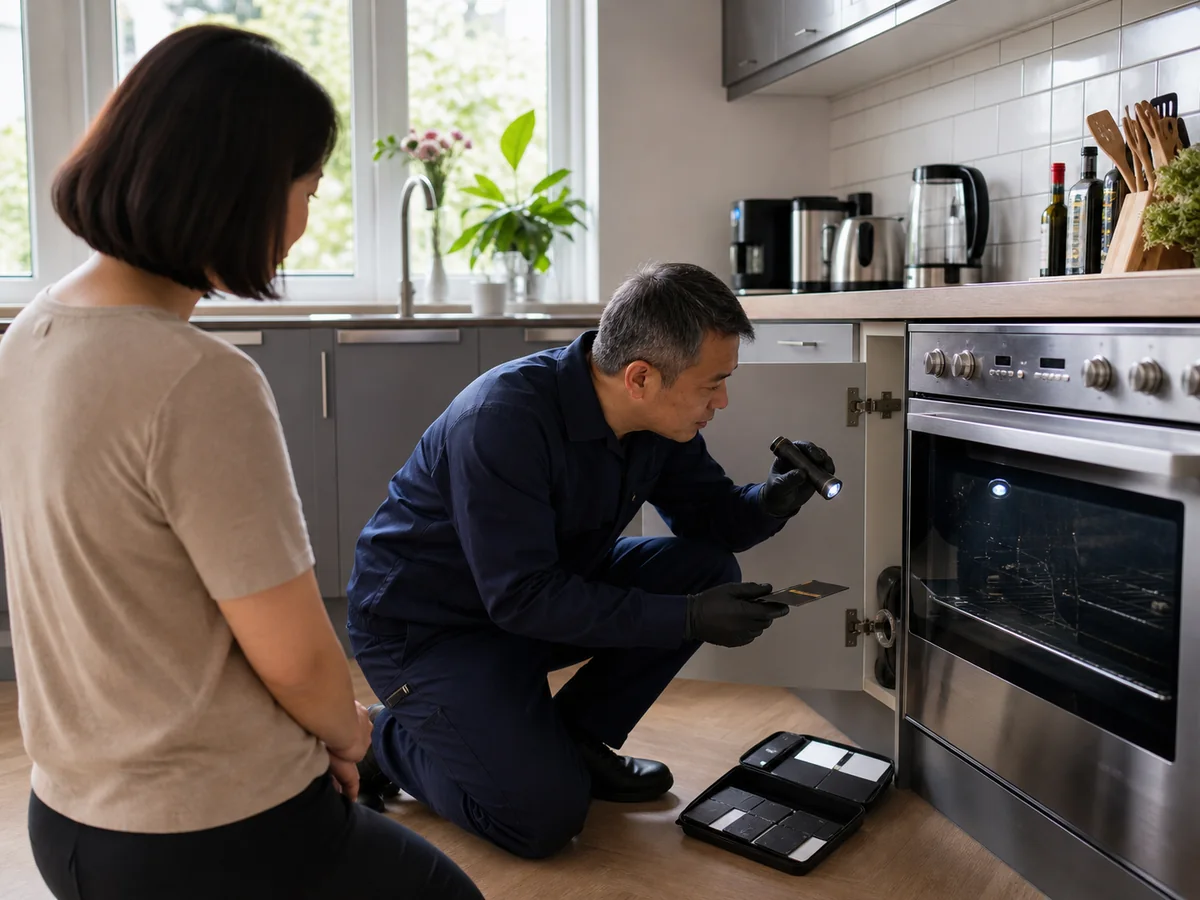
The technician inspects warm, humid and protected areas: behind appliances, beneath sinks, around boiler cupboards, cabinet joints, service penetrations and waste storage. Droppings, egg cases, cast skins and monitoring catches help establish species, distribution and severity. Water leaks, food residue, clutter and gaps into adjoining areas are recorded because treatment cannot succeed through product use alone if the property continues to provide easy resources and routes.
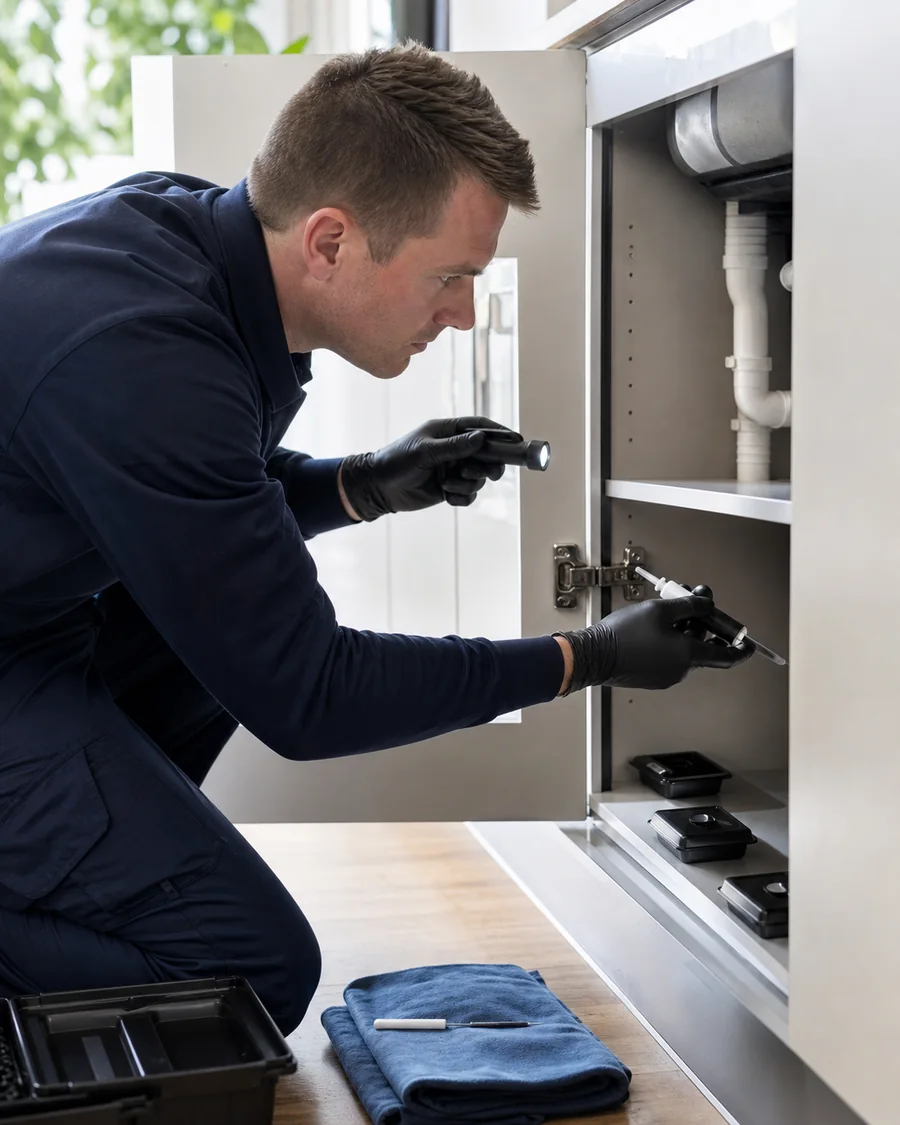
Where suitable, small gel-bait placements are applied into protected cracks and harbourages rather than across open food-contact surfaces. Monitoring traps are positioned to map activity and show progress. Residual or dust formulations may be included only where authorised, appropriate and safe for the location. Product labels, occupancy, children, pets and re-entry guidance control the method. Bait must not be cleaned away or sprayed over, and food competing with it should remain securely stored.
Control is reviewed through fresh sightings, trap catches, bait uptake and evidence of younger stages. Cockroach populations may require repeat treatment because concealed egg cases and adjoining sources can sustain activity after the first visit. In multi-unit buildings, untreated neighbouring harbourages may cause reinfestation. At handover we explain cleaning restrictions, moisture and waste actions, proofing priorities and the review period. The aim is measured population reduction and source control, not an unrealistic promise based on one visible treatment.
Clear pricing
The final cost depends on property size, species, activity level, harbourages, adjoining risks and the number of treatment visits required.
| Service scope | Price | What affects the final price |
|---|---|---|
| Targeted residential treatment | From £120 | Rooms, species, evidence, access and agreed product method |
| Multi-room or heavier activity | From £250 | Harbourage extent, monitoring, preparation and adjoining service routes |
| Follow-up or coordinated treatment | Quoted to scope | Trap results, repeat visits, multiple units and proofing requirements |
Pricing context: Existing Alesta data lists cockroach treatment from £120 and broader scopes from around £250. Inspection details and the number of planned visits are confirmed before booking.
How the service works
Describe timing, rooms, evidence, adjoining units, leaks and any products already used.
The technician maps harbourages and applies the agreed targeted control method.
Follow-up uses sightings and trap results alongside hygiene, moisture and proofing actions.
Cockroach control FAQ
Clear answers about identification, preparation, bait treatment, safety and follow-up.
☎ Call 020 3608 3976Photographs help, but species confirmation uses body shape, size, colour and evidence such as droppings, egg cases and monitoring catches. Keep a sample safely contained if possible.
Seal food, empty waste, clean accessible residue, fix known leaks where possible and open the cupboards or appliance gaps identified in your preparation instructions.
Repellent sprays can scatter insects into new gaps and contaminate gel bait. Tell the technician exactly what has been applied and where.
Products are placed in protected inaccessible locations according to their label. Occupants and pets still need to follow the specific safety and access guidance given for the booking.
No. Egg cases, concealed harbourages and adjoining sources can require monitoring and repeat treatment. The planned review depends on the species and evidence found.
Yes. Shared risers, pipe gaps and service voids can allow movement. Building management may need to coordinate inspection where activity crosses units.
Do not remove bait or traps early, keep food and waste controlled, address moisture and follow the agreed review period. Report fresh sightings with the location and time.