
How Much Does Rubbish Removal Cost in London?
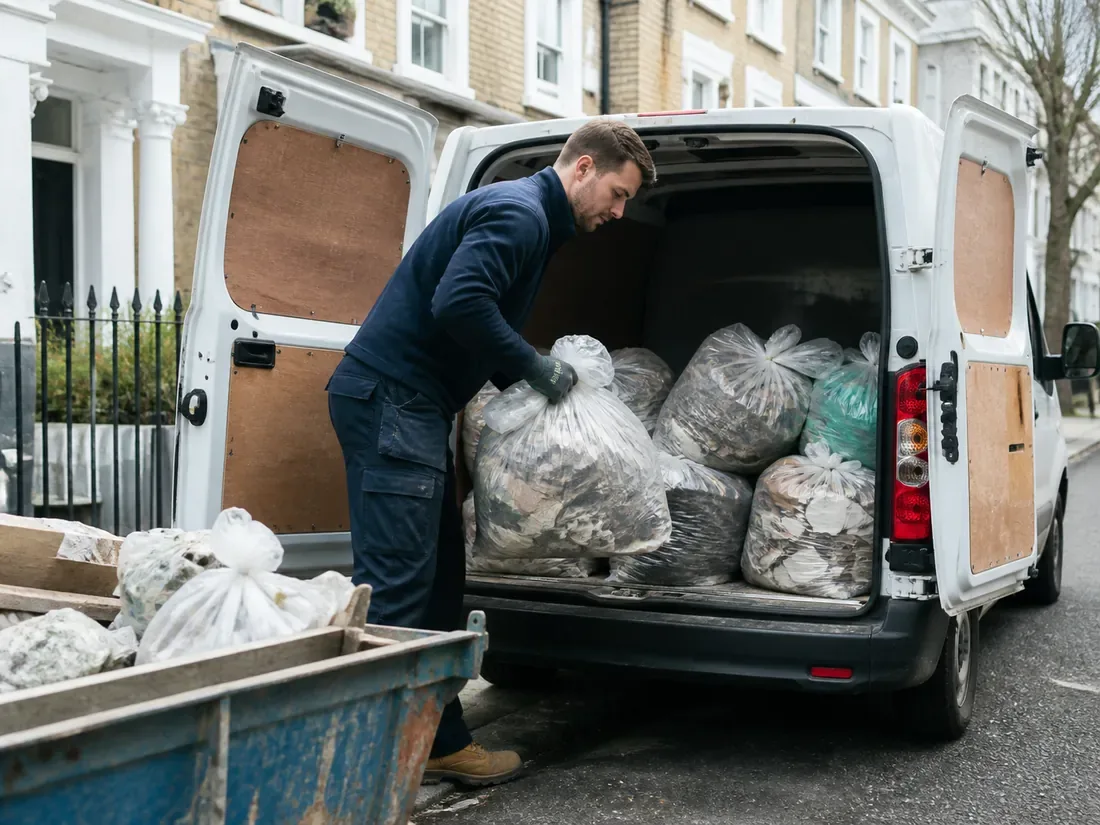
There is no honest single price for rubbish removal in London. A quote is built from the volume and weight of the load, the type of waste, carrying time, vehicle access and lawful disposal cost. A few light bags beside a driveway are a different job from the same apparent volume of soil carried down two flights of stairs. To compare firms fairly, send photographs with scale, an item list and exact access details, then ask for the total including labour, loading, disposal and VAT.
Start with the load, not the size of your home
“Waste from a one-bedroom flat” tells a collector very little. List furniture, appliances, bags and loose material. Photograph the entire pile and any items hidden behind it. Put a dining chair, tape measure or standard bin bag in the frame so the scale is clear.
Separate heavy material from bulky light material. Rubble, soil, tiles, bathroom fittings and wet timber can reach a vehicle’s payload limit before the load space is full. Mattresses and wardrobes fill volume quickly but behave differently at disposal sites.
The five parts of a useful quotation
- Load: stated volume, item list or agreed full load.
- Labour: number of people and included carrying time.
- Access: stairs, lift, distance to vehicle and parking.
- Waste type: ordinary household material versus restricted or specialist items.
- Disposal: lawful transfer, relevant fees and VAT.
Ask what could change the price on arrival. A quote that says “from” without defining the assumed load is not directly comparable with a fixed written scope.
Why access changes the bill
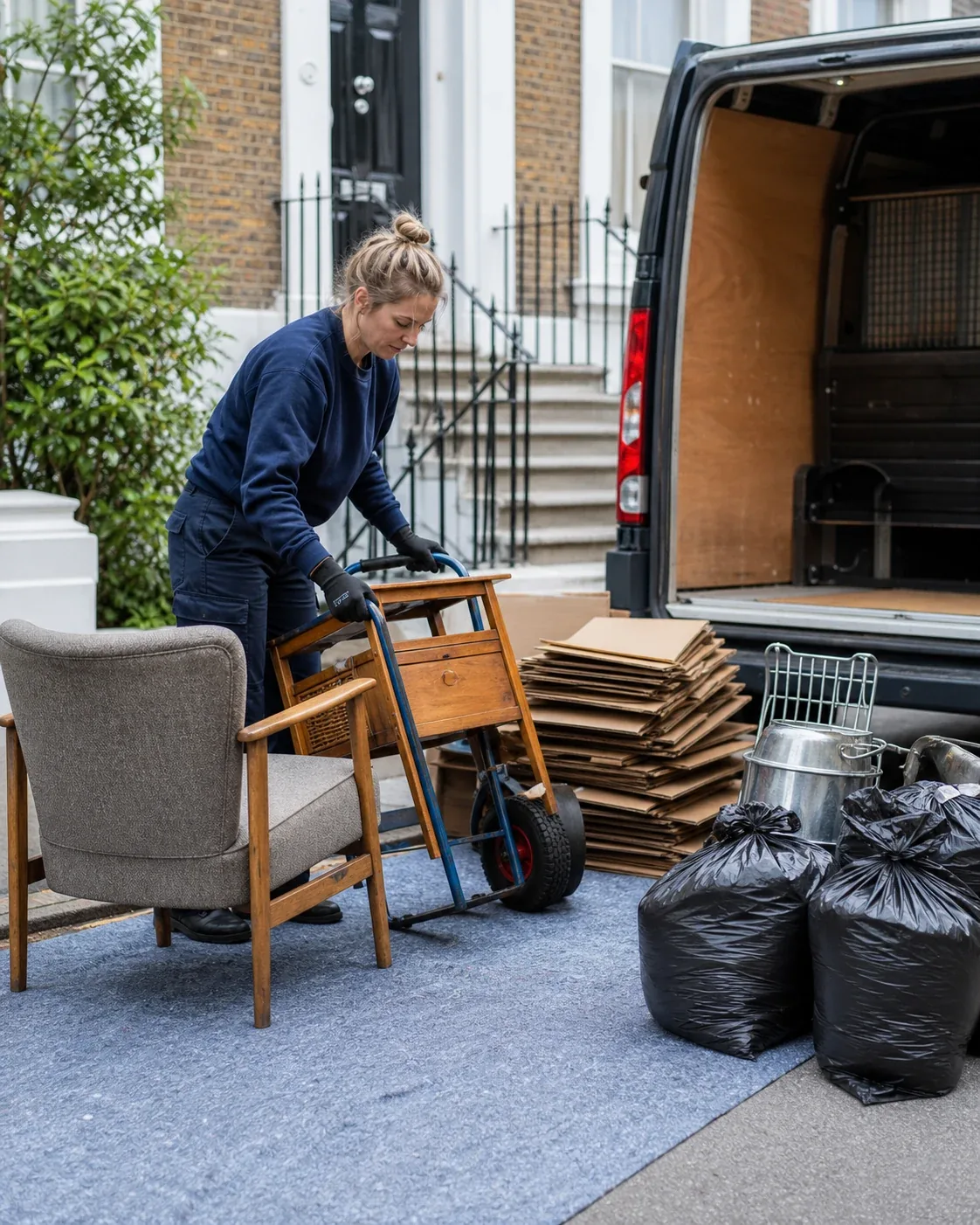
A crew may spend longer carrying than driving. Mention the floor, lift size, narrow turns, basement steps and distance from the nearest lawful stopping point. Controlled parking, red routes and loading restrictions need planning. If a lift must be booked, give the exact slot.
Do not leave rubbish on the pavement to make collection cheaper unless you have explicit permission and a confirmed immediate pickup. It can obstruct pedestrians and may be treated as fly-tipping.
Items that should never be hidden in “mixed rubbish”
Tell the company about paint, chemicals, gas cylinders, batteries, fluorescent lamps, asbestos-containing material, clinical waste, tyres, fridges and electrical equipment. Acceptance and disposal routes differ. If you suspect asbestos, do not break, bag or move it for a photograph; arrange competent identification.
Upholstered domestic seating and electrical items also have specific waste handling requirements. A responsible licensed waste removal service in London should say what it accepts before loading begins.
Man-and-van is not automatically waste removal
A removals operator transports belongings to another address. A waste carrier takes unwanted material into the waste system. The vehicle may look similar, but the duty and paperwork are not. If somebody offers to “take it away cheaply”, ask where it will go and check their waste-carrier registration.
House clearance may be the better service
Choose a full house clearance service when the work involves opening cupboards, sorting rooms, separating reusable belongings, identifying documents or coordinating keys. Rubbish removal is more suitable when the unwanted load is already identified and accessible.
Agree in writing what must stay. Photograph valuable, sentimental and landlord-owned items. A clearance team cannot infer that an unlabelled chair is for charity while the similar chair beside it is waste.
Garden material creates its own quote
Branches, leaves and grass are relatively bulky; soil, turf, wet logs and rubble are heavy. Access through a house adds protection and carrying time. A garden clearance team is the more relevant option when cutting back, digging or site preparation is part of the job rather than collection alone.
How to check the carrier before paying
Ask for the legal business name, contact details and waste-carrier registration, then verify it through the Environment Agency’s public register for England. Request a receipt describing the waste and collection address. If a collector cannot explain the disposal route, do not hand over the load.
The person who produced the waste can still face consequences if it is fly-tipped. A van photograph alone is not due diligence; registration and documentation matter.
Three quote examples that are not equivalent
A photographed pile by the front door
Fixed scope is possible because every item and the carrying route are visible. Confirm whether dismantling is needed.
A loft described as “mostly boxes”
The quote contains uncertainty: contents, safe loft access, weight and carrying time are unknown. A survey or capped labour arrangement may be fairer.
Renovation bags with rubble
Bag count disguises weight and material. State what is inside and whether builders produced it; do not mix hazardous or plasterboard waste into an ordinary household load.
Reduce cost without shifting risk
Sort the load, dismantle only items you can handle safely, photograph accurately and arrange parking. Use council bulky-waste or retailer take-back schemes where timing and eligibility suit. Donate genuinely reusable items before booking the final collection.
Do not overfill bags, drag heavy items down stairs or dismantle electrical and gas equipment to save crew time. Injury and property damage cost more than an extra carrying allowance.
Cancellation and loading-time terms matter
Ask how much notice is required to change the booking and what happens if the crew arrives to find a larger or different load. Some firms can take extra material at an agreed rate; others may lack vehicle capacity or the correct disposal route. The safest approach is a revised quote before anything is loaded.
Clarify whether the price includes a fixed loading window. If keys, lifts or parking fail, waiting time may be charged. Give one named contact authority to approve a documented variation, so the crew is not taking instructions from several residents.
Payment should follow an intelligible record
Before the vehicle leaves, compare the collected items with the agreed list and obtain the receipt or waste transfer information. Keep photographs of the cleared area. Pay through the agreed business channel rather than an unexpected personal account, and retain the quotation with the carrier details.
Questions to ask in one message
- Is this fixed price or an estimate?
- What volume, weight and carrying time are included?
- Are VAT, parking and disposal included?
- Which items are excluded or separately charged?
- Is dismantling included?
- What registration and receipt will I receive?
- What happens if the photographed load differs on arrival?
The best price comparison uses the same evidence for every firm. Define the load, expose the difficult access and name restricted items. Once those variables are visible, a cheap quote and a complete quote stop looking like the same thing.
