
Leaking Washing Machine: Use the Location of the Water to Find the Cause
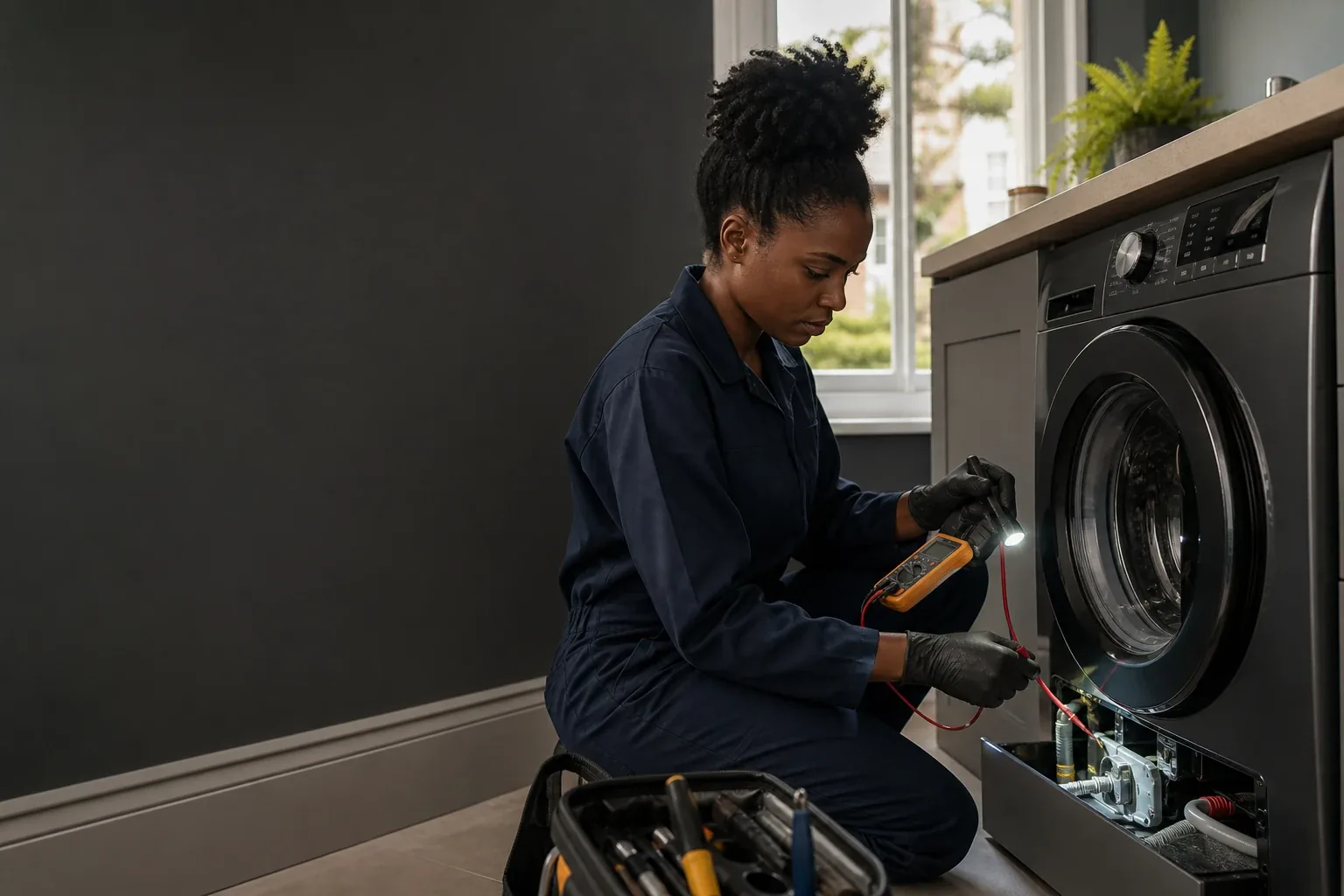
Stop the programme, close the washing machine’s water valves and isolate electricity only if the switch can be reached without stepping in water. Water at the front often comes from the door seal, filter cap or detergent drawer; a rear leak suggests inlet or drain hoses; water first appearing under the centre may involve an internal pump, tub hose or seal. Do not run repeated test cycles across a wet floor.
Make the area safe before finding the source
Keep people and pets out. If water is near a socket, plug, extension lead or damaged cable, do not touch the machine or stand in the wet area. Isolate the relevant circuit only if the consumer unit is dry, accessible and clearly labelled; otherwise call for urgent electrical help.
Use towels or a wet vacuum designed for the purpose to contain water without pushing it into cabinetry. Do not tilt a full machine. Wet laundry and retained water make it extremely heavy, and moving it can tear hoses or flooring.
Dry-cardboard mapping: one controlled observation
After the visible water is removed and the machine remains off, slide strips of dry cardboard around accessible front and side edges. They reveal the first damp point more clearly than a uniformly wet floor. Photograph staining inside adjacent cupboards and note whether the leak occurred while filling, tumbling, draining or spinning.
Do not restart solely to create evidence. If the original timing is known, it is enough. A technician can perform a controlled test with safe access. Where a very small drip is still active from an external valve or hose while isolated, a container can protect the floor until repair.
Front-centre water: inspect the door
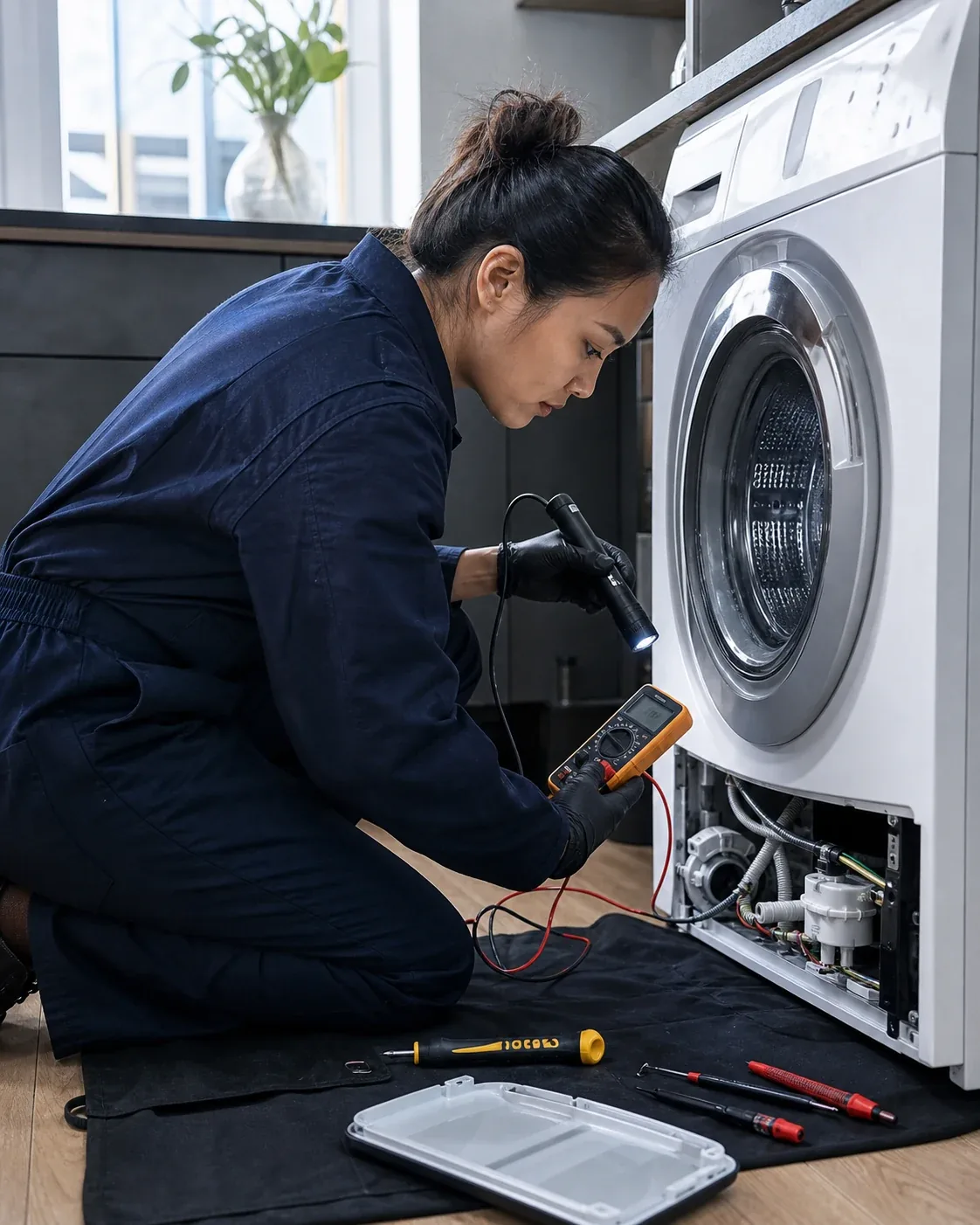
Look through the door and around the gasket without reaching into a locked machine. Hair, a sock edge or detergent residue can prevent the seal from seating. Once isolated and unlocked, wipe the folds and check for a cut, distorted section or foreign object. Do not glue a torn gasket.
Overloading can trap fabric in the door; one bulky item can also strike the seal during spin. If the gasket is damaged or its retaining band is loose, book a washing machine leak repair. Correct replacement involves model-specific fitting and a supervised test.
Front corner: filter and emergency drain
A poorly refitted pump-filter cap can leak during draining. Consult the manual before opening the flap. If the drum contains water, use the supplied emergency drain method and a shallow tray; unscrewing a filter immediately can release litres across the floor.
Inspect the cap seal for grit, cross-threading or damage and refit it exactly as instructed. A crack, seized cap or persistent drip needs repair. Never seal it permanently with tape or adhesive because the filter remains a service point.
Water from the detergent drawer
Drawer overflow appears high at the front and runs down the fascia, sometimes creating a puddle that looks internal. Remove the drawer only as the manual shows and wash away gel, powder and softener deposits. Check that water jets above it are not redirected by scale.
Too much detergent, hand-washing liquid or a product unsuitable for the machine creates foam that escapes through the drawer and door. Use the dose for load, water hardness and soil. If water surges from the drawer despite a clean path, an inlet or distribution fault needs diagnosis.
A rear leak points to connections
Do not drag the appliance forward alone. Use a torch from the side if access permits. Inlet hoses may drip at threaded unions or fail along their body; drain hoses can split or pull partly from a standpipe. Rust staining, bulging or braided damage means replacement, not tightening until it stops.
Close the service valves without force. A seized or leaking fixed valve belongs to professional plumbing support. The machine’s own hose and internal inlet valve belong to appliance repair. Tell the booking team which side of that boundary is wet.
Only during draining?
A leak that begins when the pump runs makes the waste route important. Check the visible drain hose for kinks, cracks and a loose connection. A blocked sink trap can force water back at a shared connection. Do not pour chemical drain cleaner into a machine or pipe an engineer may disconnect.
If the drum still contains water and the machine will not spin, use the earlier guide to why a washer may refuse to spin. Standing water, pump noise and a no-spin result form one drainage branch, not three unrelated faults.
Only during spin?
High-speed movement can open a small hose split, force water through a damaged seal or reveal excess foam. It can also shake water from the drawer if the machine is badly unlevel. Record banging, cabinet movement and load type. Do not hold the appliance still with your body.
A drum with obvious play, grinding or scraping needs inspection. Bearings and tub seals are not diagnosed by replacing the visible door gasket. Stop running it before water reaches the motor or floor below.
Central water beneath the machine
When external connections and front service points are dry, an internal hose, pump, tub or seal becomes more plausible. Panels must be removed to confirm it, exposing mains components and sharp edges. Leave the machine isolated and give the technician the cycle stage and first wet position.
For water that appears away from the appliance or continues after both machine valves are closed, hidden leak detection may be the correct route. The source could be fixed pipework, a neighbouring appliance or a flat above.
What to photograph and report
- First wet edge before the puddle spreads.
- Cycle stage and time into the programme.
- Door seal, drawer and filter area.
- Visible hose connections without moving the machine.
- Error code and model label.
- Any recent installation, flooring or plumbing work.
After repair, insist on a test that fills, tumbles, drains and spins while every disturbed connection is checked. Dry the floor completely and inspect the room below where relevant. A leak is resolved when the source is identified and tested—not when the old puddle has merely been mopped away.
Protect the property while waiting
Leave valves closed and the appliance isolated. Ventilate damp cabinetry and lift removable wet mats, but do not aim high heat at swollen flooring. Tell a landlord or downstairs neighbour promptly where water may have crossed the property boundary. Keep photographs, damaged-item details and the repair report for any insurer or tenancy record.
Do not reconnect the machine until the technician confirms the source and affected electrical parts are dry and safe. A temporary absence of drips while the valves are shut is containment, not proof of repair.
