
Washing Machine Not Spinning: Load Problem, Drain Fault or Worn Part?

A washing machine commonly refuses to spin because it still contains water, cannot balance the load, or has been given a no-spin setting. Look through the door before assuming a worn motor. If water remains, investigate drainage first. If one heavy item is plastered against the drum, redistribute it with several smaller items. Try a separate drain-and-spin cycle once. Stop for burning smells, grinding, leakage or repeated electrical tripping.
Read the drum before pressing Start again
Clothes dripping while water is visibly pooled at the bottom point towards a drain problem. Clothes evenly wet with an empty drum suggest the programme ended without the final spin, perhaps because of balance, selection or a drive fault. One sodden duvet or bath mat on one side is a balance problem until shown otherwise. Make a note of any error code before switching the machine off.
Some delicate, wool and crease-reduction programmes intentionally use a slow spin or leave laundry in rinse water. Check the programme indicator and selected speed. A child lock can also prevent changes without being a mechanical failure. The handbook for the exact model is more reliable than a generic sequence of button presses.
The controlled small-load test
Remove the problematic item after the door unlocks naturally. Do not force it. Put in three or four similar cotton items, well below the rated capacity, and select the manufacturer’s drain-and-spin programme. Watch the first few minutes. The machine should pump water before accelerating and may make several slow attempts to distribute the load.
If the small load spins, the original combination was probably too large, too small or badly balanced. That does not mean repeatedly washing a duvet alone is sensible; check its wet weight and care label against the appliance instructions. If the drum rocks, bangs the cabinet or the machine walks, stop and check levelling and transport-bolt history rather than holding it in place.
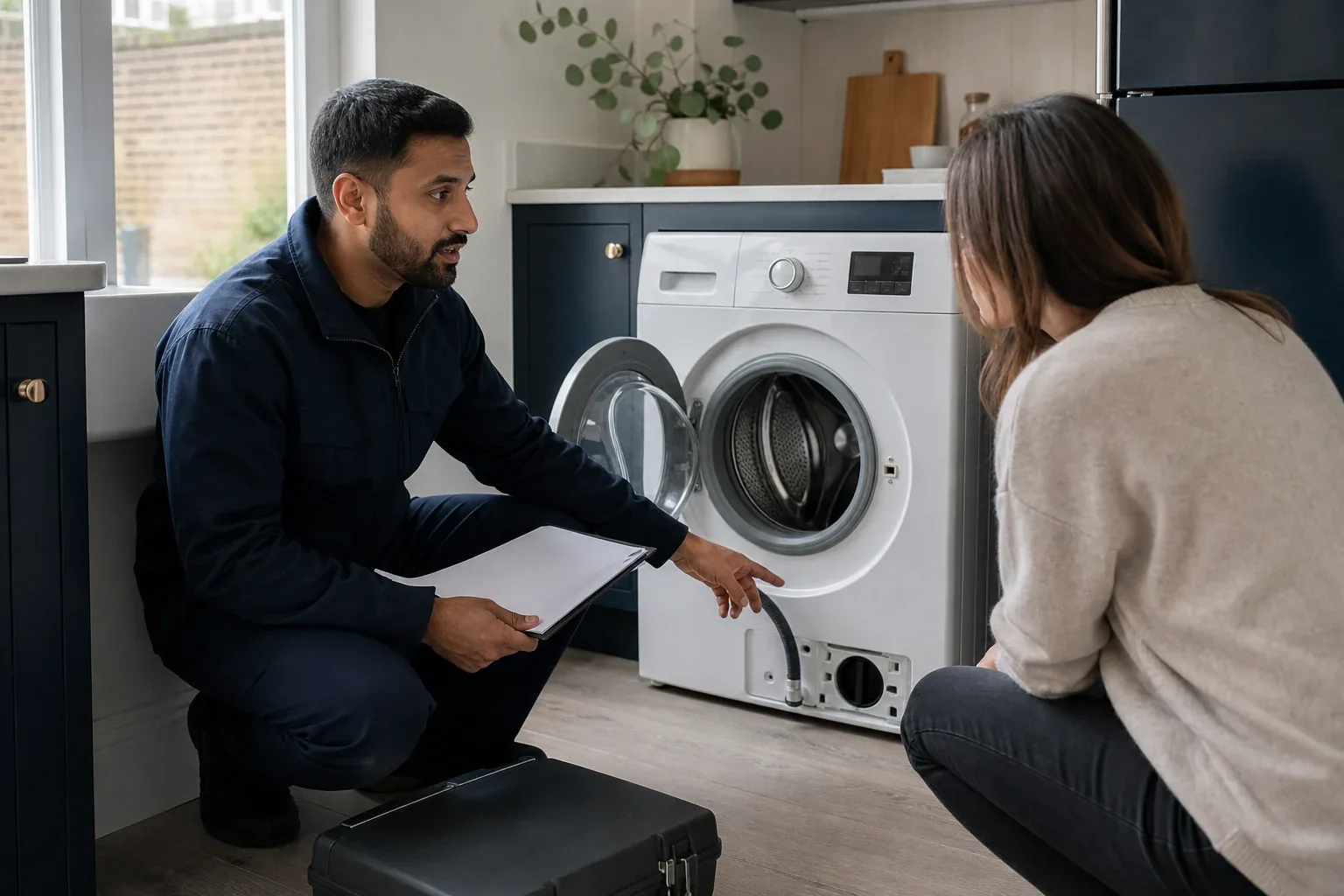
Standing water makes the filter the next check
Isolate the power. Find the pump-filter instructions for the model; some machines do not provide a user-accessible filter. Protect the floor with a tray and towels because a full drum can release many litres. Use the emergency drain hose if supplied, taking small amounts into a shallow container. Never unscrew a filter while water is hot.
Remove lint, coins and small objects that are loose and visible. Do not reach into a sharp or resistant impeller. Refit the cap squarely and check its seal before one supervised test. If the filter will not turn, the cap is damaged or water continues to appear, book a washing machine repair appointment.
Trace the waste hose after a move
A hose crushed behind the appliance can allow slow drainage but not enough flow for the control to permit a spin. Check the visible route without tilting or dragging a heavy machine alone. The hose should not be kinked, sealed airtight into an unsuitable standpipe or pushed so far into the waste that it siphons. Compare its height and connection with the installation manual.
If the sink also drains slowly or dirty water returns to the drum, the shared trap or household waste may be involved. Do not pour chemical drain cleaner into the appliance. It can remain trapped where a technician later disconnects a hose.
When the drum does not rotate at all
With the machine isolated and empty, the drum should usually turn by hand with smooth resistance. A jam, scraping noise or pronounced looseness suggests more than programme selection. A broken belt can leave the drum unusually free while the motor sound continues, but belt access requires panels and model-specific procedure. Motor brushes on some older machines, electronic motor controls on newer ones, speed sensors and wiring can produce similar outward symptoms.
A competent appliance repair technician should test before naming parts. Ask how diagnosis is charged, whether the call-out is credited to repair, and whether the quote includes the part, labour and test cycle.
Intermittent spinning is useful evidence
A machine that spins empty but not with a modest balanced load may have a weakening drive system rather than a drain blockage. Failure only on the highest speed can point towards vibration detection, bearings or suspension. Failure after the machine warms up may implicate a component that changes under load or heat. Record those distinctions.
Video the sound from a safe distance, but do not run repeated cycles to create footage. Photograph the model and serial label. State whether the drum drained, tumbled during wash, attempted a slow distribution and displayed a code. That sequence helps the technician arrive prepared.
After installation, start with installation facts
If the problem began on the first wash, check that transport bolts were removed, the machine is level, both rear feet are stable and the waste hose follows the manual. Severe shaking from retained bolts can damage the appliance. Turn it off rather than “letting it settle”. The relevant route may be washing machine installation help, particularly when hoses or cabinetry limit access.
Repair, do not rehearse the fault
One safe drain-and-spin test can separate a load issue from a persistent fault. More cycles add wear, water and heat without adding much evidence. If draining, balance and settings are ruled out, isolate the machine and arrange diagnosis. The key report is simple: water present or absent, small load result, drum movement, sound, code and any recent move. That is enough to start a proper fault path without guessing a motor.
Noise during spin can be a separate fault
A deep rumble that increases with speed, metallic scraping, or a drum with pronounced vertical play needs assessment even if the machine completes a cycle. Coins between tubs, worn bearings and damaged drum components are different repairs. Do not confuse the rhythmic click of a zip with a structural noise; inspect pockets and fasteners before loading.
Put no hands on a moving cabinet and never defeat the door interlock to watch. If vibration began after flooring work, check that every foot bears firmly and the floor is rigid enough. Packing timber or cardboard beneath a foot is not a durable level adjustment. Record whether the noise occurs empty, during slow tumble or only under high-speed load, then stop testing.
Protect the machine after the fix
Load by fabric weight and volume, not by forcing the door shut. Mix items that can distribute, fasten duvet covers so smaller garments do not collect inside, and choose a speed suitable for care labels. Clean the user filter at the interval in the manual and watch pockets for coins and hair grips.
After repair, ask the technician to demonstrate a loaded spin and show the measured fault where practical. Confirm that the machine drains, accelerates without cabinet impact and finishes without an error. Keep the report so a repeated symptom does not send the next visit back to guesswork.
