
What Can a Handyman Legally Do in the UK?
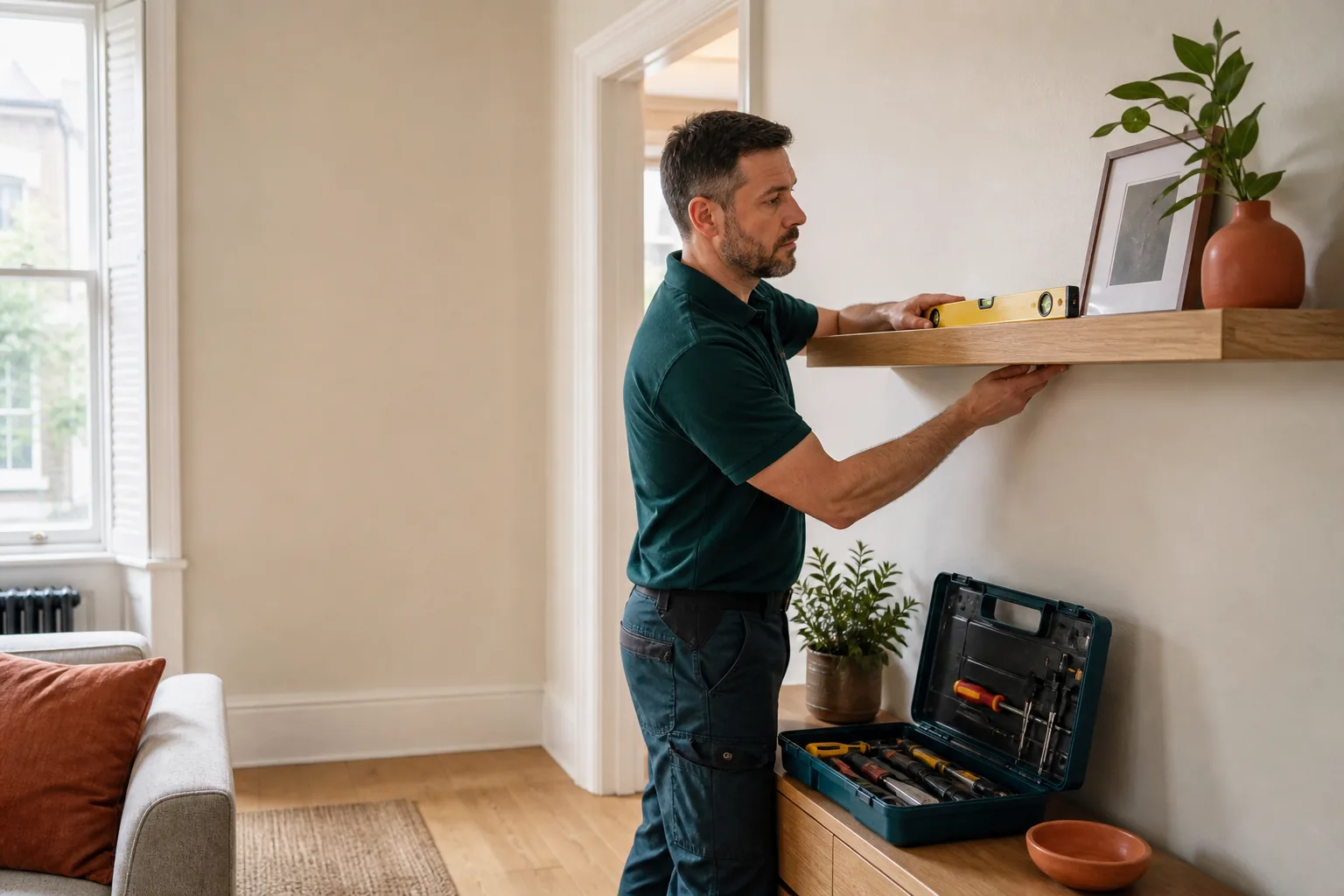
A handyman in the UK can carry out ordinary minor repairs and installations that sit within their competence, insurance and the law. The title “handyman” is not a licence to undertake gas work, certify electrical installations, disturb asbestos or make structural and fire-safety alterations without the appropriate expertise. Judge the exact task, not the broad job title.
Work that commonly suits a handyman
Typical jobs include assembling flat-pack furniture, hanging pictures, fitting simple shelves, adjusting internal doors, replacing accessible sealant, minor decorating and mounting curtain rails. Even these jobs need suitable fixings, hidden-service checks and safe access.
Describe wall construction, item weight, finish and location before booking. A shelf on plasterboard above a desk requires a different fixing plan from one on sound masonry in a utility room. For larger assembly-only work, furniture assembly specialists may be a closer match.
Electrical work is not one category
Changing a user-replaceable lamp is not equivalent to adding a circuit, replacing a consumer unit or altering wiring in a bathroom. Domestic electrical work must be safe and some work is notifiable under Building Regulations. Landlords also need appropriate inspection and documentation.
Ask whether the proposed task needs testing, certification or notification. If it involves fixed wiring, new circuits, consumer-unit work or uncertain faults, use qualified electrical services. Do not let a low quote redefine a regulated task as “just a quick swap”.
Gas work has a clear competence boundary
Work on gas appliances and fittings must be undertaken by a suitably qualified Gas Safe registered engineer. Removing a boiler case, altering a gas hob connection or servicing a gas fire is not ordinary handyman work.
You can verify an engineer and the categories on their Gas Safe ID. A handyman may undertake unrelated making-good around an installation if agreed, but the gas work and safety checks remain with the registered engineer.
Plumbing ranges from simple to safety-critical
Replacing a tap washer or accessible shower hose can be a minor repair for a competent person. Altering unvented hot-water controls, shared supply systems, concealed pipework or backflow protection has different consequences. Leaks can damage several flats before poor work becomes visible.
For pipe alterations, recurring leaks, pressure faults or work near a boiler, obtain professional plumbing support. Confirm isolation, parts, testing and responsibility for water damage in the scope.

Drilling in older buildings: stop before guessing
Asbestos-containing materials can occur in textured coatings, boards, pipe insulation, floor products and other older building elements. Age and appearance alone do not prove a material is safe. Do not drill or sand suspect material to collect a DIY sample.
Ask for the building’s asbestos information where relevant and arrange competent assessment before disturbance. Hidden electrical cables, pipes and communal services also need consideration before any fixing is drilled.
Fire doors are safety systems
A fire door’s leaf, frame, closer, hinges, seals, glazing and gaps work together. Trimming, drilling, changing hardware or disabling a closer can compromise performance. A sticking fire door is not simply an inconvenient internal door.
In flats and communal buildings, report defects to the responsible person or managing agent and use someone competent for fire-door work. Keep inspection and product records.
Structural changes are not handyman improvisation
Removing walls, cutting roof members, altering stairs or making openings can require structural design, permissions and Building Regulations approval. Even a heavy wall-mounted item needs the substrate and load path understood.
Ask who designed the fixing and what evidence supports it. “I have used these plugs before” is not an assessment of crumbling masonry, dot-and-dab construction or a concealed steel frame.
Working at height changes a small job
A smoke alarm above a stairwell or gutter repair may be simple at ground level but hazardous to access. Work at height needs planning, appropriate equipment and a stable working position. Furniture, stacked boxes and ladders balanced on stairs are not suitable platforms.
Tell the provider the height, ground condition and obstructions. The right answer may be tower access or another specialist, which should be priced before arrival.
Landlords need more than a completed-looking repair
Check identity, insurance, competence and documents appropriate to the task. Keep the written brief, invoice, product details and certificates. A tenant’s availability to admit a contractor does not transfer the landlord’s responsibility for choosing the right person.
For recurring maintenance across several trades, general handyman work can coordinate minor jobs while regulated tasks are clearly separated.
How to brief the job accurately
Send photographs with scale, dimensions, wall or surface type if known, access, parking and the result you need. State whether materials are already on site and whether waste or making-good is expected. Mention listed-building, leasehold or communal restrictions early.
Ask what is excluded. A quote to mount a television may not include moving sockets, concealing cables inside a wall or repairing decoration. Clear boundaries prevent pressure to improvise once tools are out.
Warning signs when comparing providers
Be cautious if someone dismisses certification, refuses to identify the fixing method, proposes live electrical work without testing, will not discuss insurance or insists every task is permitted because it is “maintenance”. Competent tradespeople explain limits without drama.
Price matters, but compare the same scope: labour, materials, access equipment, testing, documentation, VAT, waste and return visits. The cheapest labour line can become the dearest repair if the substrate or regulation was ignored.
The practical boundary
Use a handyman for defined, low-risk tasks they can demonstrate competence to complete. Move to the relevant regulated or specialist trade when gas, fixed electrics, structural fabric, fire safety, asbestos, complex plumbing or hazardous access enters the job.
The best outcome is not one person doing everything. It is each job finished safely, documented appropriately and handed back without leaving a hidden problem for the next contractor or occupant.
A three-job example shows why the label is not enough
Consider three requests in the same flat: assemble a wardrobe, add a new socket and investigate a gas-hob smell. The wardrobe can suit an insured handyman who checks wall restraint and follows the instructions. The socket belongs with an electrician who can design, test and certify the work. The gas smell requires the gas-emergency process and an appropriately registered engineer, not a general booking.
Bundling the three jobs into one message does not give one person authority to perform them all. Ask the handyman to quote only the suitable scope and coordinate access with the regulated trades. This keeps responsibility visible and prevents making-good work from being confused with safety certification.
Photograph the completed fixing and retain its product specification with the invoice for future maintenance.
