
When Should You Replace a Fuse Box? Warning Signs and Decision Points
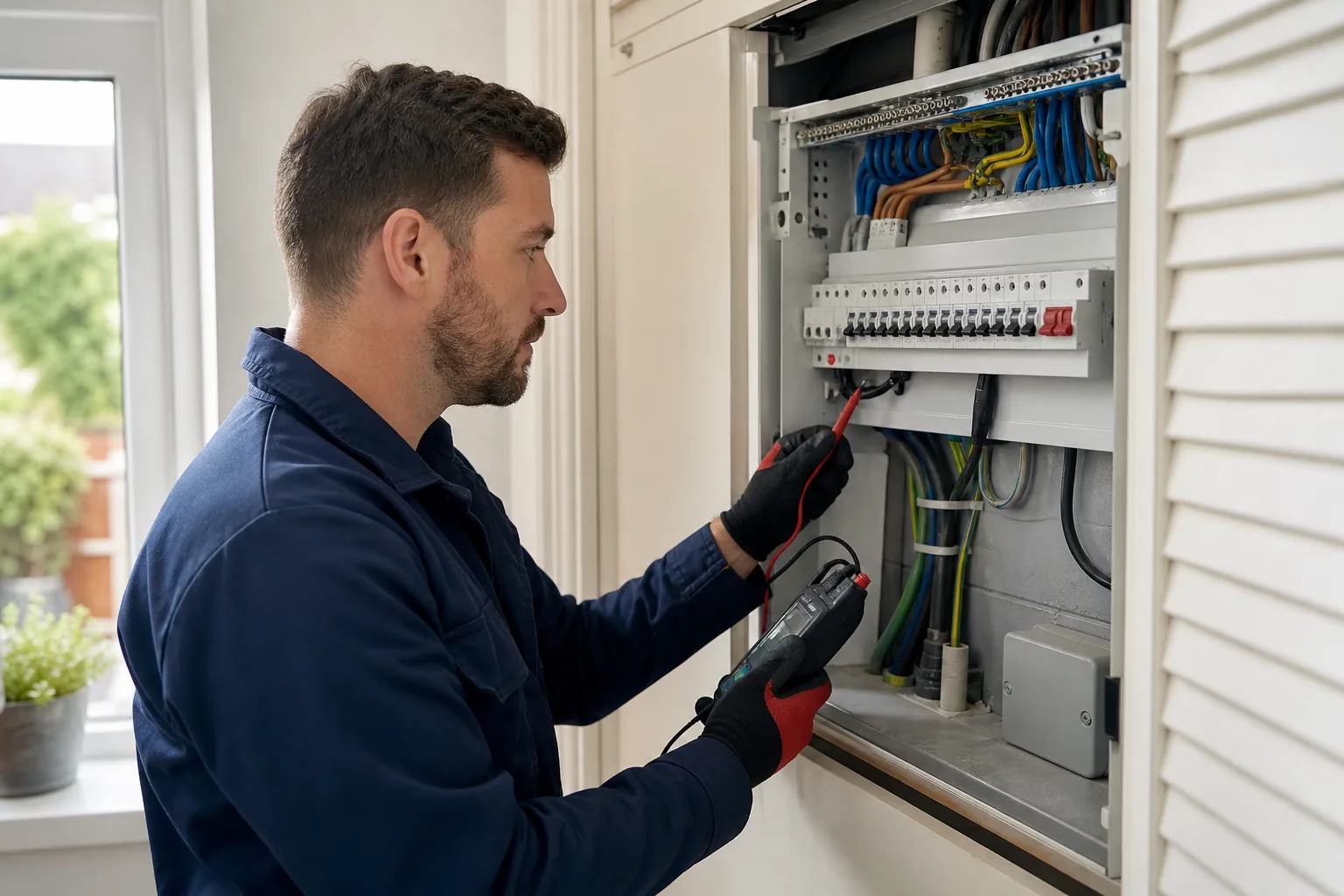
A fuse box—more accurately, a consumer unit—should be replaced when inspection finds damage, overheating, inadequate fault protection, unsuitable alterations or a board that cannot safely support planned electrical work. Age, a plastic enclosure or rewireable fuses are reasons to obtain an electrician’s assessment, not automatic proof that the entire unit is dangerous. Do not remove the cover. The decision should follow testing of the installation, because a new board cannot repair defective cables or missing earthing.
Start with the problem you are trying to solve
Homeowners are often offered a board change after reporting repeated trips, planning a kitchen or noticing that their unit looks old. Those are three different starting points. Tripping may show that a protective device is doing its job in response to an appliance or circuit fault. A new high-load circuit may require a design check. Visible age may lead to an inspection that finds the existing equipment serviceable.
Write down what prompted the question. If something is hot, crackling, scorched or smells of burning, leave it alone and contact an electrician urgently. If the concern is planned work, give the electrician details of the new shower, cooker, heat pump or EV charger before accepting a quote.
An EICR provides evidence, not a shopping list
An Electrical Installation Condition Report assesses the condition of the fixed installation through inspection and testing. The electrician considers earthing, bonding, insulation resistance, circuit protective conductors and operation of protective devices. Observations are coded according to their safety significance. Ask the inspector to explain each observation in plain language and which remedy addresses it.
An EICR can reveal faults that must be corrected before or during a consumer-unit change. If circuits have low insulation resistance, borrowed neutrals, poor identification or unsuitable additions, fitting new sensitive protection may expose those problems immediately. A quote that assumes every existing circuit will pass testing is not yet a complete project price.
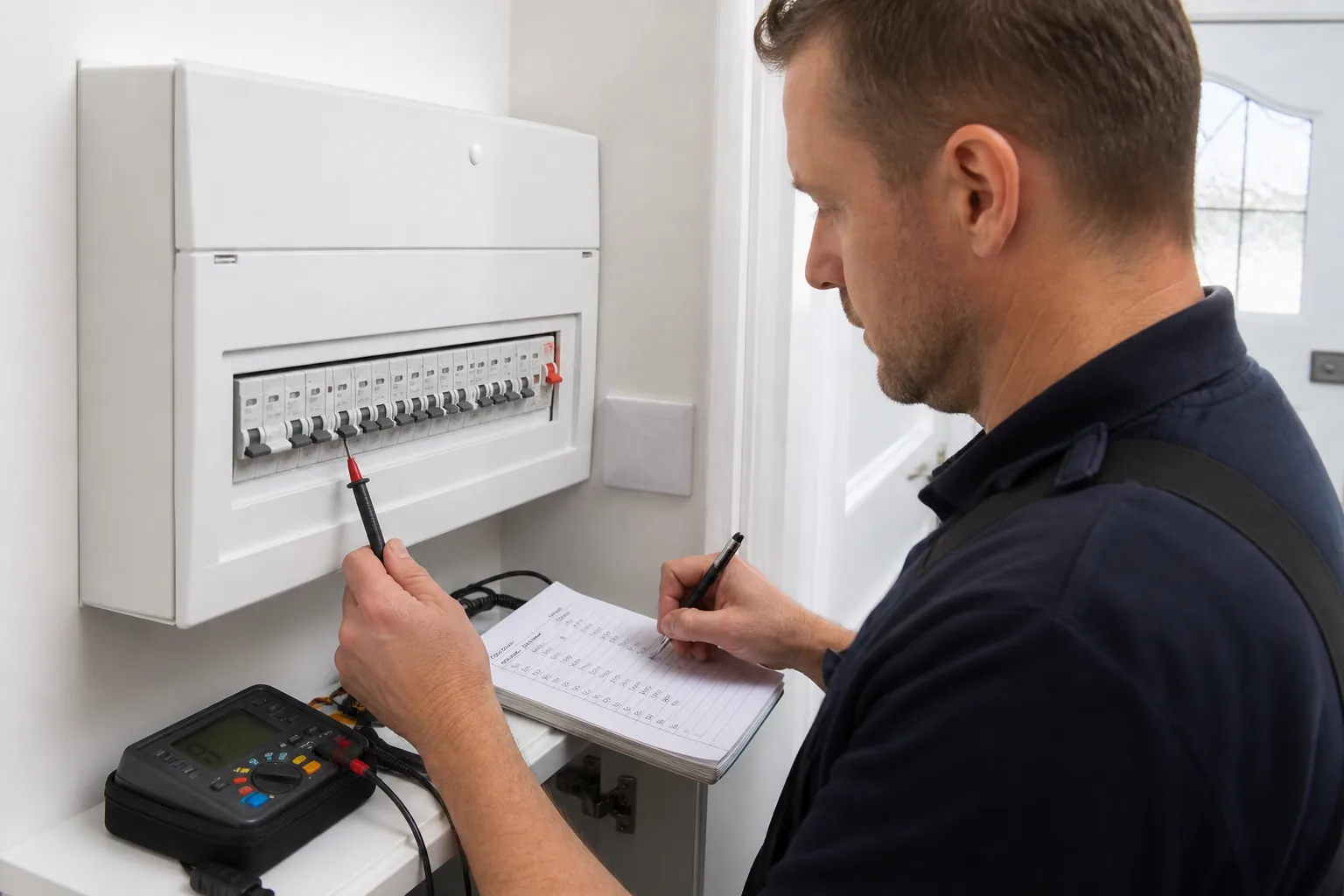
Warning signs that should move the appointment forward
- Scorching, melted plastic, heat or a burning smell at the enclosure.
- Buzzing or crackling that is not the ordinary brief sound of a device operating.
- Missing blanks that leave access to internal parts.
- Water entry, impact damage or corrosion.
- A protective device that will not reset after loads are disconnected.
- Repeated trips on the same circuit, particularly after earlier resets.
Do not tighten connections, replace fuse wire with another material or hold a breaker in position. If the safe means of isolation is unclear, keep away and describe the symptom by phone. Damage around the meter, service head or incoming supply may also require the electricity network operator rather than a private electrician alone.
What modern protection can add
Modern consumer units may use RCBOs so that residual-current and overcurrent protection is provided per circuit. This can reduce the amount of the home lost when one circuit develops a fault. Surge protective devices can limit certain transient overvoltages. Arc-fault detection has particular applications that the designer assesses under current wiring rules.
These terms are not interchangeable upgrades to select from a menu. The design depends on the installation, supply and intended use. Ask why each device is proposed and which circuits it protects. Alesta’s consumer unit replacement service is the exact route for an assessed change, rather than assuming a generic electrical visit includes design and certification.
Does a plastic fuse box have to be replaced?
No blanket rule makes every existing plastic consumer unit illegal merely because newer installations commonly use non-combustible enclosures. Its condition, location, installation date, test results and the work being undertaken all matter. An electrician may record an observation or recommend improvement without declaring immediate danger.
Do not buy a metal enclosure online and move the old devices across. Consumer-unit replacement involves isolation, circuit verification, selection of protective devices, torque-controlled connections, testing, labelling and—where applicable—Building Regulations notification.
Rewireable fuses: limitation rather than instant condemnation
An older board with fuse wire usually lacks the convenience and forms of additional protection found in a modern unit. That makes an assessment sensible, especially before alteration or for households relying on outdoor equipment. It does not allow an untested statement that the wiring must all be replaced.
The electrician should examine the board alongside the earthing and the circuits it supplies. Sometimes a board upgrade is proportionate. Sometimes wider rewiring or remedial work is needed. In other cases, the existing installation can remain in service with documented recommendations.
Repeated tripping needs fault finding first
If one breaker operates when a particular appliance runs, unplug that appliance if safe and do not keep retrying it. If a circuit trips with everything disconnected, a fixed-wiring fault becomes more plausible. Moisture, damaged accessories and deteriorated cables can all be involved.
A new consumer unit is not a cure for an unexplained trip. Arrange electrical fault finding and ask for the affected circuit and test result to be identified. Replacement may still be recommended, but it should not hide the original fault behind a larger invoice.
Planned electrical work changes the calculation
An EV charger, electric shower, induction hob or extension may alter demand and require new circuit protection. The designer needs the supply characteristics, existing maximum demand, earthing arrangement, cable route and other loads. A larger consumer unit does not create more supply capacity.
Provide model details before the survey. If the meter tails, main fuse or service equipment need alteration, responsibility may be split between the electrician, supplier and network operator. Ask who coordinates each step and whether loss of power affects alarms, refrigeration, medical equipment or home working.
What a complete quotation should contain
- The proposed unit and protective-device arrangement.
- Testing before and after the change.
- Known remedial work, with a method for approving newly discovered defects.
- Earthing or bonding work included in the price.
- Labelling, circuit schedule and certification.
- Building Regulations notification where required.
- Making good and disposal boundaries.
- Expected power-off period.
A broad qualified electrician visit is appropriate when the work extends beyond the board or the initial fault is uncertain. Compare quotations on design and scope, not only the number printed at the bottom.
After replacement, keep the evidence
You should receive the relevant electrical certificate and, where applicable, evidence of notification. Check that circuits are legibly labelled and ask the electrician to demonstrate test buttons and explain what to do if a device trips. Store certificates with property records; future electricians, buyers and landlords may need them.
The sound decision is therefore rarely “old equals replace”. It is: identify the concern, test the installation, correct underlying faults, and replace the consumer unit when the evidence or planned design requires it. That sequence gives modern protection a sound installation to protect.
