 020 3608 3976
DOOR REPAIR · EAST DULWICH01Dropped door symptoms recorded 02Closer and handle behaviour recorded 03Security faults referred appropriately 04Opening and closing tested repeatedly Call 020 3608 3976
Restore Your Doors in East Dulwich
Door, frame and hardware are assessed together so the repair addresses the movement rather than hiding the symptom.
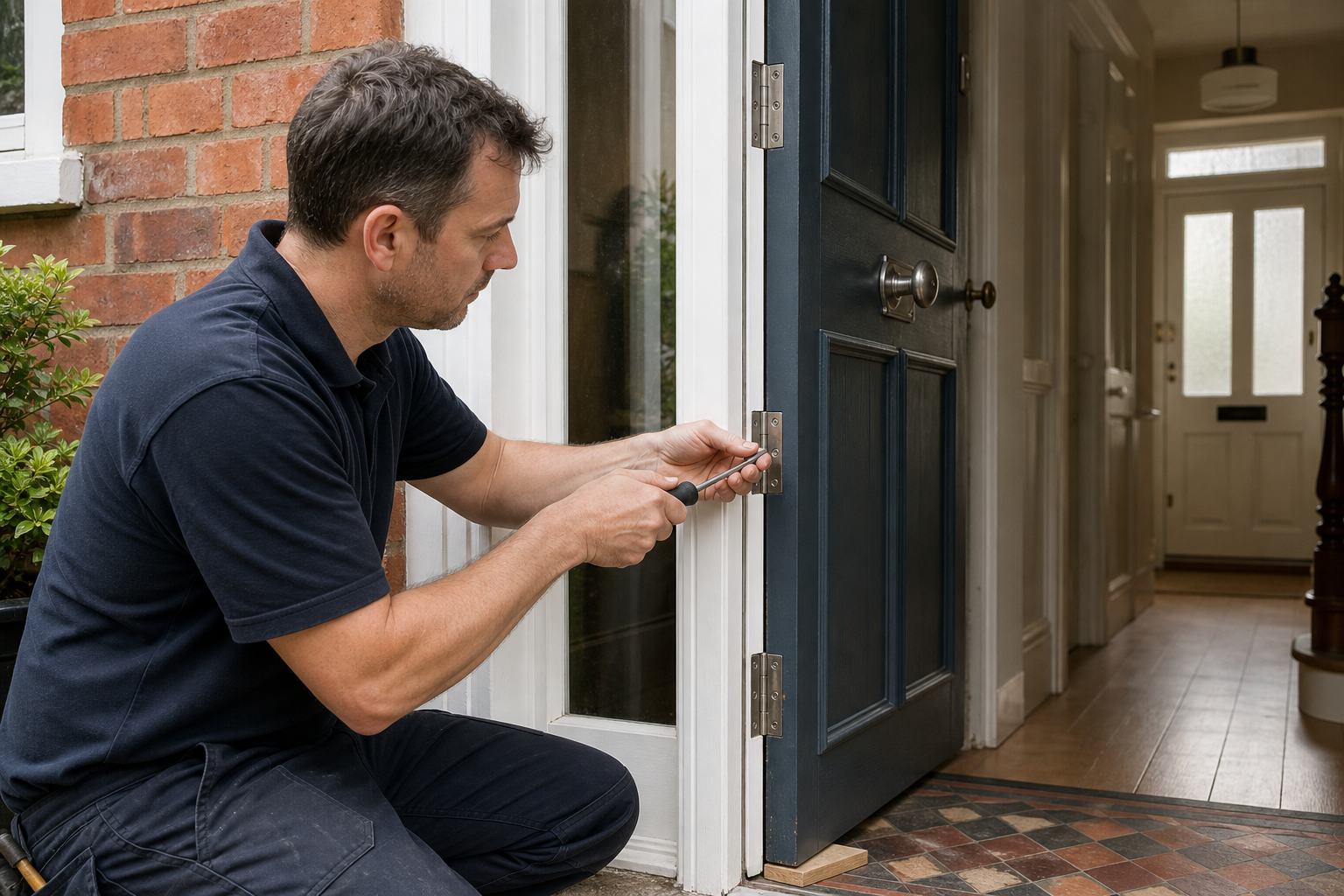
Inside a Door Repair Visit in East Dulwich
A door can rub or fail to latch because of hinge movement, loose fixings, timber swelling, frame distortion or floor clearance. The gap pattern is checked before any material is removed.
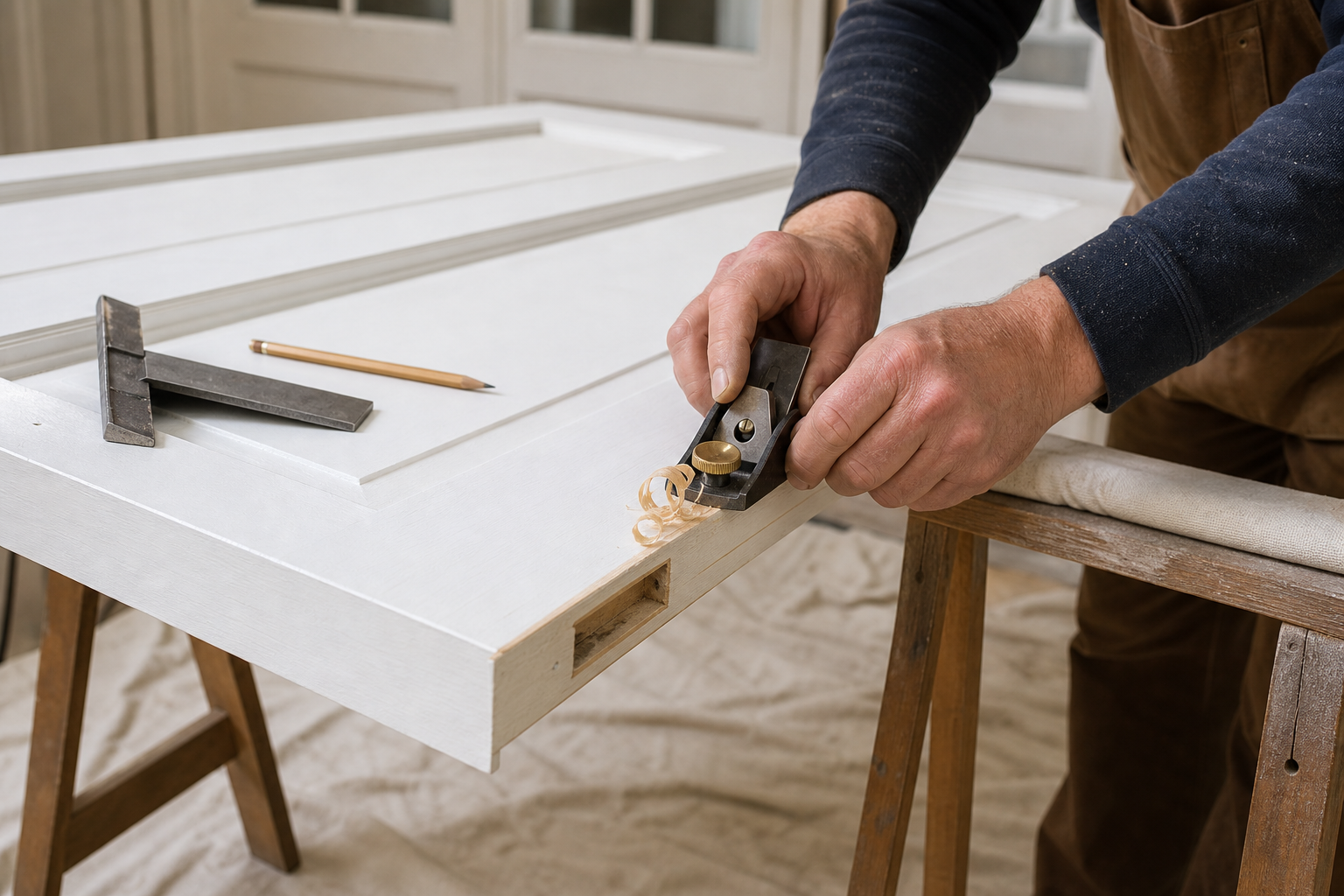
Observe movement
Separate cosmetic dents and paint wear from the movement that prevents reliable closing.
Repair precisely
Measure the strike and latch relationship before moving hardware or cutting the frame.
Agree boundaries
Agree visible finishing requirements where filler, bare timber or touched paint may remain after repair.
Test operation
Review the repaired edge and hardware, then explain any finishing or drying time still required.
What door repairs may cost in East Dulwich
Guide prices depend on the door material, movement, access and the hardware or timber repair required. Parts and decorative finishing are agreed separately.
Gap assessment, accessible hinge and latch correction.
Local hardware, alignment or minor timber work.
Longer joinery work or compatible replacement parts.
OTHER AREAS
Door Repair near East Dulwich
Door Repair FAQ in East Dulwich
Answers about alignment, timber, hardware, preparation and safe use.
01Can a dropped door be adjusted?
Often yes, if the hinges, fixings and surrounding timber remain serviceable. Severe distortion or damage may need broader repair.
02Can landlords arrange door repairs in East Dulwich?
Yes. Provide tenant access, repair approval and any requirement for matching paint or hardware.
03Are locks included in door repair?
Basic latch alignment may be part of the door repair, but lockouts, cylinders and security faults belong to locksmith work.
04What maintenance helps afterwards?
Keep hinges secure, address water ingress, avoid overloading handles and report renewed rubbing before it damages the finish.
