
It is an access arrangement and should be confirmed by the resident or manager.
MAP THE ROUTE BEFORE MOVING ANYTHING
Electrician Services in Chelsea
Electrical work is easier to plan when the route to each relevant point is described as carefully as the fault or alteration. In a Chelsea flat, house or mews property, that route might cross a staffed entrance, shared corridor, several finished rooms or fitted storage. Note who can open every door, where tools may be brought in and which surfaces must be protected. Then give a plain account of the electrical concern without removing covers or moving fixed joinery. The electrician can assess what is accessible, explain any further access needed and separate the electrical task from decoration or reinstatement.
- Trace the journey from street door to work point
- Name the person able to release each locked area
- Mark finishes and furniture that must remain undisturbed
- Describe the electrical behaviour without proposing its cause

NeedFault · Repair · Installation · Upgrade
AreaLighting · Sockets · Circuit · Consumer unit
PropertyFlat · House · Managed property
Next stepAssessment · Planned work
Access briefRoom-by-room route
Entry controlNamed key holders
Care planningSurfaces noted early
Work decisionFindings before scope
Choose by the work required
Electrical service routes for Chelsea
Begin with the outcome required, while allowing inspection to refine the route to that outcome. Apply that distinction to the Chelsea address.
| Problem or requirement | Relevant service | Important boundary |
|---|---|---|
| Repeated loss of power, tripping or an unexplained change | Electrical fault finding | The visit starts with observations and accessible checks; any repair follows the evidence found. |
| A failed accessory or a request for an additional outlet | Switches and sockets installation | The intended use, existing point and workable route need review before a new position is agreed. |
| A fixed light that has stopped working or needs changing | Light fixture installation and repair | Selection and scope depend on the fitting, support, controls and safe means of reaching it. |
| A concern about the consumer unit or its available capacity | Fuse box replacement | A replacement decision requires assessment; age, labels and photographs provide context only. |
| A list covering several rooms, fittings or planned alterations | Electrician services | Separate tasks can be grouped for access while retaining their own findings and approval points. |
Chelsea property context
A practical access map for electrical work in Chelsea
Begin at the pavement and follow the actual path an electrician would use. Record the agreed loading or parking arrangement, reception procedure, lift or stair choice and any second key needed beyond the home itself. Continue inside with the consumer unit, affected room and relevant controls marked in order. A townhouse may need a floor-by-floor route; a mansion-block flat may depend on a porter or managing agent; a mews entrance can require careful timing for deliveries. Recently finished rooms, stone floors, wall coverings and built-in cupboards should be listed as constraints rather than clues. Photographs can clarify the journey, but inspection must determine the condition of the electrical installation. Written agreement should identify access assumptions, electrical work, excluded making good and the approval required if the route has to change.
| Property situation | Electrical consideration | Effect on the visit |
|---|---|---|
| Flat reached through a staffed mansion block | Reception procedures and shared doors sit outside the resident’s private rooms. | Confirm contractor entry and any communal keys with the responsible desk. |
| Townhouse with several finished floors | The board, controls and affected point may be on different levels. | Number the storeys and keep the connecting stairs usable. |
| Mews home entered from a courtyard | A compact entrance can limit where equipment is unloaded and held. | Provide the lawful stopping arrangement and clear the doorway beforehand. |
| Apartment with integrated joinery | Electrical points may sit beside panels, shelving or other completed work. | Identify movable sections and obtain approval before fixed finishes are disturbed. |

Fault notes before diagnosis
Describe what changes in Chelsea
Timing and affected circuits guide the opening checks, but do not prove what has failed. For Chelsea, keep the account factual.
| Symptom | Appropriate next step | Why assessment matters |
|---|---|---|
| Power is lost in part of the home | Write down the affected points and the time of each change | A room label does not reveal which fixed equipment or circuit area is involved. |
| A ceiling or wall light behaves inconsistently | Record which controls were used and leave the fitting assembled | The lamp, fitting, control and supply cannot be distinguished by appearance alone. |
| A switch or socket appears damaged | Stop using the accessory and keep the immediate area clear | Heat, cracking or looseness calls for a safe examination rather than continued trials. |
| A protective device turns a circuit off | Note what was running immediately before operation | The sequence and connected loads help guide checks but do not establish the reason. |
A quotation needs a defined scope
What can change the price in Chelsea
A transparent scope explains what could alter labour, materials or surface access after testing. The Chelsea property details provide the comparison point.
| Factor | Why it changes the work | Useful evidence |
|---|---|---|
| Managed entry | Shows how much of the booked period is available inside the property | Entrance instructions, key holders and permitted attendance times |
| Internal route | Reveals stairs, doors and rooms that must remain passable | The ordered path between the consumer unit and each work area |
| Completed finishes | Allows protection and access assumptions to be stated before work begins | A list of stone, timber, wall coverings and fitted elements near the task |
| Available history | Supports sensible inspection planning without pre-judging the result | A dated account of symptoms plus documents for known alterations |
| Household timing | Helps arrange testing and any isolation around the occupants | Rooms in use, essential equipment and acceptable interruption periods |
Answers that help organise attendance
Before electrical work is booked in Chelsea
Include doors, turns, stairs and the approach to the relevant equipment.
Clear loose contents, but do not dismantle joinery unless an agreed plan requires it.
Share the critical times and equipment so possible interruptions can be discussed.
No. They assist preparation but cannot establish concealed condition.
Use the landlord, freeholder, manager or other party authorised for that space.
Leave it alone, prevent contact and explain the visible concern when booking.
Only work expressly written into the accepted scope should be assumed.
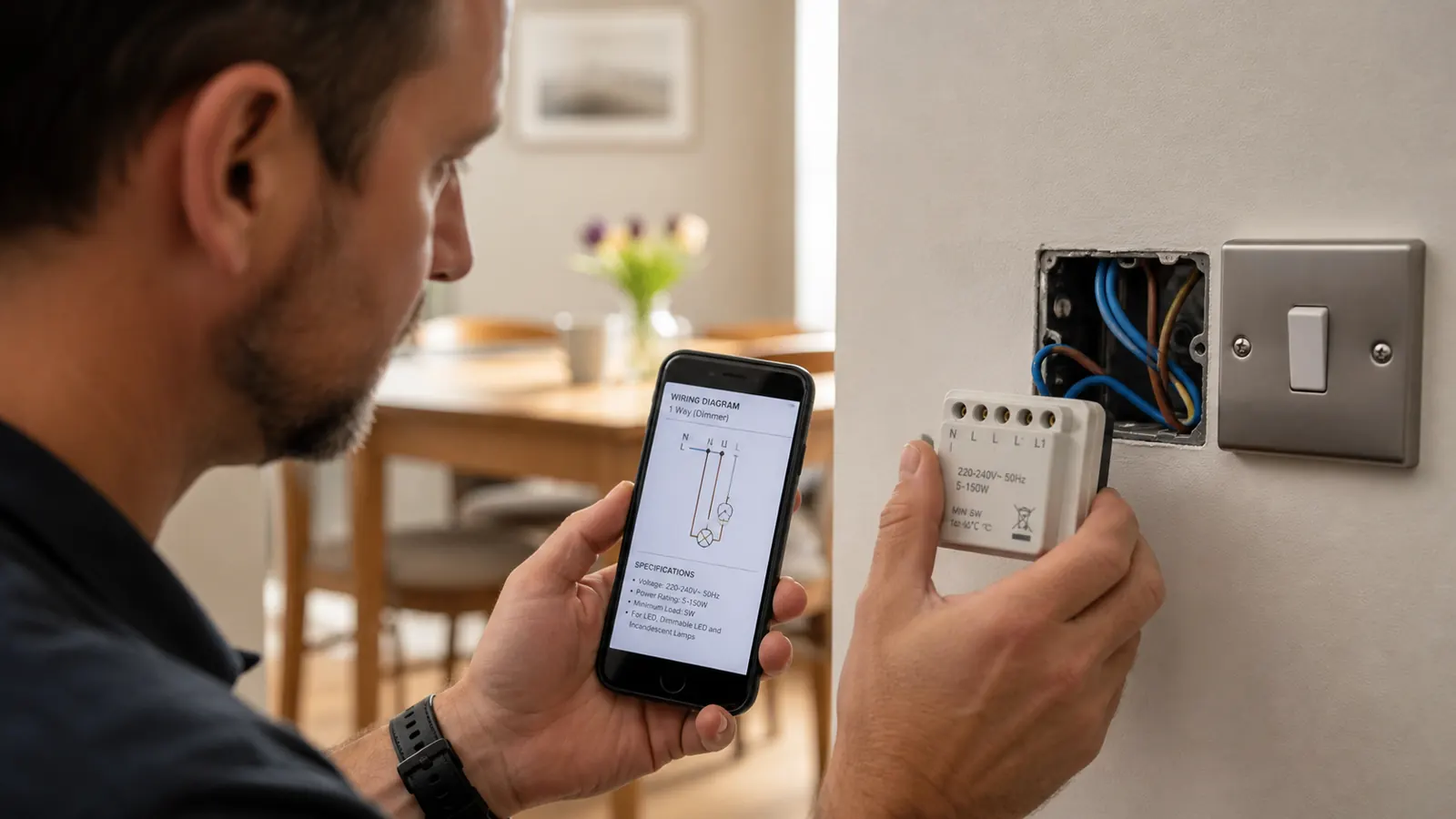
Before the visit
Set up straightforward access for Chelsea
- Walk the full access route and list every controlled door
- Ask reception or management how contractor entry is recorded
- Photograph the route only where you have permission
- Move ordinary possessions away from the work approach
- Write down finishes that must not be marked or altered
- Collect relevant certificates, plans and fitting details
- Identify powered equipment that cannot be interrupted without planning
Safety boundary
Do not turn a warning sign into a DIY test
For a Chelsea address: If an accessory is hot, damaged or arcing, leave it alone and keep others away. Repeatedly resetting a breaker or RCD does not establish the cause; the relevant circuit may require assessment.
Chelsea electrical FAQ
Questions that clarify access, evidence and boundaries in Chelsea
What information is most useful for a first Chelsea enquiry?
Give the electrical observation, when it began, the rooms involved and the route to the consumer unit. Add the contact who controls any shared entrance or cupboard.
How should I prepare for attendance through a mansion-block reception?
Check the building’s contractor procedure, reserve any required access and make sure the person on duty knows the agreed arrival details.
Can I ask for work in several parts of a townhouse at once?
Yes. Put the rooms in priority order and note which floors, keys and furniture arrangements apply to each item.
What if the consumer unit is inside fitted furniture?
Clear removable belongings and show how the door opens. Do not take apart fixed panels in anticipation of the visit.
Should I arrange floor protection before the electrician arrives?
Describe the material and the building’s rules first, then agree who supplies and installs suitable protection.
Could the quotation change if the planned route cannot be used?
It may need revision if access or the on-site findings differ from the booking information. Any extra work should be explained before approval.
Are certificates from a previous refurbishment worth providing?
Yes. Relevant records can clarify what was documented at the time, although present condition still needs to be assessed.
How do I explain an intermittent fault without guessing?
Keep a short diary of dates, affected points, controls used and equipment running. Report the pattern and leave diagnosis to the inspection.
What happens if shared electrical equipment is involved?
The responsible building party may need to provide access or take forward that part of the matter once its boundary is understood.
How are electrical work and making good kept separate?
Ask the quotation to state the proposed electrical task, access assumptions, exclusions and who will handle any later repair to finishes.
Other local assessment guides
Electrical coverage around Chelsea
Use findings—not assumptions—to shape the work
Prepare the Chelsea route as well as the task
Send a concise symptom note, the ordered access path and the relevant key-holder details. The visit can then establish what electrical work is justified and where separate permission is needed.
