Surface assessment
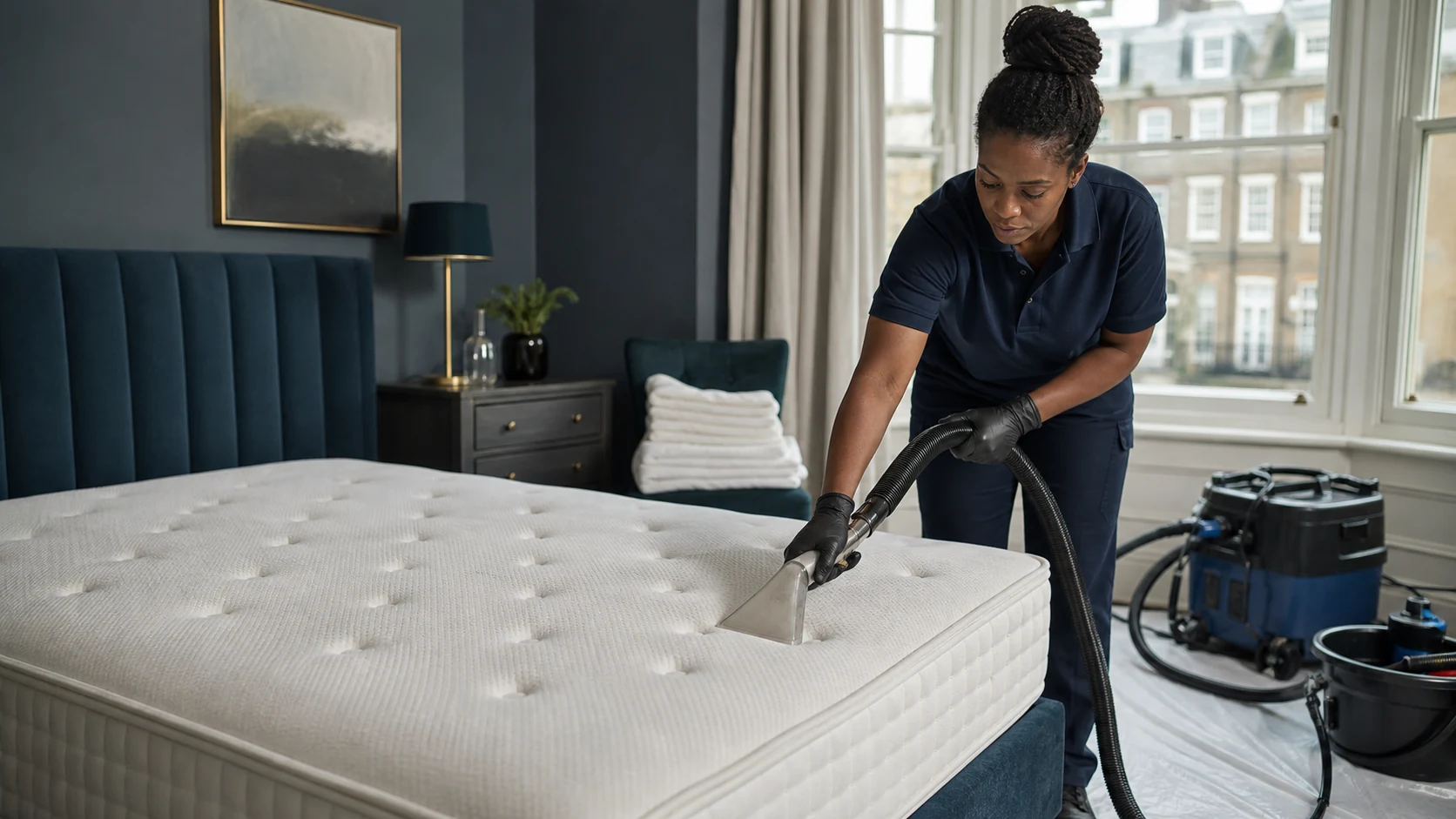
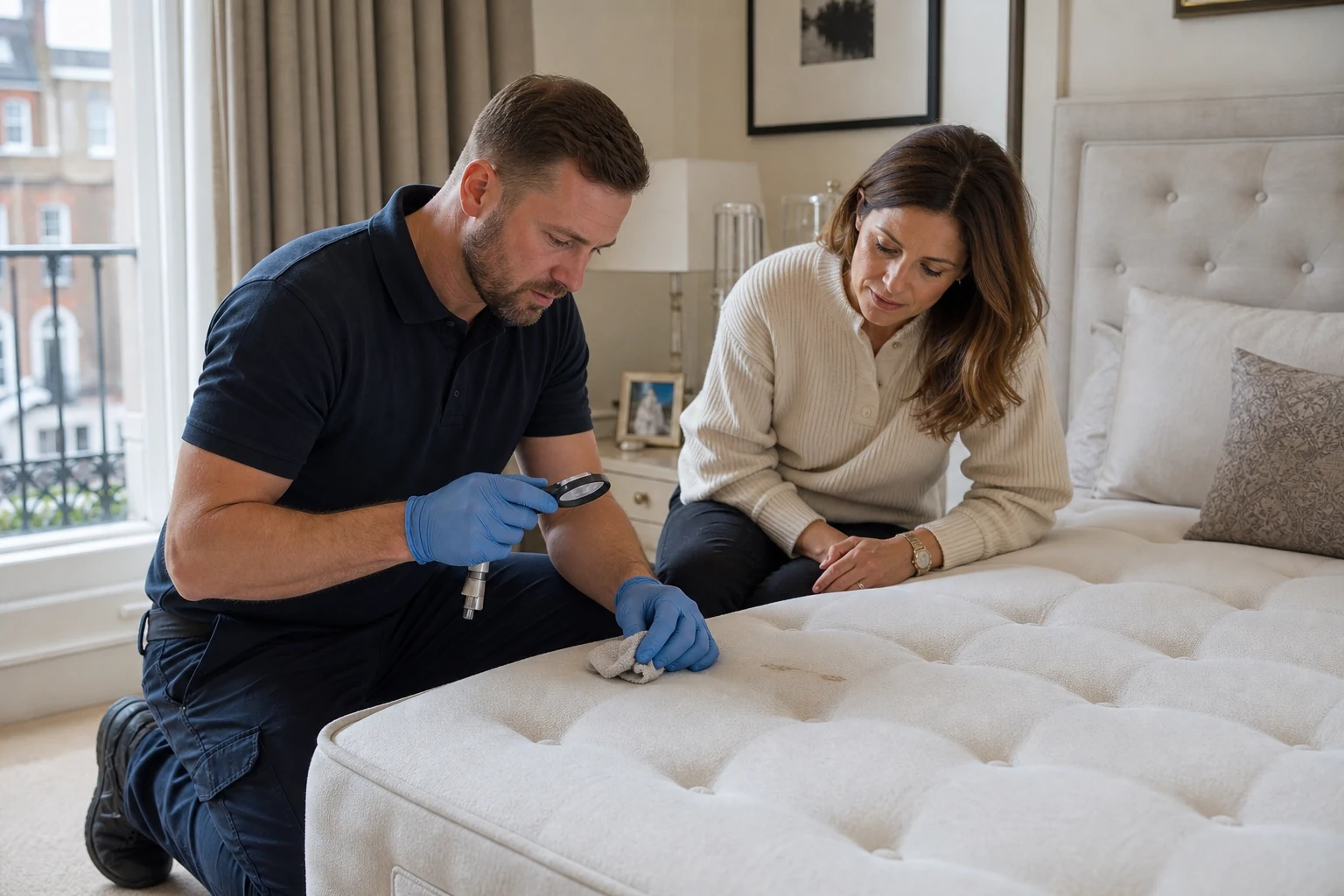
Fabric, construction, colour stability, staining and prior treatments reviewed before cleaning.
Alesta · Mattress cleaning in London
Professional mattress cleaning planned around fabric, construction, staining, access and realistic drying time, with limitations explained before treatment begins.
☎ Call 020 3608 3976Fabric before treatment
Mattresses combine fabric, foam, padding, adhesives and sometimes natural fillings. Heavy saturation can trap moisture deep inside, while aggressive stain products can bleach or distort the cover. We review the label, construction, staining and ventilation before choosing a method.
Professional cleaning can reduce removable soil and improve freshness, but it cannot restore worn fibres, guarantee removal of every bodily-fluid mark or make medical claims. Bed bugs, mould inside the mattress, severe contamination and damaged fillings require separate assessment and may make replacement more appropriate.
Fabric, construction, colour stability, staining and prior treatments reviewed before cleaning.
Accessible dust, hair and loose particles removed before moisture is introduced.
Suitable spots pre-treated and the wider surface cleaned with a controlled upholstery method.
Ventilation, room conditions and a safe return-to-use window explained after treatment.
Common reasons customers call
Body oils, dust and general soil have accumulated across the accessible surface.
The stain type and previous products must be considered before further treatment.
The mattress needs planned cleaning and full drying before the bed is remade.
Mattress, sofa, rug or carpet work can be scoped together with separate drying needs.
Why Alesta for mattress cleaning
Materials and manufacturer guidance shape the safest practical method.
Age, chemistry and previous treatment affect what can be improved without damage.
The mattress is not flooded in pursuit of an unrealistic instant result.
Ventilation and return-to-use timing are planned rather than ignored after cleaning.
A controlled upholstery method
The booking begins with the mattress size, photographs, care label and a description of stains, odours and previous treatments. We ask whether it is sprung, foam, hybrid or made with specialist natural fillings, because construction affects moisture tolerance. Access around the bed, parking for equipment and room ventilation are confirmed. The mattress should be stripped before arrival, while pillows, protectors and bedding are treated only when separately listed.
At the property, the technician inspects the cover for damage, loose seams, colour instability, wear and contamination. Dry soil and hair are removed from accessible faces, edges and seams with suitable vacuuming. Stains are identified where possible and tested conservatively. Unknown supermarket chemicals, bleaching, old bodily-fluid marks and previous over-wetting can limit improvement, so the expected result is discussed before the full surface is treated.
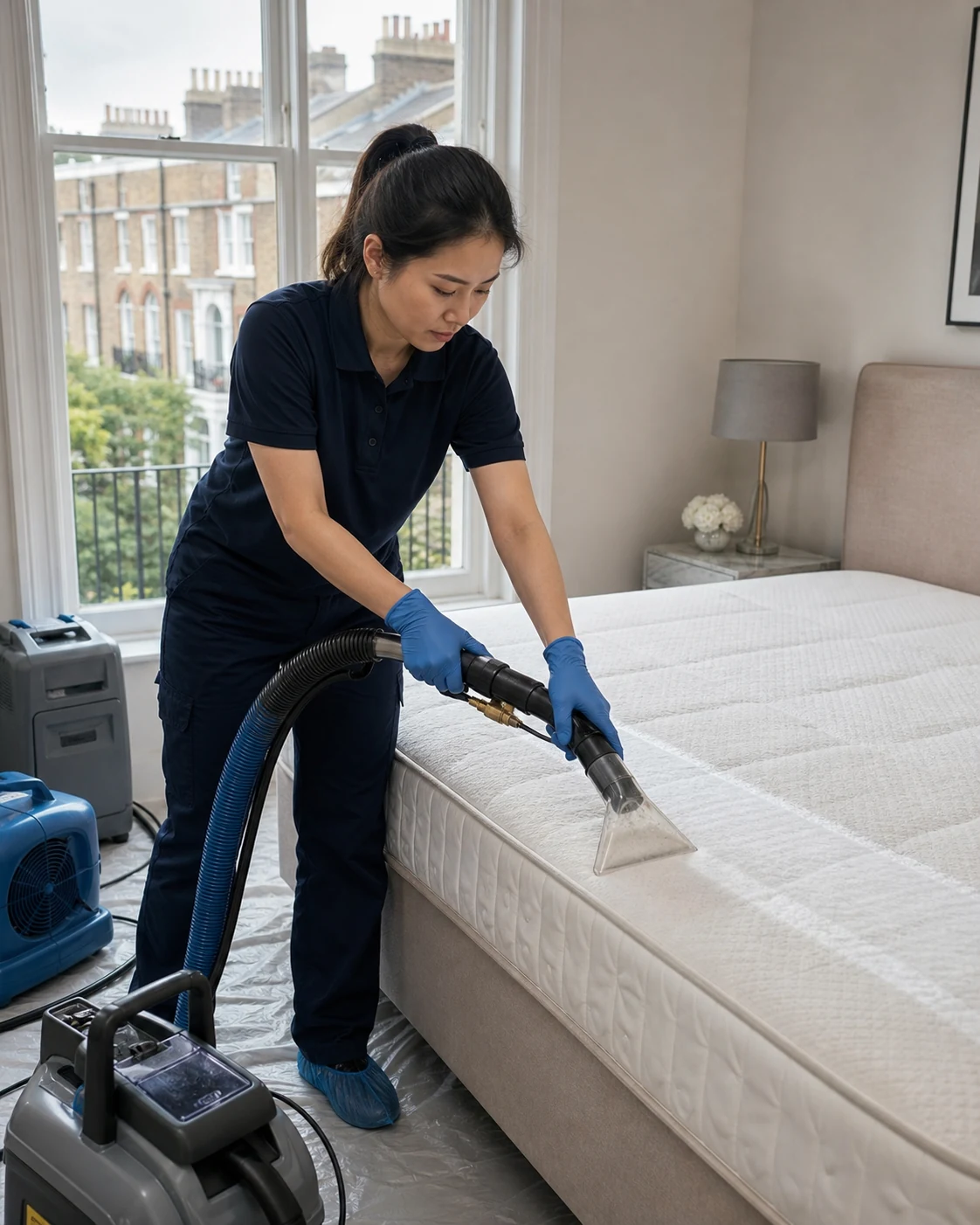
A compatible upholstery-cleaning solution is applied in controlled quantity and agitated where appropriate. Extraction or another suitable low-moisture method then removes suspended soil while limiting water left within the layers. The technician works in consistent sections and avoids soaking deep fillings. Both sides are cleaned only when booked, physically accessible and safe to turn; heavy mattresses may require customer preparation or additional handling arrangements.
After cleaning, remaining marks and fabric condition are reviewed without repeated aggressive treatment that could cause rings, fading or fibre damage. The mattress is left uncovered with ventilation and, where practical, airflow around the surface. Drying time varies with construction, humidity, temperature and method, so it must feel fully dry before bedding and use. Cleaning improves removable soil and freshness but is not sterilisation, pest treatment or a guarantee against allergens or medical symptoms.
Clear pricing
Cost depends on mattress size and construction, sides treated, stain condition, access, additional items and the cleaning method required.
| Service scope | Price | What affects the final price |
|---|---|---|
| Single mattress clean | Quoted from size and photos | Dimensions, one or two sides, fabric, access and soil level |
| Double, king or specialist mattress | Quoted after assessment | Construction, handling, stains, treatment area and drying needs |
| Multiple mattresses or soft furnishings | Combined quotation | Item count, sizes, setup, fabric methods and visit duration |
Pricing context: Photographs and the mattress label are required for a reliable quote. Severe contamination, pest treatment and replacement are not disguised as ordinary upholstery cleaning.
How the service works
Send size, label, construction, stains and previous treatment details.
We agree sides, access, limitations, ventilation and return-to-use timing.
The technician treats the surface and leaves clear drying guidance.
Mattress cleaning FAQ
Useful answers about stains, drying, both sides, bed bugs, preparation and pricing.
☎ Call 020 3608 3976No method can guarantee every mark. Stain type, age, previous chemicals, fabric damage and colour change affect what can be improved safely.
Drying depends on construction, humidity, ventilation, temperature and treatment. Keep it uncovered and do not use or remake the bed until it is completely dry.
Yes when booked, accessible and safe to turn. Some heavy or one-sided mattresses require additional handling or can only be treated on usable surfaces.
No. Suspected bed bugs require a dedicated pest assessment and treatment plan for the room and surrounding areas, not ordinary fabric cleaning alone.
Surface cleaning may be inappropriate when mould or moisture has entered internal fillings. The moisture source and extent need assessment, and replacement may be safer.
Remove bedding and personal items, provide clear access around the bed, disclose all stain treatments and arrange good ventilation and parking where possible.
Mattress size, construction, sides treated, stains, access, handling, item count and specialist treatment requirements affect the quote.