 020 3608 3976
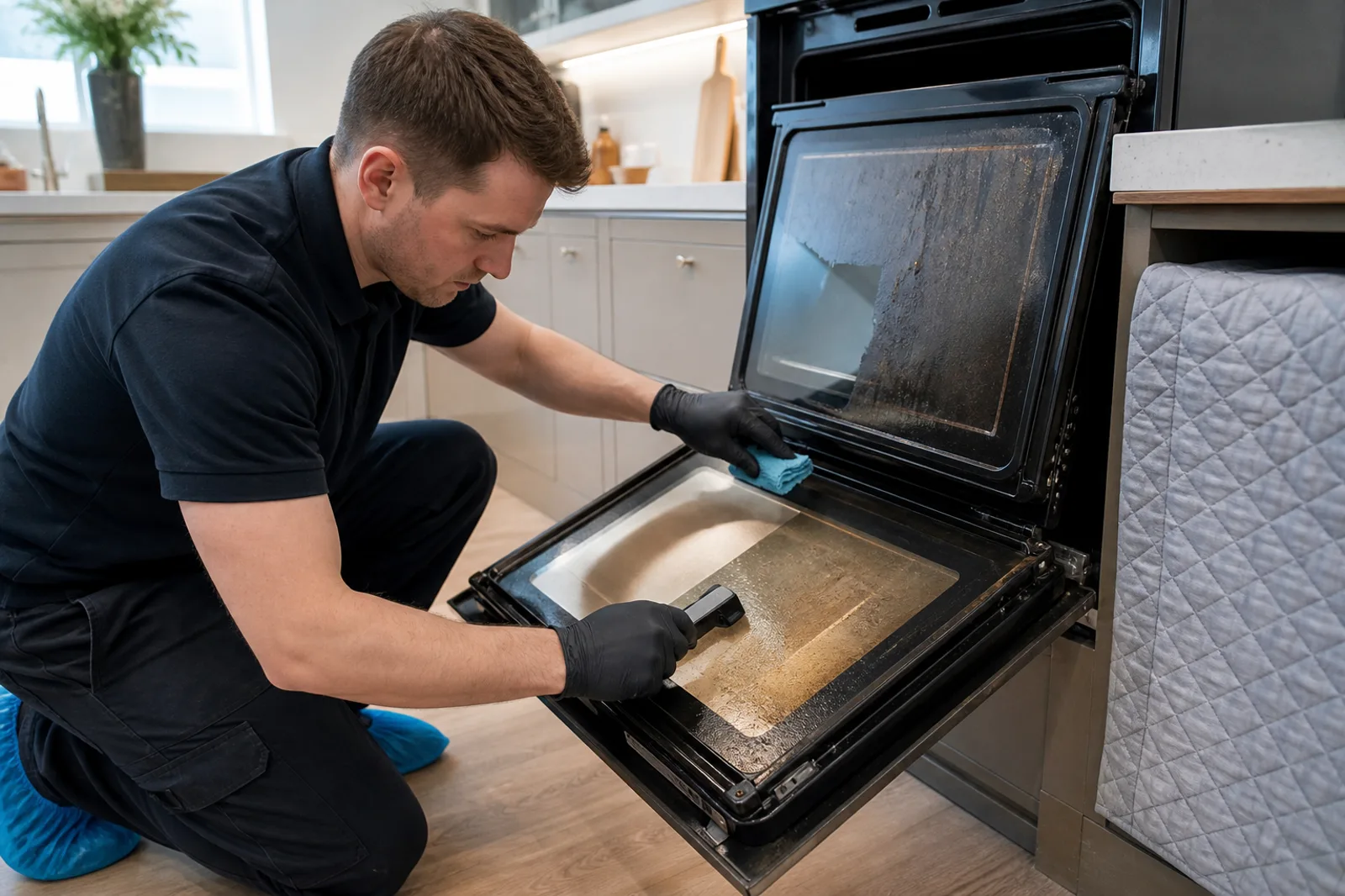
OVEN CLEANING · THAMES DITTON
Professional Oven Cleaning in Thames Ditton from Racks to Door Glass
Racks, trays, glass, seals and cavity coatings do not all tolerate the same handling.
- Appliance type confirmed · Thames Ditton
- Cavity and door count recorded · Thames Ditton
- Racks treated separately where suitable · Thames Ditton
- Glass access checked before dismantling · Thames Ditton
- Extras agreed before work · Thames Ditton
Oven Cleaning prices
| Appliance | Typical specification | Standard price | Typical duration |
|---|---|---|---|
| Single oven | 60 cm, 1 door, 2 racks | £75 | 40 minutes–1 hour |
| Double oven | 60 cm, 2 doors, 3 racks | £93 | 1–1.5 hours |
| Range cooker | 90–110 cm, 3 racks | From £123 | 2.5–3 hours |
| AGA cooker | 2–4 doors | From £103 | 2.5–3 hours |
These are standard prices, not membership rates. The final total depends on the correct appliance type and width, number of cavities and doors, removable parts, build-up, access and optional hob or extractor work.
BOOKING EVIDENCE
Photograph the whole Thames Ditton appliance
Include controls, every door, the open cavities, racks, trays, the visible model label and any hob or extractor requested. Add width, access and parking notes so the selected service matches the appliance.
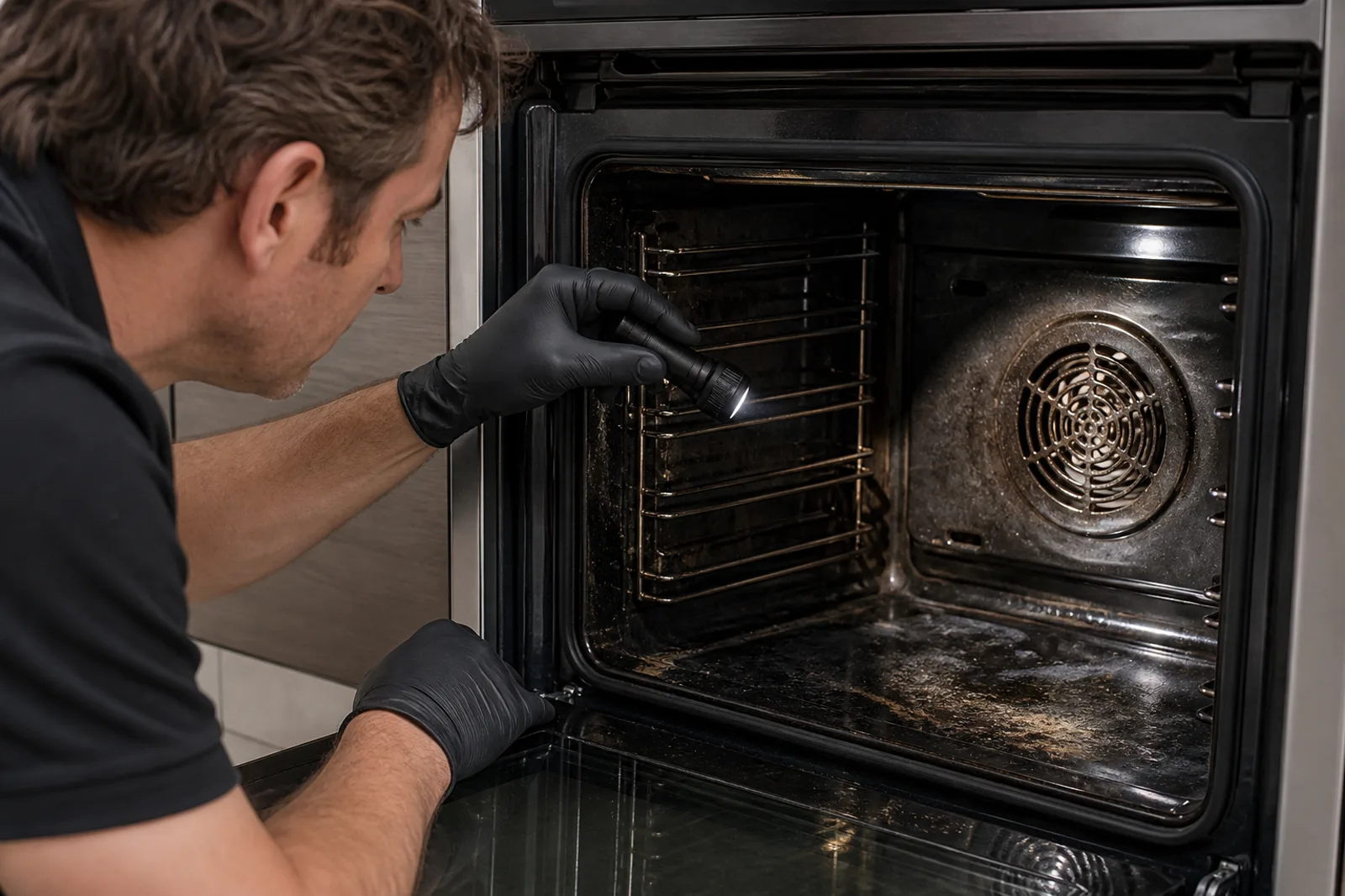
A multi-part oven needs a compartment-by-compartment brief in Thames Ditton.
The working example is a four-door heat-storage cooker with uneven build-up after a self-clean cycle. Those details decide the booked category, expected duration and order of work. A photograph should show the whole appliance rather than only the dirtiest corner, because width, doors, controls and separate cavities cannot be confirmed from a close-up of residue.
Before arrival, the practical access note is a pet that must stay outside the kitchen. The oven should be switched off, fully cool and empty of cookware, foil and loose liners. Worktops beside it and the floor route need enough space for protective materials and removed fittings. Nobody should disconnect or drag a fitted appliance from its cabinet for a routine clean.
Inspection separates removable soil from damage or wear. Enamel can be chipped or heat-discoloured; chrome may be permanently dulled; seals can stretch; foil can fuse to a cavity floor. On this Thames Ditton appliance, uneven build-up after a self-clean cycle is tested and softened with a compatible approach. Aggressive scraping is not used simply to promise a perfect colour.
Racks, trays and compatible side supports are recorded before removal. Parts suitable for separate soaking or degreasing are treated away from the cavity, while the technician works through accessible interior surfaces, door edges and glass. Fan covers, heating elements, catalytic panels and self-cleaning liners are identified because one method is not suitable for every component.
Door glass is handled according to its construction. Accessible panels may be cleaned when they can be opened and returned correctly; a sealed unit is not dismantled or resealed. The same boundary applies to electrical and mechanical parts: oven cleaning addresses accessible soil, not appliance repair, rewiring or a fault diagnosis.
After treatment, removed components are rinsed or wiped as appropriate, dried and returned to their recorded positions. The technician checks the visible finish and explains any heat staining, corrosion, scratches or inaccessible residue that remains. For the Thames Ditton booking, hob or extractor work is completed only if it appears in the agreed scope.
The final price follows the appliance actually found on site. A wide oven, extra cavity, additional doors, range format or separate add-on changes the work from the single-oven baseline. Clear booking photographs and an accurate Thames Ditton postcode are therefore more useful than a description such as “normal oven”.
VISIBLE FIVE-STAGE PLAN
How the appliance moves through the clean
- 01Identify cooker and surfaces
- 02Protect the kitchen work zone
- 03Remove and record suitable parts
- 04Degrease cavity, parts and glass
- 05Reassemble and review results
Oven Cleaning questions for Thames Ditton
Are racks and trays cleaned separately in Thames Ditton?
Compatible removable parts can be taken out and treated separately. Confirm how many racks and trays belong to the booked appliance.
How long does oven cleaning take in Thames Ditton?
A single oven commonly takes 40 minutes to 1 hour, while larger or multi-cavity appliances and extras need longer.
Can you clean an oven before a tenancy handover in Thames Ditton?
Yes. Book the correct appliance and extras, and allow enough time for access, cleaning and any separate property checks.
What information gives the most accurate quote in Thames Ditton?
Send full appliance photographs, brand or model if visible, width, cavity and door count, rack count, extras and the Thames Ditton postcode.
Is the hob included with oven cleaning in Thames Ditton?
No. Hob and extractor work are separate booking items unless a package explicitly includes them.
Oven service information for Thames Ditton
| Service | Professional domestic oven cleaning |
|---|---|
| Area | Thames Ditton |
| Booking focus | racks, trays, cavity and door glass |
| Suitable appliances | Single, double, range and AGA-style cookers when correctly identified |
| Typical process | Check → protect → remove fittings → soak/degrease → clean cavity and glass → reassemble |
| Included details | Accessible interior surfaces, compatible removable racks and trays, door and final wipe-down |
| Separate extras | Hob, extractor and other appliances only when added to the booking |
| Pricing basis | Appliance type, width, cavities, doors, racks and chosen extras |
| Preparation | Switch the appliance off, let it cool and clear the surrounding worktop and floor route |
Book the appliance you actually have
Send the Thames Ditton postcode, full cooker photographs, width, cavity and door count, rack count, priority residue, access details and any hob or extractor add-on. Call 020 3608 3976 · Request a quote
