Interior cavity cleaning
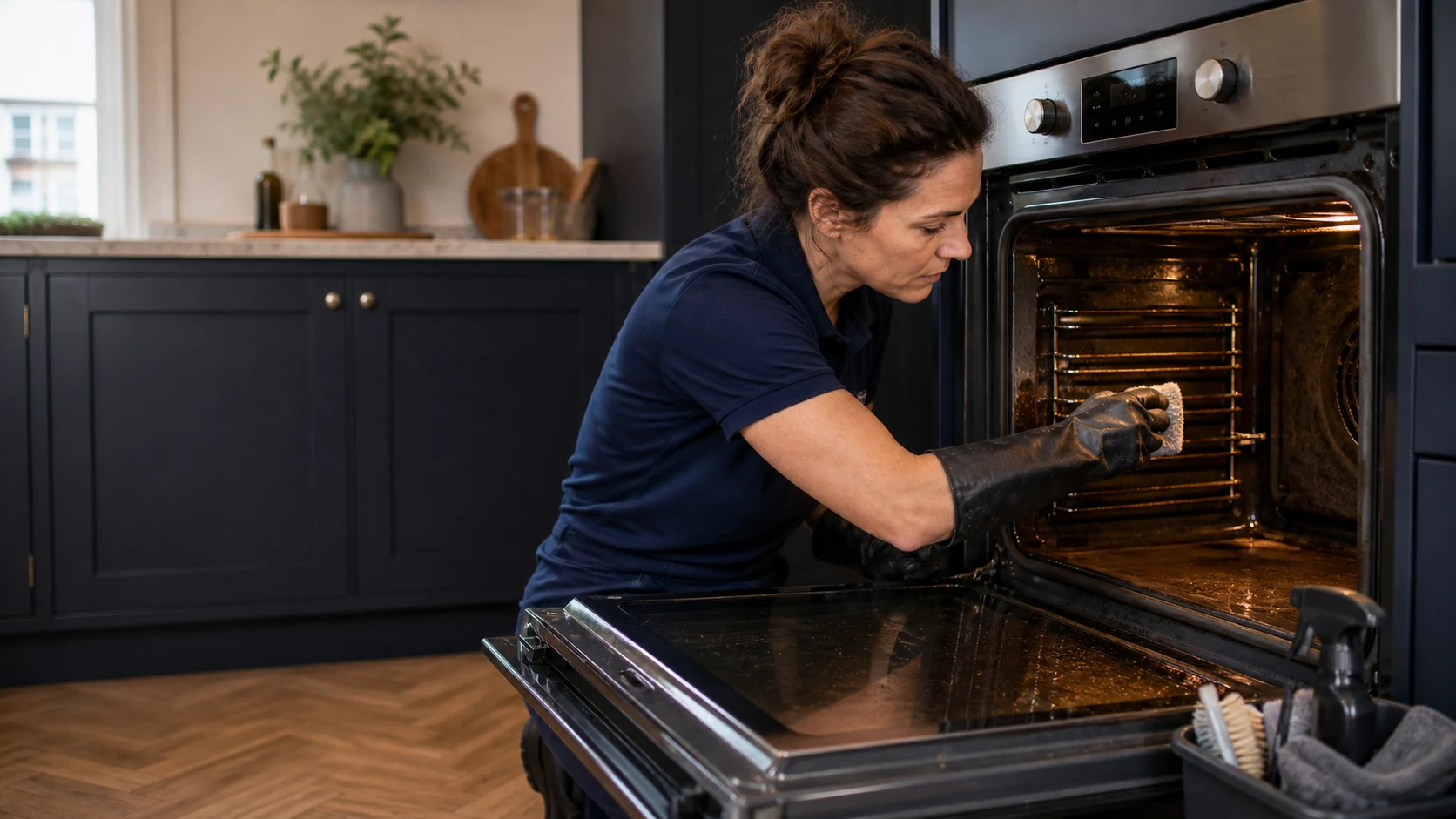
Accessible enamel and compatible internal surfaces are worked with controlled products and tools.
Alesta · Oven cleaning in London
Professional oven cleaning planned around the appliance type, size, condition and removable components, with damage and inaccessible sealed areas distinguished from cleanable residue.
☎ Call 020 3608 3976Appliance details before cleaning
Carbonised grease, food spills and smoke residue accumulate differently across cavities, racks, trays, glass and removable panels. Appliance size, multiple cavities, self-cleaning liners and existing wear all change what can be treated safely.
We request photographs and the appliance type first. Cleaning is separated from electrical or gas repair, dismantling sealed assemblies, replacement parts and restoration of damaged enamel or coatings.
Accessible enamel and compatible internal surfaces are worked with controlled products and tools.
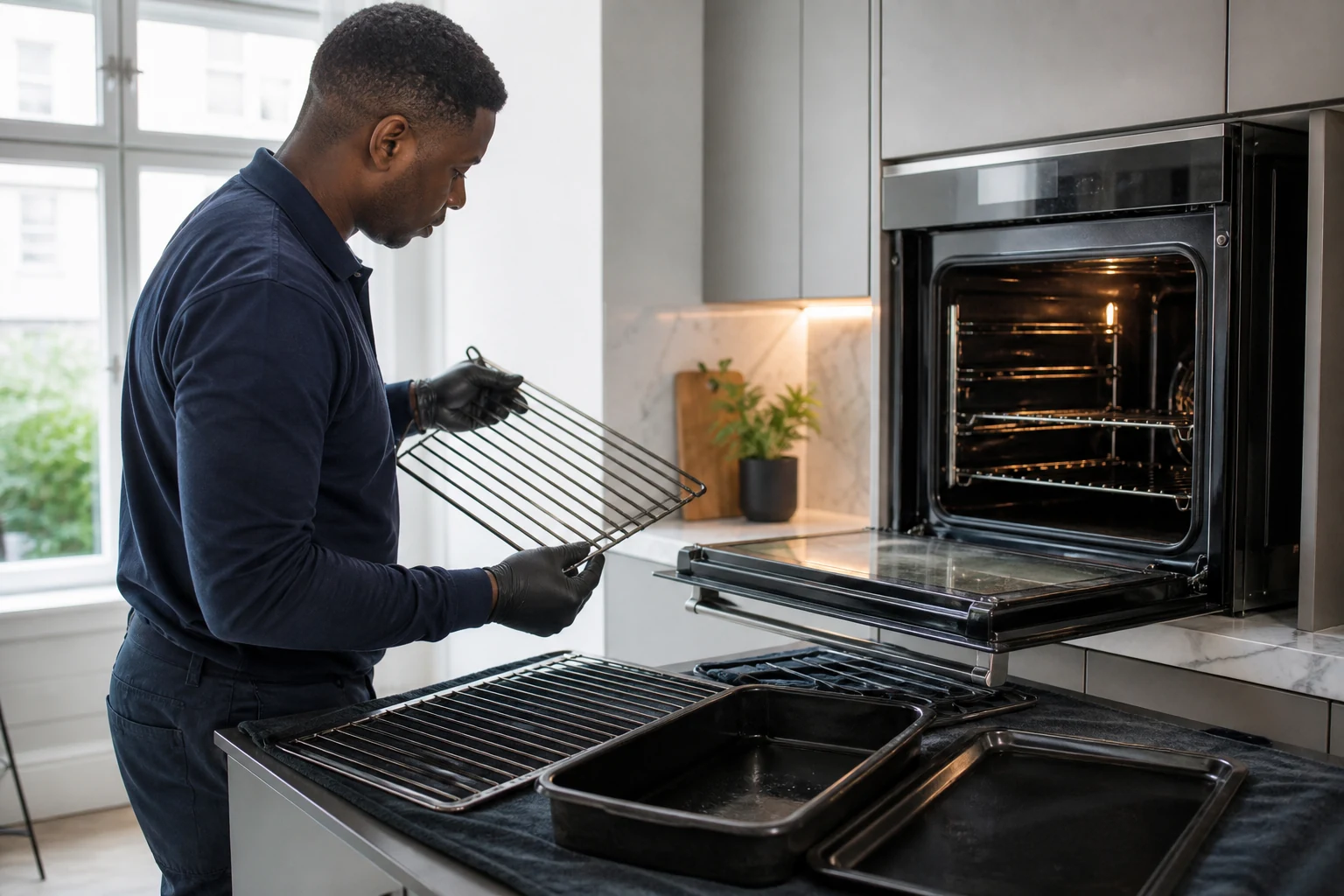
Agreed compatible shelves, supports and trays receive separate attention where safe.
Accessible faces, edges and removable panes are treated only within manufacturer-safe access.
Loose product and soil are removed before components are restored and surfaces reviewed.
Common reasons customers call
Repeated cooking has left dark deposits on compatible internal surfaces and racks.
Old food residue heats up and affects normal cooking, subject to fault checks where needed.
The appliance needs a defined internal clean before property handover.
A range, double oven or combination appliance needs enough time and correct identification.
Why Alesta for oven cleaning
Cavity construction, liners, coatings and removable components guide the method.
Enamel loss, corrosion, broken seals and failed glass are reported as repair issues.
Chemicals and tools are kept away from unsuitable coatings, elements and sealed assemblies.
Accessible cleaning is distinguished from dismantling, repair and permanent staining.
A controlled degreasing process
The booking starts with photographs of the closed appliance, open cavities and included accessories. We identify whether it is a single, double, range or combination oven and ask about self-cleaning liners, removable side supports, trays and recent faults. The appliance should be cool, emptied and connected only as required for safe checks. Parking, stairs and kitchen access are confirmed because equipment and protected working space are needed beside the oven.
On arrival, the cleaner inspects the surfaces and notes chipped enamel, corrosion, loose seals, damaged glass, failed lights or electrical symptoms. Those conditions cannot be corrected by cleaning. The area around the appliance is protected and compatible removable components are taken out according to the agreed scope. No sealed panel, gas component, electrical assembly or door construction is dismantled merely to reach hidden soil. Pyrolytic and catalytic surfaces are treated according to their limitations rather than scrubbed like ordinary enamel.
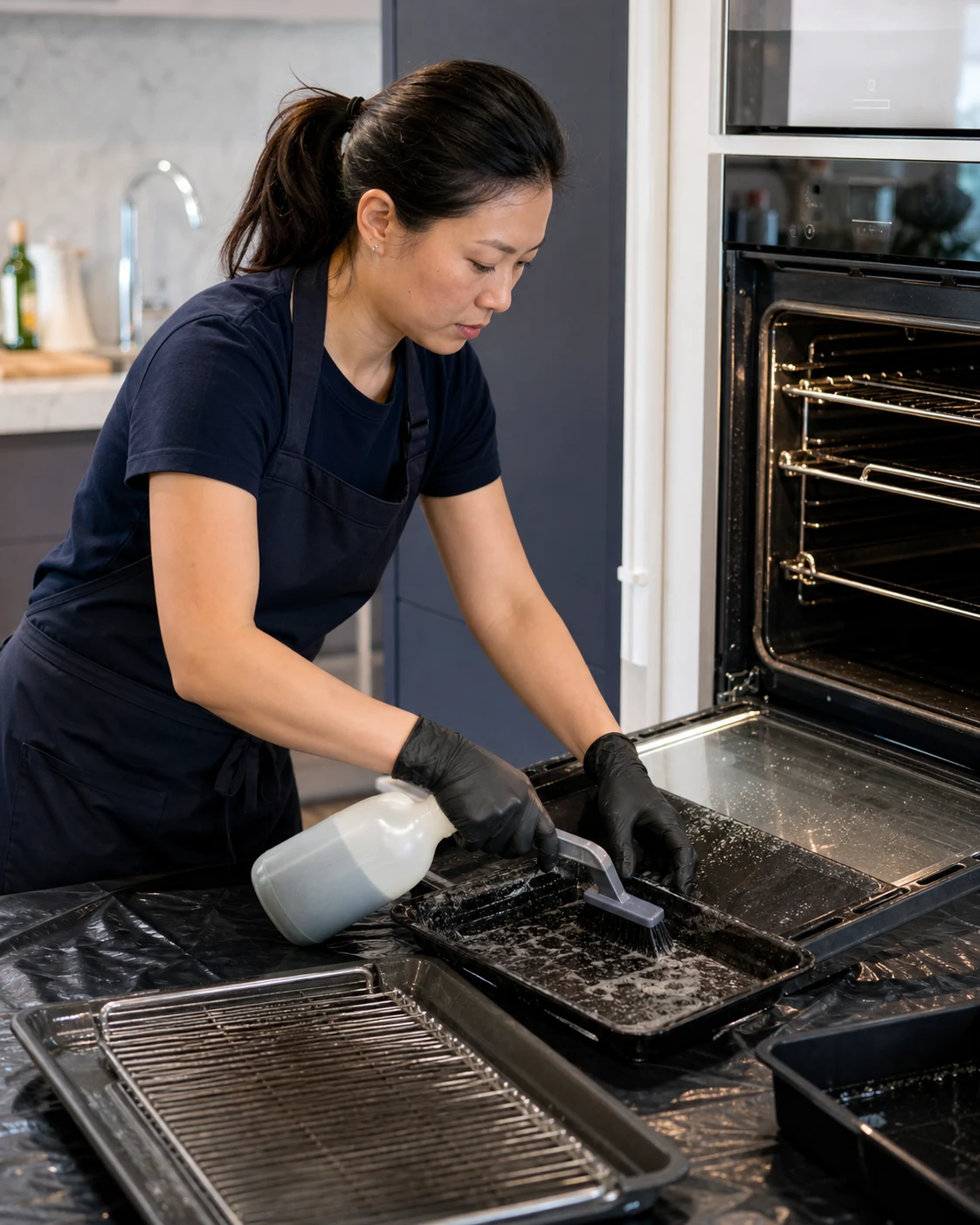
Loose debris is removed before degreasing. Appropriate products are given controlled contact time so residue can soften instead of being attacked with excessive force. Racks, trays and supports are worked separately where their material and condition allow. Inside the cavity, the cleaner proceeds section by section, keeping product away from sensitive elements, fans, ignition points and unsealed openings. Door faces and accessible glass are detailed with non-damaging tools; permanent haze between sealed panes may remain inaccessible.
Surfaces are repeatedly wiped to remove loosened soil and cleaning residue, then dried and inspected under good light. Components are restored in their correct positions and the immediate area is left orderly. A cleaning visit does not certify appliance safety or repair smoke caused by wiring, insulation or component failure. The handover identifies any remaining permanent mark, damaged finish or repair concern and explains sensible first use, including ventilation if a small residual odour from previously heated deposits is possible.
Clear pricing
Cost depends on appliance type, number of cavities, size, condition, racks, trays, removable parts and access.
| Service scope | Price | What affects the final price |
|---|---|---|
| Single oven cleaning | Quoted after assessment | Cavity size, condition, racks, trays and access |
| Double oven or range-style appliance | Quoted after assessment | Cavities, width, components, buildup and visit time |
| Additional compatible components | Quoted with the appliance | Trays, racks, hob elements and material condition |
Pricing context: Clear photographs are required for a reliable quote. Appliance repair, replacement seals, exterior hood systems and inaccessible sealed glass are not included unless separately specified.
How the service works
Send open-cavity images, appliance type, included racks and the current condition.
We define compatible removable parts, access, limitations and expected visit time.
The cleaner treats accessible components, removes residue and reports permanent damage.
Local guides
Choose a region to find your local guide. Please confirm your address and the work required when enquiring.
Oven cleaning FAQ
Useful answers about preparation, self-cleaning liners, door glass, products, faults, results and pricing.
☎ Call 020 3608 3976Let it cool, remove food and personal cookware, clear nearby worktops and provide access. Leave the supplied racks and trays that are included in the quote.
They require manufacturer-appropriate care and cannot be treated like standard enamel. Share the appliance model and interior photographs so limitations can be identified.
Only where the appliance is designed for safe, serviceable access and that work is agreed. Sealed or complex door assemblies may require an appliance engineer rather than cleaning.
Suitable professional products may be used in a controlled way according to surface and instructions. Sensitive components and incompatible finishes are protected or excluded.
It can help where heated food and grease residue is responsible. Electrical, insulation, fan, wiring or gas faults require repair assessment and should not be masked by cleaning.
The aim is the best safe clean for its condition. Chipped enamel, corrosion, discolouration, scratches, failed seals and permanent staining remain wear or damage.
Appliance size, cavities, range width, buildup, racks, trays, removable parts, surface type, access and parking all affect the quote.