
Rear sink empties slowly
Compare a small discharge with a full bowl and watch any nearby gully. Until the appointment, clean the strainer and stop if water backs up.
CHISWICK · READ THE REAR PIPE RUN ONE CONNECTION AT A TIME
Rear additions can create long kitchen and garden pipe runs with several changes of level. Diagnosis starts at the affected outlet and follows accessible connections back, rather than assuming every pipe beneath the extension belongs to one installation date.

READ THE REAR PIPE RUN ONE CONNECTION AT A TIME
Different flow or drainage at the back may be local to a trap, long branch or outside valve. Start at the affected fixture and work towards known sound behaviour.
Compare a small discharge with a full bowl and watch any nearby gully. Until the appointment, clean the strainer and stop if water backs up.
Remove the hose and compare an indoor cold outlet. Until the appointment, isolate the outside branch in freezing conditions if designed to do so.
Observe clips, pressure and which valve event triggers the sound. Until the appointment, record the event without repeatedly provoking it.
Dry the joint and check for fresh moisture during use. Until the appointment, keep stored items clear and do not tighten blindly.
Side passage access, cupboards along the route and any floor or garden obstructions. A full bowl discharge, appliance closure or hose removal can expose different problems. Accessible joints and clips should be inspected during the relevant event. A full bowl discharge, appliance closure or hose removal can expose different problems. Accessible joints and clips should be inspected during the relevant event.
Follow the rear fixture, its branch and successive accessible joints towards the main house. Renewing a rear branch needs evidence of fall, damage or unsuitable material. Keep garden excavation and floor reinstatement outside an REPAIR THE PROVED SECTION, THEN RETEST THE DISTANT OUTLET allowance.
OBSERVE LEVEL CHANGES AND SUPPORT ALONG THE ROUTE
A full bowl discharge, appliance closure or hose removal can expose different problems. Accessible joints and clips should be inspected during the relevant event.
| What has been noticed | What can be compared | What to do for now |
|---|---|---|
| Rear sink empties slowly | Compare a small discharge with a full bowl and watch any nearby gully | Clean the strainer and stop if water backs up |
| Outside tap flow pulses | Remove the hose and compare an indoor cold outlet | Isolate the outside branch in freezing conditions if designed to do so |
| Pipe knocks when appliance closes | Observe clips, pressure and which valve event triggers the sound | Record the event without repeatedly provoking it |
| Utility-room joint is green-stained | Dry the joint and check for fresh moisture during use | Keep stored items clear and do not tighten blindly |
REPAIR THE PROVED SECTION, THEN RETEST THE DISTANT OUTLET
Different flow or drainage at the back may be local to a trap, long branch or outside valve. Start at the affected fixture and work towards known sound behaviour. A full bowl discharge, appliance closure or hose removal can expose different problems. Accessible joints and clips should be inspected during the relevant event.
Renewing a rear branch needs evidence of fall, damage or unsuitable material. Keep garden excavation and floor reinstatement within a separately agreed allowance. Renewing a rear branch needs evidence of fall, damage or unsuitable material. Keep garden excavation and floor reinstatement outside an REPAIR THE PROVED SECTION, THEN RETEST THE DISTANT OUTLET allowance. Confirm that result by repeating the ordinary action described in “compare the extension outlet with the original house”.
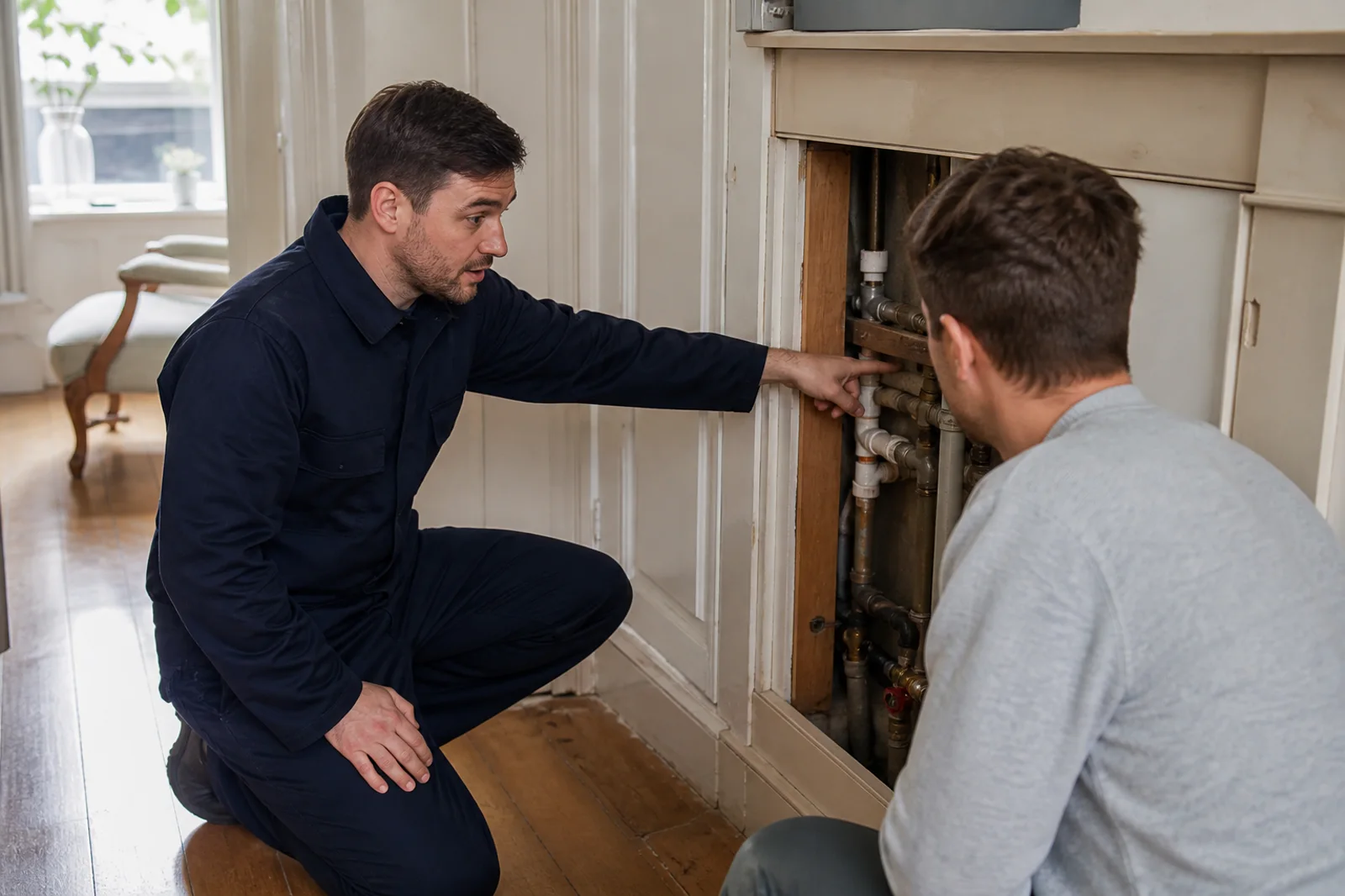
REPAIR THE PROVED SECTION, THEN RETEST THE DISTANT OUTLET
Renewing a rear branch needs evidence of fall, damage or unsuitable material. Keep garden excavation and floor reinstatement outside an REPAIR THE PROVED SECTION, THEN RETEST THE DISTANT OUTLET allowance.
Clear or realign accessible trap and pipe sections. Renewing a rear branch needs evidence of fall, damage or unsuitable material. Keep garden excavation and floor reinstatement outside an REPAIR THE PROVED SECTION, THEN RETEST THE DISTANT OUTLET allowance. Compare the extension outlet with the original house: renew a poorly falling or damaged section where proven.
Service the outlet or its accessible isolation. Renewing a rear branch needs evidence of fall, damage or unsuitable material. Keep garden excavation and floor reinstatement outside an REPAIR THE PROVED SECTION, THEN RETEST THE DISTANT OUTLET allowance. Compare the extension outlet with the original house: replace exposed damaged pipe when local repair is unsuitable.
Secure an accessible run after operating conditions are checked. Renewing a rear branch needs evidence of fall, damage or unsuitable material. Keep garden excavation and floor reinstatement outside an REPAIR THE PROVED SECTION, THEN RETEST THE DISTANT OUTLET allowance. Compare the extension outlet with the original house: investigate pressure or valve action where clips alone are not the cause.
Remake the leaking joint with compatible materials. Renewing a rear branch needs evidence of fall, damage or unsuitable material. Keep garden excavation and floor reinstatement outside an REPAIR THE PROVED SECTION, THEN RETEST THE DISTANT OUTLET allowance. Compare the extension outlet with the original house: extend renewal only past pipe that cannot accept a sound connection.
A ROUTE THAT CAN BE HANDED OVER
A nearby fitting in the original house provides a useful reference for flow, temperature or drainage. Record the difference before opening the extension route.
Take the hose from an outside tap and clear only the sink strainer or accessible trap debris. These checks can separate the fitting from the longer branch.
Trace the run through utility cupboards, plinths and outside walls. Note where pipe material, diameter or support changes along the extension.
Release one full sink bowl, close the relevant appliance valve once, or operate the outside tap without repeatedly provoking noise or backflow.
Keep sound upstream pipe in place. Where a new joint needs better support or fall, state the precise length and access in the revised instruction.
Use the rear outlet normally while accessible joints are watched, then compare it again with the reference fitting nearer the incoming supply.
RETAIN SOUND CONNECTIONS
The practical question is whether the existing connection can support a durable local repair. Parts elsewhere in the room are not renewed simply because access has been obtained.
clean and realign the accessible trap and branch before judging the longer run. If the finding extends beyond it, renew a section only where poor fall, damage or repeated restriction is demonstrated.
test the tap without a hose and check its private isolation. If the finding extends beyond it, replace frost-damaged or unsupported exposed pipe when a local service will not last.
observe the precise appliance or tap event that produces noise. If the finding extends beyond it, address pressure or fast-closing controls if support alone does not explain the movement.
remake the green-stained joint using compatible materials. If the finding extends beyond it, continue renewal only to pipe capable of accepting a dependable new connection.
COST THE KNOWN ROUTE
The estimate should follow measured access, the isolation actually available and the component identified during testing. Anything needing a second occupier, building approval or a separate finish is stated apart.
| Connection | Starting instruction | Reason for wider work |
|---|---|---|
| rear sink waste | clean and realign the accessible trap and branch before judging the longer run | renew a section only where poor fall, damage or repeated restriction is demonstrated |
| outside-tap branch | test the tap without a hose and check its private isolation | replace frost-damaged or unsupported exposed pipe when a local service will not last |
| pipe clips and valve action | observe the precise appliance or tap event that produces noise | address pressure or fast-closing controls if support alone does not explain the movement |
| utility connection | remake the green-stained joint using compatible materials | continue renewal only to pipe capable of accepting a dependable new connection |
Name the valve that was proved and any users affected by its operation.
Identify the cupboard, panel or room that must remain available until testing ends.
Record dimensions and connection type before the final fitting is ordered.
Allocate protection, drying and reinstatement without hiding them in the pipe repair.
ONE OWNER FOR EACH TASK
The plumbing instruction ends with a functional test. Shared infrastructure, locked spaces and decorative work move forward only with a named approver and their own completion check.
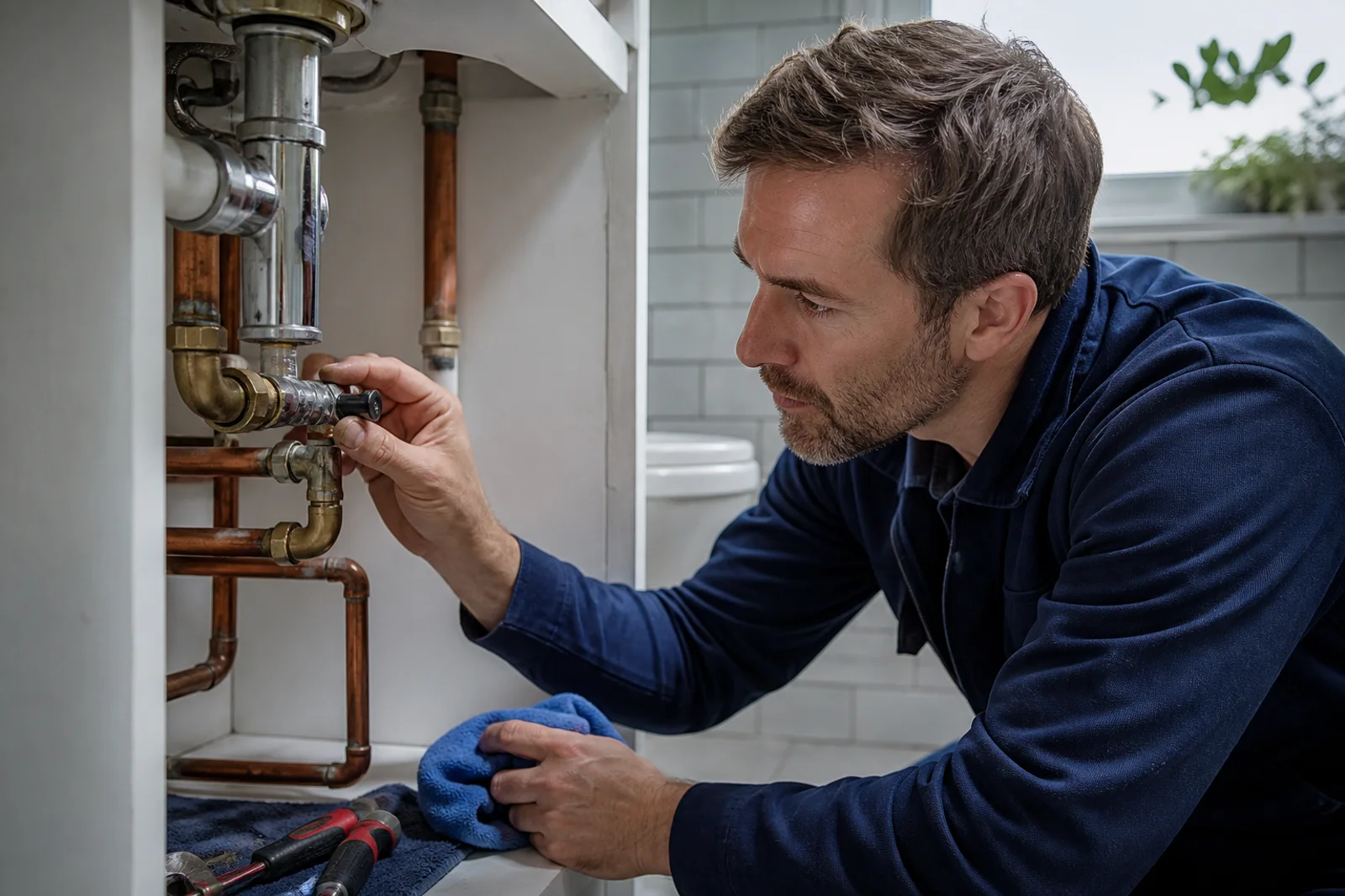
PREPARE WITHOUT DISMANTLING
Keep fixed covers and connections assembled. Add the timing and water activity in writing, because the image records condition but not sequence.
DECISIONS BEFORE AUTHORISATION
The answers below keep parts, access and completion tied to the property evidence.
The comparison shows whether reduced flow or slow drainage is confined to the extension branch. It is evidence for the next check, not a promise about concealed pipework.
No. Trap debris is one possibility, but branch fall, alignment, ventilation and response at another outlet also matter. Avoid chemical cleaners before inspection.
Remove the hose, note whether indoor cold flow changes at the same time and identify the branch isolation. Mention freezing exposure or recent valve work if known.
Not automatically. The plumber should connect the sound to a valve or appliance event and consider support, pressure and closing speed before choosing a remedy.
Only after visible route information indicates a useful inspection point. Agree the opening, protection and reinstatement rather than lifting boards across the whole room.
Do not tighten it blindly. Dry the connection and watch for fresh moisture during use; deformation or mixed materials may call for a different repair.
Splitting, broad corrosion, poor support or damage extending beyond one connection can justify measured renewal. Exposure and future isolation should be included in the plan.
Release water at realistic volume, observe trap and branch joints, and check the downstream outlet or gully without flooding it. Confirm that nearby traps retain their seals.
Floor or garden excavation, joinery, decoration and drainage work beyond the private branch need named allowances and approval if they become necessary.
Note the rear fixture, route sections actually seen, the isolation used and the result compared with the front outlet. Avoid guessing dates for concealed extensions.
RELATED ROUTES
Use the general plumbing hub for water fittings and pipework, then shift to a specialist service when the established network falls beyond that scope.
NEIGHBOURING SERVICE AREAS
These local pages help customers record the affected fixture, usable isolation point and any landlord or concierge arrangement before attendance.
ZONE REFERENCE
The map identifies the district for booking context only. It does not determine a fault, price or arrival time; send the whole building address and access course privately.
EVIDENCE FOR THE EARLIEST CALL
For Chiswick, state the particular fitting, normal-use routine, present water state, documented isolation, home course and occupier authorised to check the next step.
