
Surface
Material, porosity and existing finish determine the safe attachment and working distance.
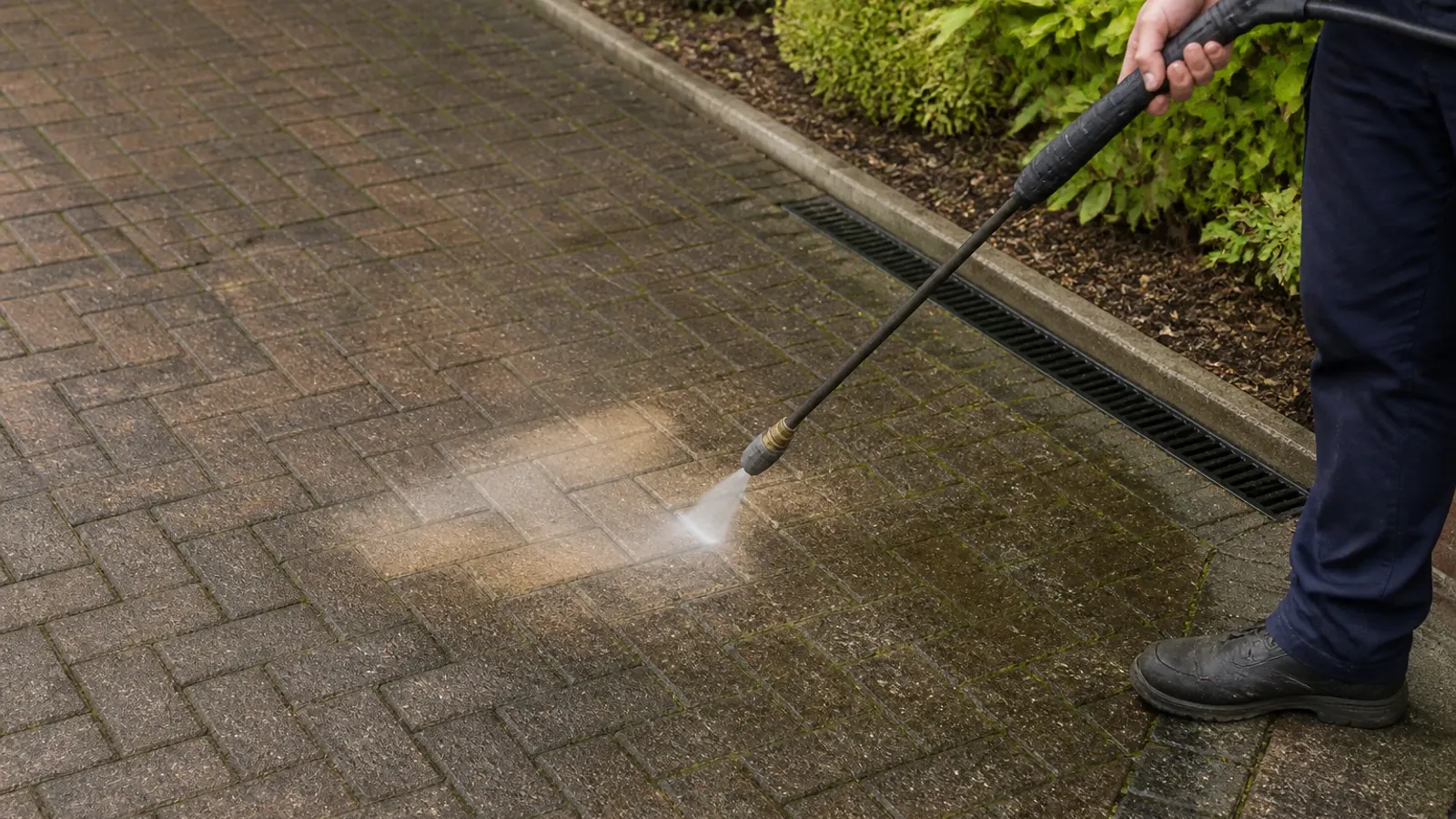
The safest result begins with the surface, joint condition and a discreet test.
Material, porosity and existing finish determine the safe attachment and working distance.
Cracks, open joints, failed pointing and weak edges are recorded before water is introduced.
Drainage, thresholds and neighbouring areas shape section order and residue control.
Doors, vents, electrics, planting and painted surfaces are kept outside uncontrolled spray.
| Area | Chislehurst |
|---|---|
| Typical surface focus | Courtyard |
| Suitable for | Stable external hard surfaces confirmed by assessment and test |
| Booking details | Photos, dimensions, material, access, water source and drainage |
| Typical process | Survey, protect, test, controlled passes, runoff management and review |
| Protection | Thresholds, vents, electrics, planting and neighbouring finishes |
| Drying considerations | Shade, weather, porosity, drainage and any later treatment |
| Pricing basis | Area, surface, soil, access, setup, water, edges and follow-on scope |
For pressure washing in Chislehurst, loose pointing, open joints and pre-existing erosion are recorded before cleaning. Nozzle selection follows the test patch and surface geometry. A shaded area may dry much more slowly than an exposed path. A discreet test area is used to judge pressure, distance and attachment.
Neighbouring walls and vehicles are kept outside the spray and splash zone. Doors and access routes remain protected from rebound and tracked residue. Block paving may require re-sanding only after suitable drying and separate agreement. The quote distinguishes cleaning from repair, re-sanding, sealing and specialist stain treatment.
Organic growth, general soil and oil-like marks require different expectations. Corners and narrow margins are detailed without dwelling on weak mortar or joints. Thresholds, vents and nearby finishes are checked before handover. Previous sealers, paints or repair products are disclosed where known.
Test results can reduce the proposed pressure or change the attachment. Protection is positioned around thresholds, electrical points and vulnerable finishes. Any remaining mark is explained by likely source and observed response. Organic growth, general soil and oil-like marks require different expectations.
The finished appearance is judged after loose water and slurry have been removed. Final rinsing remains controlled so it does not undo earlier runoff management. The customer receives a practical drying and access explanation. Neighbouring walls and vehicles are kept outside the spray and splash zone.
The technician separates removable surface soil from permanent wear or staining. Work begins with dry debris removal so grit and leaves do not become slurry. Any follow-on repair is defined without implying it formed part of pressure washing. Drain covers and channels are kept observable throughout the work.
The weakest edge or joint determines the maximum safe cleaning action. A wider attachment may be preferable to a narrow jet on suitable flat areas. The result is assessed against the agreed scope, not a promise of new-looking paving. Photographs and dimensions establish the likely surface, access route and working area.
Drain covers and channels are kept observable throughout the work. Adjacent glazing and walls are checked for splash before protection is removed. Loose aggregate or joint material found during work is not concealed. Fragile, cracked or unstable surfaces may need an alternative or reduced scope.
Doors, vents, sockets and delicate planting are identified as protection points. Edges are approached from a direction that keeps spray within the controlled area. Photographs can document the dry-soil condition, test and final controlled result. The water source is not assumed to be suitable until its position and flow are confirmed.
Water supply, drainage direction and equipment access are confirmed before a method is selected. Edges are approached from a direction that keeps spray within the controlled area. A shaded area may dry much more slowly than an exposed path. Neighbouring walls and vehicles are kept outside the spray and splash zone.
A practical Chislehurst work scenario could begin at a raised terrace with a rendered boundary. This is a planning example for a typical local property, not a claim about a named customer or completed job. Work begins with dry debris removal so grit and leaves do not become slurry. Specialist stain treatment remains separately quoted when ordinary washing is insufficient. A discreet test area is used to judge pressure, distance and attachment.
The plan avoids driving water beneath doors, into vents or through failed joints. Protection is positioned around thresholds, electrical points and vulnerable finishes. Loose aggregate or joint material found during work is not concealed. Photographs and dimensions establish the likely surface, access route and working area.
Detail work at corners and thresholds uses controlled tools rather than indiscriminate pressure. Adjacent glazing and walls are checked for splash before protection is removed. Furniture is returned only when the surface and agreed scope allow it. Previous sealers, paints or repair products are disclosed where known.
The water source is not assumed to be suitable until its position and flow are confirmed. Dislodged material is collected instead of being pushed into drains or neighbouring land. The customer receives a practical drying and access explanation. Organic growth, general soil and oil-like marks require different expectations.
Previous sealers, paints or repair products are disclosed where known. Doors and access routes remain protected from rebound and tracked residue. Any follow-on repair is defined without implying it formed part of pressure washing. The water source is not assumed to be suitable until its position and flow are confirmed.
The quote distinguishes cleaning from repair, re-sanding, sealing and specialist stain treatment. Corners and narrow margins are detailed without dwelling on weak mortar or joints. Wet colour is not presented as the final dry appearance. Drain covers and channels are kept observable throughout the work.
Access across the work area is restricted until the surface is safe to walk on. A wider attachment may be preferable to a narrow jet on suitable flat areas. Thresholds, vents and nearby finishes are checked before handover. The quote distinguishes cleaning from repair, re-sanding, sealing and specialist stain treatment.
Furniture and movable pots are cleared only as agreed. Final rinsing remains controlled so it does not undo earlier runoff management. Maintenance advice focuses on leaf removal, drainage and early treatment of regrowth. Fragile, cracked or unstable surfaces may need an alternative or reduced scope.
Observed response determines whether pressure, distance, tool or the proposed scope must change.
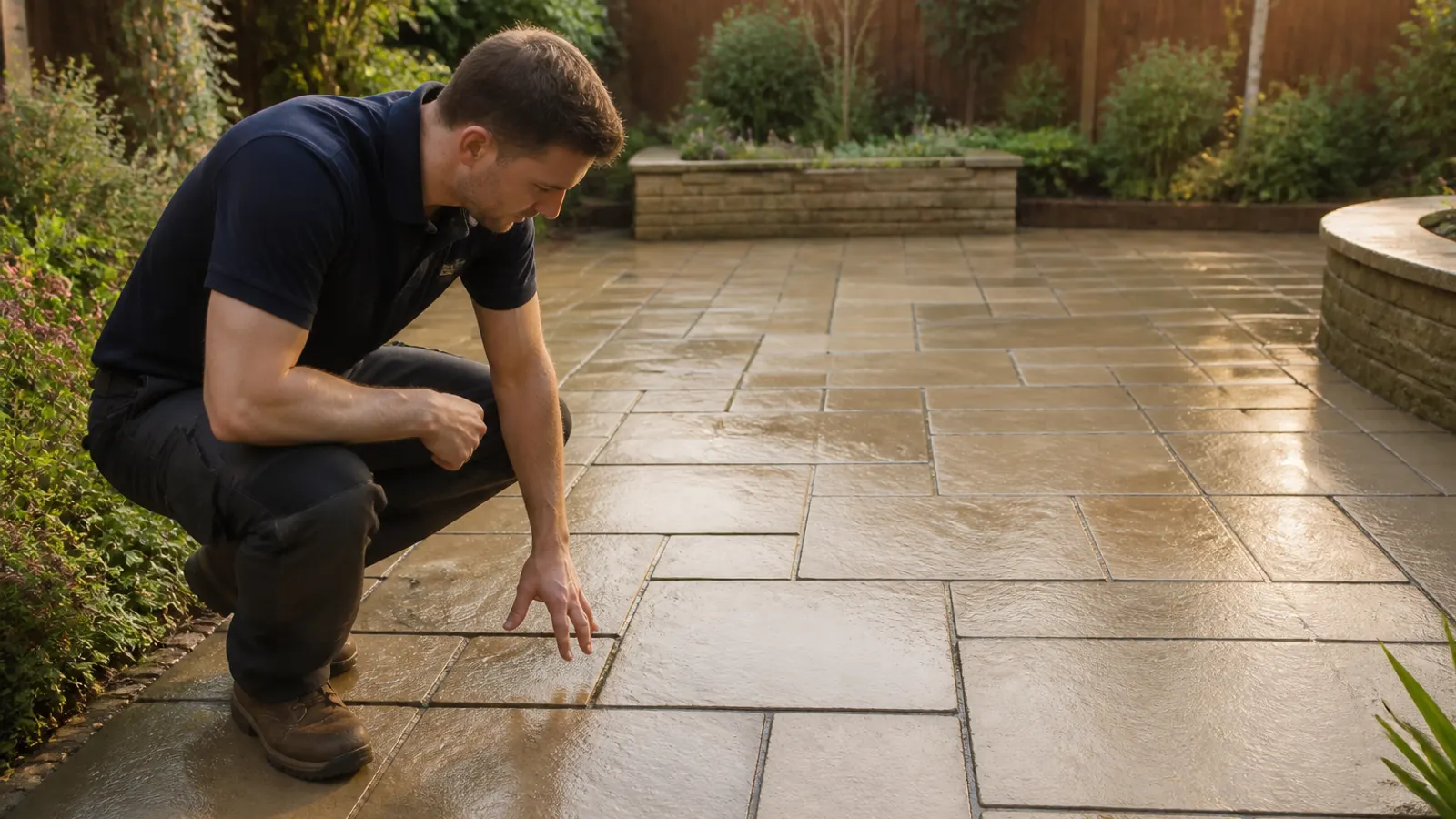
No unless specifically quoted. The surface normally needs suitable drying and compatibility checks first.
Stable patios, paths, concrete and some block paving can be considered after material, joints and condition are assessed.
They are identified and protected, and the method avoids driving water through vulnerable openings.
It can, especially in damp shaded areas. Drainage, leaf removal and maintenance affect regrowth.
Dimensions, material, condition, soil, access, water, drainage, edges and follow-on work shape the quote.
Only when written into the quote. Sand displacement and suitable drying can make it a separate follow-on stage.
| Service scope | Current price basis | Quote considers |
|---|---|---|
| Small path or patio area | Quoted after assessment | Dimensions, material, soil, access, water and setup |
| Larger or mixed hard-surface area | Quoted after assessment | Square area, edges, drainage, condition and cleaning time |
| Specialist stain or follow-on treatment | Quoted separately | Product, test result, runoff controls, re-sanding or sealing |
Current photographs, dimensions and material details are needed. Repair, re-sanding, sealing and specialist stain treatment are included only when written into the scope.
Choose the page matching the property address or review the main service scope before requesting a quote.
Share the Chislehurst postcode, photographs, dimensions, material, access, water point, drains and priority marks. Call 020 3608 3976 · Request a quote

Enter your postcode to see estimated arrival time for your area.
Estimated arrival times are approximate and may vary depending on traffic and technician availability.