
CROUCH END · OLD FLOORS, INDIVIDUAL TEXTILES
Rug Cleaning in Crouch End for Rugs with a Story
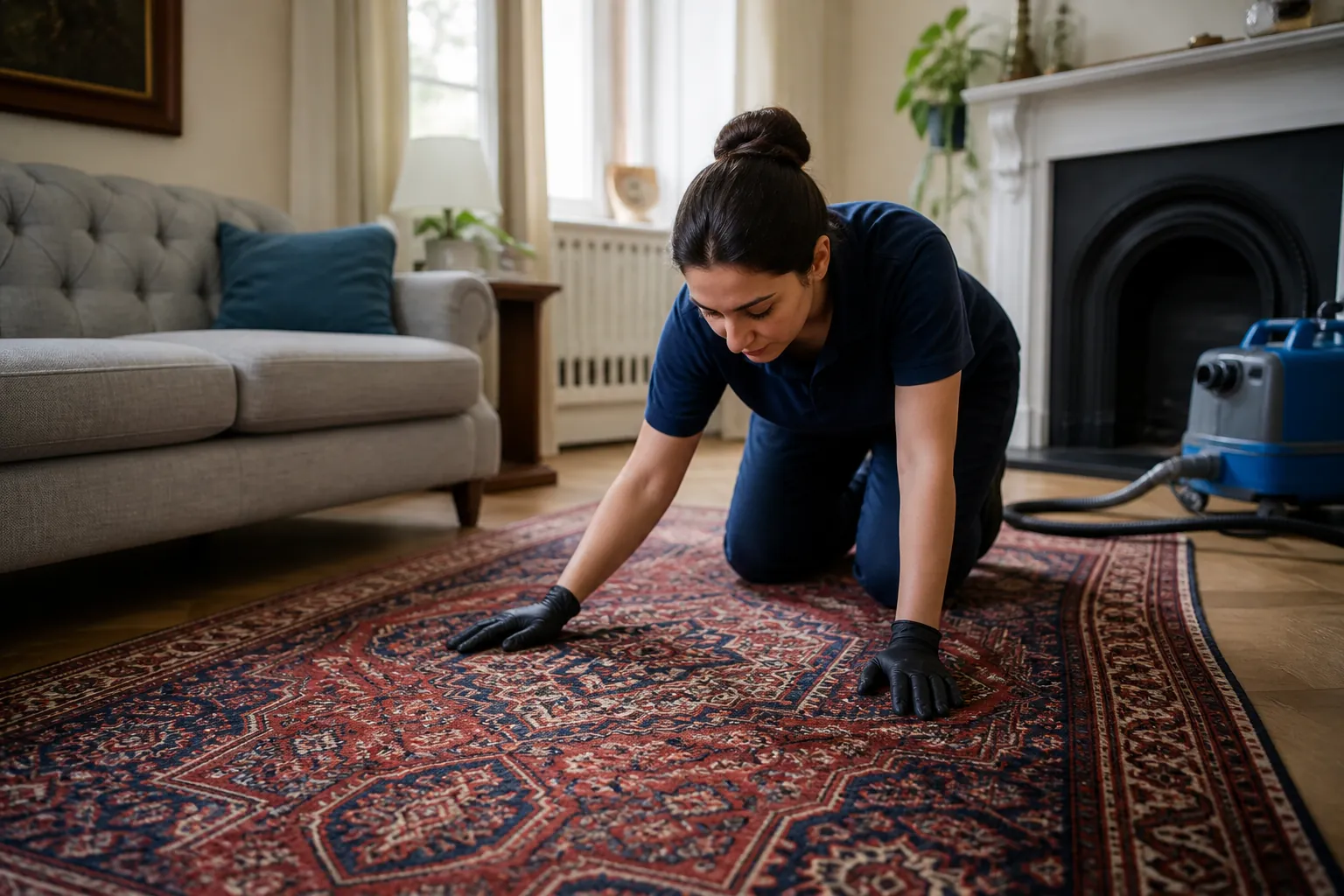
A well-used rug in a Crouch End terrace may carry a plant-pot ring, a softened fringe or colour altered by years beside a bay window. We record those differences before deciding what care is realistic.
- Photograph the rug in daylight before rolling it
- Show worn corners, the underside and any hand-finished edge
- Name past spot products, even if they seemed ineffective
- Measure the narrowest doorway on the route to the street

START WITH WHAT YOU CAN OBSERVE
Build a description without guessing the answer
Choose the nearest description and leave uncertain details open. Inspection, not a website button, sets the treatment boundary.
READ THE WHOLE OBJECT
A woven face can conceal a vulnerable foundation
Two rugs that look woollen may respond differently because one is knotted and the other tufted. Yarn, colour, foundation and old repairs need to be considered together.
Touch and absorbency
Material clues influence how much moisture and movement may be appropriate.
Sunlight and dye response
A paler window side may be fading rather than removable surface matter.
What supports the face
Backing condition affects lifting, rinsing and controlled drying.
Fringe, binding and mends
Older interventions are mapped for deliberate handling.
A CROUCH END TERRACE IN PRACTICE
Plan the journey through the house before the rug moves
In our example, a wool rug lies on varnished boards beneath a low table. The front path has steps, coats narrow the hall and a bicycle occupies the turn by the door. That route matters as much as the rug’s dimensions.
The plant spill is documented in context. One wide image shows its place beside the window; a closer view records the halo, pile direction and nearby colour. A musty note is reported separately because smell cannot reveal how far water travelled.
The floor is part of preparation. Furniture movement, temporary protection and return timing are agreed without treating sealed boards as evidence about fibre.
Notes that make a Crouch End visit workable
Scale: Give both dimensions and keep the entire border visible.
Orientation: Mark the window end and doorway end.
Floor: Say whether a separate underlay sits beneath the textile.
Halo: Explain what the plant contained and when overflow appeared.
Smell: Report when it becomes strongest rather than masking it.
Products: Photograph packaging from anything applied.
Wear: Separate flattened lanes from the newer spill.
Edges: Show pulled yarns without trimming or gluing them.
Repairs: Point out stitched patches or replaced fringe.
Obstacles: Clear loose items but avoid an unsafe solo lift.
Parking: Mention restrictions that lengthen the carry.
Timing: Keep hall and stairs free during the appointment.
Air: Describe ventilation in the chosen room.
Pets: Plan an undisturbed working zone.
Expectation: Fading and fibre loss cannot be washed back.
Review: Compare the agreed area under consistent light.

FROM DOORWAY TO HANDOVER
The sequence adapts when evidence changes
A cautious route is narrowed after physical checks, never copied from another rug merely because its colour looks similar.
- 01
Orient
Mark window side, doorway side and priority zone.
- 02
Survey
Examine yarn, foundation, ends and mends.
- 03
Test
Check relevant colour and material responses.
- 04
Reduce
Release compatible dry matter first.
- 05
Treat
Stay inside the limits established.
- 06
Finish
Manage pile, edges and retained moisture.
- 07
Return
Explain airflow and furniture timing.
CROUCH END COST GUIDE
Area opens the estimate; complexity completes it
Measure the textile rather than the room. Construction, fragile edging, access and separately requested work can change the confirmed quotation.
SEND A USEFUL FIRST MESSAGE
Nine facts beat a vague price request
- Full postcode
- Length, width and fringe depth
- Whole-rug daylight image
- Plant halo from two angles
- Back and maker’s label
- Loose ends or repairs
- Anything already sprayed
- Floor and furniture layout
- Steps, hallway turn and parking
Useful boundaries
Will a photo select the process?
No. It reveals questions; physical findings support the choice.
Could the plant ring be permanent?
Possibly. Minerals, dye change and pile damage may coexist with residue.
Should fringe be measured?
Yes, but record it separately from the woven field.
Can the table return immediately?
Follow handover advice for the rug and timber below.
QUESTIONS FROM CROUCH END HOMES
Clear answers before the appointment
What if I do not know whether the rug is wool?
Mark fibre as unknown and provide label, face and reverse photographs.
Why show furniture around it?
The wide view communicates scale, obstacles, sunlight and footfall.
Can an old musty smell be guaranteed away?
No. Source, depth and backing must be understood first.
Do front steps alter the quote?
They may affect handling, so include them before confirmation.
Is pile shading dirt?
Not necessarily; directional fibres reflect light differently.
Should I cut a loose thread?
Leave it intact and show where it enters the weave.
What if spotter residue remains?
Report the product because it can influence testing.
When is normal use possible?
Fibre, foundation, moisture route and airflow determine that advice.
Does the band include every treatment?
No. It is a size starting point; special work is scoped separately.
Can several rugs share one visit?
Often, although each still requires its own record.
YOUR RUG, YOUR ROUTE
