
HIGHBURY · FROM THE GARDEN DOOR TO THE RUG FOUNDATION
Rug Cleaning Planned for Highbury Garden Flats
Highbury homes can place very different demands on removable rugs. A tufted wool rug from a garden flat is therefore assessed for its own materials, earlier treatment and current condition before any cleaning route is proposed.
- Stand back far enough to capture the wool rug, furniture feet and garden doorway together
- Photograph paw tracks in daylight and mark the edge where the smell is strongest
- Lift one safe corner for a view of the backing, binding and any maker information
- Measure the side gate and count the lower-ground steps before an off-site route is considered
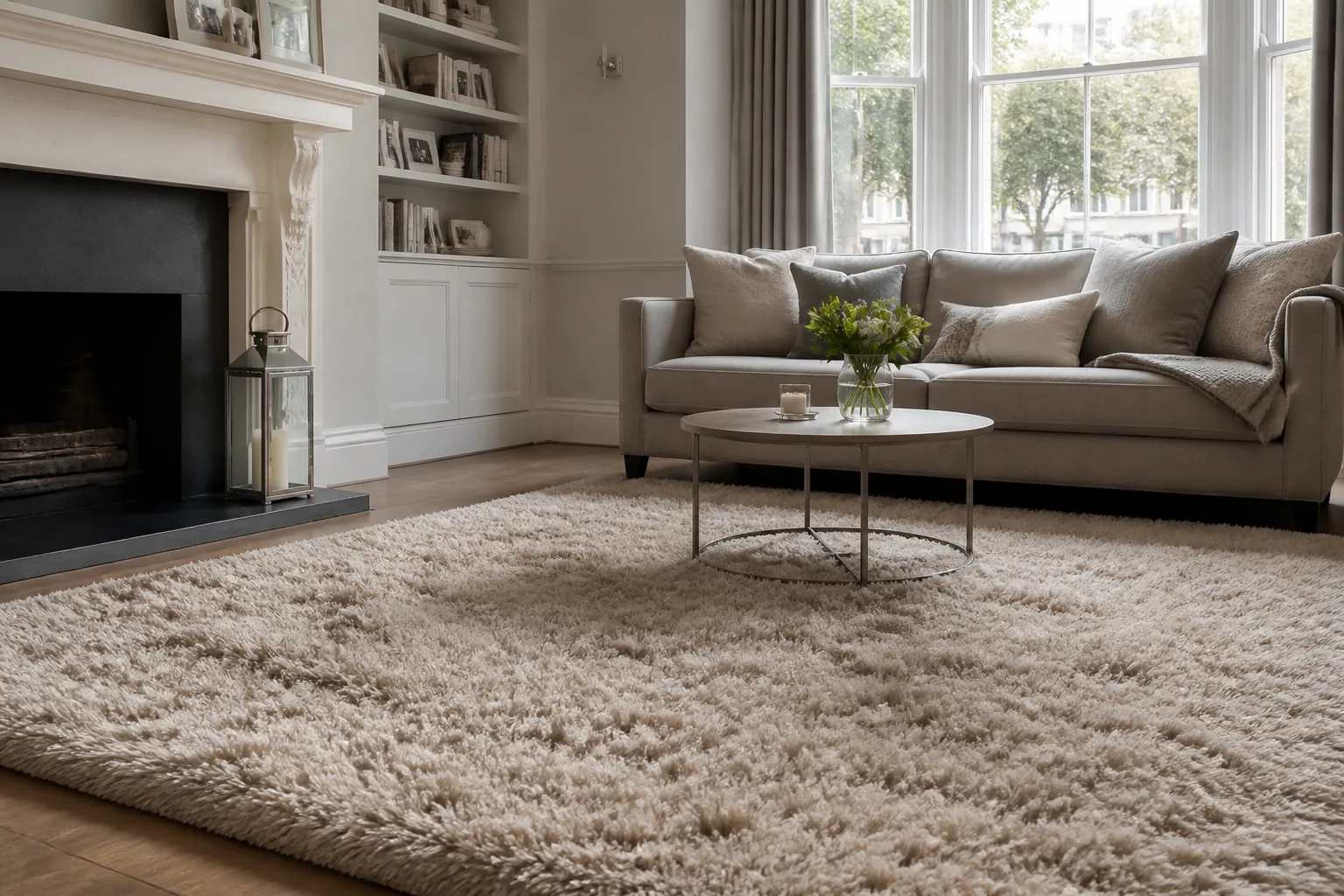
A LOWER-GROUND ARRIVAL
Garden access can shape the handling plan
A Highbury garden flat presents two linked questions: what has reached the textile from outside, and whether the rug can pass safely through the available route. This example pairs a tufted wool piece with engineered oak, regular paw traffic and a short run of exterior steps.
A realistic Highbury case. The full-room image establishes scale and furniture position. Separate close-ups then distinguish garden grit, paw marks and an odour concern at one edge from ordinary loose soil, shading or wear. None of those photographs is treated as proof that a mark can be removed.
The owner measures door and gate clearances as well as the textile. They also record recent rain, pet use and anything already sprayed on the affected edge. Those facts make the initial conversation specific without turning it into a remote diagnosis.
A field note for this Highbury rug
Threshold view: A wide photograph connects the garden door, traffic track and the rug’s position on the oak.
Paw route: Repeated prints are mapped from entry to resting area, with the most recent incident marked separately.
Outdoor route: Gate aperture, step surfaces and turns are recorded alongside street-side parking limitations.
Footprint: Maximum dimensions include curling edges so the carrying question is based on actual space.
Tufting clues: The pile, secondary backing and any firm or powdery areas are captured without peeling layers apart.
Shade map: Pale traffic zones and strong accents are recorded in the same daylight for useful comparison.
Perimeter: The affected edge is checked for curling, loose binding, stiffness and contamination on the reverse.
Pet history: Dates, cleaning sprays and changes during wet weather are more valuable than a general odour description.
Oak finish: Existing scratches and the area below the suspect edge are noted before protective materials are selected.
Heavy items: Furniture feet are counted and photographed so movement and later replacement can be agreed.
Source boundary: Observations from pile, backing and floor remain separate until assessment connects or excludes them.
Traffic change: Crushed tufts and sunlight variation are marked outside the list of cleaning priorities.
Ventilation: The garden opening may help airflow, but security, weather and the finished backing set practical limits.
Quote logic: Size starts the calculation before construction, odour investigation and handling are added where relevant.
Pet-safe return: The household receives a clear point for foot traffic, paws and furniture rather than assuming “touch dry”.
Open outcome: The feasible change and suitable working location are confirmed only after the layered rug is examined.
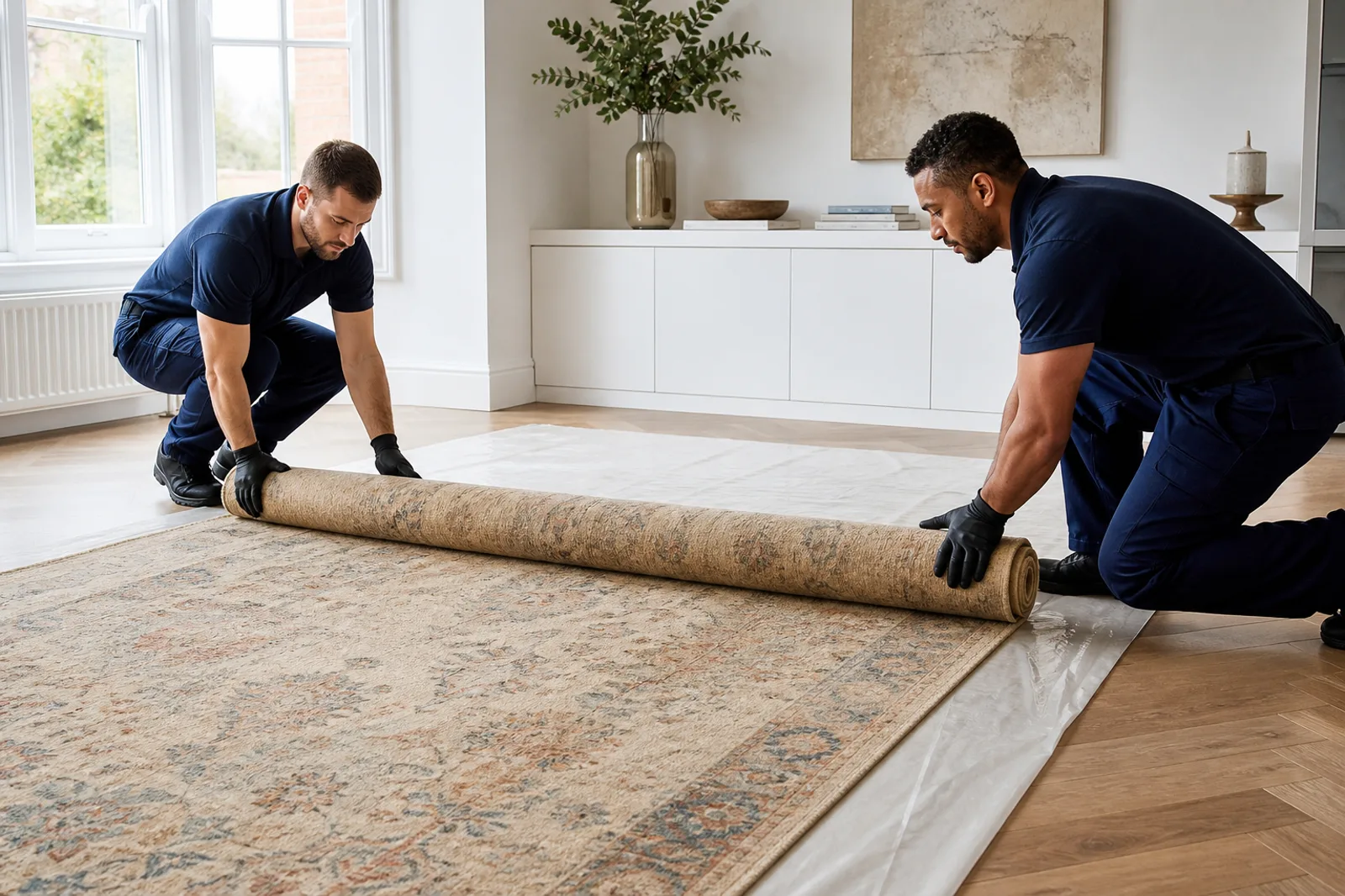
TUFTS, ADHESIVE AND COLOUR
A wool face does not describe the whole rug
Tufted rugs may combine wool yarn with a separate foundation, latex and a secondary backing. Each layer can respond differently, so the face fibre, colour transitions and structural firmness are checked as a connected system.
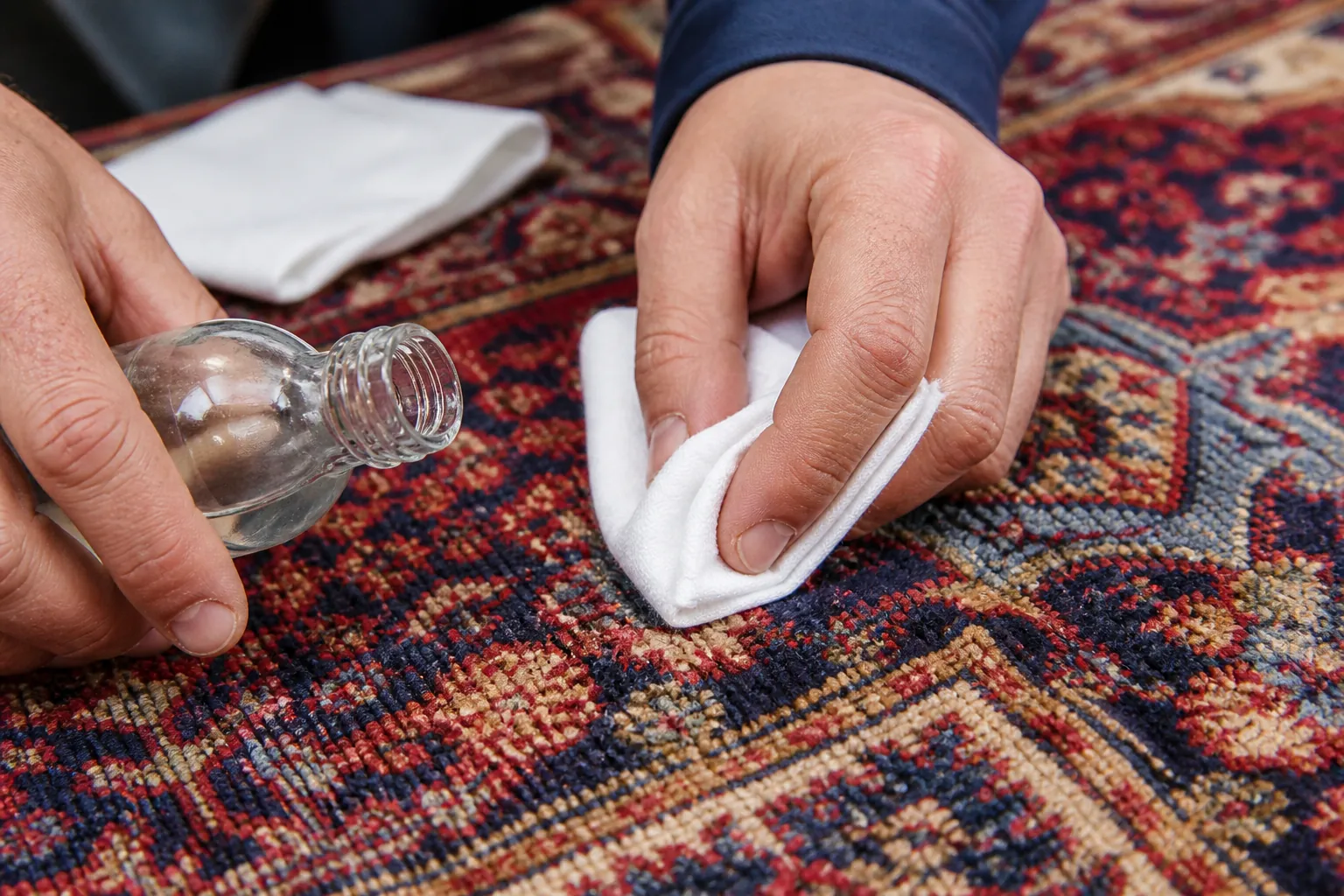
Face yarn
Wool pile calls for controlled chemistry and careful mechanical action.
Contrasting shades
Testing explores whether neighbouring colours can be worked without migration.
Tufted foundation
Backing condition affects lifting, moisture limits and the finishing sequence.
Perimeter evidence
Curling, loose binding and hard adhesive are logged before the rug changes position.
PAWS, PATHWAYS AND PILE
Map the route of the grit
Outdoor particles often collect along the same line that people and pets take into the room. A map of that route helps distinguish loose grit from crushed pile, colour loss and older edge wear.
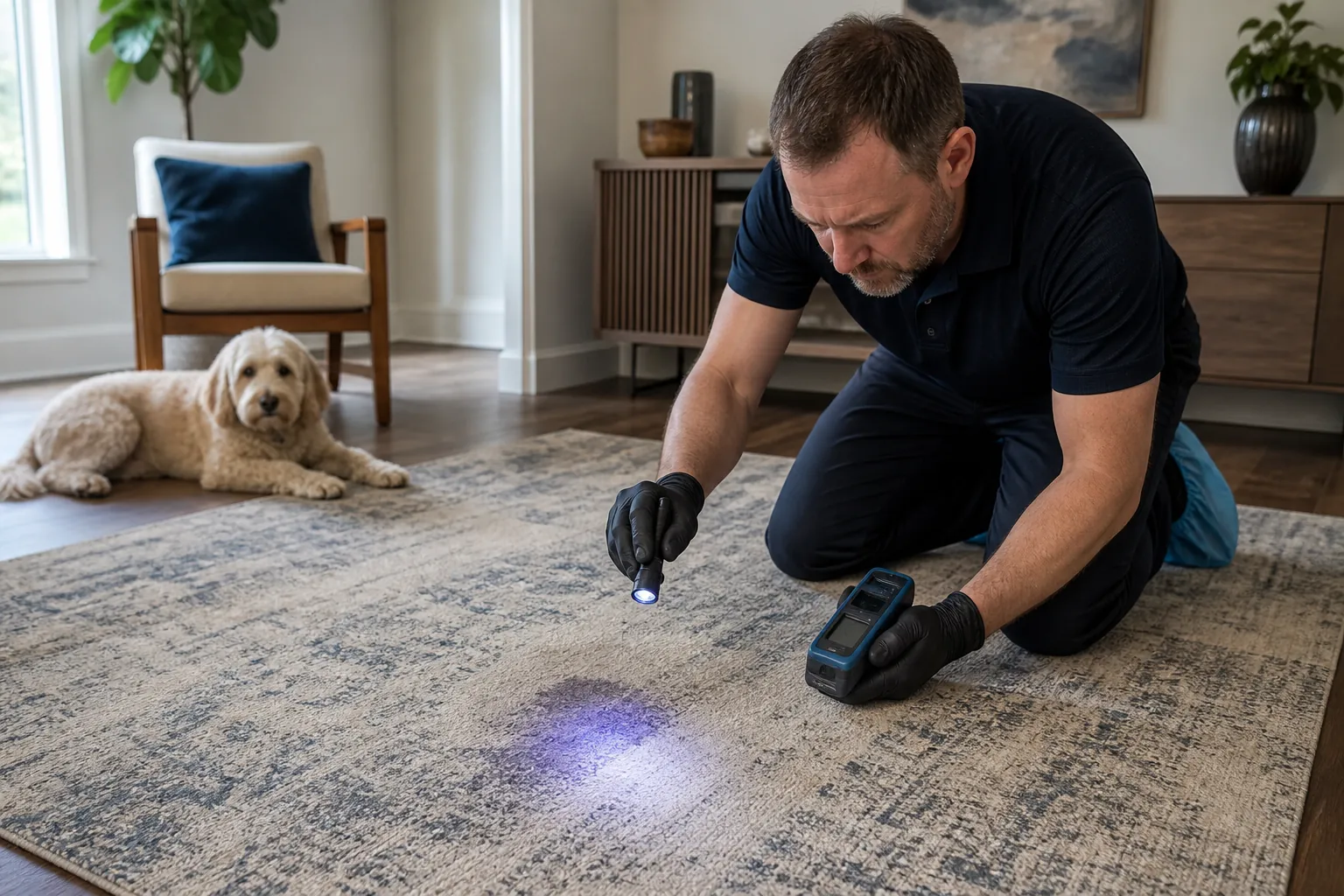
ONE EDGE SMELLS DIFFERENT
Locate the source before discussing deodorising
An odour close to the garden door may sit in yarn, backing, underlay or the floor interface. Note when it appears, whether damp weather changes it and what has already been applied.
- Outline the noticeable zone with reference to an edge
- Record pet incidents, rainwater and household sprays
- Inspect the reverse without dragging it across oak
- Agree realistic limits only after the source is explored
FROM DOORWAY DEBRIS TO HANDOVER
A Highbury sequence built around this room
The working sequence responds to the soundness of the tufting, the depth of tracked material and the possibility of contamination at the edge. Drying advice comes after the chosen work, not from a postcode-wide timetable.
-
01
Trace the pathway
Plot garden entry, paw traffic and the odour boundary
-
02
Read the build
Examine tufts, backing adhesion, binding and colour transitions
-
03
Reduce grit
Extract accessible dry debris before introducing a wet process
-
04
Address priorities
Work the agreed traffic and paw-mark zones within tested limits
-
05
Protect the interface
Keep the engineered oak isolated during inspection and finishing
-
06
Review in daylight
Compare the entry path, edge and surrounding pile from both directions
-
07
Return the room
Set ventilation, foot-traffic and furniture timing for the actual finish
BUILD THE GARDEN-FLAT RECORD
Sort what you know from what needs checking
The buttons organise useful clues for the booking conversation. They are a note-taking aid, not a treatment calculator.
BEFORE YOU SEND THE ENQUIRY
Make the lower-ground brief easy to picture
- Full address plus a suitable appointment window
- Length and width at the longest points
- A room view facing the garden entrance
- Detailed images of the paw path and affected edge
- Safe underside photograph with the label in focus
- Notes on loose tufts, curled corners or firm backing
- Anything known about manufacture and fibre
- Products used since the first odour was noticed
- Side-gate clearance, step count and parking restrictions
Four early decisions for a Highbury booking
Will the rug need to leave the flat?
That cannot be settled from its size alone. Construction, condition, the agreed work and the measured exit route all contribute.
Are paw marks treated like a single spill?
Not necessarily. Repeated traffic can combine loose particles, oily transfer and physical pile change across a wider pathway.
Should the oak floor be covered beforehand?
Tell us its finish and current condition first. Protection is then selected so it does not trap moisture or mark the surface.
Does the visit include a pet-odour guarantee?
No. The team first investigates where the source may have travelled and explains the workable boundary.
MEASURED GUIDE FOR HIGHBURY
Area opens the estimate; evidence completes it
Use the size bands to understand the starting scale. Tufted construction, edge contamination, lower-ground handling and any separately requested work are then considered when the actual quotation is assembled.
HIGHBURY QUESTIONS FROM THE GARDEN LEVEL
Useful answers before the rug moves
Which photograph best explains the room?
Take one from the opposite side, keeping the complete rug, garden threshold and nearby furniture in frame. Detail shots can follow.
Why mention engineered oak in the booking?
Its finish needs appropriate separation during inspection, lifting and drying. The floor detail also informs the return-to-room plan.
Will every paw track disappear?
No responsible promise can precede inspection. Some paths contain removable deposits while others show flattened yarn, abrasion or colour change.
What access measurements are useful?
Provide the narrowest gate opening, exterior step count and any sharp turn between the room and street. Mention restricted parking too.
Is a wool label enough to select a process?
No. It identifies a face material but may not explain the adhesive, backing, dyes or current structural condition.
Can I spray the odorous edge before the visit?
Pause further applications and list anything already used. Added fragrance or residue can make the source harder to interpret.
Why photograph a curled or loose corner?
It reveals a handling vulnerability before movement and may indicate a backing or binding issue that changes the proposed scope.
How do I describe an intermittent smell?
Say where it is noticed and whether rain, heating or closed windows make it stronger. Timing can be more informative than adjectives.
When will people and pets use the room again?
The handover sets that point after checking the finished rug, backing and room conditions. Keep paws and furniture away until advised.
How are the published figures used?
Measured area identifies a starting band. The confirmed figure follows the evidence, access plan, chosen work and minimum visit value.
START AT THE GARDEN DOOR
