Fibre and dye assessment
Construction, colour stability and care information reviewed before wet treatment.
Alesta · Rug cleaning in London
Professional cleaning for suitable household rugs, with labels, dyes, backing, staining and drying conditions assessed before treatment begins.
☎ Call 020 3608 3976Identification before treatment
Wool, viscose, cotton, synthetic fibres, natural dyes, glued backing and hand-finished edges respond differently to moisture and agitation. A method that is effective on a colourfast synthetic rug can cause dye migration, texture change or shrinkage on a delicate piece.
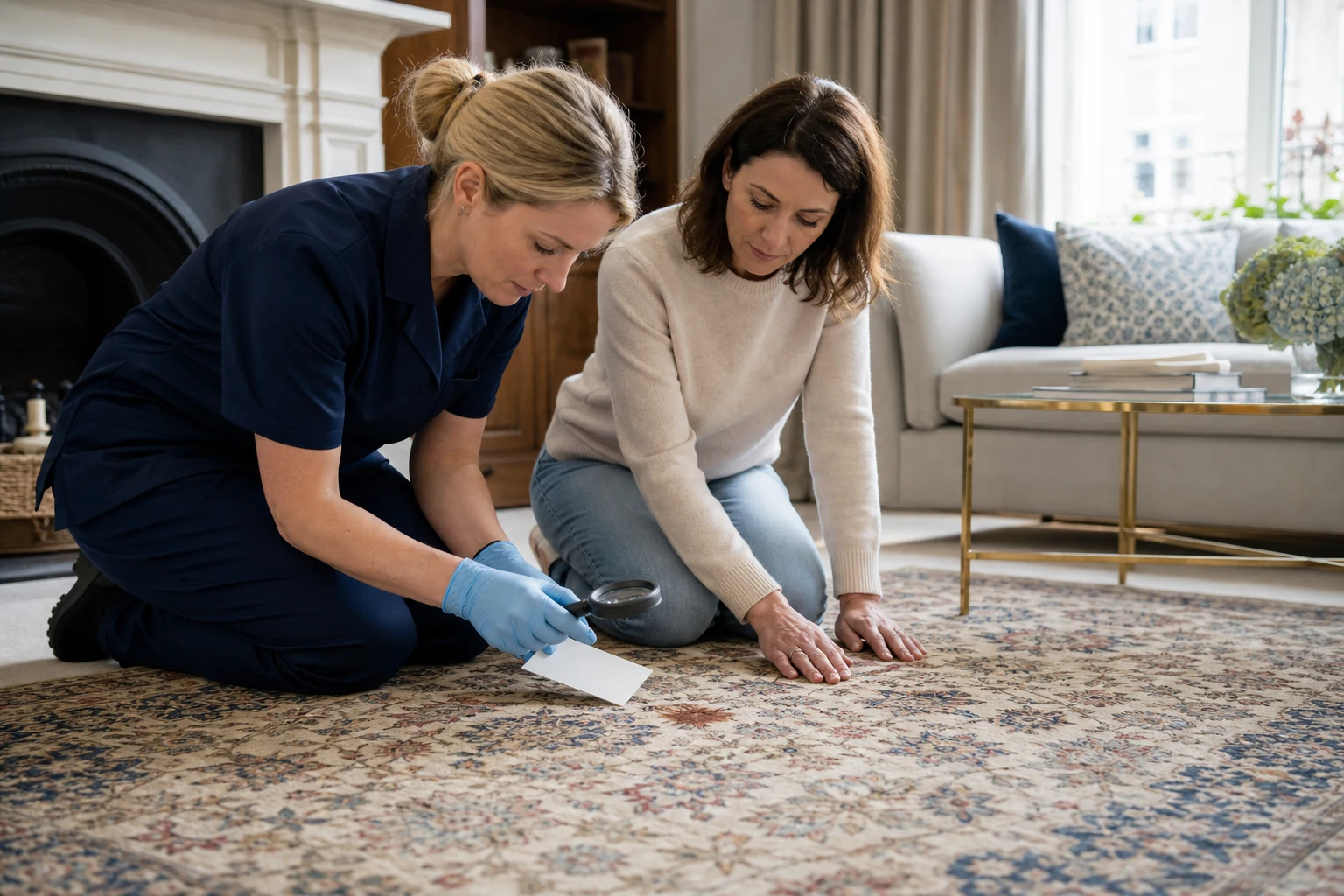
We request photographs of the whole rug, label, backing, fringe and affected areas before confirming an in-home or specialist route. Cleaning can improve removable soil, but wear, fading, fibre loss, pet damage and permanent chemical change cannot be washed away.
Construction, colour stability and care information reviewed before wet treatment.
Loose grit, hair and surface particles removed before compatible cleaning begins.
Suitable marks pre-treated conservatively within the limits of the textile.
Moisture, ventilation and return-to-use guidance planned around the rug and room.
Common reasons customers call
Embedded dry soil and everyday use have changed the appearance of busy areas.
The substance, age and products already used affect the safe treatment options.
Contamination depth and backing condition must be assessed before expectations are set.
Rugs, carpets and upholstery can be coordinated while each keeps its own method.
Why Alesta for rug cleaning
Face, backing, edges, label and stains provide more evidence than one close photograph.
Dye instability and previous treatments can change the suitable cleaning route.
Specialist or high-value rugs may require referral rather than routine in-home cleaning.
The rug is not returned to use while residual moisture could affect fibres or flooring.
A textile-aware process
Planning starts with dimensions, construction and condition. We ask for clear views of the face, corners, fringe, backing and care label, plus details of spills, pet accidents and products already applied. The floor beneath the rug, room access and available drying conditions also matter. Valuable, antique, hand-knotted or unstable pieces are identified early because they may require specialist off-site conservation rather than a standard household method.
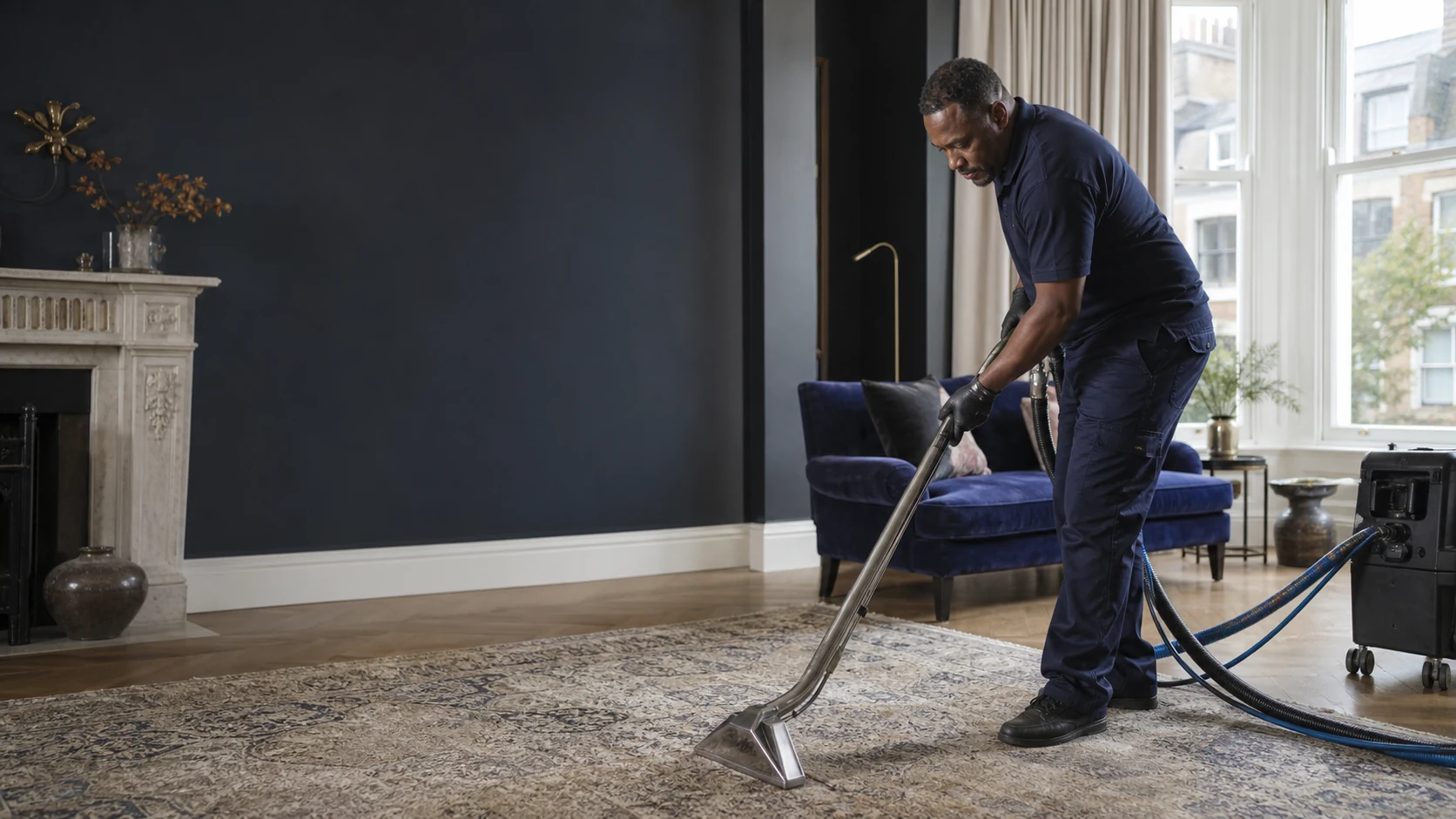
At the property, the technician inspects wear, loose edges, colour change, fibre distortion and backing weakness. Dry soil and hair are removed with equipment suitable for the textile. Dye and fibre response are tested where appropriate before broad treatment. Unknown stain removers, bleach, pet urine and prolonged moisture can alter colour or backing permanently, so likely improvement and risks are discussed before cleaning continues.
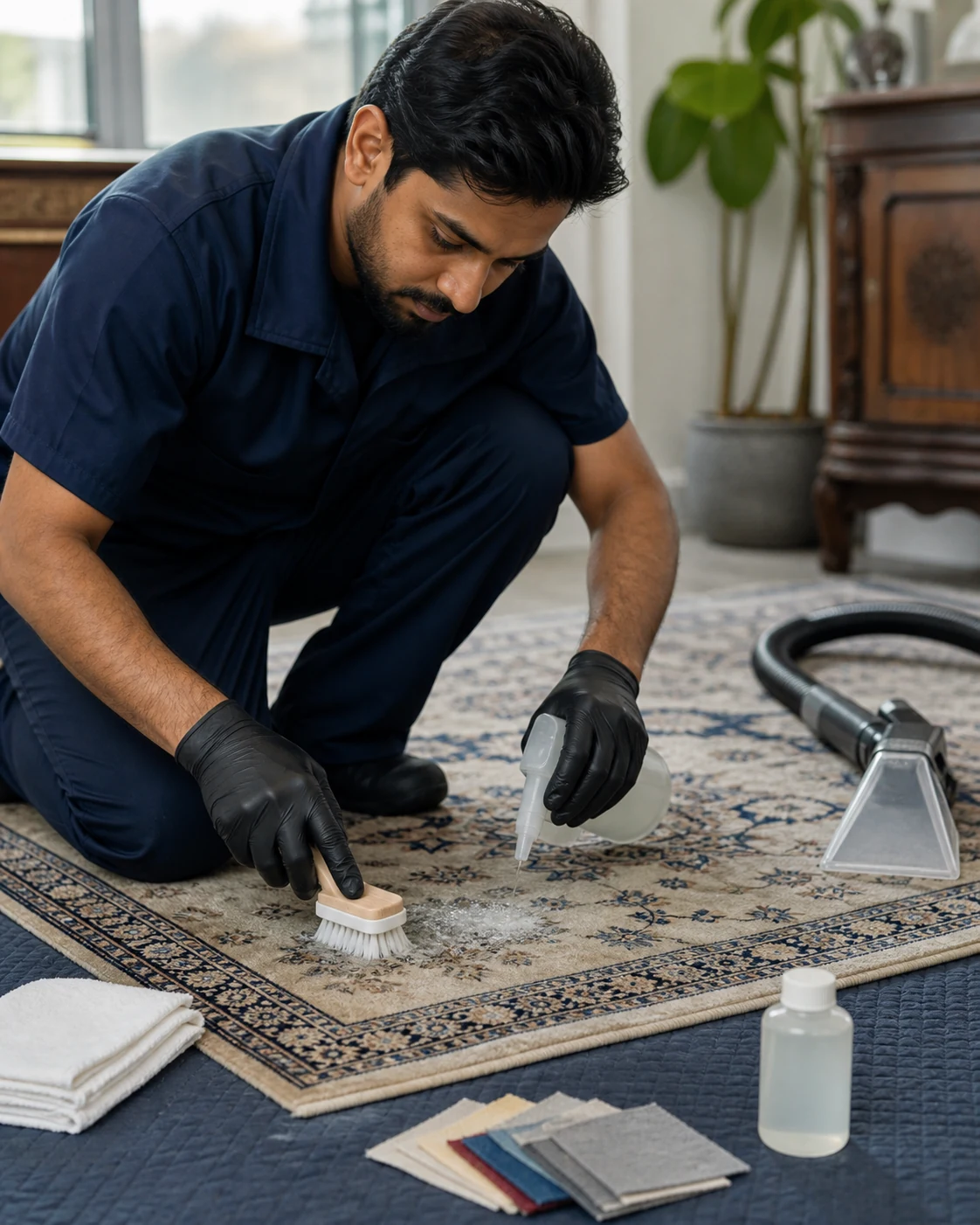
A compatible solution and controlled level of agitation are selected for the assessed rug. Suitable pieces may receive low-moisture or extraction cleaning in consistent sections, while edges and fringe are handled separately. The textile is not flooded in pursuit of an instant visual result. Stain treatment is stopped where additional chemistry or repetition risks dye movement, rings, texture loss or weakening of the construction.
After treatment, the rug is groomed where suitable and positioned for airflow without transferring moisture to vulnerable flooring. Drying varies with fibre, backing, humidity and method, so furniture and foot traffic must wait until it is completely dry. The technician reviews remaining wear, staining or damage and explains aftercare. Cleaning improves removable soil; it cannot restore missing pile, reverse sun fading or guarantee removal of every odour held deep in damaged backing.
Clear pricing
Cost depends on rug dimensions, fibre, construction, condition, stain treatment, handling, access and whether specialist off-site care is required.
| Service scope | Price | What affects the final price |
|---|---|---|
| Small standard household rug | Quoted from photographs | Size, fibre, backing, soil level and in-home access |
| Large or heavily soiled rug | Quoted after assessment | Area, treatment, handling, drying and stain complexity |
| Delicate or specialist rug | Specialist quotation required | Construction, dye stability, collection and conservation route |
Pricing context: A reliable quote requires full-rug and label photographs. High-value, antique or unstable textiles are not priced as routine synthetic rug cleaning.
How the service works
Send dimensions, face, backing, label, edges and stain history.
We assess method, colour risk, handling and realistic limitations.
The rug is treated conservatively and aftercare is explained.
Rug cleaning FAQ
Useful answers about fibres, stains, pets, drying, floors, specialist rugs and pricing.
☎ Call 020 3608 3976No. Fibre, dyes, construction, value and condition determine whether in-home treatment is suitable or specialist off-site care is safer.
No. Stain chemistry, age, previous products, dye loss and fibre damage limit what can be improved safely.
Surface contamination may improve, but urine reaching backing, underlay or flooring can remain and may require deeper specialist treatment or replacement.
Drying depends on fibre, backing, method, humidity and ventilation. Do not replace furniture or use the rug until it is fully dry.
The floor type is considered and moisture is controlled. The rug may need repositioning for drying, especially over timber or delicate finishes.
They require individual assessment and may need a dedicated textile specialist. Routine machinery is not assumed suitable.
Size, fibre, construction, soil, stains, handling, access, drying and any specialist collection route affect the quote.