
Contact areas
Arm ends, seat fronts and a favourite chaise position can show both removable soil and permanent abrasion. Compare them with a sheltered side panel.
Large seating needs a measured plan
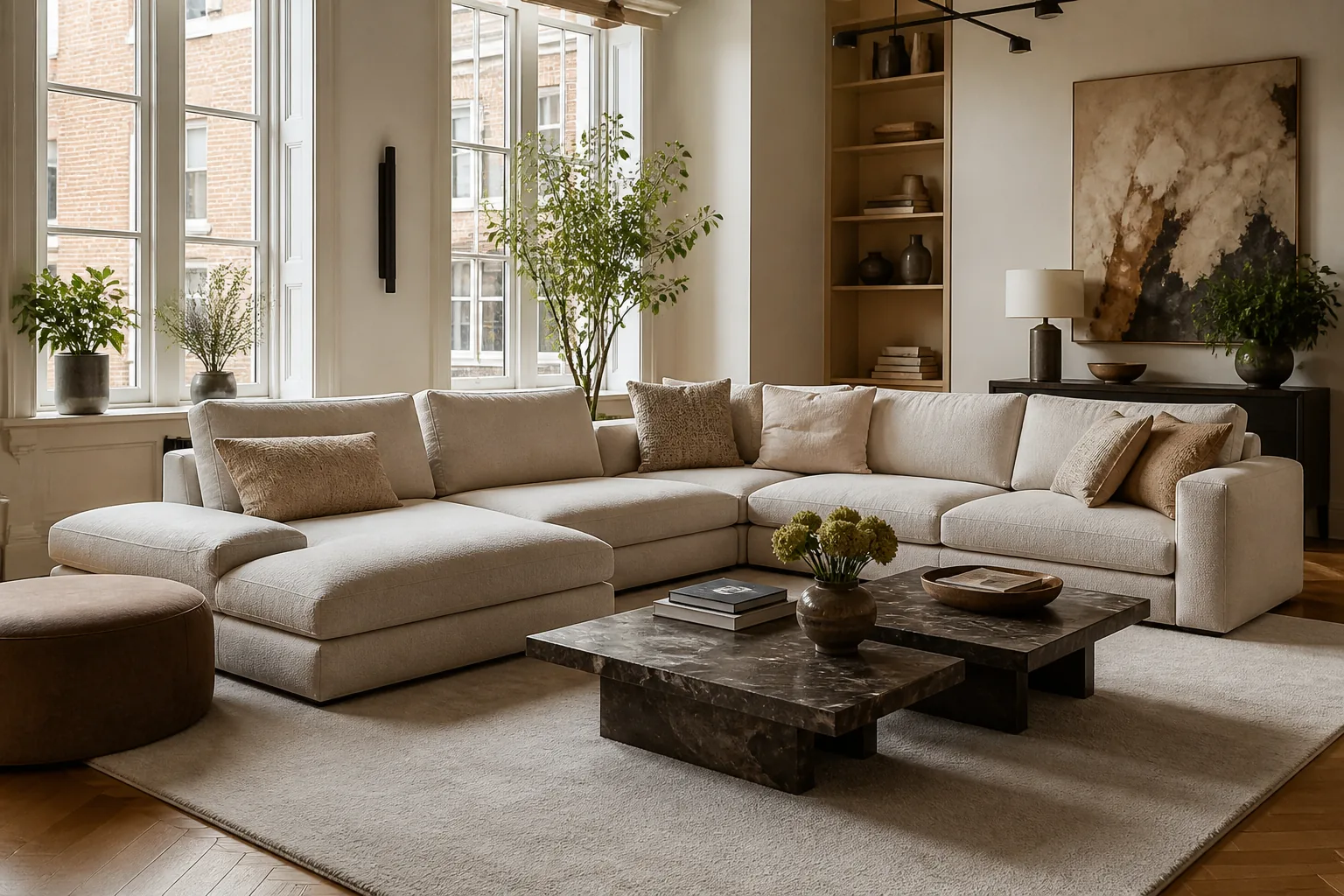
Corner and modular sofas are easier to quote when the photographs show every section, the joining points and the route into the room. We assess the upholstery and present condition before recommending a suitable cleaning approach.
For corner and modular seating
Record every section and joining point
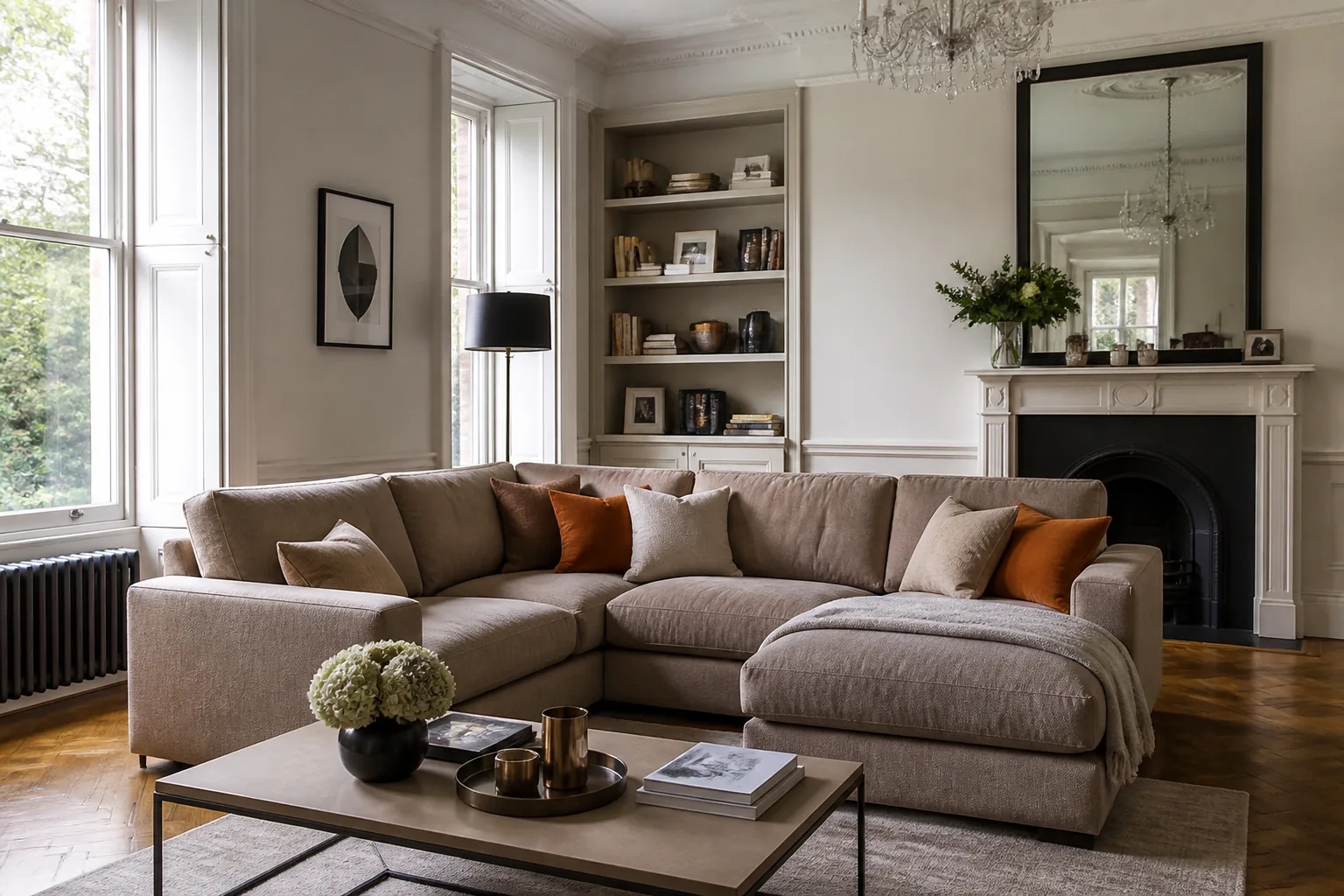
A modular sofa is easier to plan when the layout, connectors and separate cushions are visible. Include the access route if a section may need repositioning.
Configuration first
A fixed corner unit, a detachable chaise and a group of clipped modules are not the same job. The technician needs to know which sides are upholstered, whether sections can be released safely and how many cushion faces are included.
Do not pull modules apart simply for the appointment. Photograph the connectors if they are easily visible and explain whether the manufacturer provides instructions. Powered headrests, charging leads or recliner controls should be identified before anything is moved.
Material and condition
Large sofas may combine the main upholstery with different backing cloth, piping, zip tape or coated trim. A care label is useful, but testing may still be required where colours, finishes or replacement cushions differ.
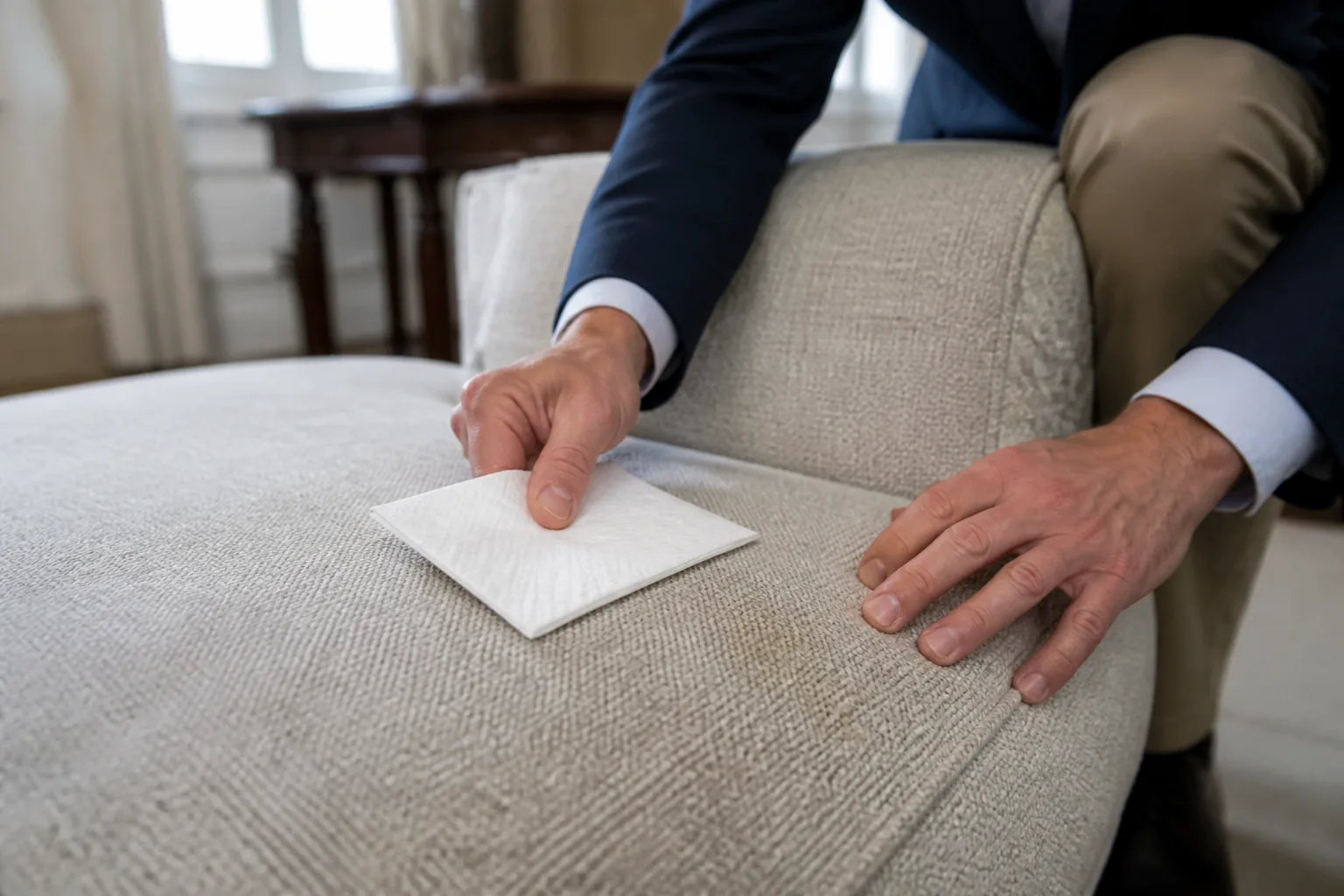
Arm ends, seat fronts and a favourite chaise position can show both removable soil and permanent abrasion. Compare them with a sheltered side panel.
State what was spilled, when it happened and what has already been applied. Old products can leave residue or alter colour.
Hair and suitable surface contamination can be assessed. Odour held within filling may need a separate discussion and is not guaranteed to disappear.
Realistic limits
Cleaning cannot restore missing dye, worn yarn, stretched seams, damaged foam or a faulty mechanism. Some older stains also remain visible after the safest compatible treatment. We distinguish these changes before work wherever the evidence allows.
Current published guide
The range shown on Alesta’s main Sofa Cleaning page is a guide, not a fixed local tariff.
The quotation reflects module count, accessible faces, cushions, upholstery, condition and access. Optional chairs, footstools or specialist requests are listed separately. The agreed price does not promise complete stain removal.
Planning the visit
Greenwich enquiries can concern a house, a converted property or a purpose-built flat. Tell us the floor level, lift availability, stair turns, loading restrictions and the space beside the sofa. These practical details matter more than assumptions about the area.
For an occupied home, arrange a clear working zone and keep children and pets away from equipment and damp upholstery. Delicate timber floors or recently decorated surfaces should be mentioned in advance.
Readiness depends on fabric, filling, applied moisture, room temperature and airflow. Leave cushions arranged as advised, avoid direct heaters and wait for the item-specific return-to-use guidance.
Module survey
Start at the left arm and number the pieces in order: armless seat, corner wedge, chaise, terminal arm and movable ottoman. This inventory prevents an L-shaped photograph from hiding an extra platform or reversible cushion. Note clips, brackets and anti-tip fittings without forcing them. Record any transformer, handset and cable path on a powered section.
Construction changes the working sequence. A centre unit may have exposed upholstery on only one side, while a detachable chaise can have a broad hidden face. Count loose bolsters, headrests and scatter cushions by face. If one module was bought later, say so; a close colour match does not prove identical fibre, dye or protective finish.
Measure the working envelope rather than the room as a whole. Space may be needed to reach rear seams, place hoses without sharp bends and rotate a light section safely. Flag glass tables, low pendants and delicate flooring. After cleaning, keep the numbered arrangement open for airflow until advised, and never reconnect powered furniture while nearby textiles remain damp.
Send a full front view, both ends, the chaise, every module, labels and close photographs of the areas of concern.
No. Leave them assembled unless separation has been agreed and can follow the manufacturer’s instructions safely.
The estimate follows the number of sections, upholstered faces, cushions, materials, condition and practical access.
No. Substance, age, earlier products, dye loss and fibre damage can all restrict the final improvement.
They can be included when counted in the quotation, with the required faces and any contrasting materials identified.
Controls and cables must be disclosed. Cleaning does not include electrical or mechanical repair, dismantling or fault diagnosis.
Describe the floor level, stairs or lift, doorway width, parking or loading restrictions and clearance beside the furniture.
Avoid adding another product. Record previous attempts and leave the affected area available for inspection.
Follow the guidance given after treatment; construction, filling, ventilation and the chosen method all affect drying.
Yes, when requested and quoted separately so that the necessary equipment, method and appointment time can be planned.
