
Furniture
Freestanding sofas, tables, wardrobes and other bulky household pieces.
Collection planning · Wallington
Describe the material, show the full load and explain the route from item to vehicle. Those facts are checked before collection scope or timing is agreed.
Collection sequence For the wider booking boundaries, review Alesta's main waste removal service.
Send photographs and identify material.
Explain communal doors and lift checks, floors and vehicle position.
Confirm the expected work and quotation basis.
The presented load is checked before loading.
Suitable material follows the appropriate disposal route.
Identify the material Bulky household pieces can be assessed separately through the bulky furniture disposal.
Describe every group that is present. Do not place uncertain liquids or unlabelled containers inside an ordinary mixed load.
Freestanding sofas, tables, wardrobes and other bulky household pieces.
Closed bags with their general contents described and unusual weight highlighted.
Cuttings and garden material kept visible and separate where accepted.
Compatible non-hazardous project debris, declared before the quotation.
Make the load visible Declared renovation material should follow the separate renovation waste collection rather than an ordinary mixed load.
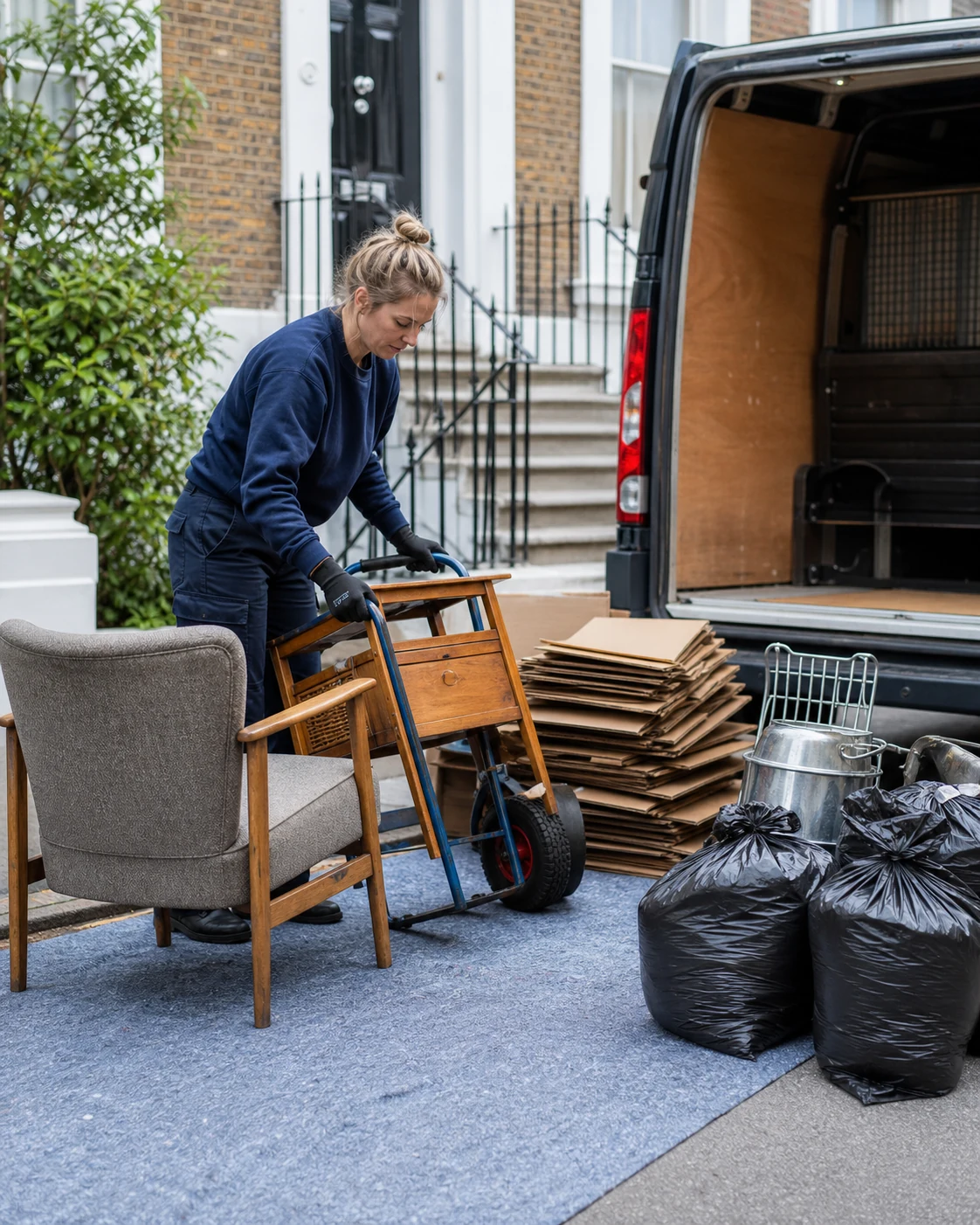
Lay out the Wallington request as a material schedule rather than a string of object names. Give furniture dimensions, count bags by storage area and show outdoor material in its own photograph. State when a sack contains renovation remnants, since its weight may be disproportionate to its size. Whole-scene images establish bulk; close-ups clarify condition, shape and anything requiring special attention. Include items behind other objects and contents waiting in a garage. Once each group has a location and category, the proposed loading plan can reflect both capacity and stability instead of relying on an optimistic photograph of the easiest section.
Access changes the work
Show steps, gates and the distance from door to vehicle.
State the floor, stair turns and shared areas.
Confirm the working size and any booking rule.
Photograph gates, alleys and surface changes.
Use current signs or authority information.
Supply dimensions before dismantling is considered.
Property context in Wallington
Planning in Wallington starts with a simple walk through the property. Choose the largest or heaviest object and trace its real path outside: through internal doors, around corners, down steps and across any front approach. Photograph obstacles from both sides instead of describing access as merely “easy”. For a flat, include the storey and any lift arrangement; for a house, note gates, narrow paths or a long carry. Finish with the present roadside situation, without assuming a space will be waiting.
The inventory should then answer a different set of questions. What is furniture, what is ordinary bagged household material, and what comes from a garden or renovation? How many separate collection points are involved? Are any pieces unusually dense or likely to need agreed dismantling? A coherent Wallington brief connects those answers to the route already recorded. It gives the assessor evidence for labour and capacity while keeping restricted substances visible rather than lost inside a vague mixed-load label.
Material route and limits
Reusable and recyclable material is separated where practical. The actual route depends on what is presented, so no fixed recycling percentage is promised.
Asbestos, chemicals, clinical waste, gas cylinders and unidentified containers are not ordinary mixed waste. Unknown liquids, paints, solvents, fuel and refrigerants must be declared before any collection is discussed.
Quotation basis
There is no meaningful district price for an unseen clearance. Assessment combines the amount and nature of the material with its weight, the crew effort and relevant disposal charges. The route contributes its own factors: floors, stairs, lift use, distance to the vehicle and current parking conditions. Previously agreed dismantling may add work as well. If the collection shown on arrival differs from the submitted Wallington record, the original calculation may no longer apply. Reporting changes early is the clearest way to keep the quotation tied to reality.
Before the team arrives
Place no new object into the agreed group without reporting it. Empty personal belongings from furniture and label bags whose contents are not visually apparent. Keep doors, paths and stairs clear, then recheck any lift or controlled entrance mentioned during assessment. Confirm permission to remove material from shared ground. Unknown liquids, cylinders and other restricted categories must be identified separately. A last comparison with the photographs helps expose changes while there is still time to review them.
Questions for this collection
Usually not. A single angle can hide bags, distort scale or omit material behind furniture. Provide a wide view of the full group, closer pictures of heavy or unusual pieces, and another image showing the route towards the likely loading position.
Mention internal steps, narrow doorways, gates, front paths and the approximate carry to the road. Describe the current stopping conditions as well. These facts help assess manual effort and vehicle position without treating a residential address as automatic kerbside access.
Photograph the two locations independently and give each a short inventory. Explain any outdoor path, locked door or step between the garage and vehicle. Combining their totals is fine only after both sections are visible and their material types are declared.
Bags vary in size, content and weight. Light household belongings do not present the same handling demands as dense project remnants. Pair the count with images and identify anything sharp, unusually heavy or unknown so the assessment reflects what will actually be lifted.
It may. Undeclared additions can exceed the space or safe weight allowed in the original plan. The team must compare the waiting material with the Wallington brief, and a revised scope or further journey may be necessary instead of overloading.
Reusable or recyclable material may be separated where practical in Wallington, but no fixed percentage is promised. Condition and material influence the suitable route. Describe each item honestly so decisions can follow what is collected rather than an unsupported expectation.
Yes, confirm that you own the contents or hold authority to arrange their removal. Shared areas can contain property belonging to other residents or a manager. Clear responsibility avoids uncertainty when the collectors attend the Wallington address.
Notify the team as soon as the expected vehicle position becomes unavailable or restrictions differ from the original information. Carrying distance and labour can change with it. Current verified conditions are more useful than a space remembered from a previous day.
Collection area
Use the map to identify the collection address and describe the actual vehicle approach. Current access restrictions still need to be checked for the proposed date.
Return to the Waste Removal Services hub for the service scope.
