
Furniture that sets a limit
Show the top of the console and any object that must remain beneath the panel. Those constraints should be considered with the usual seated eye line.
Leyton · Home technology, considered
Make the fixed position count
A fixed TV bracket in Leyton should begin with a settled viewing position. With little adjustment available afterwards, height, horizontal centre and rear access deserve attention before drilling.
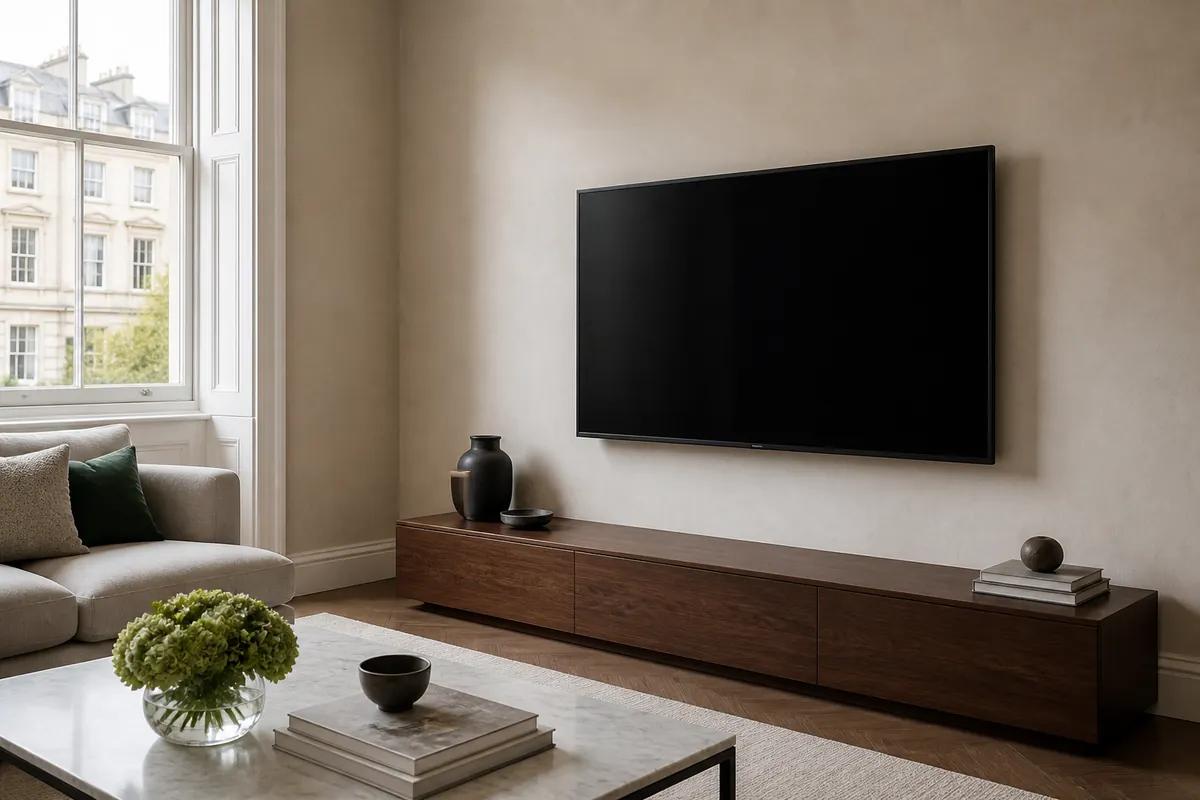
The room after installation
An empty room can hide problems that furniture introduces later. Use the diagram to organise the discussion, then provide the intended layout for the final height and centre decision.
Show the top of the console and any object that must remain beneath the panel. Those constraints should be considered with the usual seated eye line.
Explain whether glare is occasional or affects normal viewing. A moving mount may offer options, but the room arrangement still needs thought.
Furniture beside the television may need room to open or be serviced. Check those actions with the full screen outline, not the bracket alone.
Provide device locations and identify leads you regularly disconnect. Access to those connections can influence the bracket and cable arrangement.
Fireplaces need their own decision
Before choosing an above-fireplace position, assess the structure, heat, flue and hidden services. The screen’s manufacturer requirements must be considered with the actual conditions.
A technically possible point may still give a poor seated view. Discuss whether moving the television beside the feature would provide a workable lower position and clearer cable route.
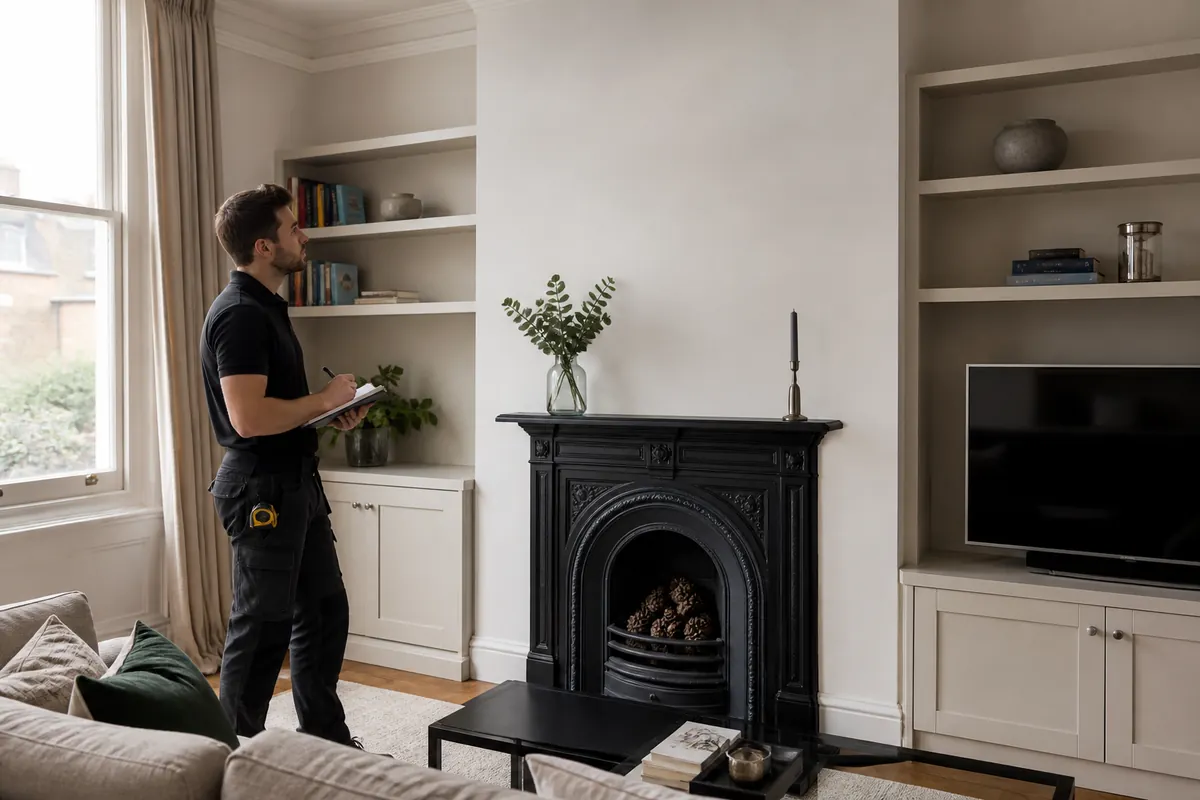
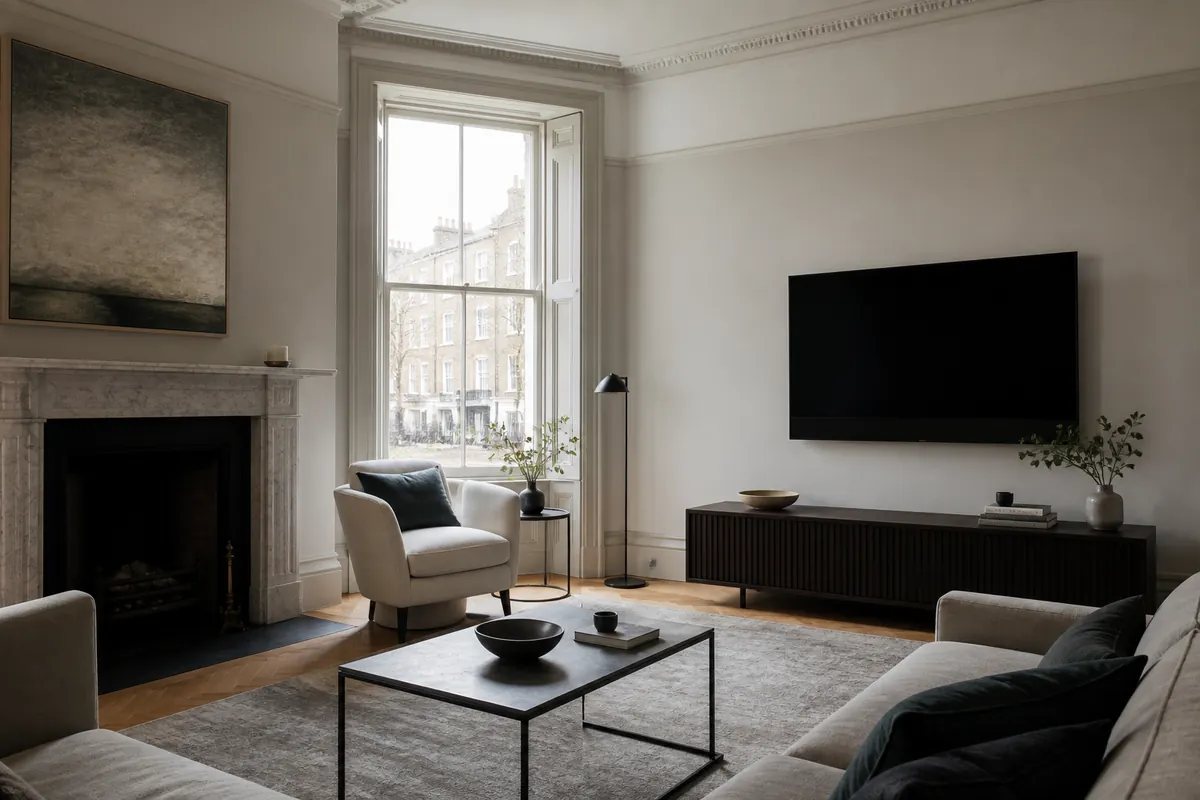
Leyton / room by room
If the sofa sits off-centre, point that out in a room photograph. Aligning the panel with the middle of the wall can produce a different result from aligning it with the main viewer.
A close fit against the wall should still accommodate the specified connectors. Provide the model number and identify rear-facing plugs before choosing a bracket purely for its advertised slimness.
Describe your Leyton installation ↗A mounting system, not isolated parts
A suitable screen mount still depends on appropriate fixings and a workable location. Assess the load path and connection access rather than approving each item in isolation.
| Factor | What is checked | Why it matters |
|---|---|---|
| TV | Model-specific weight, VESA and lifting guidance | Establishes what the bracket and handling method must suit. |
| Bracket | Correct TV fasteners, spacers and rated movement | Avoids assuming any bolt kit or size range will do. |
| Wall | Verified support and assessment of hidden pipes or cables | Allows an appropriate fixing approach for that construction. |
| Position | Seated view, furniture limits and required access | Checks that the proposed centre works for the actual room. |
| Cables | Connection reach and slack during the intended adjustment | Keeps adjustment from tugging on plugs and device ports. |
Make the quotation specific
A useful request combines the screen label, bracket specification, whole-wall view and postcode. Add the devices to connect and explain any constraints on entry or working room.
The price follows the assessed support, parts and handling plan. Separate optional work from the essential mounting so changes to the brief can be discussed clearly.
Request my mounting quote ↗| Installation | Pricing | Main variables |
|---|---|---|
| Standard fixed-bracket mounting | Quote after assessment | The intended fixed view and the assessed screen, bracket and wall. |
| Large TV / full-motion bracket | Quote after assessment | Screen handling, extended-arm support and available installation space. |
| Mounting + additional cable / electrical work | Detailed quote | Agreed cable method, electrical tasks and repair expectations. |
Plan the property visit
Send the postcode and describe the permitted arrival arrangements. Identify any entry booking, stairs or lift limits, plus fixed obstacles on the route. Confirm arrangements with the relevant building contact where needed before the visit is agreed.
For the wider service scope, see TV mounting in London .
From idea to specification
A fixed screen and a moving arm put different demands on position, clearance and support. Choose the intended arrangement, then include your actual TV, wall information and preferred cable finish for review.
This tool outlines the brief, not the final installation design.
Your setup brief
Small screen · Fixed bracket · Masonry wall · Visible cables.
Send this setup by email ↗Need a new socket? Plan the electrical work separately
Understand the backing
A new paint finish can cover an old wall, a lining or a recent partition. Share the construction history you know and identify areas where the information is uncertain.
Masonry fixing depends on reaching suitable material with an appropriate assessed system. Surface plaster and the presence of an old television do not establish that system.
For board construction, suitable structural support must be verified. The television’s weight and bracket movement form part of that check, not just the panel’s advertised size.
A timber-framed wall needs more than locating a single member. Soundness, plate geometry and suitable fixing points all influence whether the intended arrangement works.
Show joints, edges and the overall specialist finish in photographs. The way a facing is attached can matter along with the practical difficulty of drilling it.
Do not open up the wall merely to answer an enquiry question. Explain what is unknown so any further investigation can be considered safely within the assessment.
Service detection is one aid with limits, not permission to drill anywhere else. Other evidence about concealed pipes and wiring remains relevant to the decision.
Specify, then select
Send the TV’s full reference and any bracket already supplied. Model-specific information helps distinguish a genuine fit from an advertised range that appears suitable.
A heavier or awkwardly shaped television can change the handling requirement even when the existing room position stays. Describe stairs and preparation access before the installation is priced.
VESA fit does not approve the wall, and a strong wall does not approve the bracket. The rated load, attachment parts and assessed fixings must suit the same proposed arrangement.
| Bracket | Best suited for | Movement | Key consideration |
|---|---|---|---|
| Fixed | A consistent watching direction and a low wall profile | Minimal | Rear service access deserves attention with a close-fitting mount. |
| Tilt | A viewing setup needing vertical angle control | Vertical adjustment | The angle range must work with the real panel dimensions. |
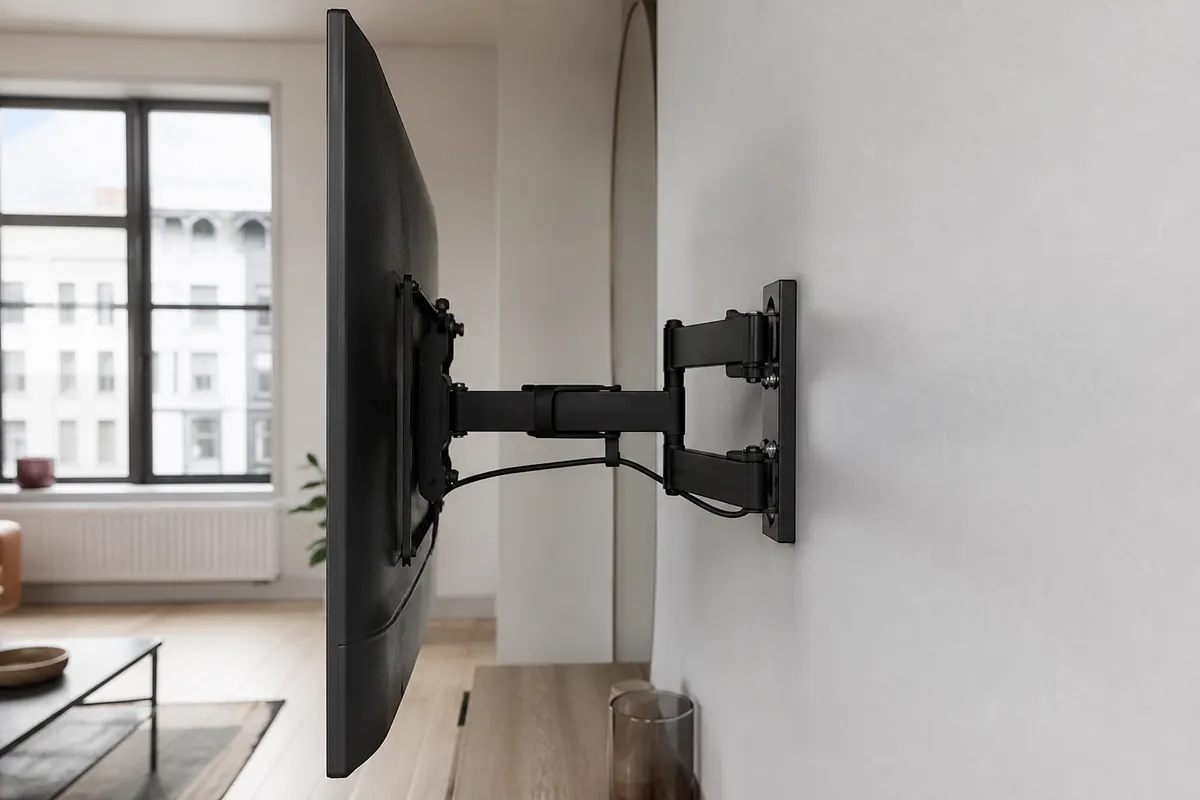
| Full motion | A normal resting position plus another useful view | Extend and swivel | The stored depth and extended load both need consideration. |
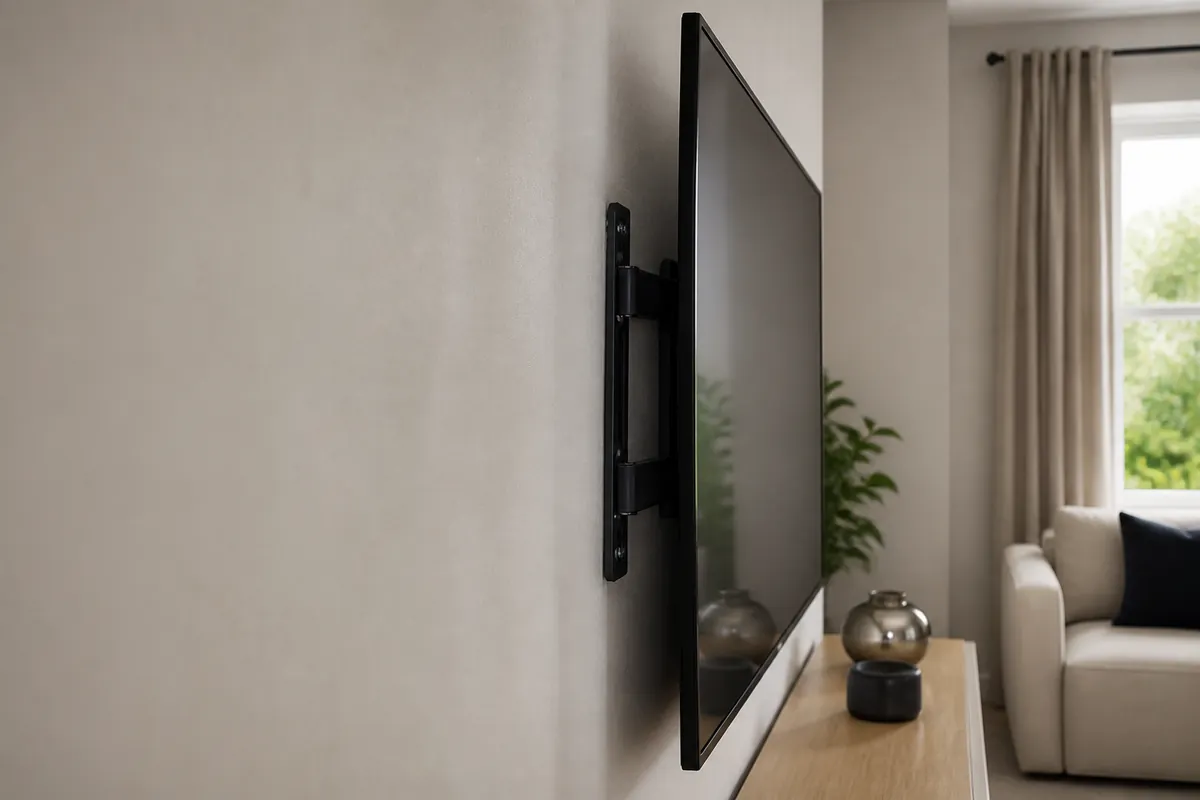
The finish needs a defined scope
A lead tucked behind furniture, a surface channel and an in-wall route are different arrangements. Use the illustration to describe your preference, not to assume the work required.
List power and signal connections separately, including the equipment at each end. Surface organisation can be agreed with mounting; in-wall routing and the associated decorative repairs require additional assessment and agreement.
An extra power point is a separate electrical task. Putting ordinary mains flex into the wall does not replace the need for an appropriate electrical installation.
Discuss a new socketThe visual comparison is illustrative and is not presented as a customer case study.
Scope before booking
Describe them with the mounting request so assessment can distinguish the main installation from removals, specialist finishes, cable alterations or electrical work.
It assists the assessment but cannot guarantee detection of every concealed service. Wall information and other evidence remain important.
The bracket still needs the right VESA, capacity and attachment parts. The wall and fixing arrangement must also be suitable.
No. Product quality does not establish the condition or capacity of the supporting wall or its fixing points.
The intended travel needs to be checked with the connected leads and nearby furniture, allowing movement without strained ports.
Heat, chimney or flue, support, services, manufacturer requirements and the seated view all matter to the decision.
It can impose a clearance constraint. Show it open and discuss the resulting view before accepting that height.
Tell us how the screen is stored and what needs moving. Preparation and handling requirements should be agreed for the actual starting condition.
Installation with clear checkpoints
Provide model information, wall views, postcode and any additional tasks requested.
Review material, condition and hidden services before choosing a fixing strategy.
Verify rating, VESA and attachment parts, including bolts and spacers appropriate to the panel.
Agree the height and centre from the intended seat with the final furniture layout available.
Use the assessed fixings and confirm the plate’s position and level.
Follow the handling plan, engage the screen and check all applicable locking features.
Make the agreed accessible connections and review the leads through the intended bracket movement.
Check basic function and alignment and explain how to use the adjustment safely.
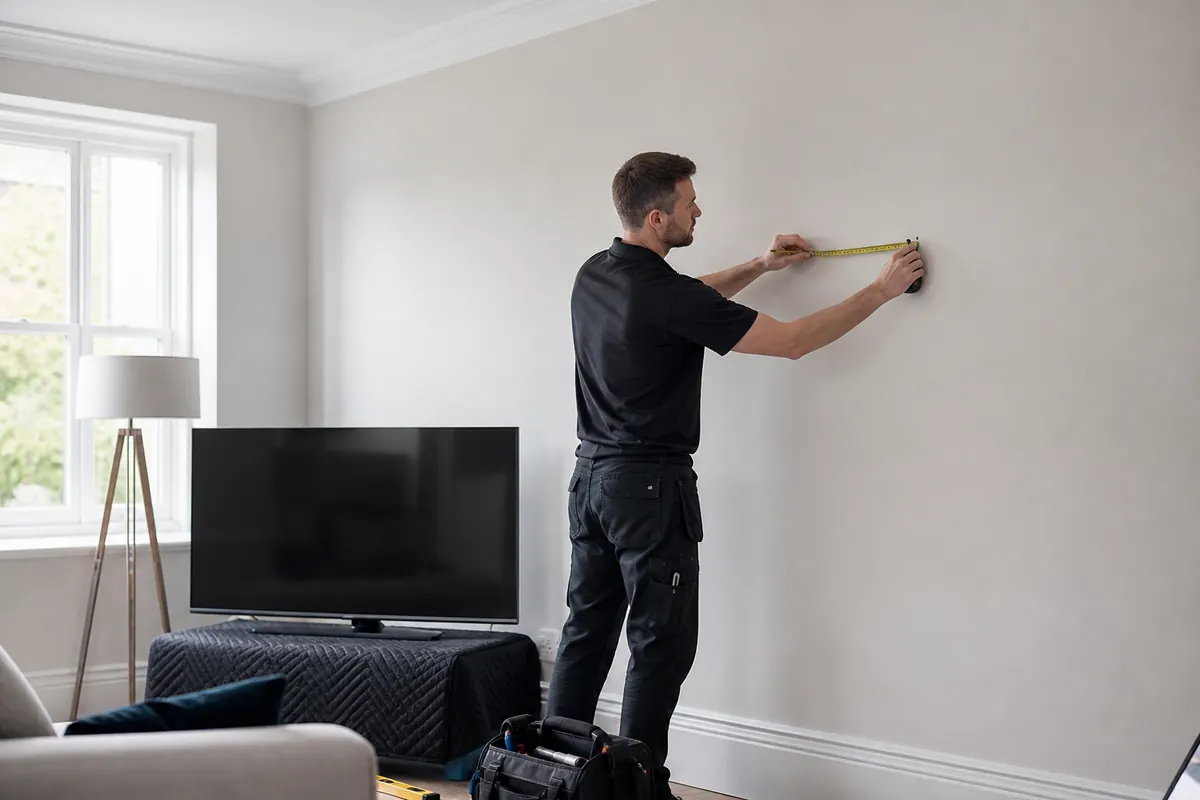
A complete enquiry assembled.
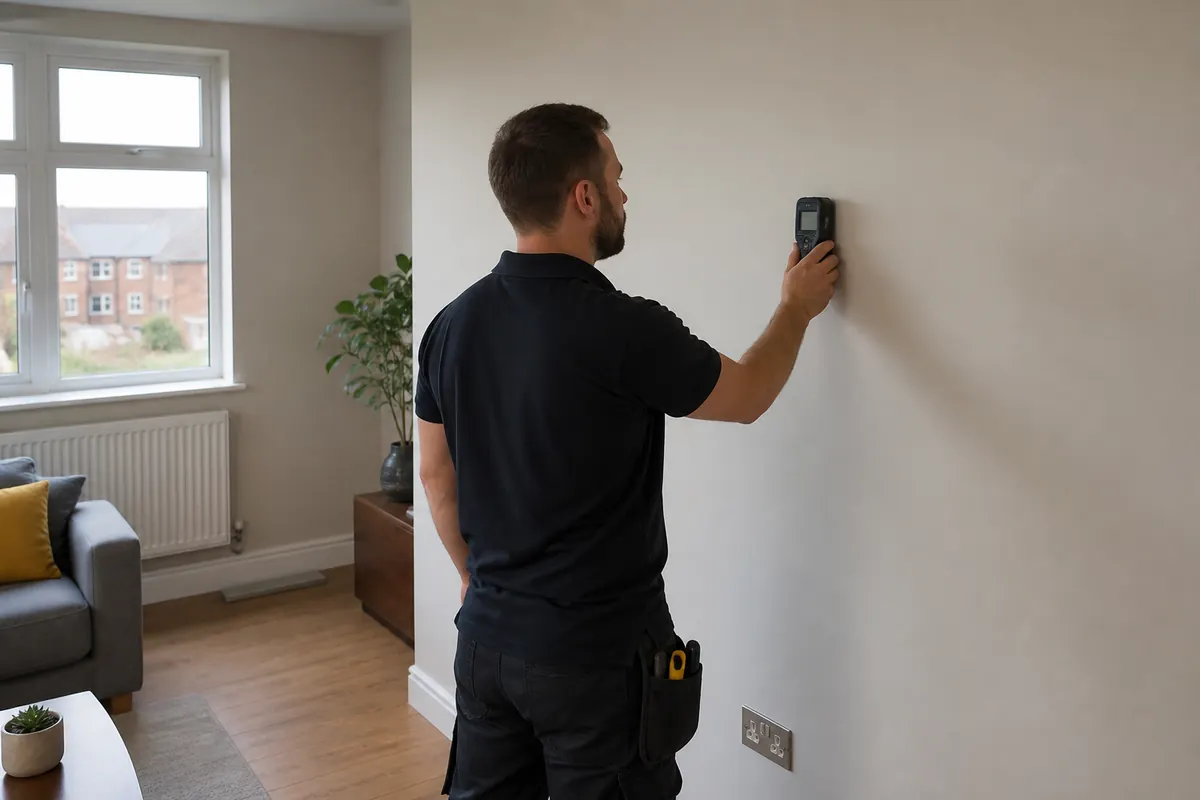
The assessed wall and viewing plan.
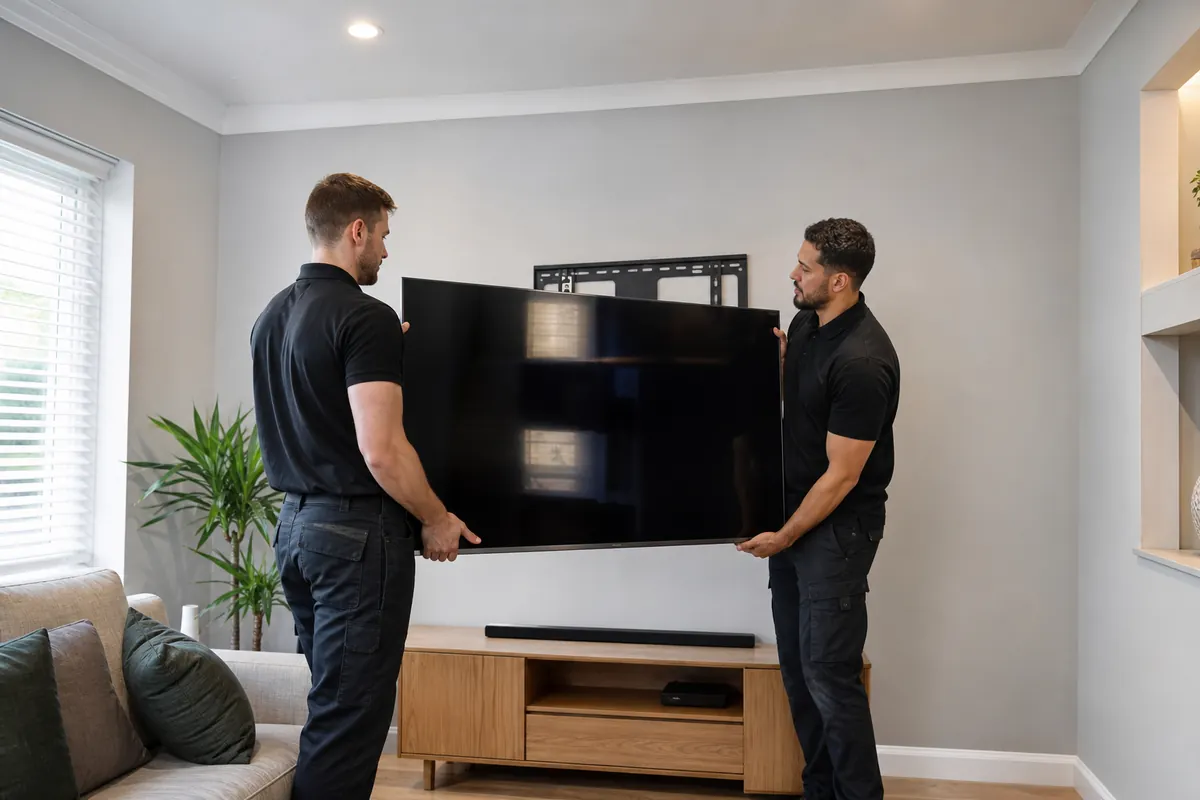
Supported mounting rather than an improvised lift.
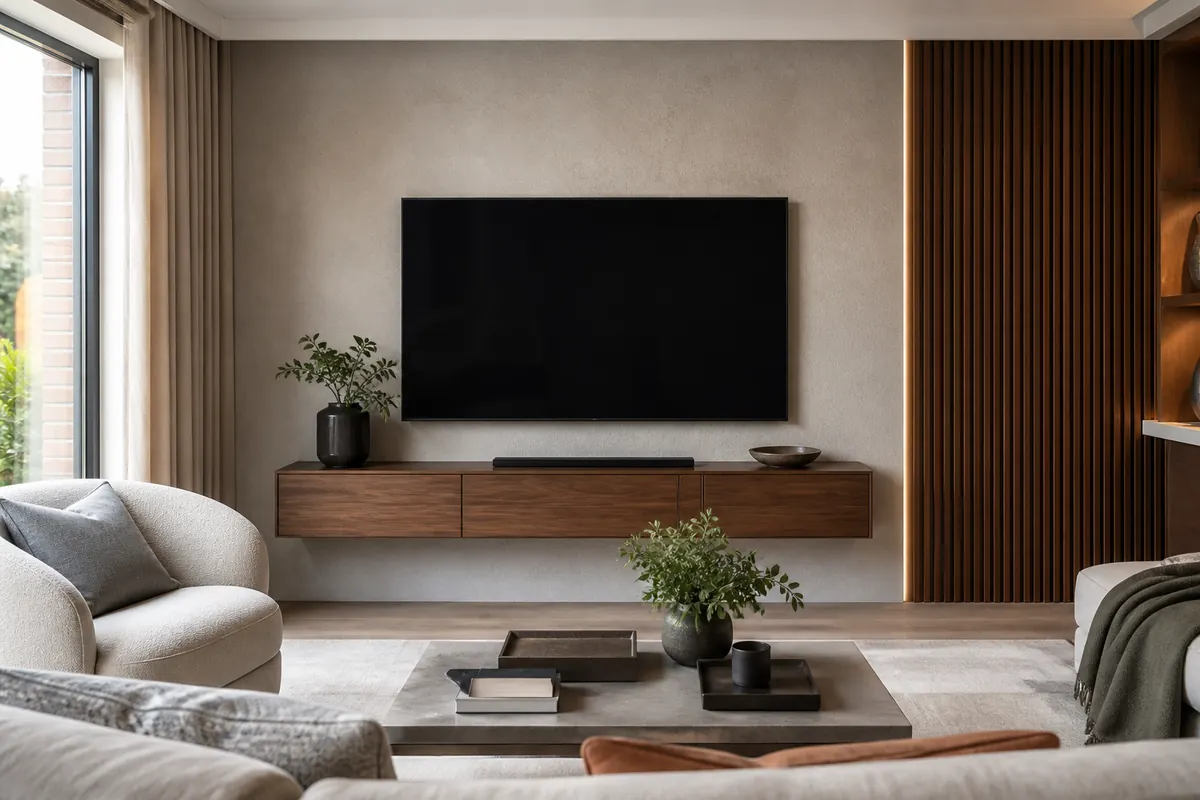
Practical checks with the screen connected.
Illustrative stages shown in different interiors, not one documented customer installation.
The actual building conditions
Assessment concerns the particular wall, screen and access route. A conversion, newer apartment or family house can each contain construction that needs further investigation.
Mention shared entry, loading rules and the available carrying route. Large panels may need extra planning at doors and lift openings.
Photograph fireplaces, wall detailing and any specialist finish. Say what is known about later alterations without guessing what lies behind the surface.
Construction drawings or relevant building information can assist. A clean surface or new decoration does not settle fixing suitability.
For a house installation, identify the floor and starting point of the panel. Include stairs and the area available to prepare the TV.
Confirm requirements separately where the screen is intended for a workplace or another non-domestic environment.
Practical details
A concealed signal route and an electrical power point are different tasks. Explain each desired change so construction, electrical requirements and making good can be assessed and agreed separately.
That should not be treated as a shortcut to a hidden finish. Appropriate electrical provision must be considered; burying ordinary mains flex is not a substitute for a correctly planned installation.
Specify it when requesting the quote, including the preferred path. Accessible connection and a neatly managed surface route have different work requirements from opening the wall for concealment.
Show the accessible space and explain whether panels or units can be moved. A route hidden from view still needs practical access and suitability; it should not be assumed from the furniture’s appearance.
It can, depending on device location and the agreed bracket travel. The connection needs enough usable allowance without strain, so assess the route with the screen in its intended positions.
Agree that responsibility and finish explicitly before work is booked. Access openings, repair and decoration are separate elements of a concealment proposal, not automatic consequences of a TV mounting request.
Mention the soundbar and its location with the other devices. Any mounting hardware, extra connections or concealed routing should be included in the defined scope rather than presumed.
That depends on the TV’s port orientation, connector size and bracket arrangement. Explain which connections you expect to change regularly before selecting a mount chiefly for its shallow profile.
Yes, provide a simple description or photograph showing both. That helps identify which connections can remain accessible and which requested changes require additional routing or electrical work.
No. A practical route does not establish structural support or remove hidden-service risks. The wall and fixing arrangement need assessment independently of the desired cable appearance.
The room comes first
For a fixed TV mount in Leyton, agree the screen centre, wall suitability and connection access before drilling. Fewer moving parts do not remove the need to match the bracket and television properly. Include the exact TV and bracket models, wall photographs and postcode. Identify any additional work you want separately assessed.
