
Height from the usual seat
Have the normal seating position available when height is discussed. If the furniture must be cleared for work, record its finished location first.
Walthamstow · Home technology, considered
Define where the screen rests and where it turns
For a flexible Walthamstow TV setup, describe two things: the everyday resting position and the additional view you want. Movement is useful only when the room and support can accommodate it.
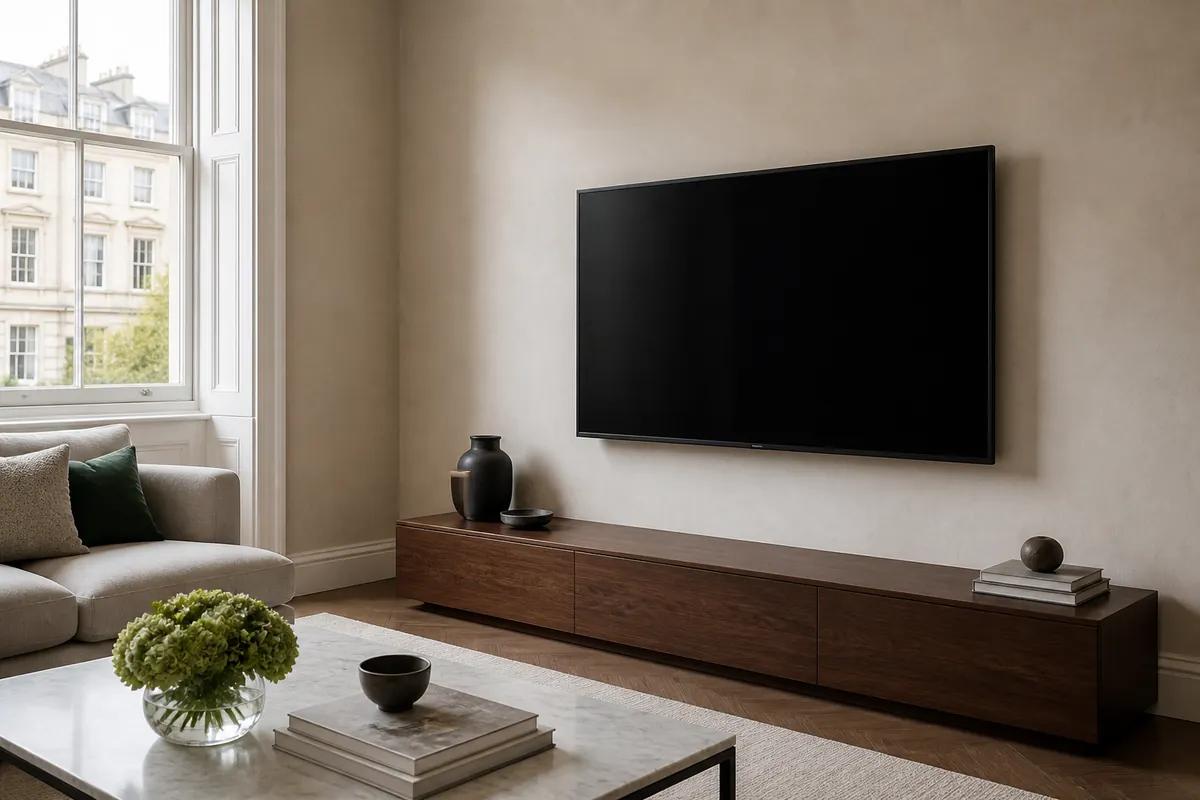
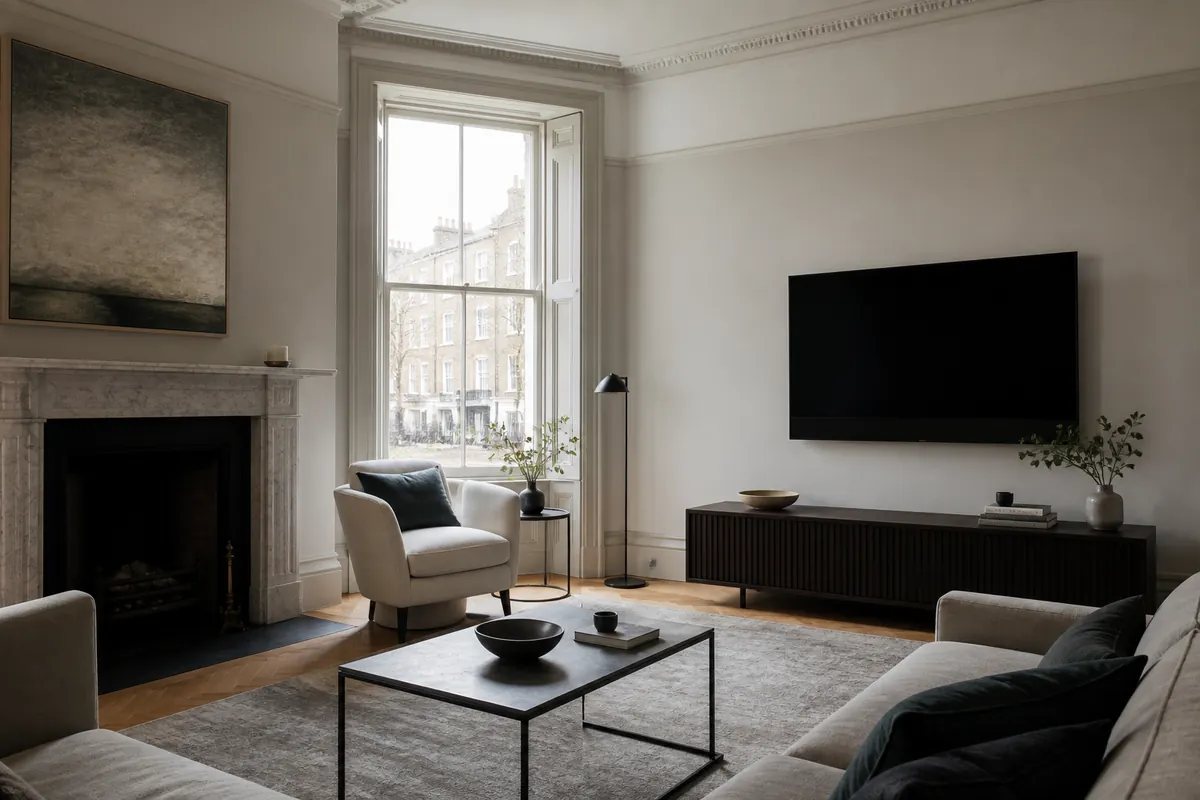
Walthamstow / room by room
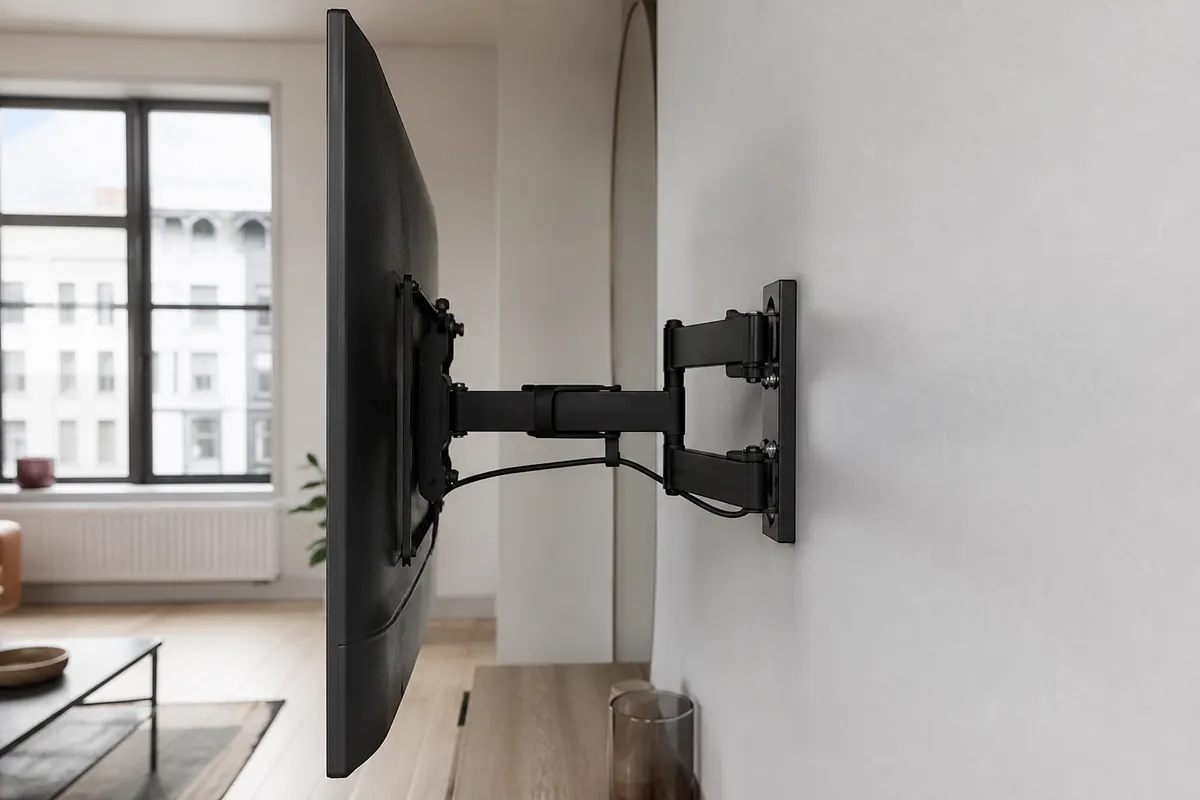
If the screen will turn towards a dining table, include the table and intervening furniture in the room view. The end position is not the only clearance check; the panel must travel between positions.
Consider the arm when folded, too. Its stored depth and the location of the screen edges should not unnecessarily crowd a route through the room or prevent nearby storage from opening.
Describe your Walthamstow installation ↗Make the position deliberate
The plan view is illustrative and cannot set measurements for your installation. Use it to explain your watching position, furniture and the direction any screen movement should serve.
Have the normal seating position available when height is discussed. If the furniture must be cleared for work, record its finished location first.
Show reflective light sources in a wider picture. Choosing the screen wall without that context may leave a problem that bracket adjustment cannot solve.
Check shelves, cabinet fronts and the route past the television. An extending screen needs a practical space to occupy, not merely a compatible arm.
Include the equipment’s planned home and all visible fittings near the wall. Any relocation of power should be assessed as electrical work.
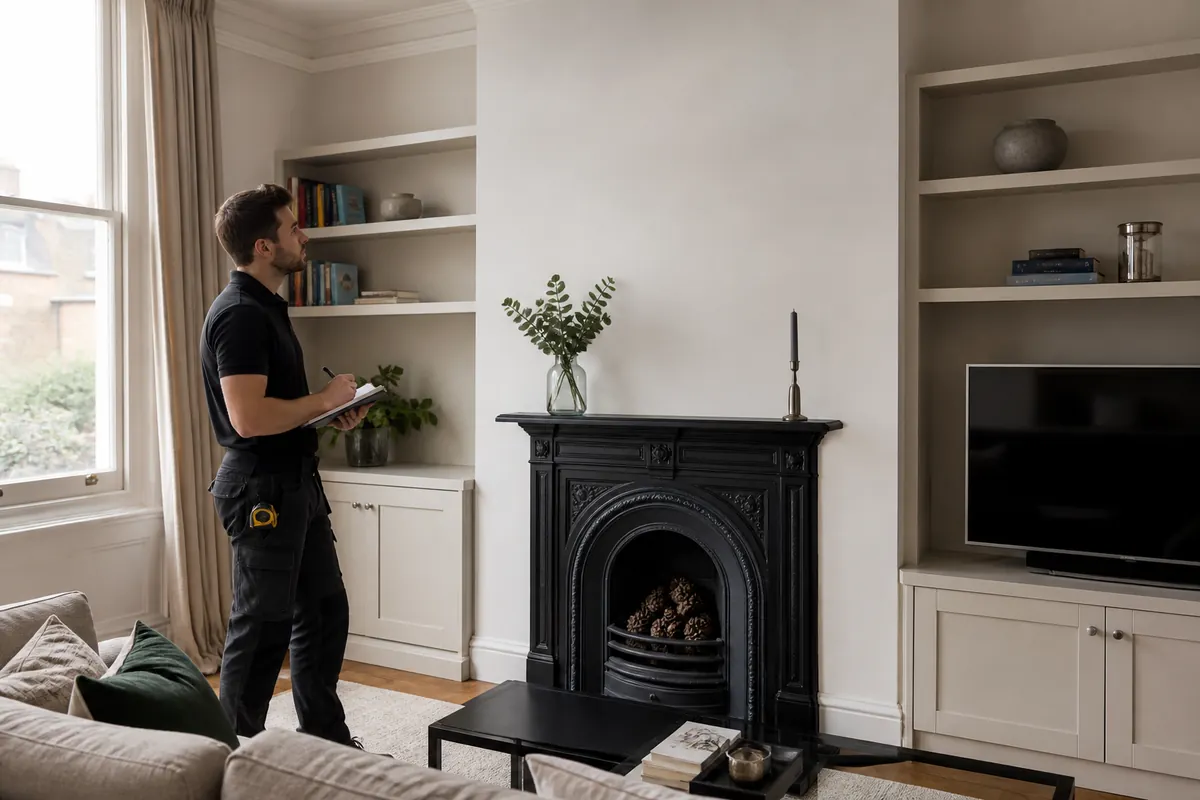
A separate above-fireplace assessment
Heat exposure and chimney or flue conditions may rule out a fireplace location even if the screen fits visually. Support and concealed-service risks also need to be assessed.
The remaining question is whether the viewer can use that height comfortably. Consider an adjacent position when necessary, with cable treatment and any finishing changes described explicitly.
Let assessment set the fixing plan
Wall mounting should begin with evidence about construction and condition. Keep an alternative location in mind if the desired centre or bracket movement cannot be supported safely.
A masonry description does not tell us the condition at each proposed fixing point. The installer must assess the substrate and select an appropriate fixing approach for the load.
A boarded surface may conceal several different assemblies. Suitable support has to be established before approving the screen, especially where an arm will bring it forward.
Known framing information helps, but it still needs to fit the actual wall plate and screen position. The selected fixings must suit the assessed structural timber.
Stone, tiles and decorative coverings should be declared in advance. A suitable wall behind them does not remove the separate drilling and finishing considerations.
Unknown support can affect cost, position and whether the work proceeds. A realistic enquiry makes those checks explicit instead of treating every blank wall as equivalent.
The absence of a detector alert is not proof that no services are present. Concealed routes need a reasoned assessment before the mounting points are agreed.
Decisions before execution
Share both model references and photographs showing the whole working area.
Assess construction and concealed-service risk with the preferred position still open to revision.
Check TV mass, VESA, mount rating and the correct fasteners and spacers.
Use the actual screen outline and intended seating to settle centre and height.
Apply the fixing method supported by the assessment and verify alignment.
Use sufficient handling support and confirm that the screen is retained as the bracket requires.
Connect accessible equipment and leave the leads suitable for the agreed travel.
Review basic use, level and movement and explain the finished access and adjustment arrangements.
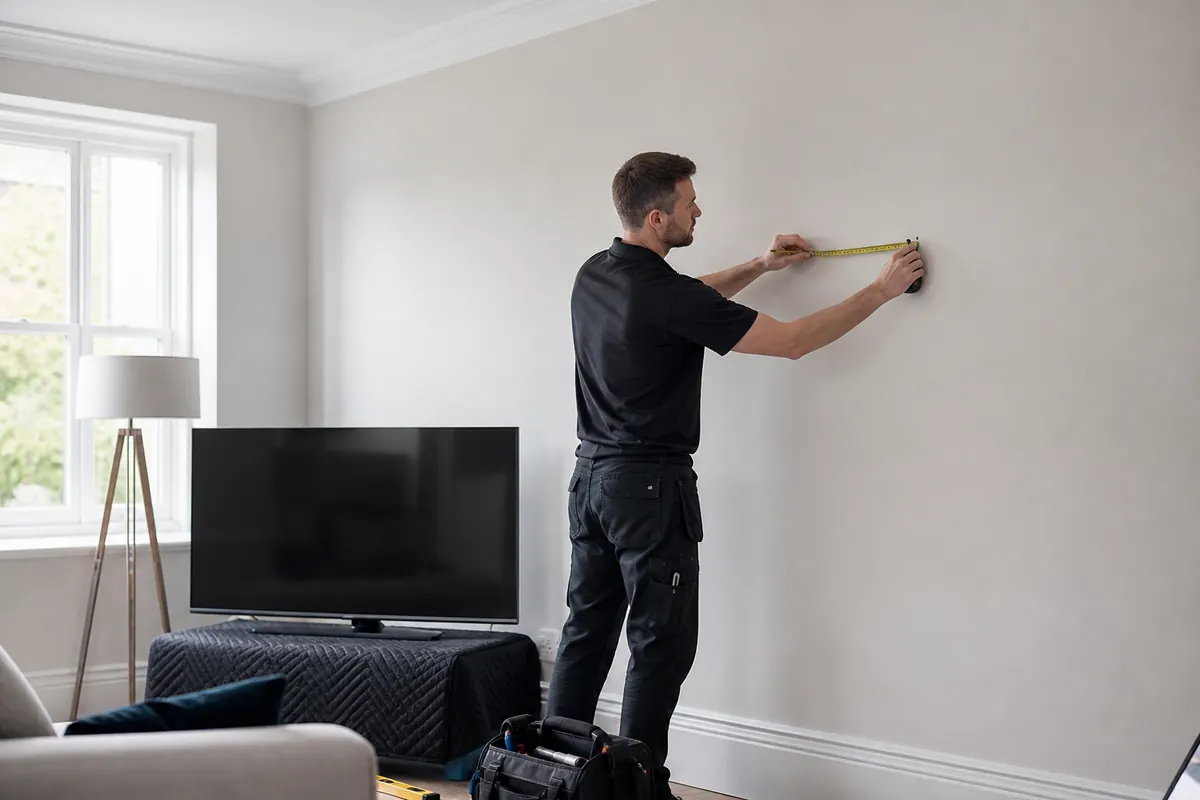
Models and room conditions recorded.
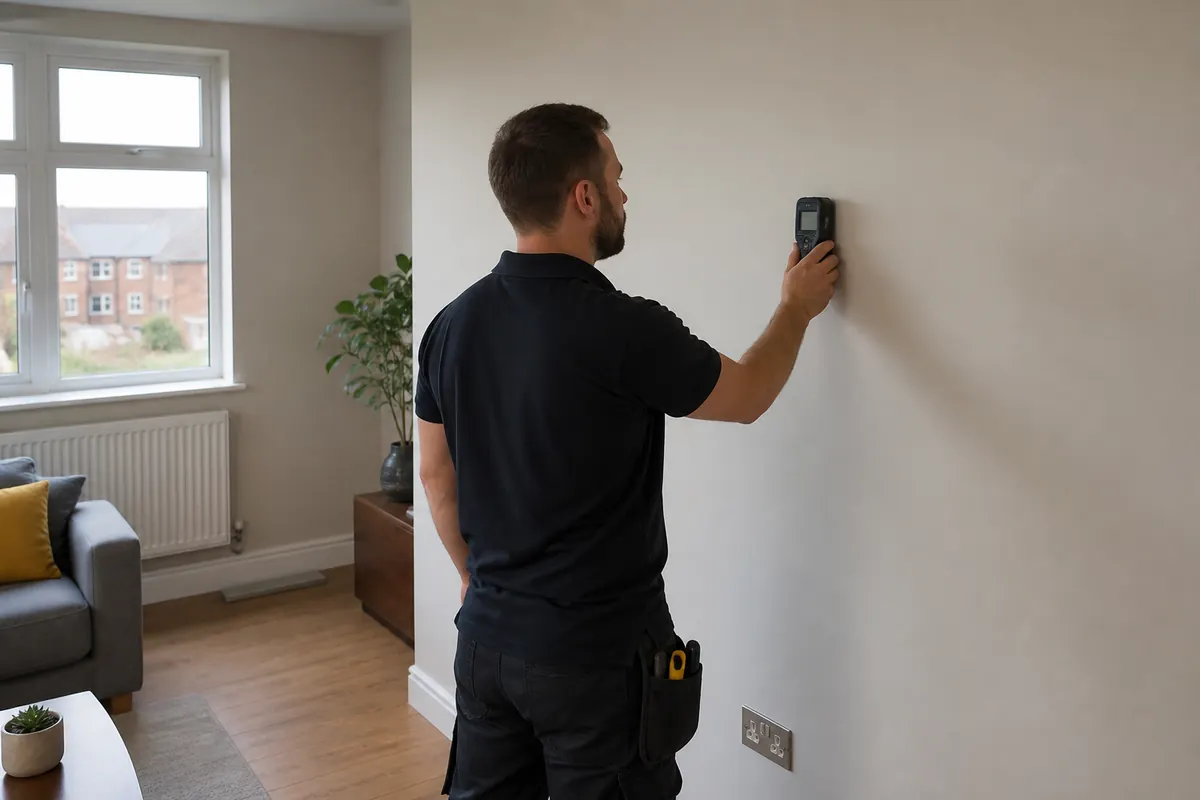
The support strategy reviewed.
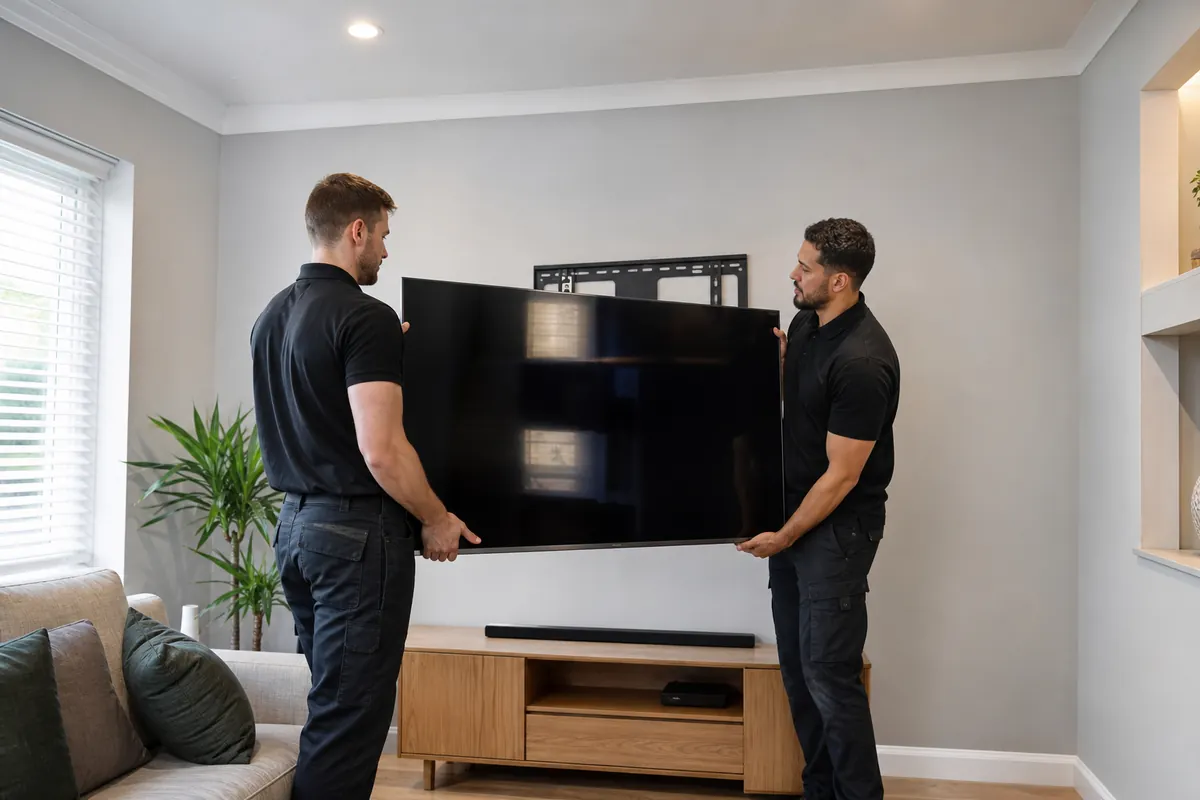
The mounted panel checked for retention.
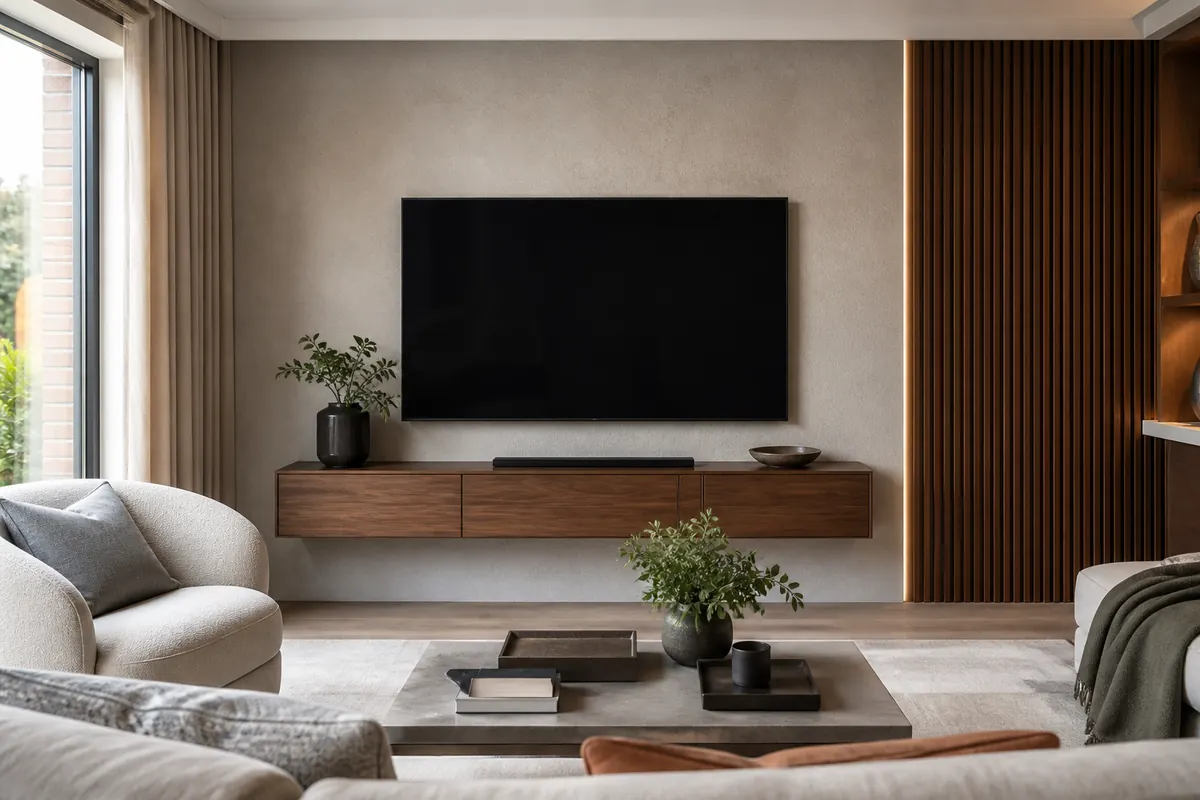
The agreed finish and use discussed.
Illustrative stages shown in different interiors, not one documented customer installation.
A defined installation result
Include model references and clear photographs with the full postcode. Describe the desired position and cable appearance, plus anything that makes moving or preparing the screen difficult.
Assessment may change the bracket, location or work required. Ask for the agreed scope to identify additional electrical, concealment and making-good tasks instead of folding them into a general mounting assumption.
Request my mounting quote ↗| Installation | Pricing | Main variables |
|---|---|---|
| Standard fixed-bracket mounting | Quote after assessment | Screen compatibility, supporting material and fixed-position accuracy. |
| Large TV / full-motion bracket | Quote after assessment | Load and leverage alongside the team’s handling and access needs. |
| Mounting + additional cable / electrical work | Detailed quote | The actual routing work and separately agreed electrical and finish changes. |
Information before installation
Alongside these choices, mention any old bracket removal, restricted access or new electrical point you want considered. An assessed quote should distinguish the mounting itself from extra tasks needed to finish the room.
A setup selection is not a promise that the proposed wall is suitable.
Your setup brief
Small screen · Fixed bracket · Masonry wall · Visible cables.
Send this setup by email ↗Need a new socket? Plan the electrical work separately
Make the screen specification useful
The rear mounting pattern and port layout may matter as much as the visible width. Provide the exact model and manufacturer weight before compatibility is confirmed.
A large screen can make a narrow landing, lift doorway or fixed console significant to the work. Show those restrictions rather than assuming the final wall photograph explains the handling needs.
The television, bracket and assessed wall form one supported arrangement. Check VESA, capacity and fixing suitability together, including the extra leverage of an extending mount.
| Bracket | Best suited for | Movement | Key consideration |
|---|---|---|---|
| Fixed | A viewing centre unlikely to change | Minimal | Confirm both visual alignment and accessible connections. |
| Tilt | An agreed position benefiting from vertical tilt | Vertical adjustment | Check comfort without using tilt to justify an excessively high screen. |
| Full motion | A room needing controlled extension or rotation | Extend and swivel | Lead routing and structural support must remain suitable as it moves. |
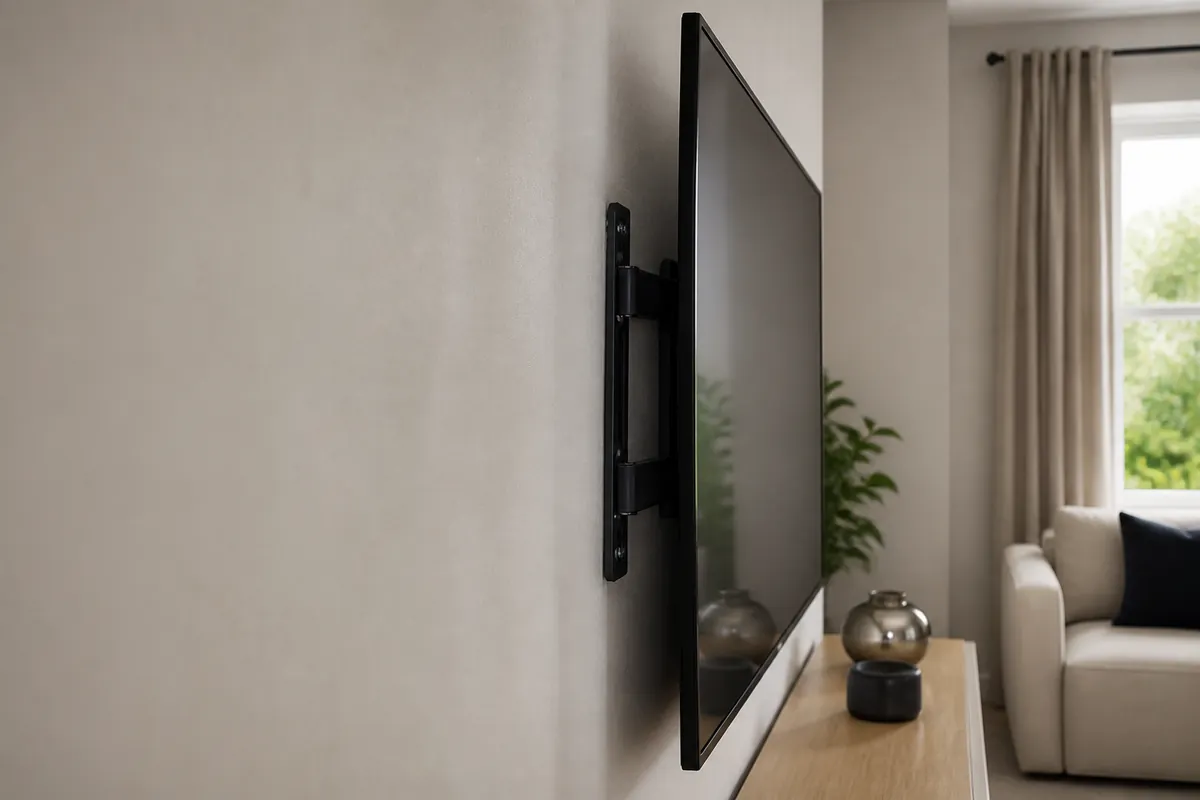
Plan the connections as a system
The drawings compare cable appearances rather than quote packages. Your screen ports, bracket depth and device locations need to inform the actual route before a finish is agreed.
Accessible device connections and a suitable surface treatment can be specified together. A concealed route may need wall access and making good, which must be assessed and agreed outside assumptions about basic mounting.
Request a new socket separately where needed. Ordinary mains flex should not be concealed inside the wall as a shortcut around appropriate electrical work.
Discuss a new socketThese are explanatory scenes, not photographs proving an installation result.
The details behind the finish
You can start the enquiry with that uncertainty identified. The final mounting approach and price depend on assessment of suitable support and the rest of the scope.
It provides context only. The current wall condition, fixings, bracket and new screen load need their own review.
Both requirements must be satisfied. Matching the mounting holes is not sufficient to approve the bracket for that television.
Only if the assessed wall and fixing strategy support their use. Included hardware is not a universal solution for every construction.
Not always, but any socket change is a separate electrical task. Describe the desired route so the actual requirements can be assessed.
Photographs begin the discussion, but suitability depends on the actual conditions and required checks, not its appearance in an image.
Check it against the new screen dimensions and current seating. Reusing a mark is not necessarily the most comfortable result.
Undisclosed access restrictions, unsuitable support or missing compatible parts can affect the work. Make uncertainties visible before the visit.
Make the technical checks connected
The wall, screen and mount need to be suitable for the same arrangement. A change to one can alter position, handling or the cable plan, so assess them together.
| Factor | What is checked | Why it matters |
|---|---|---|
| TV | VESA specification, actual weight and safe handling notes | Clarifies the panel’s requirements beyond its visible dimensions. |
| Bracket | Load rating, completeness and the correct mounting parts | Confirms a usable attachment rather than an apparent match. |
| Wall | Sound supporting material and concealed-service risk | Guides fixings and may limit the proposed wall location. |
| Position | Height and centre with edge clearance and lifting space | Supports a comfortable view and a practical fitting method. |
| Cables | Accessible ports and a route suited to bracket movement | Allows the completed screen to be connected without strain. |
Access, support and the room
The wall’s appearance and the property’s label cannot establish a fixing method. Supply the details that show how the proposed installation will actually be reached and supported.
Explain any entry appointment and the path to the room. Include equipment storage and furniture that reduces working space around the chosen wall.
Mention known linings, repairs or decorative materials. A chimney breast or special finish warrants consideration before the position is promised.
Share relevant guidance about the wall if it exists, while allowing suitability to be assessed for the specific TV and mount.
Describe landings, door turns and the final approach. A wide panel can face access constraints that are not obvious from its weight alone.
For a setting other than a home, request confirmation that the proposed installation scope is appropriate.
The practical arrival details
Include full address-area information and any loading or parking restrictions in the enquiry. Describe who provides entry and the route through the building to the wall. Access requirements should be known while the handling plan and installation scope are assessed.
For the wider service scope, see TV mounting in London .
Load the map when you need it.
Open map in a new tabPractical details
Yes, appearance does not establish construction or condition. Share known wall information and allow the actual mounting area to be assessed before assuming the proposed screen and bracket can be fitted.
Not necessarily, but the sound does not identify a suitable fixing method. The wall build-up and dependable support points need establishing for the intended load and movement.
No. Material, condition and the situation at the fixing points matter. A supplied plug kit or a previous installation should not replace assessment of the particular wall.
The bracket geometry and fixing arrangement must be assessed with the support position. A different location or mount may be needed; the visible centre should not be finalised by ignoring the structural constraint.
Yes. Provide photographs and any information about the backing. The finish introduces drilling and damage considerations in addition to the support needed for the television and bracket.
No detector guarantees that every concealed service will be found. Its readings are one part of an assessment that also considers visible fittings, available information and likely service routes.
No. The attachment to the panel, bracket capacity and wall support all need to suit the intended load. Extension adds leverage that must be considered in the assessed fixing arrangement.
Do not make exploratory holes simply to prepare the enquiry. Identify uncertainty and share what is known so any further investigation can be assessed with hidden services and the wall condition in mind.
No. Chimney or flue construction, support and concealed services still matter, with heat conditions and viewing comfort assessed as appropriate. The location must be considered on its actual circumstances.
The proposal may need further assessment before a fixing method or final scope can be confirmed. Be prepared to discuss alternatives rather than treating the original wall position as guaranteed.
The room comes first
Tell us how a turning television would help in your Walthamstow room. The desired viewing positions should be weighed against the wall, arm leverage and available clearance before selecting a full-motion mount. Include the exact TV and bracket models, wall photographs and postcode. Identify any additional work you want separately assessed.
