Minimum visit applies
 020 3608 3976
COMPILE THE HISTORY
A partly changed mark may need the history of several household attempts, not just the name of the original spill.
For your Orpington property, gather the labels of products already applied where possible.
Avoid further experiments·Assess compatibility·Review the outcome
RECORD VISIBLE CHANGES
Describe repeated wetting, scrubbing or powder use without embarrassment; accurate information is more useful than a perfect-looking photograph.
Do not add another treatment merely to make the patch seem easier before assessment.
Several applications can complicate the history.
A packaging photograph is more reliable than guessing.
MATERIAL CHECKS
Synthetic
Report sticky residue or altered sheen
Keep packaging from earlier spot products
Wool
Disclose colour reactions after product use
Mention powders as well as liquid sprays
Low pile
Mention disturbed fibres at the treated spot
Describe repeated wetting and scrubbing
Deep pile
Explain products worked below the surface
Stop guessing once the product history is unclear
Rugs
Provide a separate treatment history for loose pieces
Separate rug enquiry ↗HOW THE CARPET IS CLEANED
The sequence of sprays, powders, wetting and scrubbing is considered alongside the original mark.
Fibre, backing and colour response are assessed for signs that earlier products affected the covering.
Dry vacuuming where required and compatible pre-treatment follow the findings rather than another unassessed attempt.
Suitable extraction or a justified low-moisture method respects observed response and avoids stronger chemistry solely because a mark remains.
Practical moisture recovery and appropriate finishing precede a review of colour loss or disturbed fibres.
Handover covers aftercare and persistent effects without promising reversal of every earlier household attempt.
QUOTE FROM THE FULL TREATMENT HISTORY
For an Orpington enquiry, pair the room measurements with the sprays, powders and repeated attempts already used. A current quotation should reflect what can safely be attempted now, not the untreated mark as it first appeared.
Minimum visit applies
Keep packaging from earlier spot products
| Included request | Compile the history | Starting guide |
|---|---|---|
| Small carpeted room | Room dimensions with previously treated patches | From £30 |
| Two to three rooms | Named rooms and the products used in each | From £75 |
| Stairs or additional sections | Any additional sections reached by prior applications | Request a quotation |
| Separate or unusual textile | Loose pieces need a separate treatment record. | Assessment required |
Explain the sequence before authorising more treatment. Some chemical or physical changes may be permanent; confirm the accepted scope and minimum visit conditions without a correction guarantee.
Published service prices ↗ILLUSTRATING A PREVIOUSLY TREATED MARK
Generated room images explain a sequence only. They are not an Orpington correction case or evidence that earlier chemical effects were reversed.
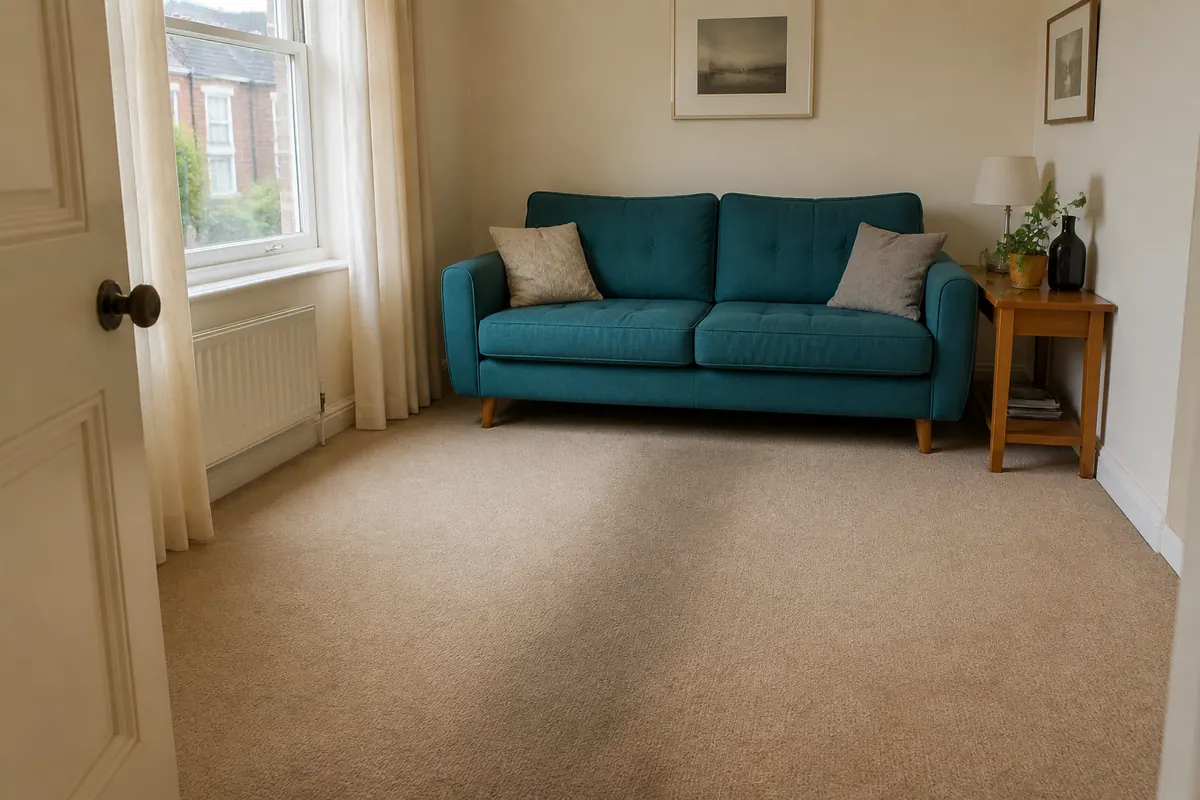 Before
Powders and sprays are included with any repeated wetting or scrubbing.
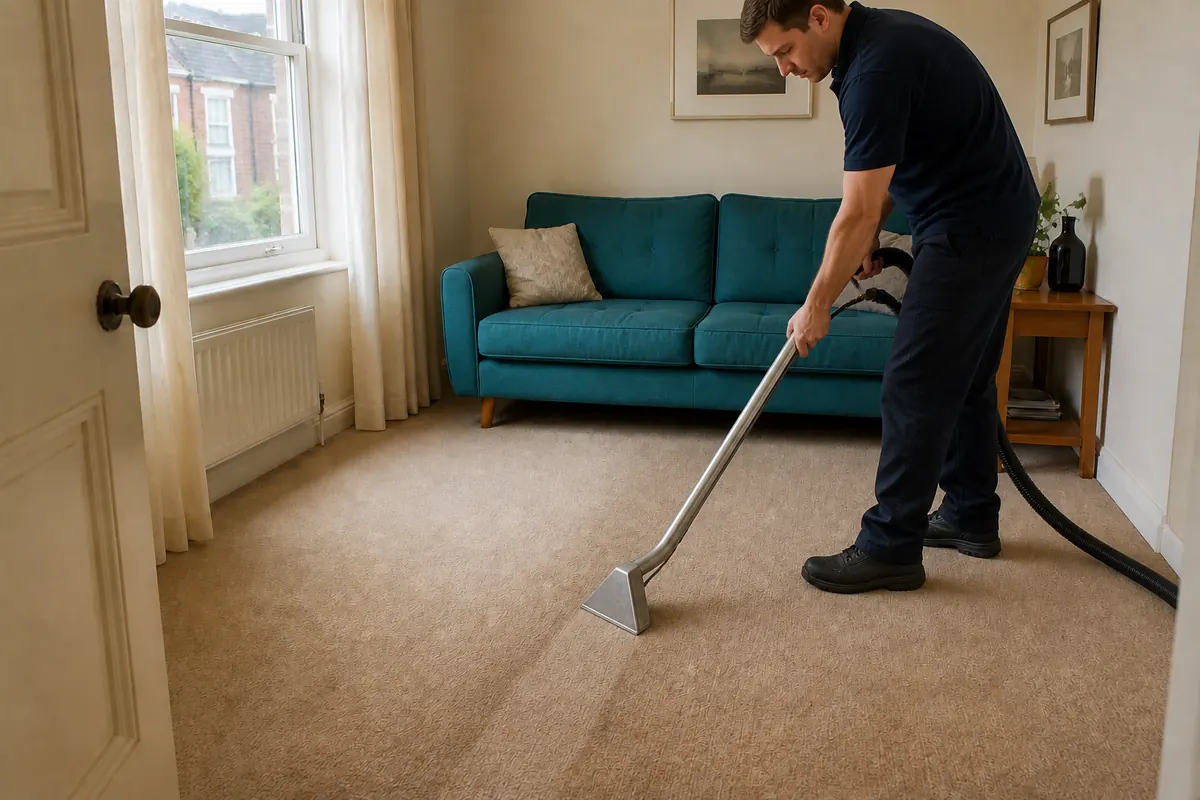 During
The present carpet condition limits further work, even when the original substance was familiar.
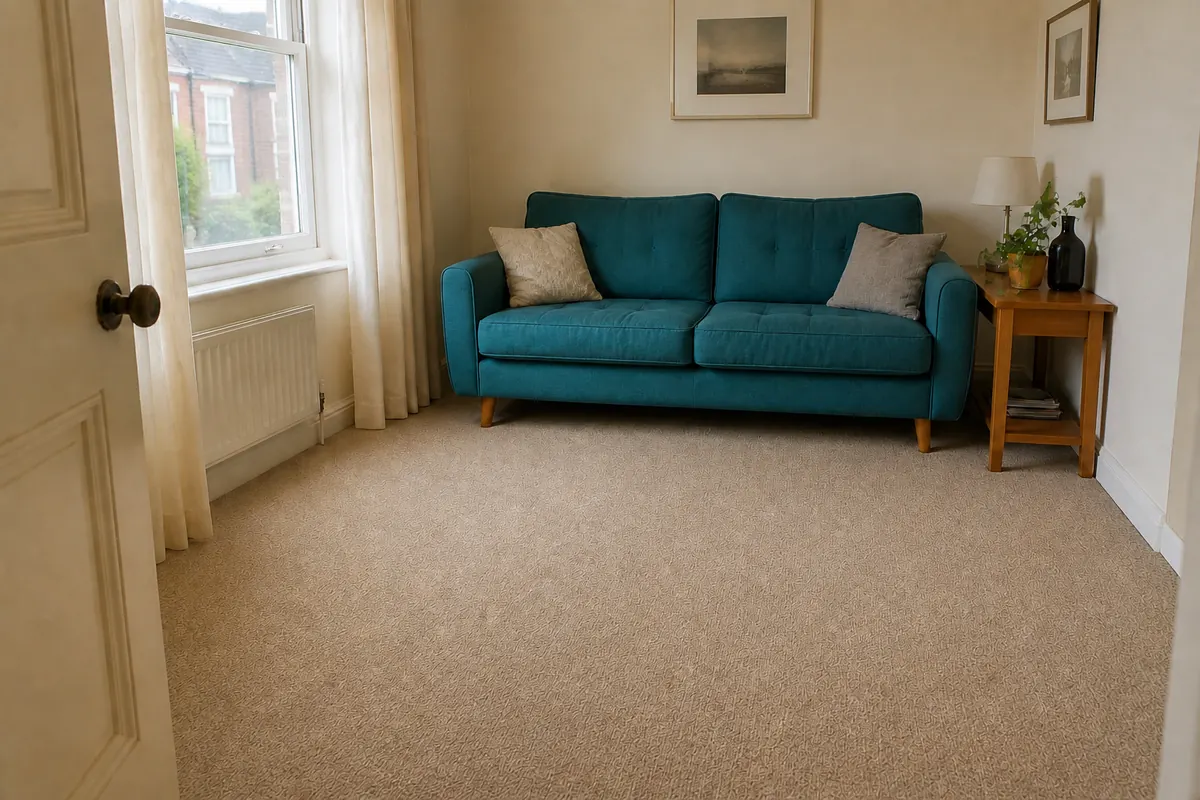 After
AfterPersistent marks do not justify indefinite chemical application; aftercare follows the accepted treatment.
SCRUB DAMAGE
A partly changed mark may need the history of several household attempts, not just the name of the original spill.
Several applications can complicate the history.
A packaging photograph is more reliable than guessing.
Dry products belong in the account too.
Tell the team if liquid spread beyond the original mark.
Disturbed fibres may not recover through cleaning.
A lighter patch can indicate damage rather than success.
Stain removal and appearance restoration are not guaranteed.
AVOID FURTHER EXPERIMENTS
The room starts are £30 and £75 with minimum visit conditions; previous-product history may affect what work is accepted.
A stubborn treated spot does not automatically need more frequent cleaning. Assess residues and damage before repeating attempts.
Explain the sequence of earlier applications before relying on an estimate based solely on the visible spot size.
A changed stain appearance is not a drying indicator. The fibre, chosen treatment, recovery and ventilation determine aftercare; avoid covering a previously treated patch until the actual guidance allows it.
Colour loss and disturbed fibres may be permanent. Additional products cannot be promised to reverse unsuccessful earlier treatments.
SCRUBBED DOORWAY
Keep packaging from earlier spot products. Mention powders as well as liquid sprays. Describe repeated wetting and scrubbing. Stop guessing once the product history is unclear.
LOCATION CHECK
Supply the address with the sequence of products applied to the affected spot. Keep available packaging or label photographs associated with the correct room, especially where several patches were treated differently.
Confirm attendance after disclosing previous applications.
Explain the earlier product attemptsLocate the property and send the relevant treatment history separately.
Loading connects to Google Maps.Open Orpington in MapsOVER-WETTING
Dry products belong in the account too.
Tell the team if liquid spread beyond the original mark.
Disturbed fibres may not recover through cleaning.
A lighter patch can indicate damage rather than success.
BEFORE YOU BOOK
A partly changed mark may need the history of several household attempts, not just the name of the original spill.
Discuss your circumstancesNo, accurate history helps assessment.
Say what you remember and identify uncertainty.
Yes, mention them alongside sprays and liquids.
No, unsuitable treatment can cause further damage.
It may instead reflect colour change.
Not necessarily; physical fibre changes may remain.
Discuss the existing history before adding more products.
Confirm the complete postcode directly.
COMPILE THE HISTORY
Share the previous-product history when requesting carpet care at your Orpington address.
Orpington: appointment availability must be confirmed
